
 雷科技
雷科技





Over the past few years, I’ve come across quite a few bizarre cameras.
Just a couple of weeks ago, a coworker picked up the Cangye C3 Mark I — a playful, gimmicky retro camera with a water-pipe-inspired build — and let me experience first-hand the quirky charm of its image output. Going further back, there’s the Kodak Charmera small enough to clip on a keychain, and the Fujifilm X Half built for retro film aesthetics. My team has bought basically all of them.
After seeing so many of these, I don’t get easily impressed by this kind of product anymore. At the end of the day, they’re just cheap camera sensors wrapped in fancy casings. You buy one, play with it for a few days, and more likely than not, it ends up gathering dust in a drawer.
That was until I stumbled upon the Godox C100 a while back.
(Image source: LeiTech)
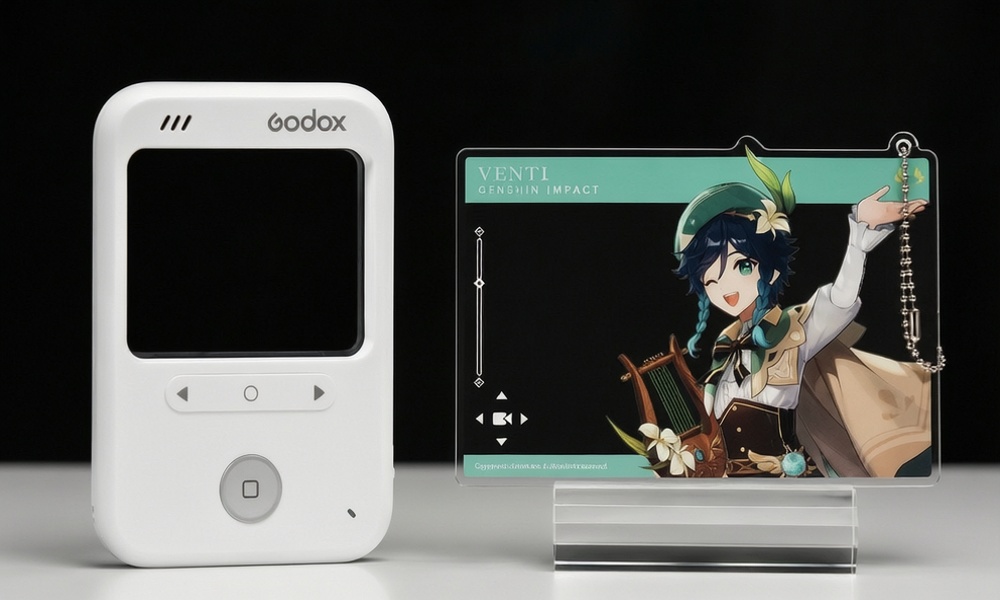
Unlike many similar creative retro cameras, the Godox C100 doesn’t follow a conventional camera design. It has no display screen; instead, it features a transparent viewfinder. With a sleek, minimalist overall design, it looks more like an acrylic photo standee than a camera. The design alone was enough to make me want to buy it, so I picked one up to put together this hands-on review (note: this article contains no sponsored content of any kind).
The Transparent Viewfinder Is Surprisingly Fun
Anyone into photography is probably already familiar with Godox.
From speedlights and triggers to all kinds of studio lights, Godox has built its product lineup around lighting for years. As its first ever camera, the Godox C100 makes it clear from the design that the brand isn’t planning to follow the conventional camera playbook.
Of course, it’s easy to spot its inspiration: enter the ESCURA InstantSnap.

(Image source: ESCURA)
Compare it with the Godox C100 above, and the similarities in design philosophy are easy to see: both feature a transparent viewfinder and a thin, lightweight build. While plenty of cameras have used transparent viewfinders in the past, this model from Hong Kong crowdfunded brand ESCURA is widely regarded as one of the original pioneers of this card-style transparent compact camera format.
But let’s get back to the Godox C100.
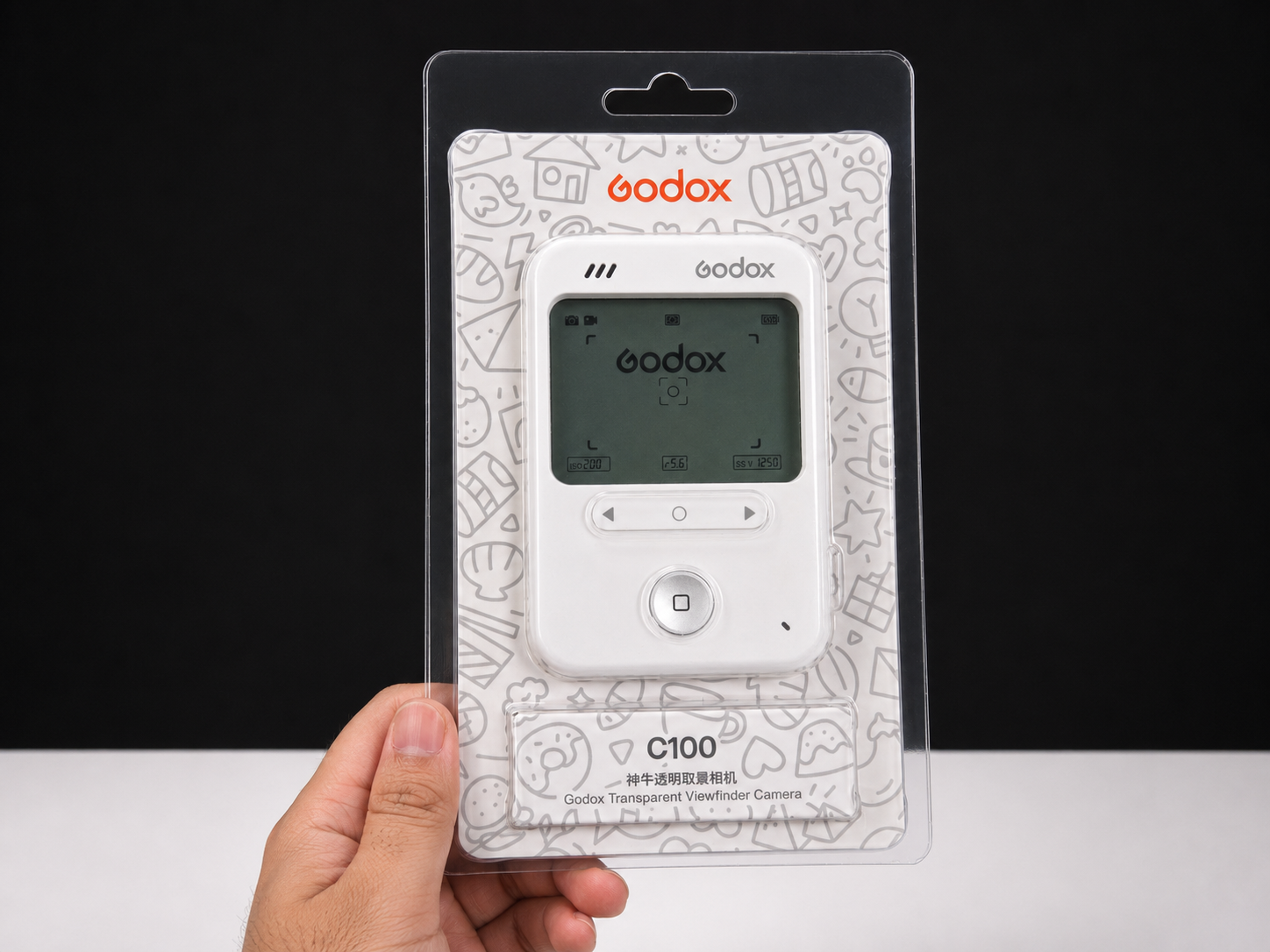
As I mentioned earlier, the Godox C100 barely looks like a camera, and its packaging doesn’t either. I’ve never seen this kind of minimalist plastic shrink wrap on any product outside of toys, at least.
(Image source: LeiTech)
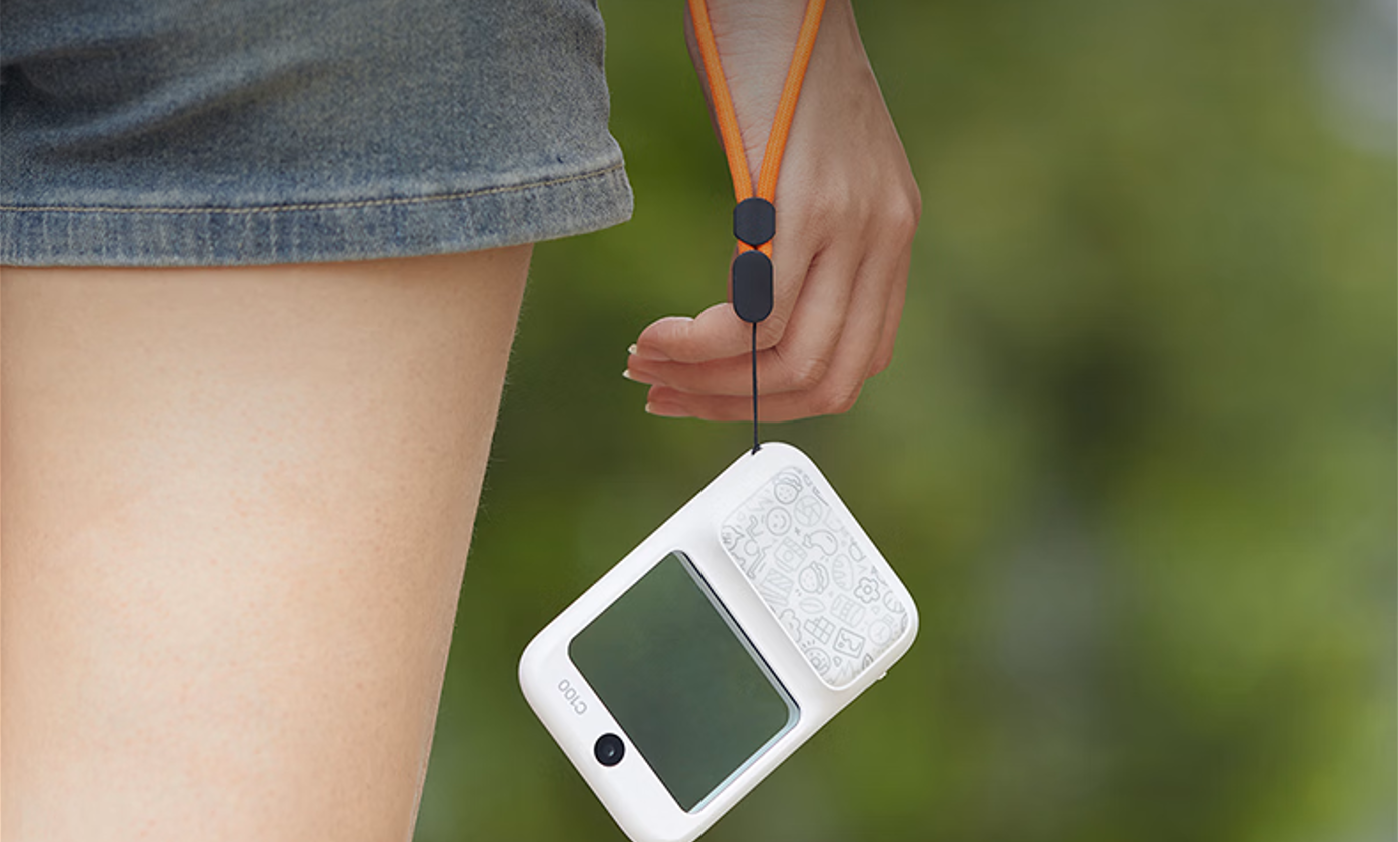
The Godox C100 is compact, weighing just 65 grams — it feels almost weightless in hand. You can slip it into your pocket or clip it to your backpack without it getting in the way.
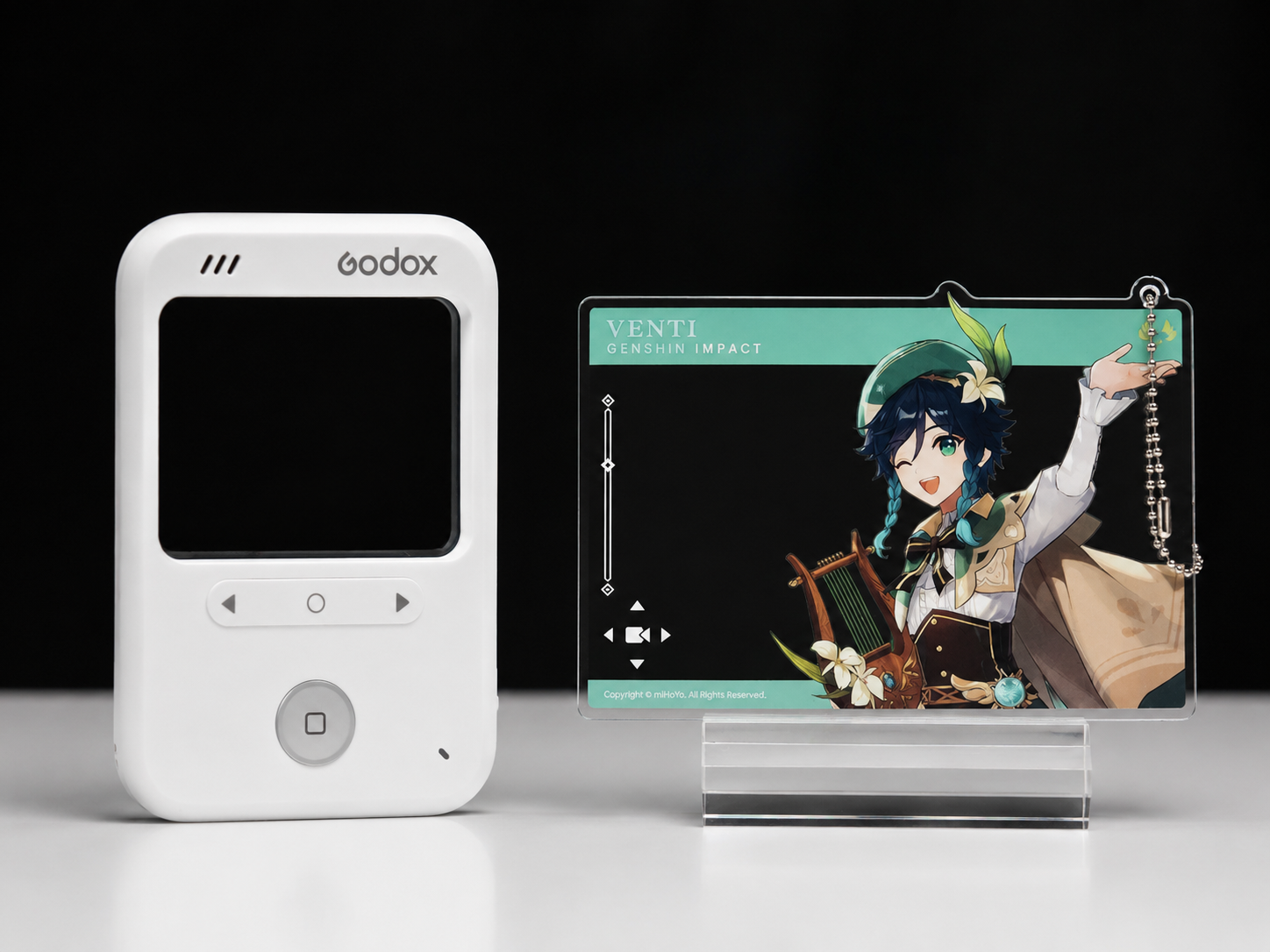
The overall design is straightforward: the lens, buttons and ports are all clustered on one side, leaving a large transparent section in the middle. It really does look like some kind of anime merch.
If you’re not sure what an acrylic photo standee is, here’s an example:
(Image source: LeiTech)
The power button is on the bottom right of the body, with a toggle switch to cycle between off and three function modes. The crevice is a total dust and lint trap — I have to clean it 2 to 3 times a day on average.
Flick it up once to enter photo mode. Side note: the C100 has a crisp startup sound that reminds me of a Game Boy Advance, which I really like.

(Image source: LeiTech)
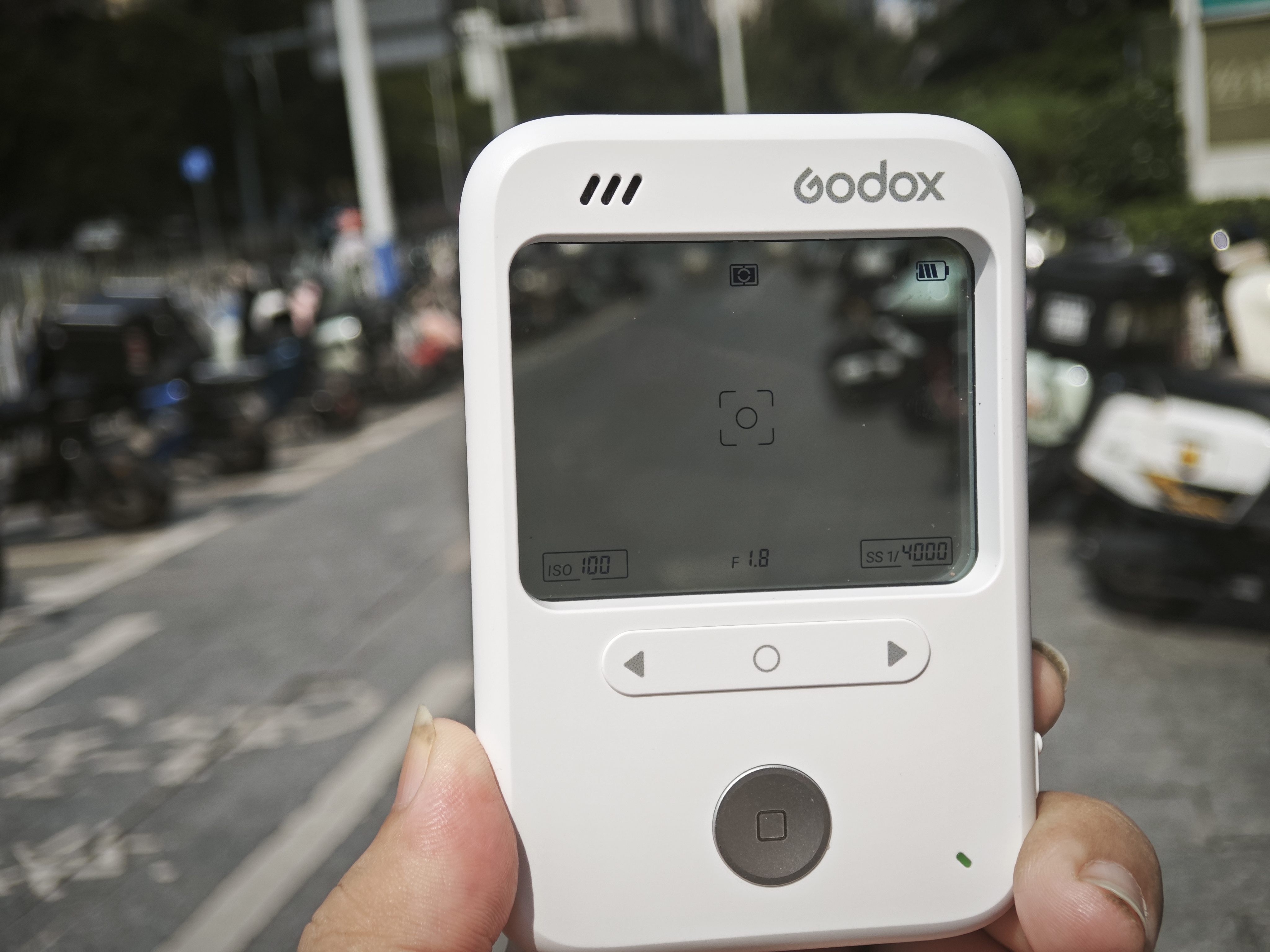
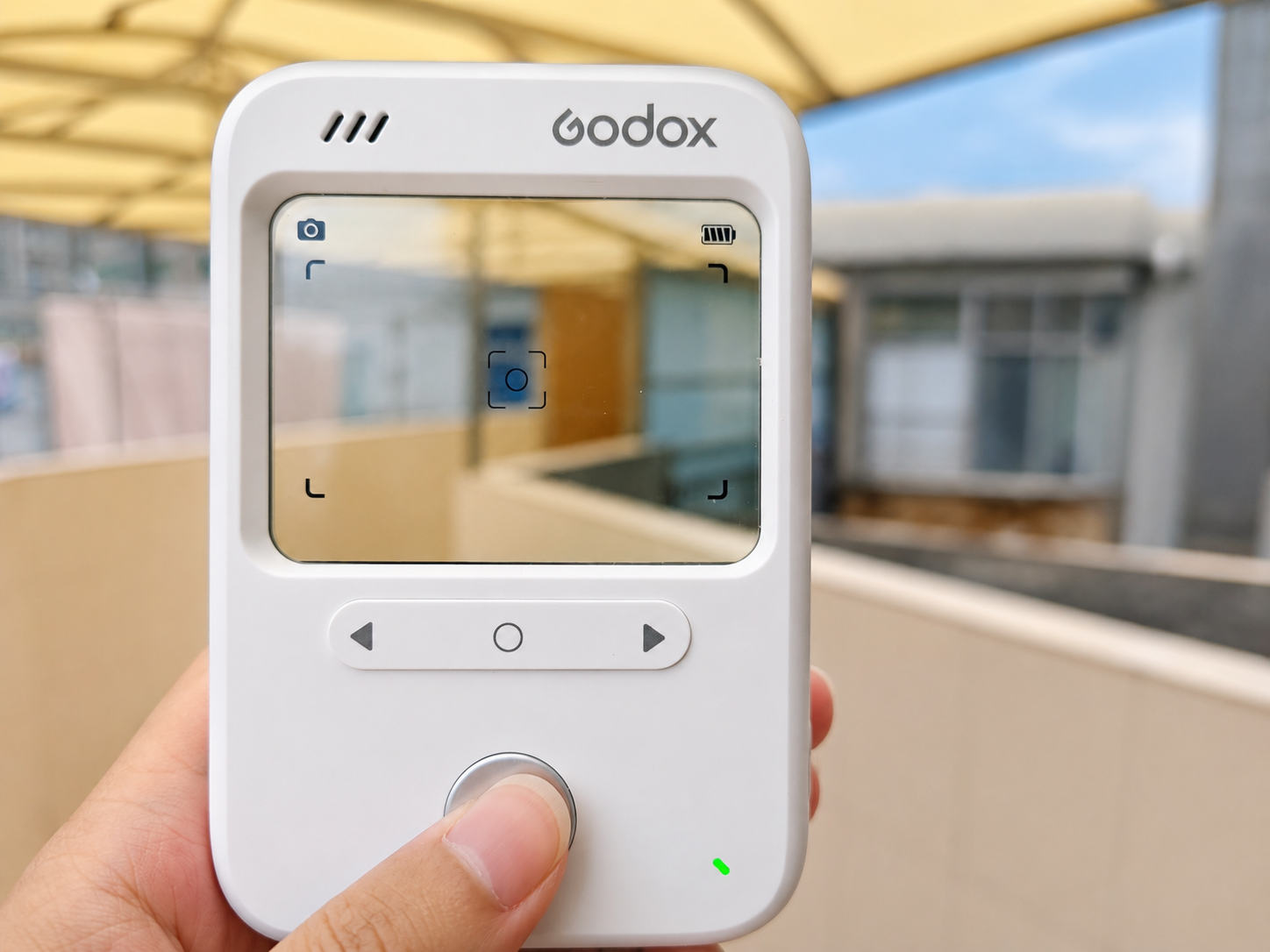
Once powered on, the transparent display shows the framing guide, battery level and current mode. Switch to the light metering function, and aperture, shutter speed and ISO readings appear at the bottom of the screen.
This was my first time using a transparent display, and the visual effect is genuinely novel. You see the scene in front of you directly through the screen, with framing guides overlaid on top — it gives off a subtle augmented-reality vibe.
Like this — it looks pretty cool.
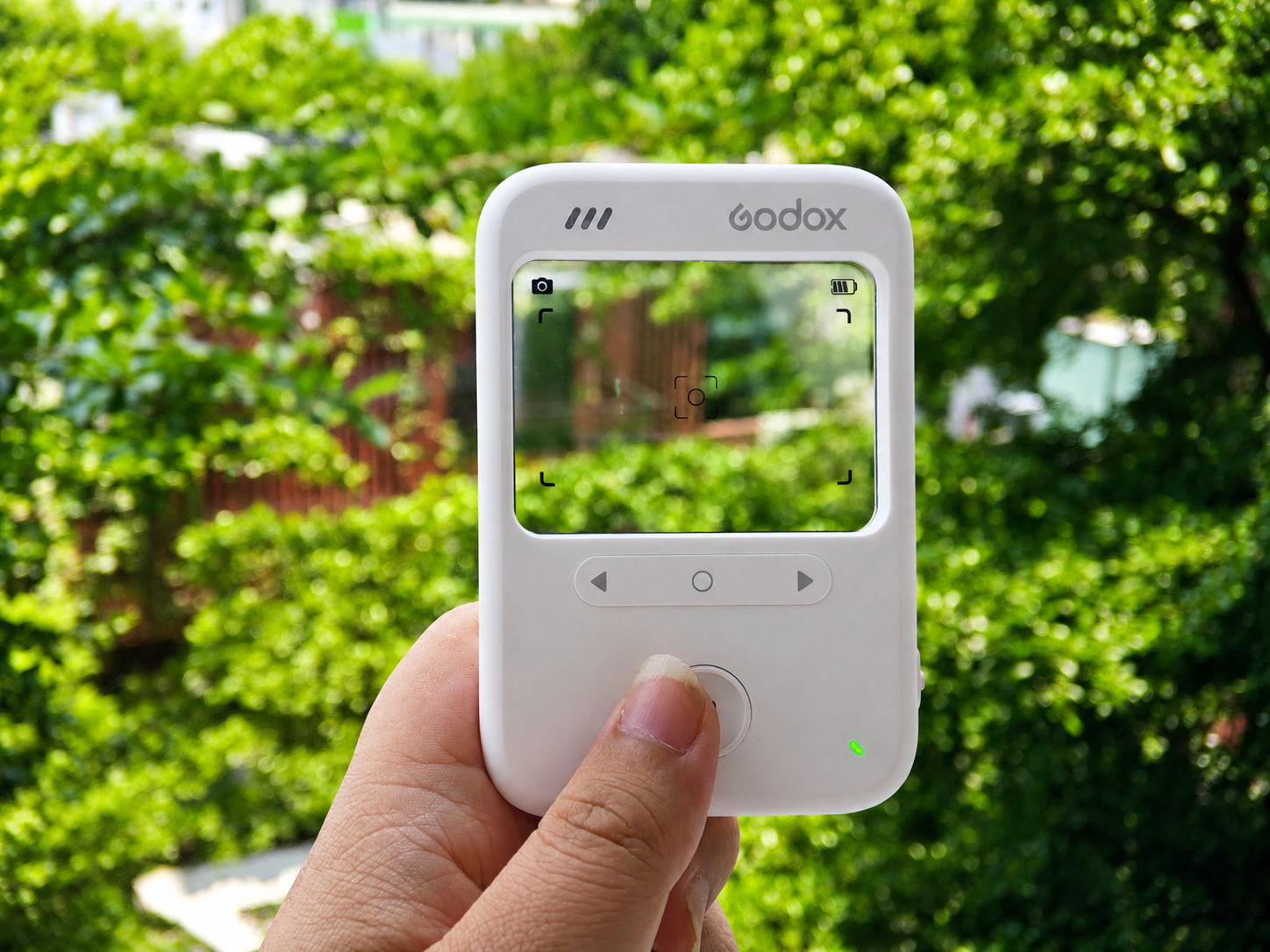
(Image source: LeiTech)
That said, if you hold the camera and look at the screen at an angle against the light, you’ll notice something off — it looks like all the display elements are permanently printed on the screen.
Yeah… that’s because that’s exactly how this screen works. It’s similar to the calculators we used as kids: all the display elements are pre-printed, and powering on specific segments determines what’s shown.
In other words, the content this screen can display is fixed.
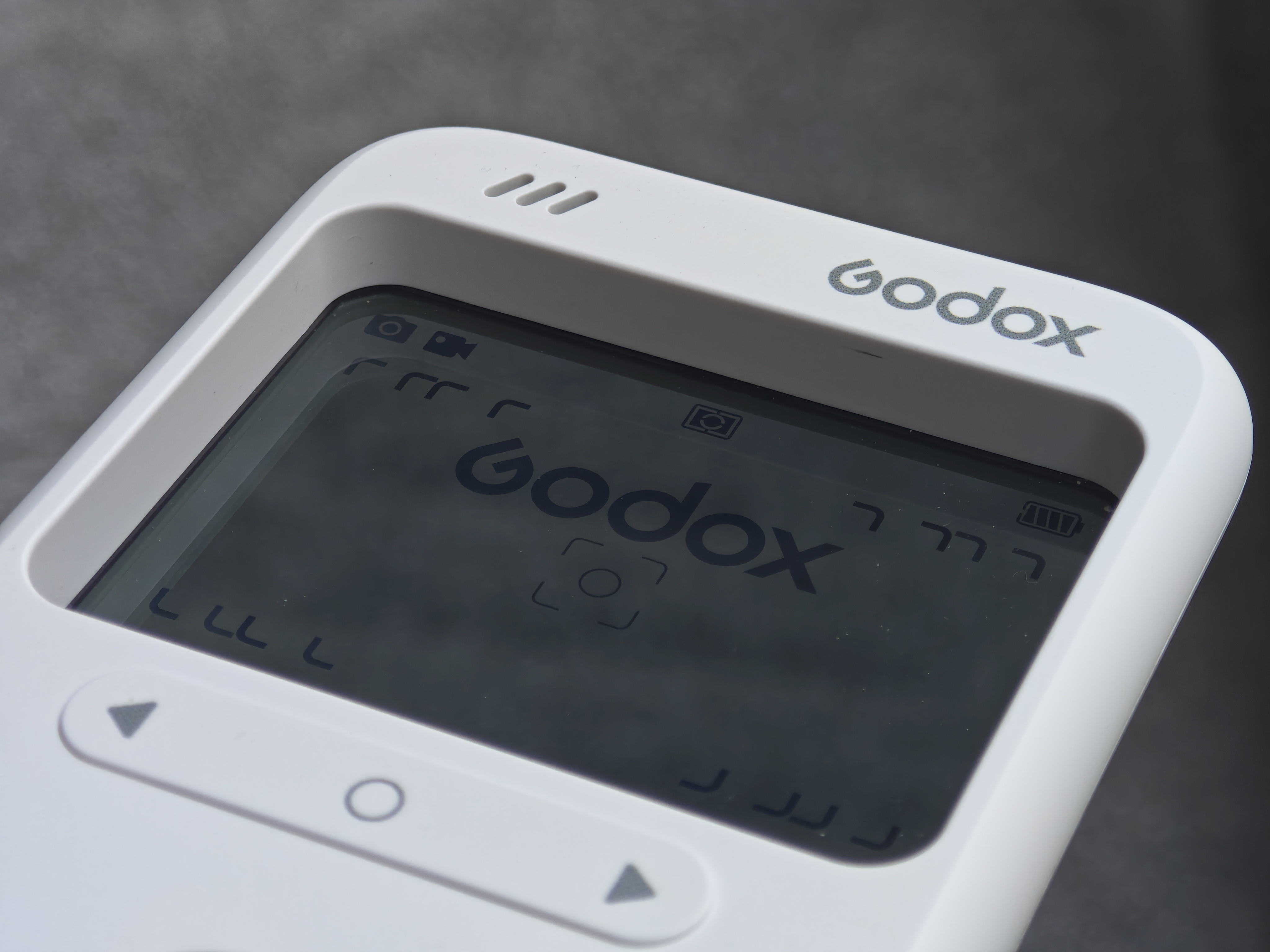
(Image source: LeiTech)
Beyond showing the current mode and battery level, the main purpose of this screen is to give you a rough idea of the framing. When you set an aspect ratio crop, the viewfinder shows corresponding guide lines.
But since all aspect ratios are just crops of the original image, you’re better off shooting the full frame and cropping it yourself in post.
Also, because the transparent viewfinder design doesn’t fix the position of your eye, parallax is exaggerated. Even if the camera stays still, moving your eye closer or farther changes what you see through the viewfinder quite noticeably. I’ll test the actual framing range later in the review.
Some of you might be wondering: if the screen doesn’t show your photos, how do you view them?

(Image source: LeiTech)
Well… you plug it into your phone via cable.
There’s no way around it. This device supports neither Bluetooth nor Wi-Fi. Your only options are to connect it to your phone via OTG to read the files, or pop out the memory card.
Funny enough, this experience is actually a bit like shooting film. When you press the shutter, you have no idea how the shot turned out — you just go by your judgment in the moment. Once you transfer the photos over, the C100 is sure to serve up some truly one-of-a-kind results, for better or worse.
Underwhelming Image Quality: Overexposed Photos, Overexposed Metering
Godox hasn’t disclosed the C100’s sensor size, lens aperture or exact focusing mechanism.
I checked with JD.com customer service and confirmed it roughly uses a 2-megapixel sensor with an equivalent focal length of 24mm, which lines up with the maximum output resolution of 1920×1080.

(Image source: LeiTech)
Of course, with a tiny lens like that on the body… I don’t think anyone expects stellar image quality from it.
Seeing is believing, so let’s jump straight into real-world sample shots. First up, a series of daytime photos all shot in 16:9 aspect ratio.
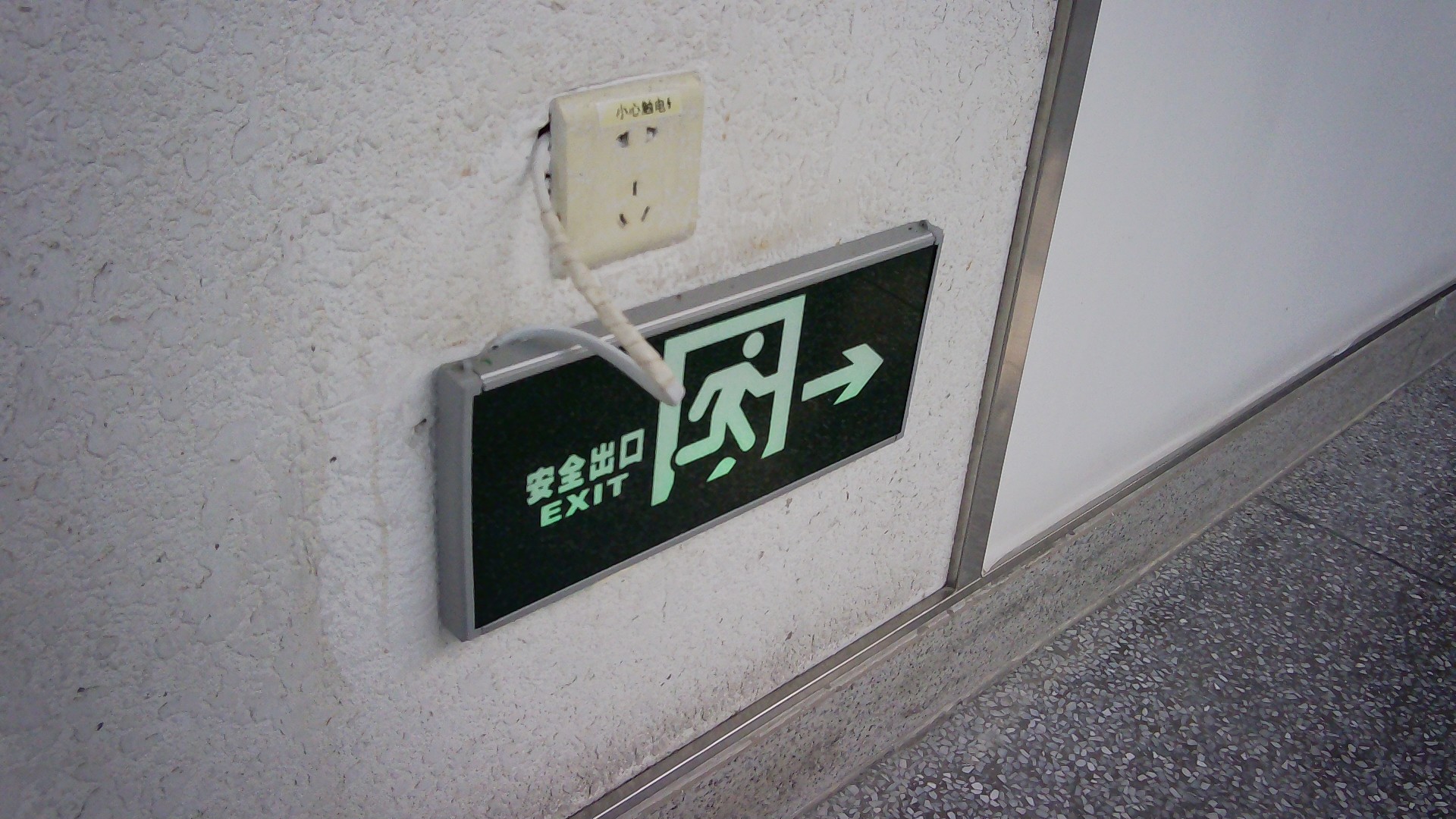


(Image source: LeiTech)
To be fair, in normal daylight, the C100 is capable of capturing street scenes, architecture and people adequately.
Colors are somewhat muted, resolution is low, and there’s obvious oversharpening. Zoom in, and the details fall apart quickly — leaves, hair and distant text all blur together easily.
But when the light is too bright, or there’s high contrast between light and shadow, the experience falls apart completely — the results are basically unusable.

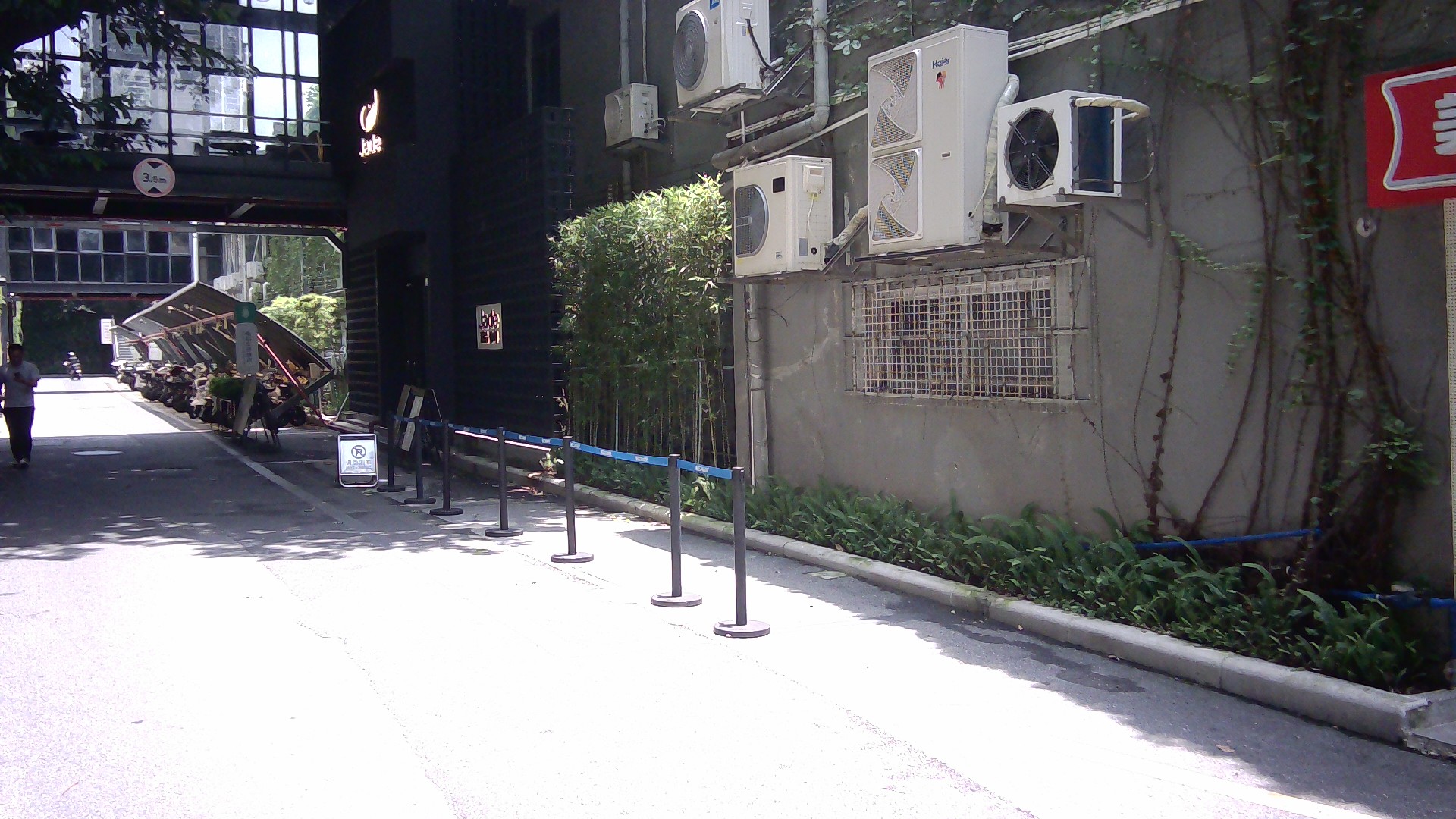
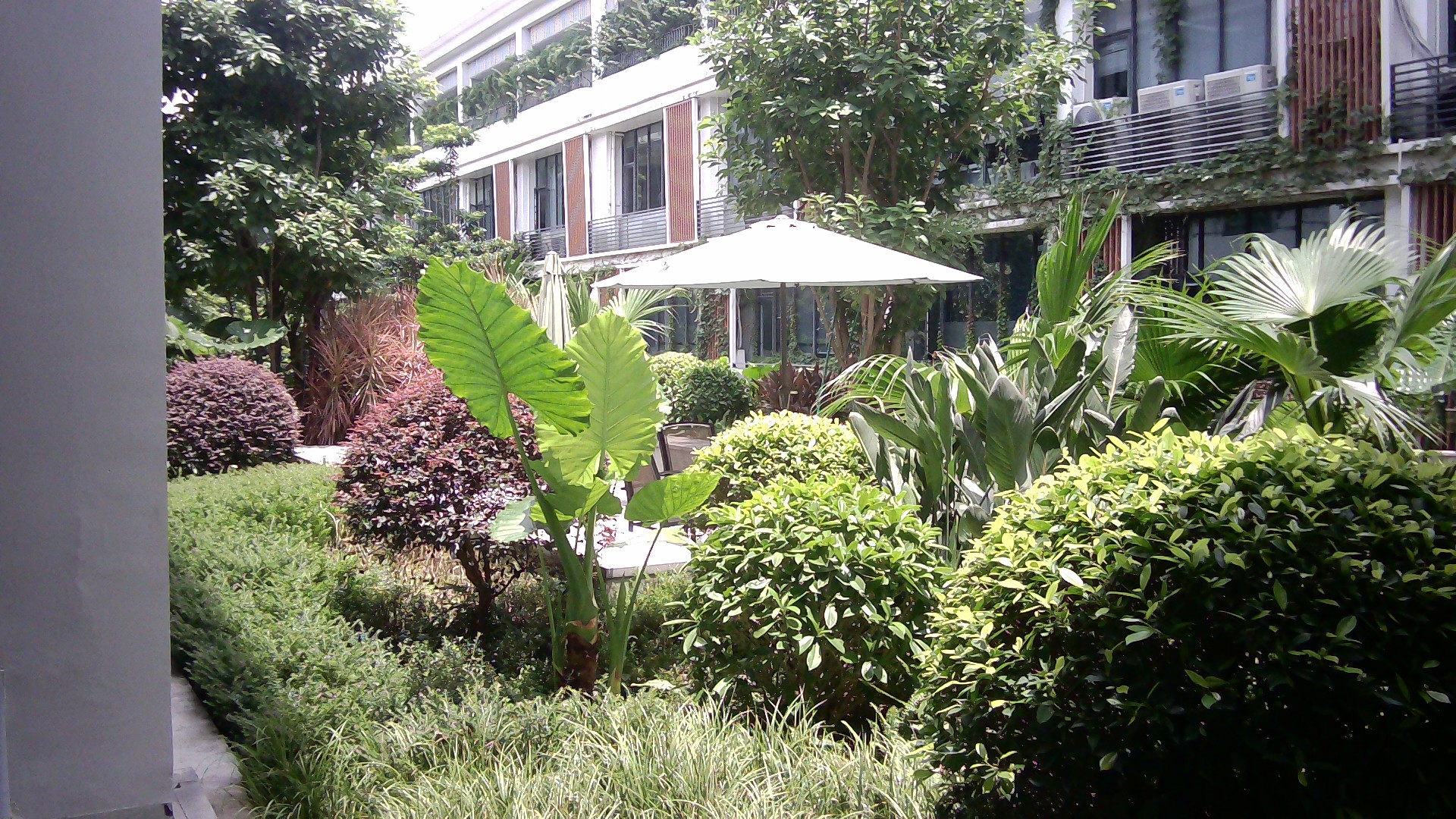
(Image source: LeiTech)
The overexposure is so intense it almost feels like the sun is shining directly at you through the photo.
That said, it’s still a clear step up from the 1.6-megapixel Kodak Charmera and the 0.3-megapixel Cangye C3M1. Honestly, the fact that it can take decently clear shots at all is already above expectations for this category.
While people online love to lump this kind of look under the “CCD aesthetic” umbrella, I think there’s a clear difference.
Many old point-and-shoot cameras had low megapixel counts, but they at least had proper lens assemblies, autofocus and built-in flashes. Plus, CCD sensors work on a completely different principle from CMOS. Personally, I’d say the C100’s image style is closer to early mobile phones — it has that distinct low-res digital look.
Whether this look is appealing comes down to the scene and personal taste.
In practice, thanks to the low-resolution sensor and fast processing, it shoots almost instantly after you press the shutter — the delay is less than a second. You can just snap away freely, which is pretty satisfying, at least in terms of the tactile experience.

(Image source: LeiTech)
But as I mentioned earlier, the transparent viewfinder comes with parallax issues.
The lens position doesn’t line up with what you see through the viewfinder. The discrepancy is usually unnoticeable when shooting distant buildings, but for tabletop objects or close-up portraits, there’s a clear difference between the final photo and what you framed. It’s hard to judge the distance correctly — you basically have to go by feel.
For example, with the framing in the photo above, here’s what the final shot looks like. You can clearly see the actual frame is wider than the viewfinder guide, and the light falloff at the edges is pretty severe.
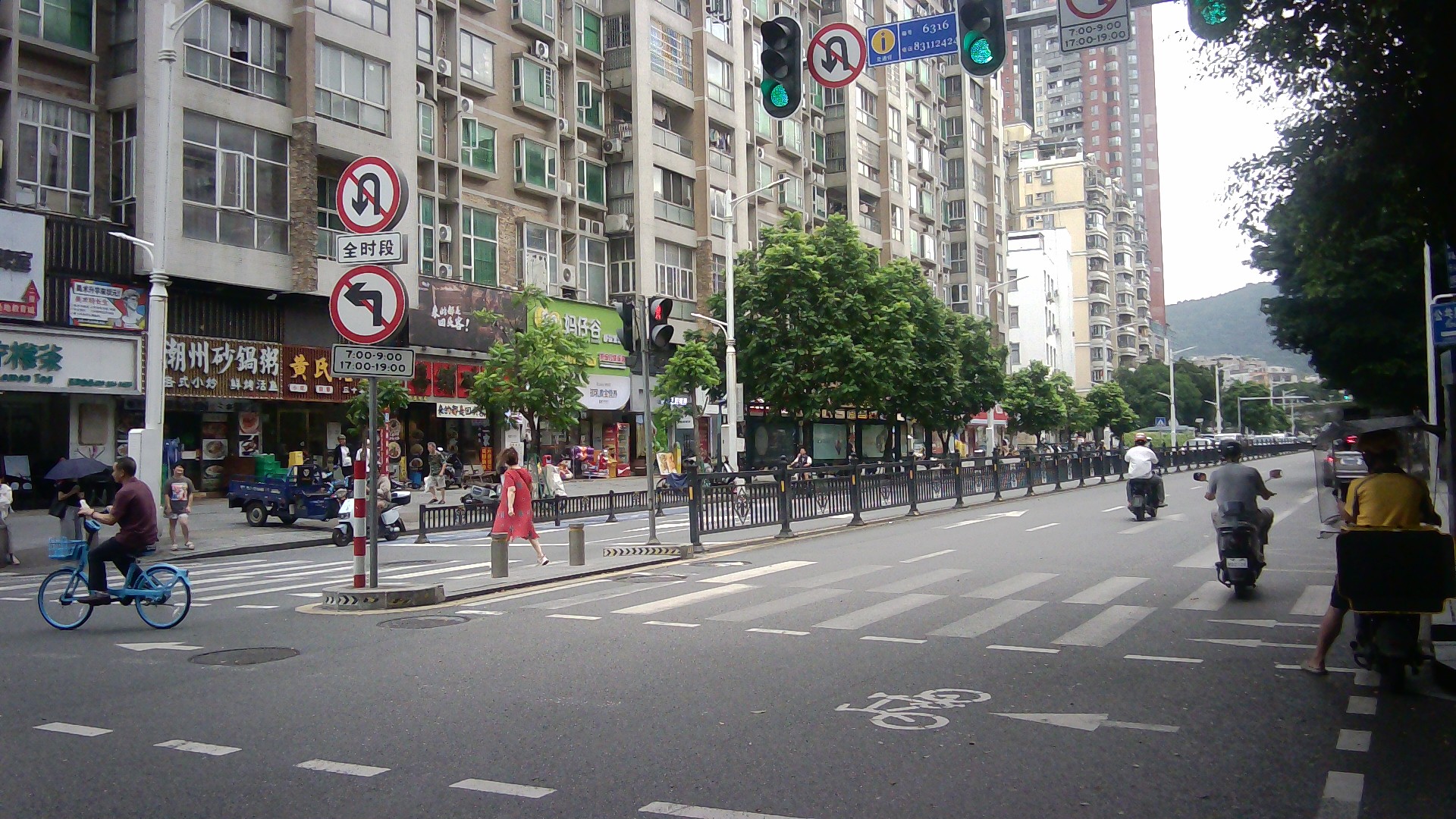
(Image source: LeiTech)
I also tried shooting some figurines with it. Let’s just say getting close to the lens almost always results in out-of-focus shots…
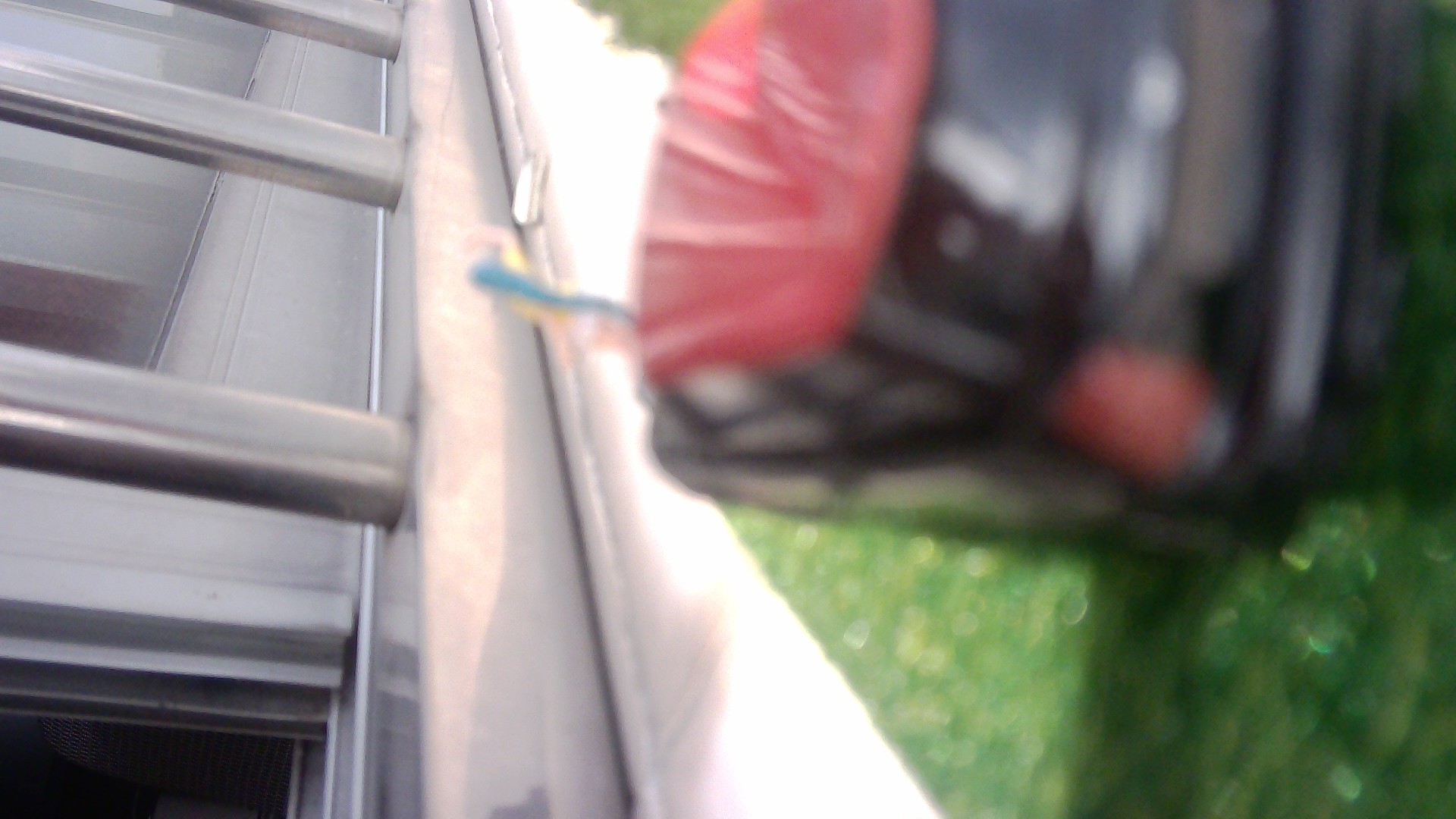
(Image source: LeiTech)
At night, the C100 is heavily dependent on ambient light.
It has no built-in flash, and low-light performance is limited. In well-lit places like shopping malls or the night market near my place, it can 勉强 capture people and surroundings, but any bright light source blows out immediately.

(Image source: LeiTech)
In dimly lit areas, nine out of ten shots come out blurry.
Video is the same story. And let’s not forget there’s no image stabilization — even a 5-second clip is this shaky. Don’t expect any kind of usable video experience.
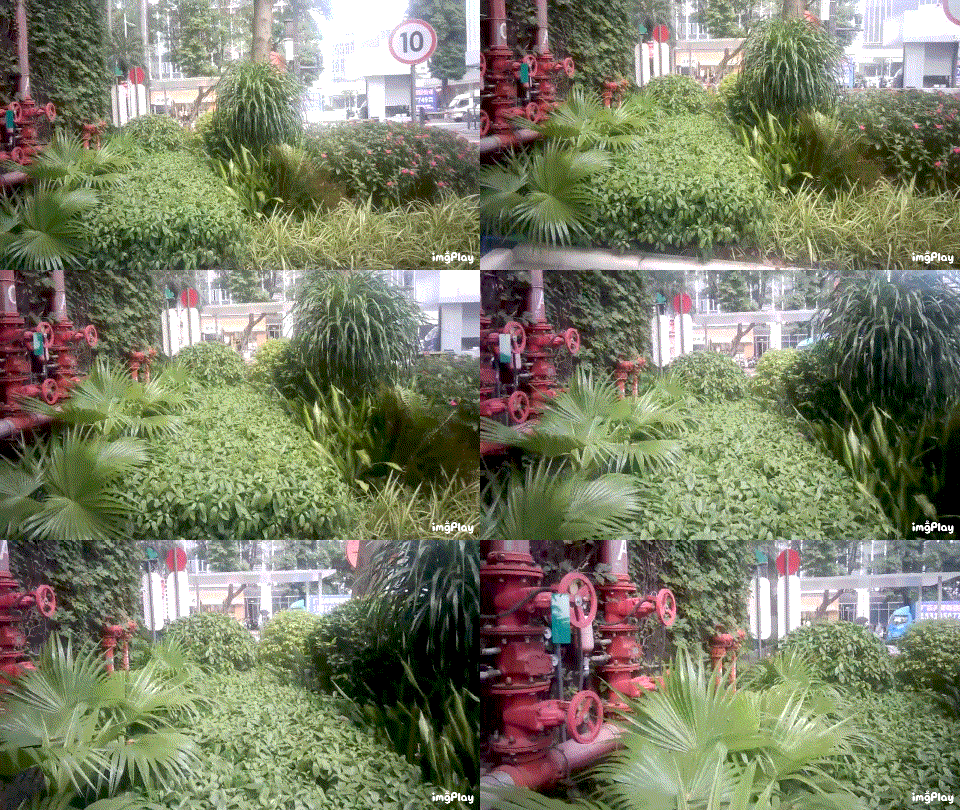
(Image source: LeiTech)
Finally, as I mentioned earlier, one of the camera’s selling points is that it doubles as a light meter.
As shown below, after setting the ISO, you can either set the aperture to calculate shutter speed, or set the shutter speed to calculate the aperture.
(Image source: LeiTech)
Set your parameters, press the shutter, and the calculated result appears.
I don’t know much about light metering myself, but a coworker of mine bought the Cangye C3M1, which requires manual metering. I just handed the C100 over to him to test out.
After using it for a while, he told me it’s not reliable — it consistently overexposes.
No way, right? Skeptical, I decided to test it myself using my main camera’s manual mode. I dialed in the parameters the C100 gave me and took a shot.

(Image source: LeiTech)
Wouldn’t you know it — it was overexposed. This thing overexposes everything.
That said, my coworker pointed out that with cameras this low in dynamic range and poor in low-light performance, slightly overexposing and then pulling down the highlights in post is actually easier to fix than underexposing and lifting shadows.
After all, the sensor on these “toy cameras” is so basic that lifting shadows from underexposed shots introduces a ton of noise.
Another Imaging Toy—Just a Toy
In my opinion, the Godox C100 is less a camera and more a creative gadget with a camera function.
It’s lightweight enough to carry around as a basic light meter. Even when you’re not using it for metering, you can snap a few low-res style photos with it.
Most importantly, at 199 yuan, it’s cheap enough that buying one to try out is no big financial commitment.
(Image source: LeiTech)
But if you’re looking for an everyday camera for travel photos, family memories or group shots with friends, the C100 is not the right pick. Most smartphones today have clear advantages in image quality, autofocus, low-light performance and sharing convenience. The fact that you can’t even view your photos on the device is enough to put off most buyers.
As for why Godox released this product, I think it’s mainly about finding an easy entry point into a new category.
Traditional cameras require years of accumulated expertise in lenses, autofocus and image processing, making it hard for new brands to compete directly. Godox went with a low price point and a distinctive design, using the transparent screen to grab attention, then adding the light metering function it already knows well. The product strategy is pretty clear.
As for the actual user experience… well, your mileage may vary.
On July 31, ChinaJoy 2026—under the theme “Exploring with AI”—will officially launch.
A total of 900 entertainment industry exhibitors—including Tencent, NetEase, Sony, Qualcomm, MaiCong, and Qingxian—will jointly present a global feast for the entertainment sector;
How will AI-enhanced hardware brands—spanning devices, peripherals, robotics, displays, and chips—collaborate across disciplines with game content creators to redefine entertainment experiences?
Led by Founder & Editor-in-Chief Luo Chao, the LeiTech ChinaJoy 2026 reporting team will descend upon Shanghai—stay tuned for exclusive coverage.