
 雷科技
雷科技




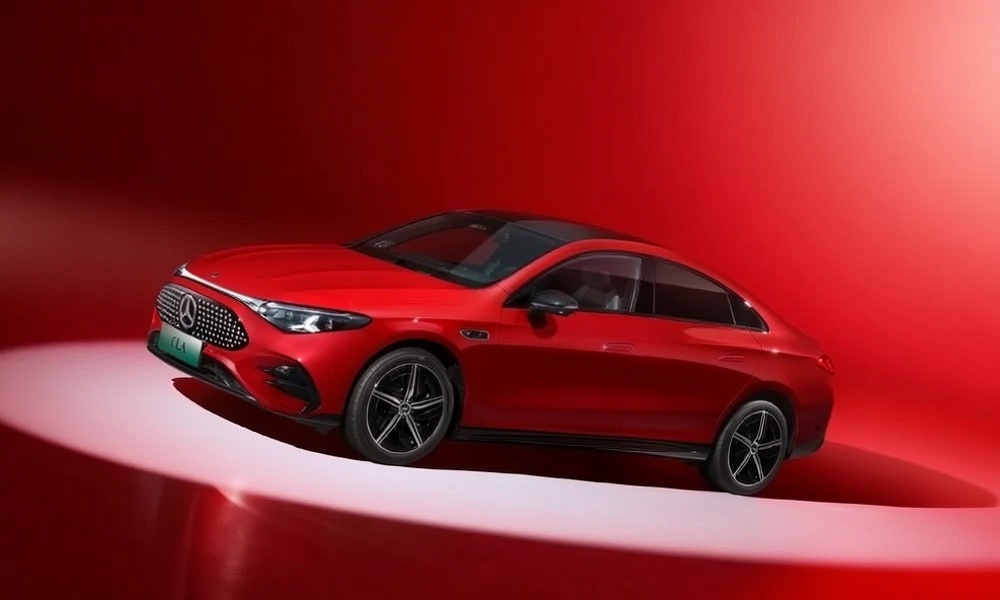

Has Mercedes-Benz’s all-electric CLA, which hit the Chinese market merely eight months ago, been taken out of production?
Multiple foreign media outlets reported that Beijing Benz has halted production of the Mercedes-Benz all-electric CLA, with sluggish sales suspected as the primary cause of the production suspension.
Nevertheless, Beijing Benz denied the rumor on July 24, stating: “The CLA model remains in production with relatively steady monthly sales. As per regular practice, different production lines take staggered high-temperature leave for summer break, during which equipment maintenance is carried out.”
(Image source: Mercedes-Benz)
According to public data retrieved by Dianchetong (ID: dianchetong233), cumulative sales of the Mercedes-Benz CLA EV in China reached only 627 units between February and June this year, with March marking its best monthly sales volume at 358 units.
What do these figures signify? Tesla Model 3 recorded monthly sales of 14,266 units in June, equivalent to 475 vehicles sold per day on average. Xiaomi SU7 sold 20,414 units in June, averaging 680 units daily.
The BMW i3, converted from a gasoline vehicle to an electric model, also achieved monthly sales of 1,039 units in June. To put it plainly, total sales of the all-electric Mercedes-Benz CLA across five months equal the BMW i3’s sales in a little over half a month. The five-month figure falls short of Tesla Model 3’s sales in one and a half days, let alone Xiaomi SU7’s single-day sales volume.
As Mercedes-Benz’s debut model built on the brand-new MMA platform and the pacesetter spearheading Mercedes-Benz’s latest round of electrification and intelligent transformation in China, why has the all-electric CLA suffered such sluggish sales?
High online praise fails to win market recognition
When the all-electric CLA was launched, online public opinion generally spoke highly of the vehicle. Netizens commended its low power consumption, superior performance of the two-speed transmission compared with single-speed counterparts, agile driving experience and abundant premium ambiance. Despite rave reviews upon its release, sales results reveal that mainstream consumers remain unconvinced.
The root cause is straightforward: insufficient market competitiveness.
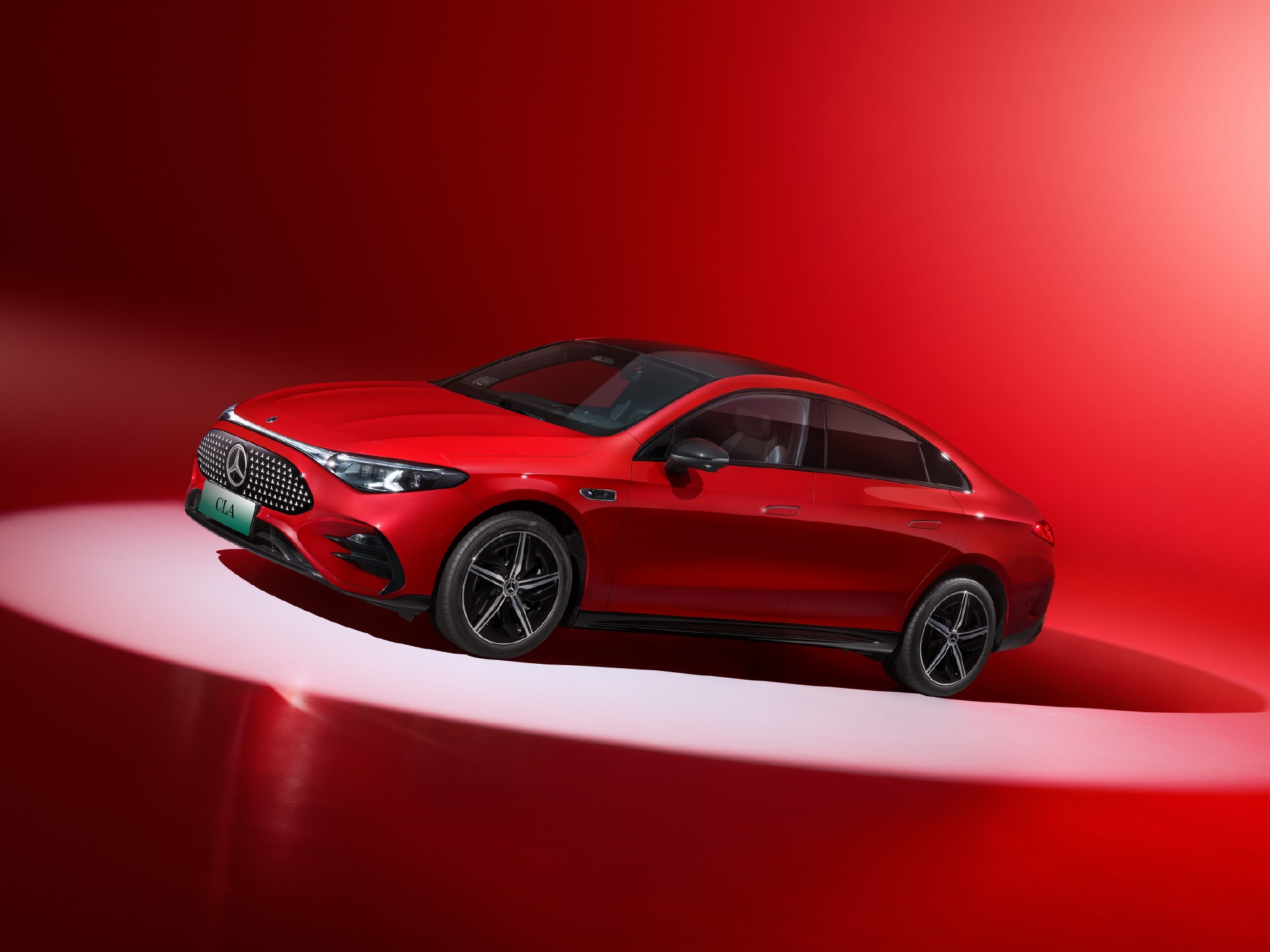
Here is an overview of the core specifications of the all-electric CLA. It measures 4763mm × 1836mm × 1471mm with a wheelbase of 2830mm. It offers two motor options rated at 165kW and 200kW, paired with two battery capacities of 60kWh and 80kWh.
Its official price range stands from 229,000 yuan to 285,600 yuan.
For fair comparison, we set aside domestic electric vehicles such as the Xiaomi SU7 and benchmark it against the Tesla Model 3.
The Tesla Model 3 has exterior dimensions of 4720mm × 1848mm × 1442mm and a wheelbase of 2875mm. It comes with four motor configurations: 194kW, 225kW, dual-motor 137kW+194kW and dual-motor 137kW+265kW, alongside two battery capacities of 62.5kWh and 78.5kWh.
The Model 3 is priced between 235,500 yuan and 339,500 yuan. Excluding the high-performance all-wheel-drive variant, its price bracket narrows down to 235,500 yuan to 285,500 yuan.
A side-by-side comparison demonstrates that the gaps between the Model 3 and all-electric CLA are marginal in terms of body size, performance and pricing.

(Image source: Mercedes-Benz)
The crux is that Mercedes-Benz is a latecomer in the new energy vehicle sector, so its brand strength and influence for all-electric models are undeniably far weaker than Tesla’s.
Therefore, given the two vehicles have comparable pricing and configurations, most buyers will opt for the brand with higher visibility.
This lands the all-electric CLA in an awkward predicament. Within the 200,000–300,000-yuan all-electric sedan market, a large share of consumers choose new energy vehicles from domestic brands such as Xiaomi and Zeekr. Other buyers uninterested in local marques turn to Tesla instead, leaving Mercedes-Benz with only a tiny pool of potential customers.
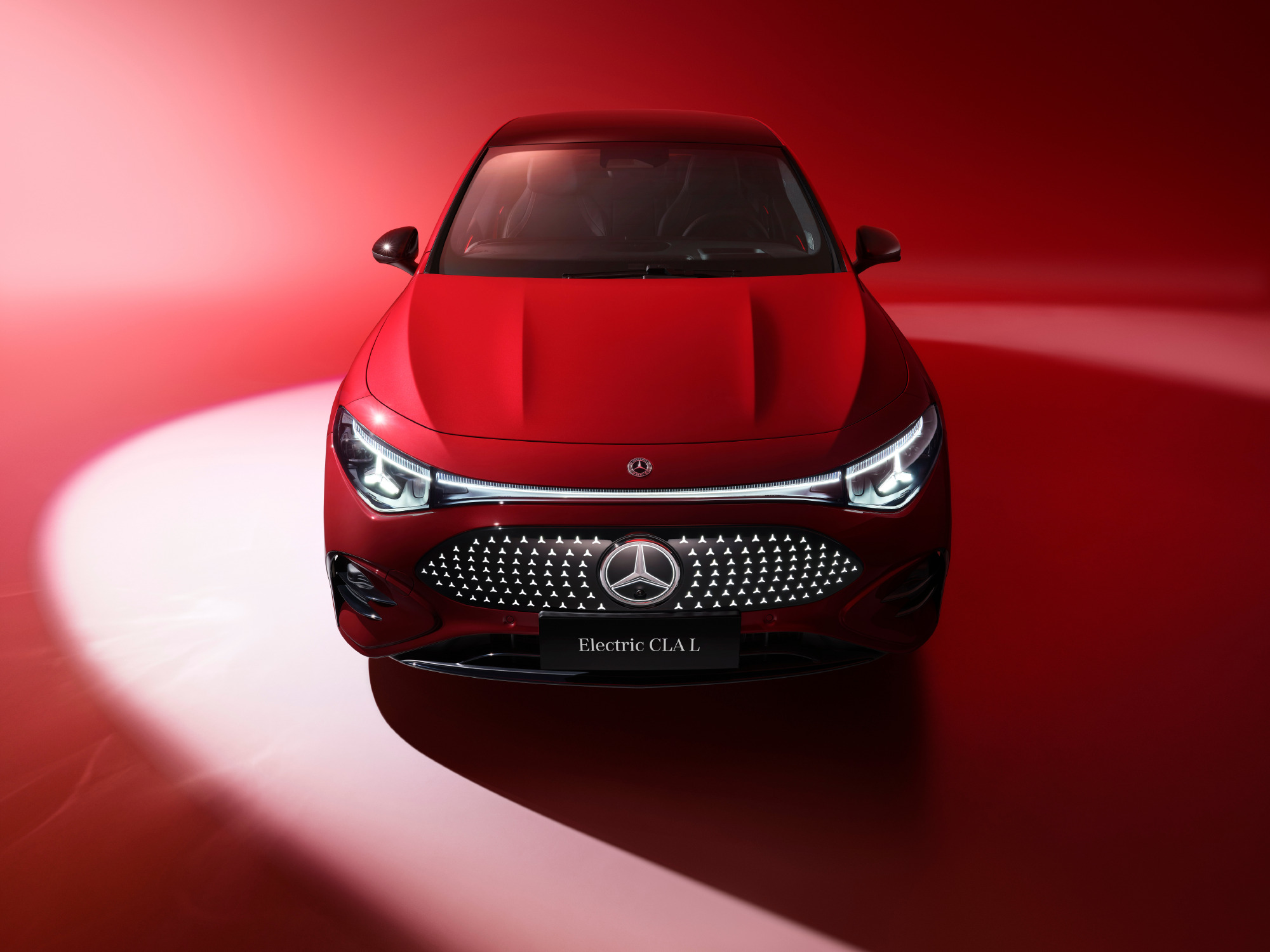
From Mercedes-Benz’s perspective, the brand may feel wronged. Compared with the European version, the China-market all-electric CLA features an extended wheelbase and upgraded intelligent functions, yet consumers remain unconvinced.
Even with these substantial improvements, the all-electric CLA still falls noticeably short of rivals at the same price point, especially domestic new energy vehicles, in terms of overall competitiveness.
Domestic EVs in this price bracket generally match the specifications of full-size C-segment sedans: nearly 5 meters in vehicle length and a 3-meter wheelbase. Ultra-fast charging, LiDAR and high-level intelligent driving assistance have become near-standard equipment for cars in this price range.
The all-electric CLA offers specs similar to the Tesla Model 3 but lacks Tesla’s market clout in the electric vehicle space. It cannot compete with domestic EVs or Tesla, and even trails the BMW i3, a gasoline-to-electric conversion model derived from the 3 Series, in monthly sales.
According to Dianchetong (ID: dianchetong233), the all-electric CLA clearly suffers from poor market adaptation in China. This raises a bigger question: what does the future hold for Mercedes-Benz’s electric cars, and joint-venture EVs as a whole?
What Lies Ahead for Joint-Venture Electric Vehicles?
A longstanding debate in the automotive industry centers on whether joint-venture EVs have a viable future and what path they should take.
Many people argue that if joint-venture automakers actively advance electrification and intelligent upgrades, they can carve out a stable niche for themselves even if they cannot outperform domestic EV brands.
However, the lackluster sales of the all-electric CLA sound the alarm for all joint-venture carmakers. Automakers cannot focus merely on internal upgrades; they must align their products with market demand and build vehicles that consumers are willing to buy.
(Image source: Mercedes-Benz)
Take Japan’s three leading automakers — Toyota, Honda and Nissan — as an example. Their disparate moves in China’s new energy vehicle market have inevitably led to vastly different outcomes.
Dongfeng Nissan, Nissan’s Chinese joint venture, leverages technologies accumulated by Dongfeng in electrification and intelligence, paired with Nissan’s strengths in ride comfort, to develop three China-focused new energy models: the N6, N7 and NX8. These vehicles have achieved decent sales results.
Dongfeng Nissan even plans to export the N7 overseas, tapping China’s new energy technologies to compete on global markets.
GAC Toyota, one of Toyota’s Chinese joint ventures, built the Bozhi 3X and Bozhi 7 directly on GAC’s proprietary vehicle platforms and architectures. The Bozhi 3X recorded monthly sales of 7,895 units in June, ranking sixth among all Toyota vehicles sold in China.
By contrast, Honda has neither developed EVs with its Chinese joint venture partners nor designed electric cars tailored to local consumer demands. Consequently, its latest all-electric models, the P7 and S7, only notch up monthly sales in the hundreds.
Beyond Toyota and Nissan, numerous foreign brands are developing China-exclusive models customized to local consumer preferences and market conditions.
Audi, another member of the BBA luxury trio, rolled out the AUDI marque and partnered with SAIC’s all-electric platform to launch the AUDI E5 and E7X. These models deliver stronger cost performance compared with traditional Audi badged vehicles.
Volkswagen Anhui, the joint venture between Volkswagen and JAC Motors, adopted Xpeng’s vehicle architecture, three-electric system technologies, intelligent cabin solutions and autonomous driving capabilities to develop the ID.UNYX 08 and ID.UNYX 09.
In addition, the updated ID. lineup from FAW-Volkswagen and SAIC Volkswagen consists of China-exclusive vehicles engineered specifically for domestic market needs.
In the opinion of Dianchetong (ID: dianchetong233), foreign brands can sustain strong performance in China’s auto market only by gaining deeper insight into local demands, catering to consumer expectations and boosting overall product competitiveness.
Furthermore, the underwhelming performance of Mercedes-Benz’s all-electric CLA serves as a timely reminder for BMW, which is set to launch updated i3 and iX3 models in China. BMW must figure out how to avoid repeating Mercedes’ mistakes with the CLA EV.
Closing Thoughts
Ultimately, the weak sales of the all-electric CLA do not stem from Mercedes’ inability to build competent electric cars. Rather, the brand has failed to truly comprehend China’s new energy vehicle landscape.
China’s automotive market has evolved past the era when the three-pointed star logo alone could command a price premium. Even an automaker with a 140-year legacy pioneering the auto industry must humble itself and faithfully keep pace with China’s market trends.
Following the setback of the all-electric CLA, what strategies will Mercedes-Benz deploy to navigate China’s intensifying competition? We will wait and see.
July 31 marks the grand opening of ChinaJoy 2026, themed “Journeying with AI.”
A total of 900 entertainment-related exhibitors—including Tencent, NetEase, Sony, Qualcomm, MaiCong, and QingXian—will jointly present a global feast for the entertainment industry.
How will AI-enhanced hardware brands—including terminals, peripherals, robots, displays, and chips—collaborate cross-industrially with game content creators to deliver novel entertainment experiences?
Led by LeiTech founder and Editor-in-Chief Luo Chao, the LeiTech ChinaJoy 2026 reporting team will soon descend upon Shanghai—stay tuned for comprehensive coverage.