
 雷科技
雷科技




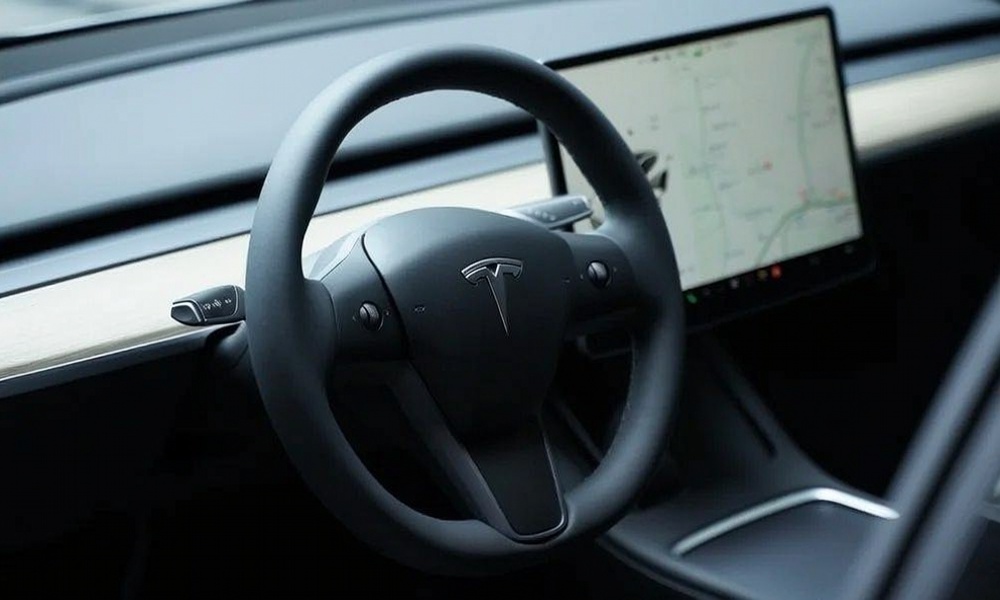

On July 22 Eastern Time, Tesla released its Q2 2026 earnings report. Total revenue reached USD 28.24 billion, jumping 26% year-on-year and beating market expectations by a wide margin. Automotive business revenue stood at USD 20.52 billion, representing a 23% year-over-year increase.
However, the critical takeaway is that net income attributable to parent shareholders was only USD 1.111 billion, down 5.21% year-on-year, with an operating margin of merely 1.4%.
Following the earnings release, Tesla’s stock tumbled 6.10% in a single trading day as of the screenshot taken on July 23. This reflects investors’ lack of confidence in this earnings report featuring revenue that exceeded forecasts.
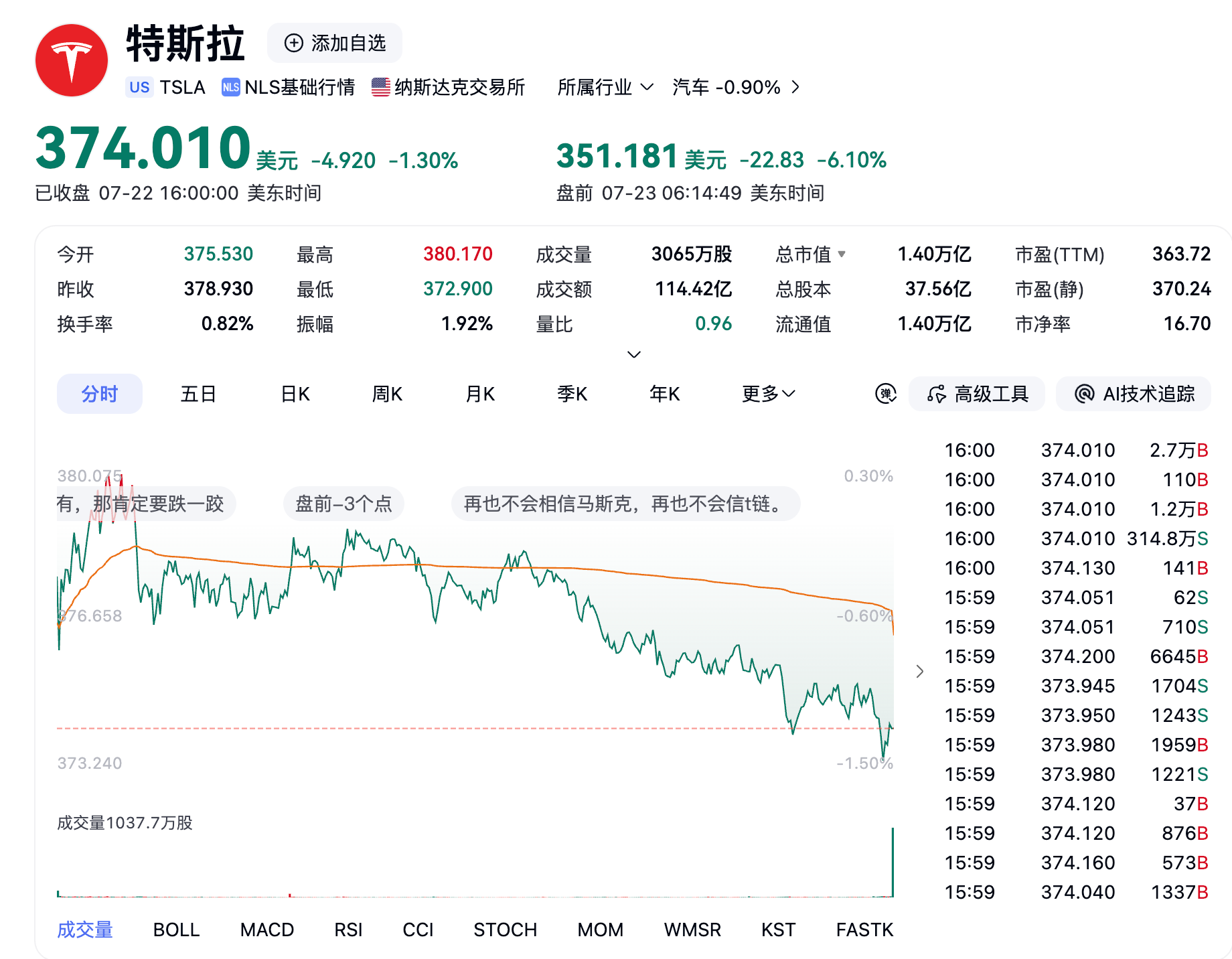
(Source: Baidu Stock Trading Screenshot)
In terms of new car production and sales, Tesla’s global factories rolled out 451,000 vehicles in Q2, representing a year-on-year increase of over 10%. Deliveries exceeded 480,000 units, up roughly 25% year-on-year.
Despite sharp rises in sales volume and revenue, Tesla’s net income attributable to parent shareholders declined year-over-year, driven by two core factors. First, Tesla adopted a price-for-volume strategy to lift sales, squeezing profit per vehicle and dragging gross margin down to 16.8%. Second, Tesla is pursuing comprehensive business expansion, pouring massive capital into projects including FSD training, Cybercab robotaxis, Optimus humanoid robot production lines and battery manufacturing plants.
From the perspective of DianChetong (ID: dianchetong233), the first factor compelled Tesla to develop new business lines. The huge capital expenditure required for new ventures in turn caused continuous falls in Tesla’s attributable net profit. One major reason behind Tesla’s price-for-volume tactics stems from mounting competitive pressure from rivals.
Chinese Carmakers Launch All-Out Offensive; Tesla Confirmed as the Undisputed Industry Archrival
Within China’s new energy vehicle sector, Tesla has long acted as the archrival or ultimate benchmark competitor. Many domestic automakers including Xpeng and Xiaomi frequently reference Tesla in launches of new models and technologies, drawing direct comparisons with the Model Y and FSD.
For instance, during the recent launch event of the Xiaomi YU7 GT, Lei Jun, Chairman of Xiaomi, stated that Xiaomi believed it stood a solid chance of outperforming Tesla upon the YU7’s release. However, in 10 consecutive months of monthly sales head-to-head comparisons, the Xiaomi YU7 posted 8 losses against only 2 wins.
Rivals attach such high importance to Tesla’s Model Y because the SUV has occupied the top spot in SUV sales rankings for most months since its debut, only being overtaken by other models in a small number of months. It is undoubtedly Tesla’s flagship core vehicle.

(Source: DiancheTong Production)
Since Tesla does not officially release sales breakdowns for segmented markets, we rely on statistics from Taiping Auto. In China’s domestic market during Q2 this year, cumulative deliveries of the Model 3 reached 35,602 units, while the Model Y recorded total deliveries of 90,555 units, showing a stark gap between the two models.
While the Model 3 consistently ranks among the top five best-selling vehicles on sales charts, its performance pales in comparison to the impressive results of the Model Y.
To compete against Tesla’s flagship Model Y, domestic carmakers have rolled out numerous sporty, spacious models including the Xiaomi YU7, Luxeed R7 and Zeekr 001.
The Xiaomi YU7 stands out as the Model Y’s fiercest rival. The two vehicles share similar pricing and positioning, and each boasts a CEO with massive online fame. Elon Musk is arguably the world’s biggest internet celebrity, whereas Lei Jun is hailed as the "Godfather of the Internet" within China. Both command enormous fan bases, attracting large groups of consumers willing to back their brands.
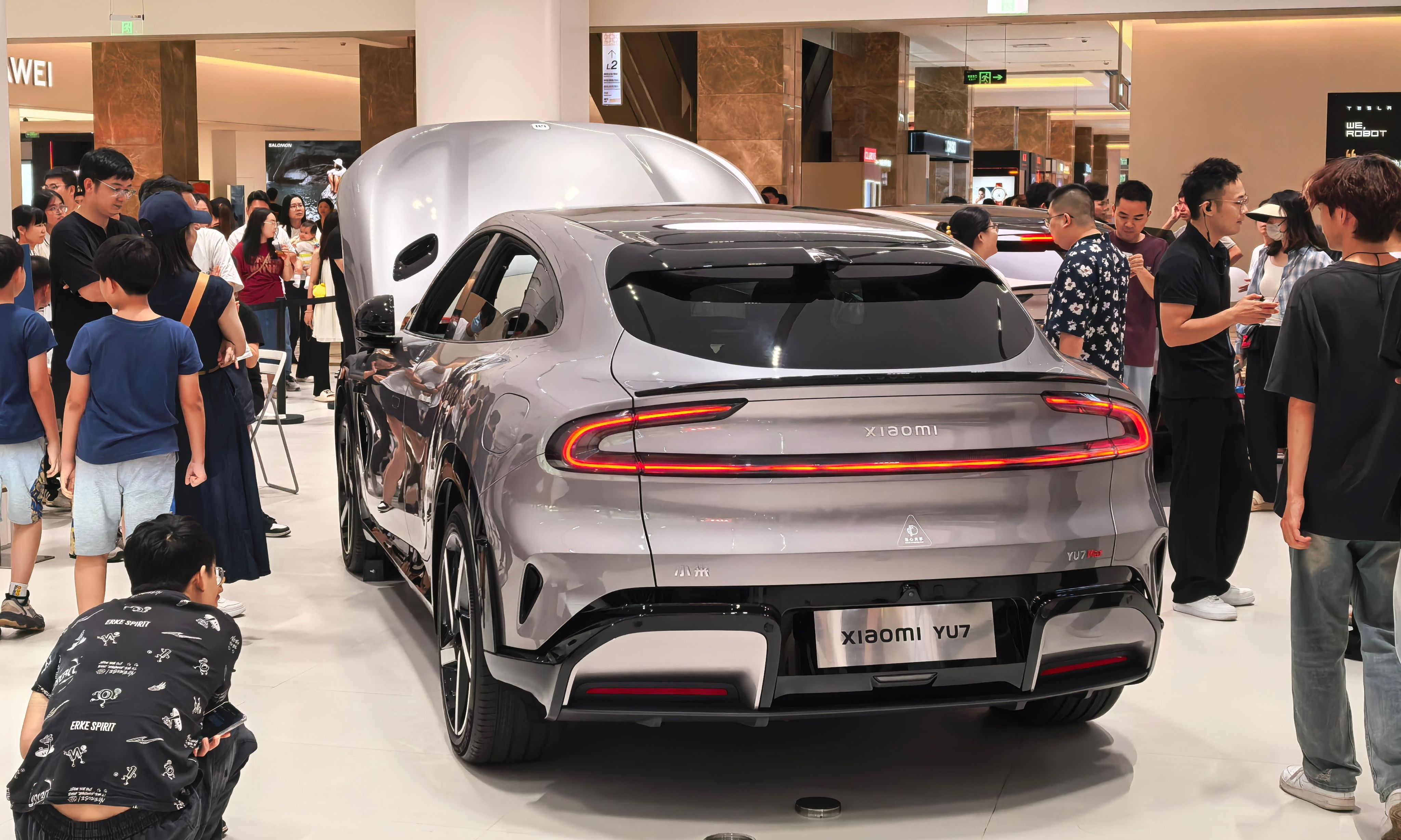
(Source: DiancheTong Production)
This explains why the Xiaomi YU7 managed to outsell the Model Y in a small number of months and claim the top sales spot among SUVs.
While the Model 3 lags behind the YU7 in sales, it faces fierce competition from numerous rivals. Models including the Xiaomi SU7, Xpeng P7, Luxeed S7, Zeekr 001 and Avatr 12 compete directly against the Model 3. In addition, sales of the updated Xiaomi SU7 have skyrocketed after its launch, steadily outperforming the Model 3.
That dozens of automakers regard Tesla as their competitor fully demonstrates Tesla’s strength and excellent product quality. Nevertheless, Tesla’s net profit has kept falling, revealing the grim challenges plaguing the entire automotive industry.
From Profit to Loss: The Auto Industry Enters Its Darkest Hour
If even a global giant such as Tesla is suffering shrinking net profits, domestic automakers are facing far greater pressure.
Li Auto, the first EV startup to achieve consistent profitability, slipped into losses in Q1 of this year with a massive net loss of 2.29 billion yuan. Seres, which returned to profitability thanks to its AITO lineup, is expected to register a net loss attributable to parent shareholders of 1.5 billion to 1.8 billion yuan in the first half of the year, with a non-GAAP net loss ranging from 2.2 billion to 2.5 billion yuan.
As the world’s top-selling new energy vehicle manufacturer, BYD sold 700,463 new energy vehicles in Q1 this year, down 30.01% year-on-year. Its net income attributable to shareholders of the listed company reached 4.085 billion yuan, a year-on-year decrease of 55.38%. The non-recurring net income attributable to listed shareholders was 4.148 billion yuan, falling 49.24% year-on-year.
Xiaomi Auto, which carries high market expectations, is also encountering tough conditions. Financial statements show that Xiaomi Auto and its AI innovation business posted a quarterly loss of 3.1 billion yuan in Q1. By comparison, these business segments made a profit of 900 million yuan in 2025.
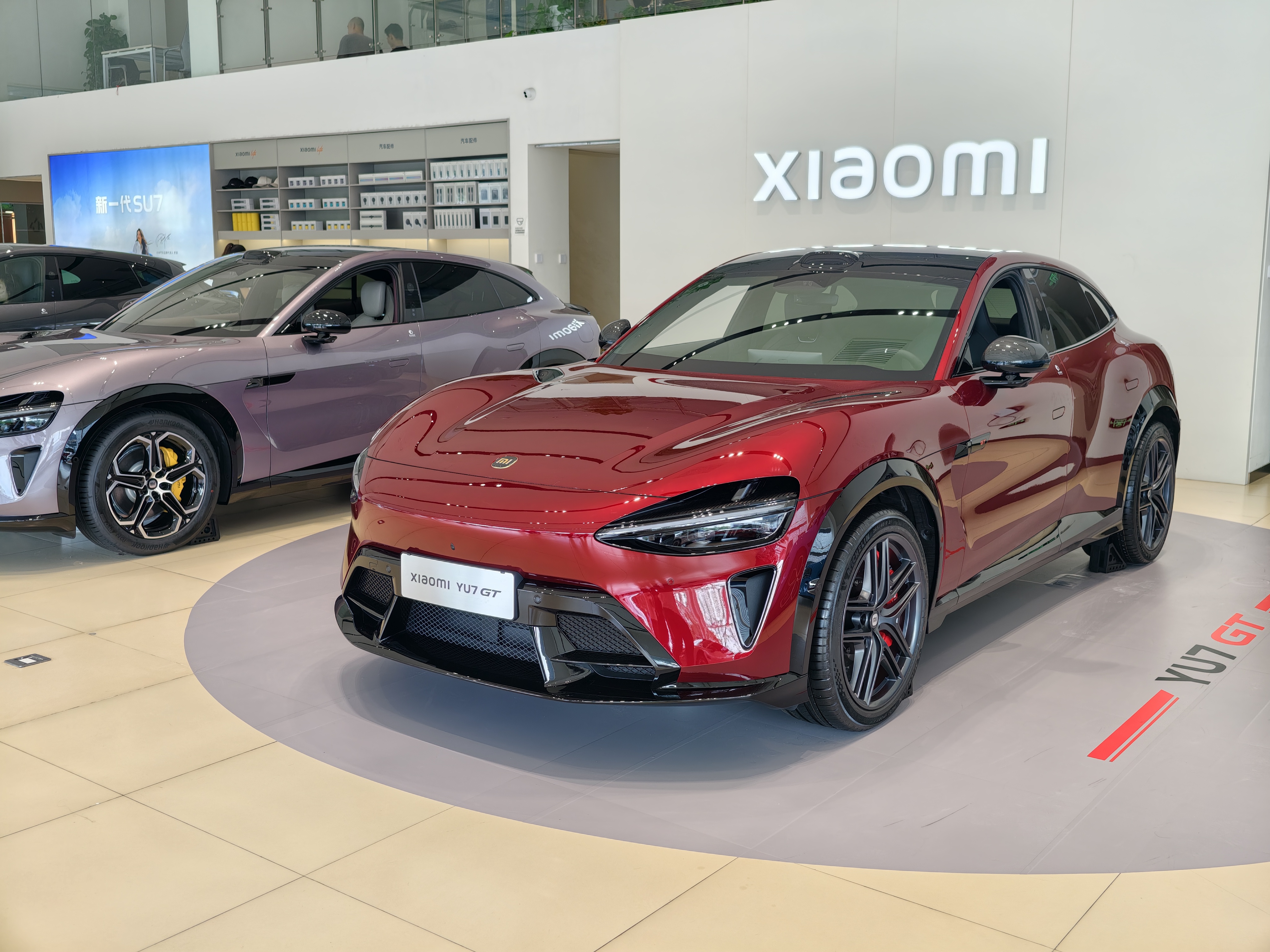
(Source: DiancheTong Production)
Leapmotor is one of the few carmakers sustaining robust sales growth. Even so, the brand relying on cost performance as its core competitiveness is struggling amid price hikes of memory chips and lithium carbonate. Financial reports reveal Leapmotor’s gross margin stood at merely 9.4% in Q1 this year, down 5.5 percentage points year-on-year. Its net loss attributable to parent shareholders hit 390 million yuan, triple the loss recorded in the same period of 2025.
Plunging net profits and profit reversals across multiple automakers stem from three major causes. First, the price war forces manufacturers to roll out frequent discounts, continuously squeezing per-vehicle profit margins. Li Auto’s gross margin tumbled to 6.1% in Q1 this year, a stark contrast to its full-year gross margin of 18.7% in 2025. Second, domestic consumption potential has been overdrawn; both output and sales of domestic passenger vehicles declined year-on-year in the first half of the year. Third, memory chips and lithium carbonate have kept rising in price. Vehicle-grade memory chips have jumped by nearly 400%. Battery-grade lithium carbonate surged from 80,000 yuan per ton to 180,000 yuan per ton before recently easing to roughly 150,000 yuan per ton.
Against this backdrop, domestic carmakers are striving to ease operational pressure by tapping overseas markets. BYD, Xiaomi Auto, Li Auto, Xpeng, NIO, Great Wall Motors, Leapmotor and other brands are accelerating global expansion.
BYD’s new vehicle sales slumped sharply in Q1, yet its total revenue only dipped by 11.82%. This is largely attributable to overseas sales accounting for nearly half of its overall deliveries. Higher revenue driven by overseas expansion, however, does not guarantee stronger profits.
DianChetong (ID: dianchetong233) warns of a major risk: Chinese brands may repeat the vicious cycle seen in the domestic market overseas. Endless price wars will keep squeezing profit margins. Coupled with export tariffs, logistics expenses and distribution costs, local marques could remain unprofitable both domestically and abroad.
Hardship extends well beyond Chinese brands; the global automotive industry faces widespread headwinds amid the new energy transition.
Auto giants Volkswagen and Toyota have both announced plans to streamline their vehicle lineups. General Motors and Ford axed numerous all-electric programs. Cadillac, suffering slow new-energy vehicle sales, decided to revive the gasoline-powered XT6. Stellantis, the world’s fourth-largest automaker, pins nearly all its hopes on Leapmotor, aiming to gain market clout in Europe and North America through cooperation with the Chinese brand.
Carmakers Shift Focus to Robotaxis and Humanoid Robots as Vehicle Sales Lose Profitability
Despite widespread profit declines, DianChetong (ID: dianchetong233) spotted promising highlights in Tesla’s latest earnings report.
Elon Musk has long stated that future profitability will hinge on software rather than hardware, and Tesla is delivering on this vision. Revenue from Tesla’s services and software businesses surged 50% year-on-year in Q2, with FSD subscription users climbing to 1.48 million.
Furthermore, Tesla’s Robotaxi service has been extensively deployed across Texas in the United States. The service expanded to Miami, Orlando, Tampa and other cities in July. Cybercab, purpose-built for autonomous ride-hailing, has entered low-volume production and road trials.

(Source: Tesla)
Separately, preparations for mass production of the Optimus humanoid robot have been confirmed, with small-scale manufacturing scheduled to kick off at the Fremont Factory within this year. Tesla’s energy storage business is expanding rapidly. Revenue from its energy storage and solar energy segment rose 13% year-on-year in Q2, boosting Tesla’s confidence ahead of the imminent launch of its third-generation Megapack.
According to Tesla executives, humanoid robots, Robotaxis, energy storage and chips make up four major business arms beyond automobile manufacturing. The primary function of its chip business is to supply local computing power for vehicles and humanoid robots.
Robotaxis are built upon Tesla’s automotive manufacturing capacity and autonomous driving technology, creating synergies with its core car business. The large AI model powering humanoid robots also shares deep connections with intelligent driving technology. Millions of Tesla vehicles on the road collect massive volumes of road condition and behavioral data, supplying abundant datasets for Tesla to train AI large models tailored for robots.
Chinese automakers refuse to fall behind. While most do not operate as diversified a portfolio as Tesla, they are actively developing alternative revenue streams.
Humanoid robotics is a frontier area being explored industry-wide. Senior BYD executives have confirmed ongoing R&D work on humanoid robots. Li Auto has set up three new secondary departments dedicated to embodied engineering, embodied interaction and embodied behavior technologies, with its first-generation humanoid robot codenamed "Nexus". Xpeng, a consistent investor in cutting-edge technology, has already unveiled its Iron humanoid robot, targeting deployment in physical retail stores next year.

(Source: XPeng)
When it comes to Robotaxis, Xpeng is also among the automakers making the most headway. The GX, Xpeng’s top flagship model, offers a variant equipped with four Turing chips exclusively developed for Robotaxi use, delivering a total computing power of 3,000 TOPS. He Xiaopeng stated that Xpeng’s Robotaxi service will debut in Guangzhou, the company’s headquarters city, in the second half of this year.
GAC partnered with Didi Chuxing to develop the R2 Robotaxi model, which is operated by Ruqi Travel. The vehicle officially rolled off the production line earlier this year and now runs in cities including Guangzhou and Shenzhen. BAIC leverages its Arcfox brand to jointly develop Robotaxis with Pony.ai, with more than 1,000 such vehicles already put into operation in Beijing’s Yizhuang district, Shenzhen and other locations.
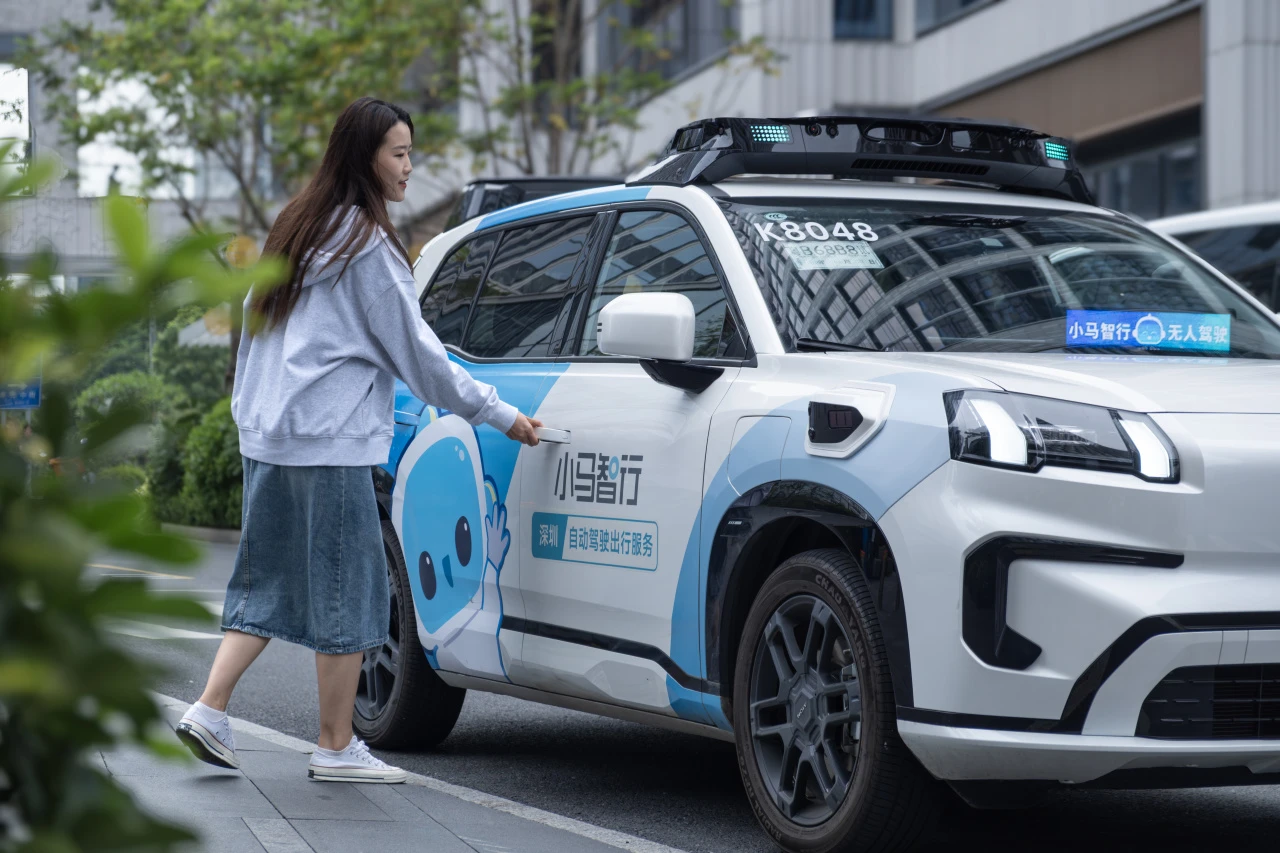
(Source: Pony.ai)
Geely partnered with Caocao Inc. to deeply customize the Eva Cab Robotaxi model, which debuted at the Beijing Auto Show this April. At the recent World Artificial Intelligence Conference (WAIC), SAIC Motor announced plans to co-develop tailor-made Robotaxi models with Momenta and EnjoyGo, with the earliest unveiling scheduled for next year.
Energy storage constitutes a vital revenue growth driver for domestic carmakers. As a titan in the battery sector, BYD enjoys inherent advantages; its annual energy storage battery shipments exceeded 60 GWh in 2025. Not long ago, BYD secured a supply contract with Masdar, an Emirati energy enterprise headquartered in the United Arab Emirates, covering 11.2 GWh of energy storage batteries. This capacity is enough to equip roughly 180,000 new energy vehicles outfitted with 60kWh batteries apiece.
NIO, Geely and other automakers are also ramping up layouts in the energy storage sector. NIO teamed up with LONGi Green Energy to launch a photovoltaic-energy storage-charging-battery swap integrated project in Jiaxing. Geely established Baoji Shanju Battery Co., Ltd., a wholly-owned subsidiary in Baoji, whose business scope covers power battery manufacturing and supporting energy storage services.
With profits from vehicle sales getting increasingly hard to secure and most EV startups remaining in the red, exploring new business lines has become an imperative for all automakers.
In fact, part of the reason behind some carmakers’ losses and slow profit growth mirrors Tesla’s situation: revenue and deliveries keep rising, yet profits decline. The root cause lies in excessive investment across multiple new businesses and projects, pushing operating expenses higher than gains. These funds are not wasted; instead, they are invested for long-term future growth.
Survival Is the Top Priority in the New Energy Vehicle Era
Multiple auto executives have predicted that merely around five major global automakers will survive long-term, with most players eliminated from the market. This is no alarmist claim but an ongoing industry reality. Mitsubishi’s retreat from China and Honda and Nissan’s attempted merger (later terminated) serve as typical examples of industrial reshuffling.
Strong competence in gasoline vehicle manufacturing does not guarantee success in new energy vehicles. Developing new energy technologies demands massive capital input. If newly launched EV models fail to win market recognition, manufacturers cannot recoup R&D and production costs and may fall into operational trouble. Honda posted an operating loss of 414.3 billion Japanese yen and a net loss attributable to parent shareholders of 423.9 billion yen for fiscal year 2025, offering direct proof of such risks.
For automakers navigating the new energy vehicle era, staying viable stands as the primary objective.
Tesla has enjoyed favorable tailwinds: it faces few strong domestic rivals of equivalent caliber in the U.S., while the Gigafactory Shanghai ensures ample production capacity. Chinese domestic brands also have inherent strengths: access to China, the world’s largest automobile consumption market, plus a complete industrial supply chain that cuts overall component costs far below overseas levels. Even amid repeated rounds of industry-wide price wars, local carmakers retain a certain profit buffer.
A growing number of European automakers are relocating R&D and production to China, leveraging Chinese enterprises’ strengths to complete new energy transitions and product upgrades. Chinese firms including Momenta, Horizon Robotics, Xpeng and Hongmeng Zhixing have become key partners for Volkswagen, Mercedes-Benz, BMW and Audi.
It is plausible that more automakers will adopt a "China-based R&D" strategy in the near future. By tapping China’s supply chain and technological strengths, companies can cut costs, boost efficiency and sharpen competitiveness in the new energy vehicle landscape.
On July 31, ChinaJoy 2026—under the theme “Exploring with AI”—will officially open.
A total of 900 entertainment and cross-industry exhibitors—including Tencent, NetEase, Sony, Qualcomm, MaiCong, and QingXian—will jointly present a global entertainment extravaganza;
How will AI-enhanced hardware brands—including devices, peripherals, robots, displays, and chips—collaborate with game content creators to deliver innovative, cross-domain entertainment experiences?
LeiTech’s ChinaJoy 2026 coverage team, led by Founder & Editor-in-Chief Luo Chao, will soon descend upon Shanghai—stay tuned for exclusive coverage.