
 雷科技
雷科技





The AR headset company that fooled the whole world can no longer keep up its deception.
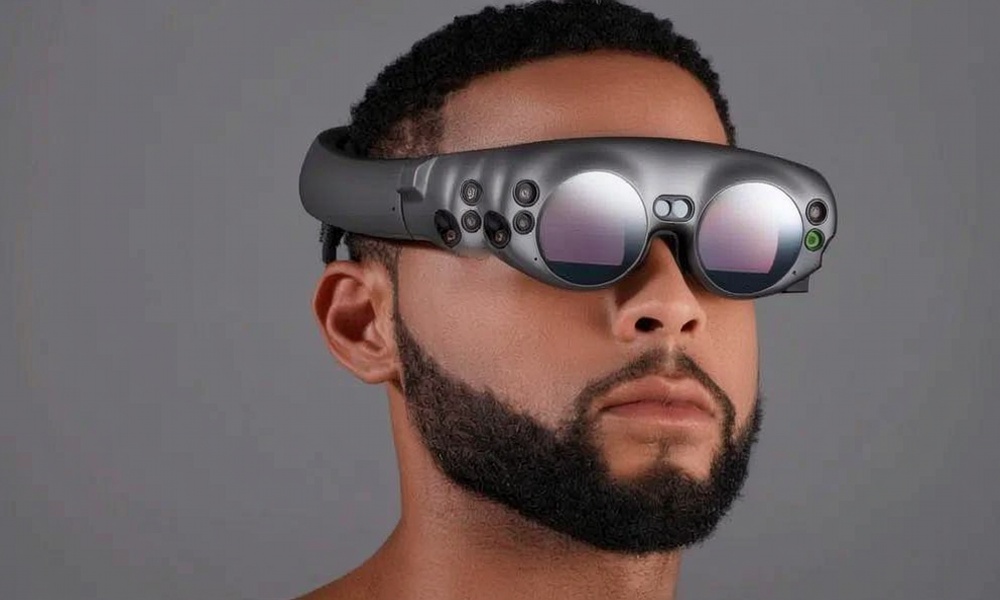
On July 9, Magic Leap announced a strategic transformation. Starting in October, it will halt research and development of its own-brand AR headsets, shifting its business to become a supplier of AR waveguide technology and a provider of complete machine integration solutions. I realize that just mentioning the brand Magic Leap may not ring a bell for many people. But once you see the animation below, I’m sure it’ll jog everyone’s memory:

Image source: Magic Leap
In March 2015, Magic Leap, an AR firm founded only five years prior, released this demo video that took the world by storm. Though numerous industry insiders and digital enthusiasts pointed out shortly after the video’s release that it was entirely computer-generated special effects, the live audience’s convincing pantomime performance led countless netizens unfamiliar with AR technology to believe Magic Leap had truly developed the multi-user, multi-angle glasses-free 3D projection technology showcased in the footage.
Judging by the company’s subsequent trajectory, this controversial CG promotional video was likely the pinnacle of Magic Leap’s existence. In 2016, a wave of core employees left Magic Leap. Then in 2017, the company launched its debut AR headset, the Magic Leap One.
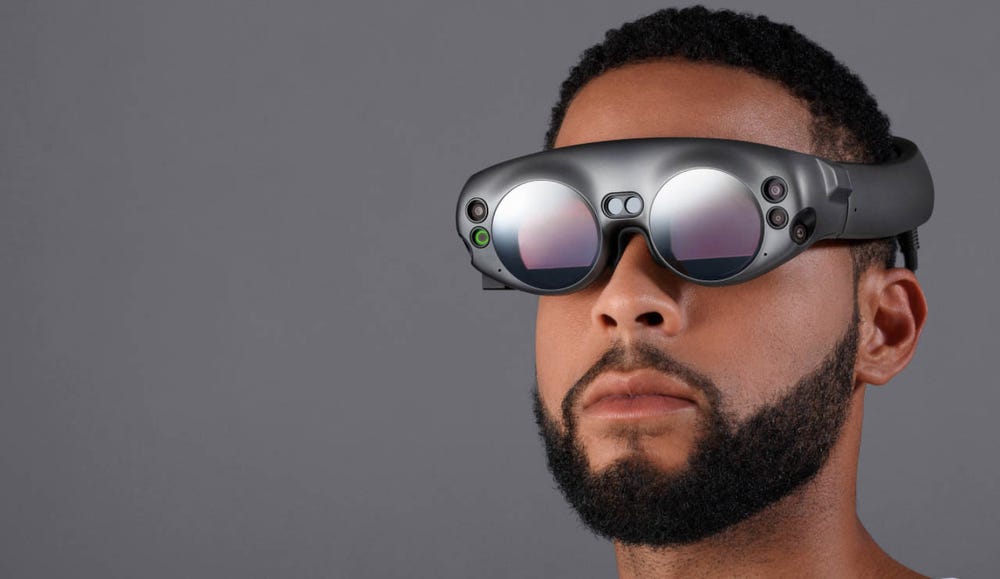
Image source: Magic Leap
It is clear that trying to watch humpback whales leaping in a stadium with the Magic Leap One is nothing more than seeing only a tiny fraction of the whole picture. The massive gap between the product’s actual performance and its marketing promises also subjected the company to widespread criticism. With this tainted track record, by the time the Magic Leap 2 launched in 2022, the brand had lost nearly all public trust, becoming an afterthought in every sense of the phrase.
Against a backdrop of successive departures among investors, senior executives and core engineers, Magic Leap’s drastic decision to abandon in-house hardware development came as little surprise. After all, AR waveguide technology is the only truly valuable asset the company has left at this stage.
At Leitech (ID: leitech), we believe the time is ripe to examine these critical questions: Where exactly did Magic Leap go wrong, falling from the golden child of the AR headset industry to a mere waveguide component supplier? More importantly, what lessons can today’s AR hardware makers draw from Magic Leap’s current predicament?
Magic Leap’s Fundamentally Flawed Product Positioning
When taking stock of its failures, Magic Leap’s biggest misstep was undoubtedly its deceptive marketing.
It is usually forgivable for a first-generation product to lack polish—manufacturers can refine and iterate on subsequent models. Back in 2015, an era of explosive growth for AR and VR hardware, consumers willing to test such devices held realistic baseline expectations. Even if Magic Leap’s first headset failed to meet industry standards, the firm could have gradually refined its hardware down the line.
However, Magic Leap’s CG promotional reel hyped its product capabilities to levels straight out of science fiction, even stealing the spotlight away from Microsoft HoloLens—a genuine, functional headset built after five years of dedicated research. Magic Leap’s evasive responses regarding its fraudulent marketing footage only inflated public expectations for its hardware even further.
Technically speaking, the Magic Leap One boasted decent hardware specifications for its 2018 release date. Its 40-degree horizontal field of view (FOV) even outperformed equivalent offerings from major players like Microsoft. Its waveguide optical display and split-body design also gave Magic Leap an edge in wear comfort compared to many all-in-one VR and AR headsets on the market.

Image source: Magic Leap
The core issue, however, is that the Magic Leap One’s real-world performance paled drastically in comparison to the effects shown in its promotional video. Even after the headset’s launch, the brand hemmed and hawed about the Magic Leap One’s actual capabilities, only granting access to a tiny handful of media outlets—who were permitted hands-on demos on the condition they signed an NDA, yet barred from publishing formal reviews. This unusual, overly cautious stance sparked widespread public suspicion: what exactly was Magic Leap hiding from everyone? The brand was soon painted as little more than a fraudulent enterprise.
But even setting its flawed hardware aside, looking back today, Magic Leap also made catastrophic missteps in product positioning. Back in 2018, amid the explosive growth of VR and AR technology, nearly every industry giant had carved out a clear market niche for itself: either partnering with gaming, film and other entertainment sectors to target mainstream consumers, or collaborating with industrial and medical enterprises to focus on commercial enterprise use. Even Microsoft’s HoloLens, toward the end of its product lifecycle, rode the coattails of the U.S. Department of Defense to secure major government contracts.
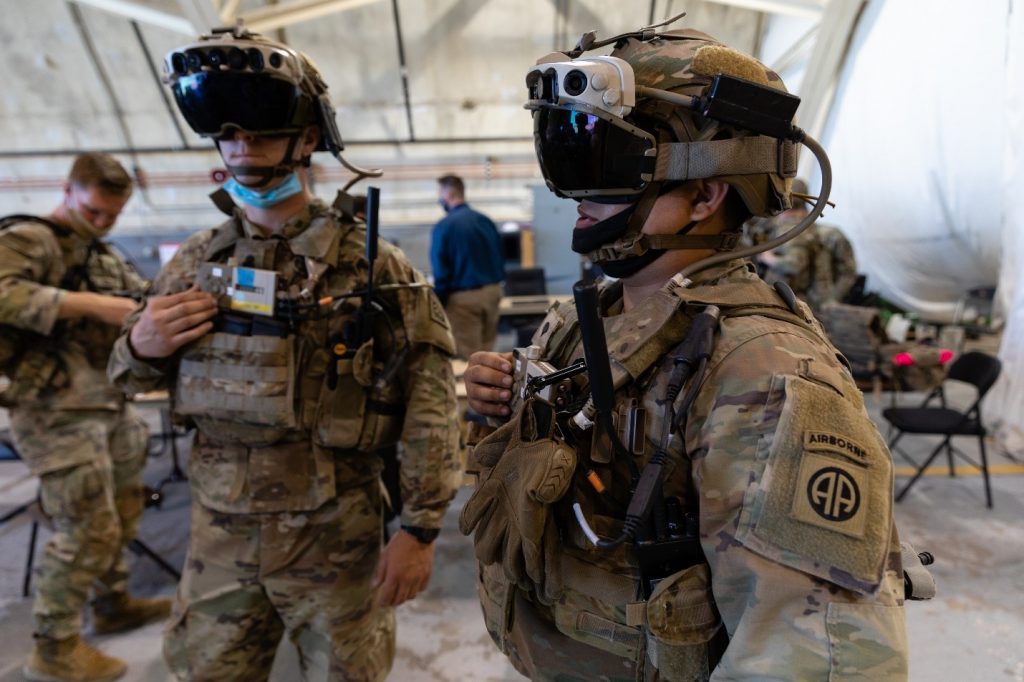
Image source: Microsoft
Yet Magic Leap missed every single promising industry wave. While Vive and Oculus captured the consumer market with relatively affordable pricing, Magic Leap kept delaying its product launches. After slashing half its workforce and replacing its CEO in 2020, the company belatedly set out to compete with Microsoft’s HoloLens for medical and defense contracts.
Faced with an expensive platform that boasted a tiny user base and constantly shifting development roadmaps, even the most dedicated developers were reluctant to build ecosystem content exclusively for Magic Leap. The hardware delivered less than half of the grand promises teased in its promotional footage; it lacked a robust content ecosystem, yet carried a staggering price tag of $3,299—even pricier than Vive’s flagship headset. Plagued by subpar performance, exorbitant pricing and a barren content ecosystem all at once, Magic Leap’s collapse was all but inevitable.
Chinese Brands Step Up to Lead the AR Headset Industry
From Leitech’s perspective, Magic Leap’s downfall is largely self-inflicted, yet we must also account for broader market evolution. Magic Leap’s gravest miscalculation was marketing AR headsets as a fully-fledged “next-generation computing platform” far too early. In contrast, Chinese manufacturers have thrived in recent years precisely because they cast aside this lofty, premature ambition.
Take XREAL as an example. Some readers may not know that Chi Xu, CEO of XREAL (originally named NREAL at its founding), previously worked at Magic Leap. However, XREAL avoided replicating Magic Leap’s strategy of launching a costly AR headset locked behind a closed ecosystem from the start. Instead, the company positioned its AR glasses as an external large screen for smartphones and Nintendo Switch. This intuitive design delivers an out-of-the-box user experience, letting customers immediately grasp the practical uses of XREAL’s AR headset on their very first day of ownership.

XREAL’s AR glasses showcased at CES.
Image source: LeiTech
This product development path has since shaped the design philosophy of domestic AR/AI smart glasses brands. Chinese manufacturers such as Thunderbird, Rokid, MYVU and Qwen adopt waveguide solutions to slim down display eyewear. Meanwhile, they integrate high-frequency daily functions including real-time translation, teleprompters, navigation, photography and built-in AI assistants, striving to let users instantly perceive the tangible value of smart glasses the moment they put them on.
Beyond that, a mature consumer electronics supply chain has empowered Chinese brands to surge ahead. AR devices (including waveguide AI glasses) demand refined optical engines, lens solutions, and well-controlled OEM manufacturing systems. Backed by sophisticated domestic mobile phone and wearable industrial chains, Chinese manufacturers outperformed Magic Leap’s 2015 setup by a wide margin in terms of technological iteration speed, cost control and production yield.
From Leitech’s perspective, Magic Leap’s retreat signals that the baton for AR headset development has officially passed to Chinese brands.
Consumer-grade Hardware Failed, Yet Magic Leap’s Optical Technology Remains Valuable
This raises a critical question: in 2026, when retail prices of AI glasses have dropped below 2,000 RMB, how much competitive edge can Magic Leap retain as a reborn waveguide component supplier amid China’s mature domestic supply chain?
Leitech (ID: leitech) holds the view that although Magic Leap suffered a total defeat in complete machine manufacturing, its years of accumulated optical technology still offer valuable reference for the industry.
For Google’s AI glasses prototype, Magic Leap integrated its proprietary waveguides alongside Raxium’s microLED optical engines. Its partnership with Pegatron also filled the gap in large-scale mass production capabilities. For manufacturers eager to enter the AI glasses market without years of accumulated near-eye display expertise, Magic Leap’s technological legacy can shorten R&D cycles and help newcomers avoid the same costly missteps Magic Leap once made.
Furthermore, modern display-equipped AI glasses universally adopt waveguide architectures. Yet based on Leitech’s hands-on testing, many mainstream products still leave substantial room for improvement in waveguide optical efficiency, resolution and field of view (FOV). Magic Leap boasts years of deep technical know-how in waveguide technology, and this hard-earned experience can significantly elevate the overall user experience of AR glasses.
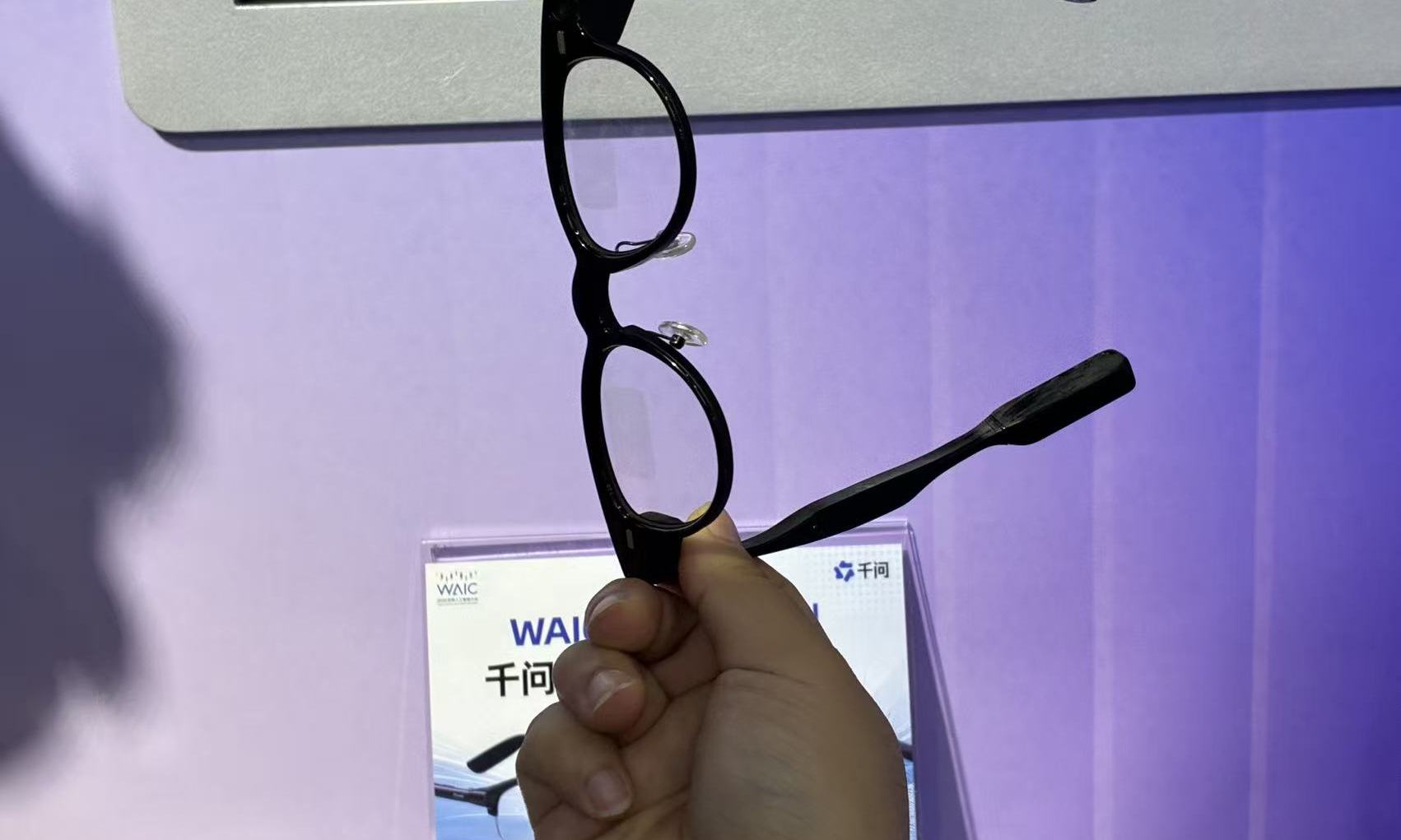
The Qwen S1 glasses employ a dual-eye, dual-light-engine waveguide architecture.
Image source: LeiTech
Of course, while Magic Leap’s technological legacy has its merits, it cannot solve all the challenges plaguing the smart glasses industry. For instance, the biggest bottlenecks for smart glasses at this stage lie in ecosystem development and battery life—areas where Magic Leap’s performance was even more abysmal.
Nevertheless, Leitech believes that shifting into a component supplier represents the most dignified exit available to Magic Leap, far preferable to a full industry withdrawal. From a product standpoint, Magic Leap undeniably failed to deliver on the futuristic vision it promised eleven years ago, marking a clear product failure. From an industrial perspective, however, the company left behind valuable waveguide technology know-how that can still be leveraged by other players.
Back in 2015, Magic Leap stunned internet users worldwide with cinematic CGI effects and catapulted AR technology into the mainstream. Eleven years later, the firm has opted to pave the way for the industry’s emerging players through its core technologies. If these rising innovators one day manage to recreate the seamless AR experiences shown in that original CGI demo, Magic Leap will have atoned for its past missteps.