
 雷科技
雷科技





Over the past two years, AI voice recording devices have emerged as one of the few categories of personal AI hardware with clear and proven market demand.
Whether for meetings, interviews, classes, or even capturing sudden fleeting thoughts, users tend to record audio first before relying on AI for transcription, summarization and organization. Unlike AI Pin, which is still struggling to justify practical use cases, these devices target concrete pain points with a low barrier to entry. As a result, the market has quickly flooded with products in diverse forms, ranging from card-shaped gadgets and pendants to earbuds.
Now, Insta360 has partnered with Tencent Meeting to enter this space.
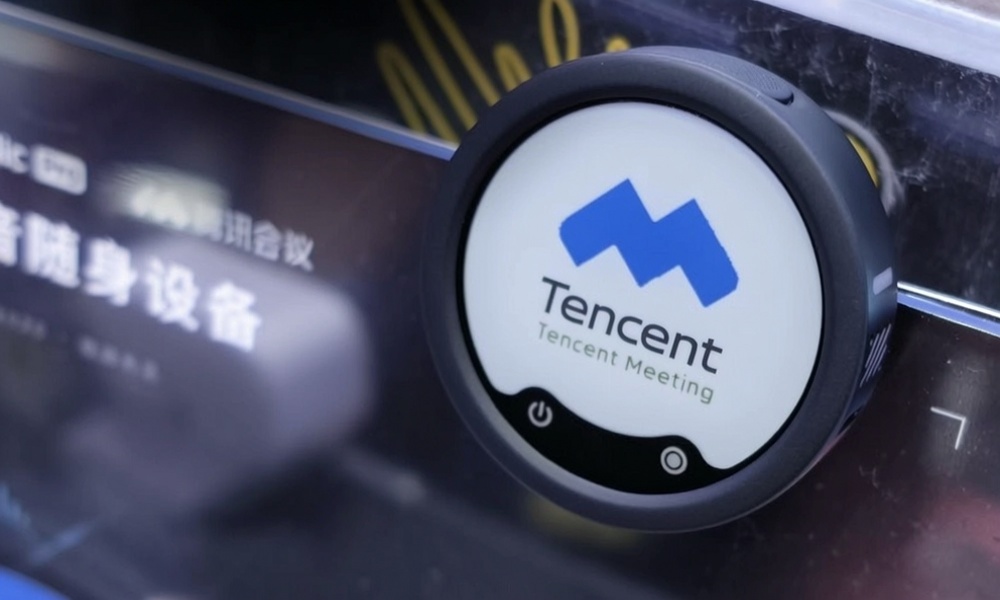
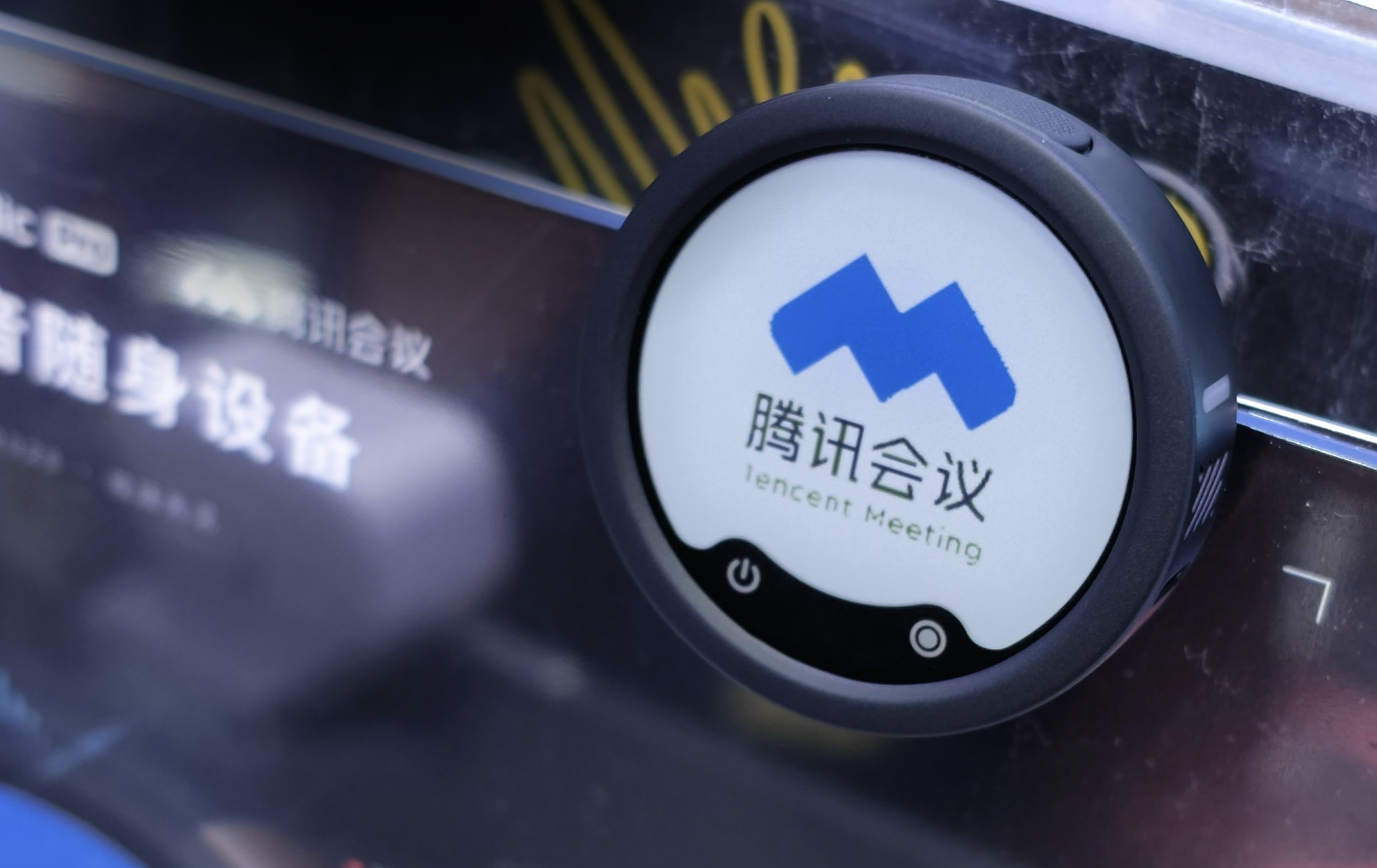
During WAIC 2026, Insta360 previewed its first portable personal AI voice recorder developed jointly with Tencent Meeting. The product is scheduled for official launch this September. Strictly speaking, however, it is not an entirely brand-new piece of hardware. Built upon the Mic Pro, Insta360’s flagship wireless microphone released in May this year, it integrates into the Tencent Meeting ecosystem. The audio capture device originally tailored for content creation has been expanded to support personal note-taking and AI office scenarios.
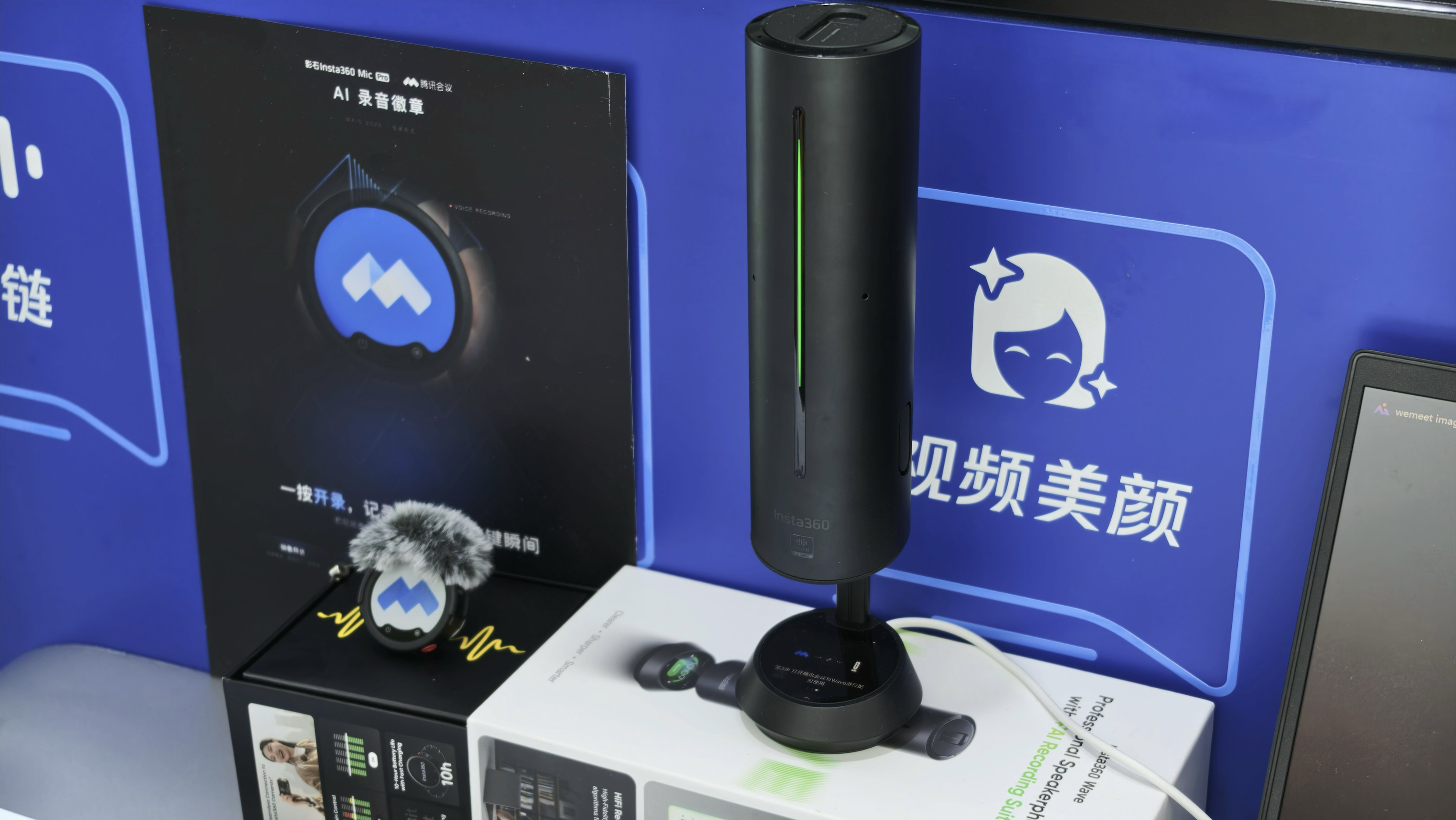
Most mainstream personal AI voice recording devices on the market today adopt either card-style or pendant-style designs. Card-shaped recorders are usually attached to the back of mobile phones, making it easy to capture calls and offline meetings. Pendant-style models prioritize wearable portability, enabling continuous audio pickup around the user.
Insta360 has opted for another mature form factor: the lavalier microphone (lapel mic).
At Tencent’s AI in Action Application Innovation Forum held on July 18, the guest speakers on stage all wore the Mic Pro. Clipped onto collars, the device moves along with users while leaving both hands free. This design delivers inherent strengths for interviews, meetings, exhibition communications and other scenarios. Wherever the user goes, the microphone follows, centering audio capture consistently on the wearer.

The Mic Pro boasts hardware specifications comparable to professional audio recording gear. According to official details released by Insta360, it features a color e-ink screen and a triple-microphone array with directional sound pickup. An embedded NPU chip powers AI noise reduction. It also supports 32-bit float internal recording, automatic gain control, and wireless transmission spanning up to 400 meters.
No matter how advanced downstream AI models are, they cannot salvage poorly captured human voices. This is especially true at expos such as WAIC, where multiple people speak simultaneously amid loudspeakers, chatter and equipment interference. The quality of raw audio recordings largely determines whether transcription results are usable.
From this perspective, building an AI recorder based on a mature flagship microphone aligns better with Insta360’s core expertise than developing a slim new card-shaped device from scratch.
When the Mic Pro launched this May, it targeted video creators primarily. Two months later, Insta360 rebrands it an "AI note-taking sidekick", expanding its user base from content creators to general users who need to document meetings, conversations and random daily ideas.
The underlying logic is straightforward. Hardware maximizes audio capture quality, while Tencent Meeting delivers subsequent software functions and AI capabilities. The cumbersome multi-step process of unlocking a phone, launching an app and starting recording is streamlined into one simple, intuitive operation.
Insta360 and Tencent Meeting already have an established cooperation history. Back in 2022, Insta360 Link webcam obtained Tencent Meeting certification. Later, the Wave product line gained compatibility with Tencent Meeting’s Tianlai Intelligent Connection Protocol. This latest partnership extends their previous product collaboration centered on conference rooms into portable personal usage scenarios.
That said, the brand has only announced the general product positioning for now. Details including account linkage with Tencent Meeting, support for real-time transcription, speaker identification, summary generation and to-do list extraction, potential extra fees for these features, and step-by-step mobile operations will only be finalized upon the official launch in September.
The skyrocketing popularity of personal AI recording devices largely stems from a straightforward truth: audio recording is an established demand, while transcription, summarization and information sorting fall squarely within the strengths of large language models. Unlike many other AI hardware products that require extensive market education, these recorders eliminate the need to persuade consumers of their purchase value.
However, as software functions across competing products grow increasingly homogeneous, competition will shift back to fundamental hardware merits: sound pickup quality, wearing experience, battery life, operational feedback and service pricing.
What makes Insta360’s entry distinctive is that the company rushed no new AI hardware form factors. Instead, it built the product based on its mature audio capture hardware expertise. This represents a pragmatic development route for today’s AI hardware: deliver solid hardware performance first, then leverage AI to handle tedious information processing work.
Whether the Mic Pro can successfully evolve from a content creation companion into an all-purpose note-taking companion remains to be seen in September.