
 雷科技
雷科技




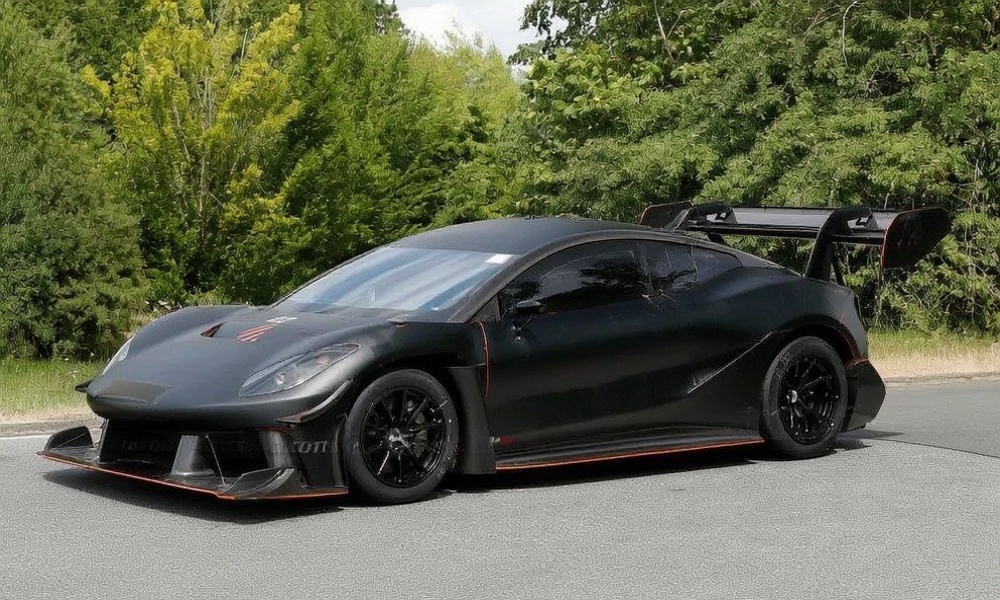

Denza’s Nürburgring journey has officially begun.
According to foreign automotive media Carscoops, Denza Z Special Edition, the high-performance variant of Denza Z, is now undergoing testing at the Nürburgring. Per Denza’s roadmap, the Denza Z Special Edition will attempt to set a fast lap time on the Nürburgring this autumn.
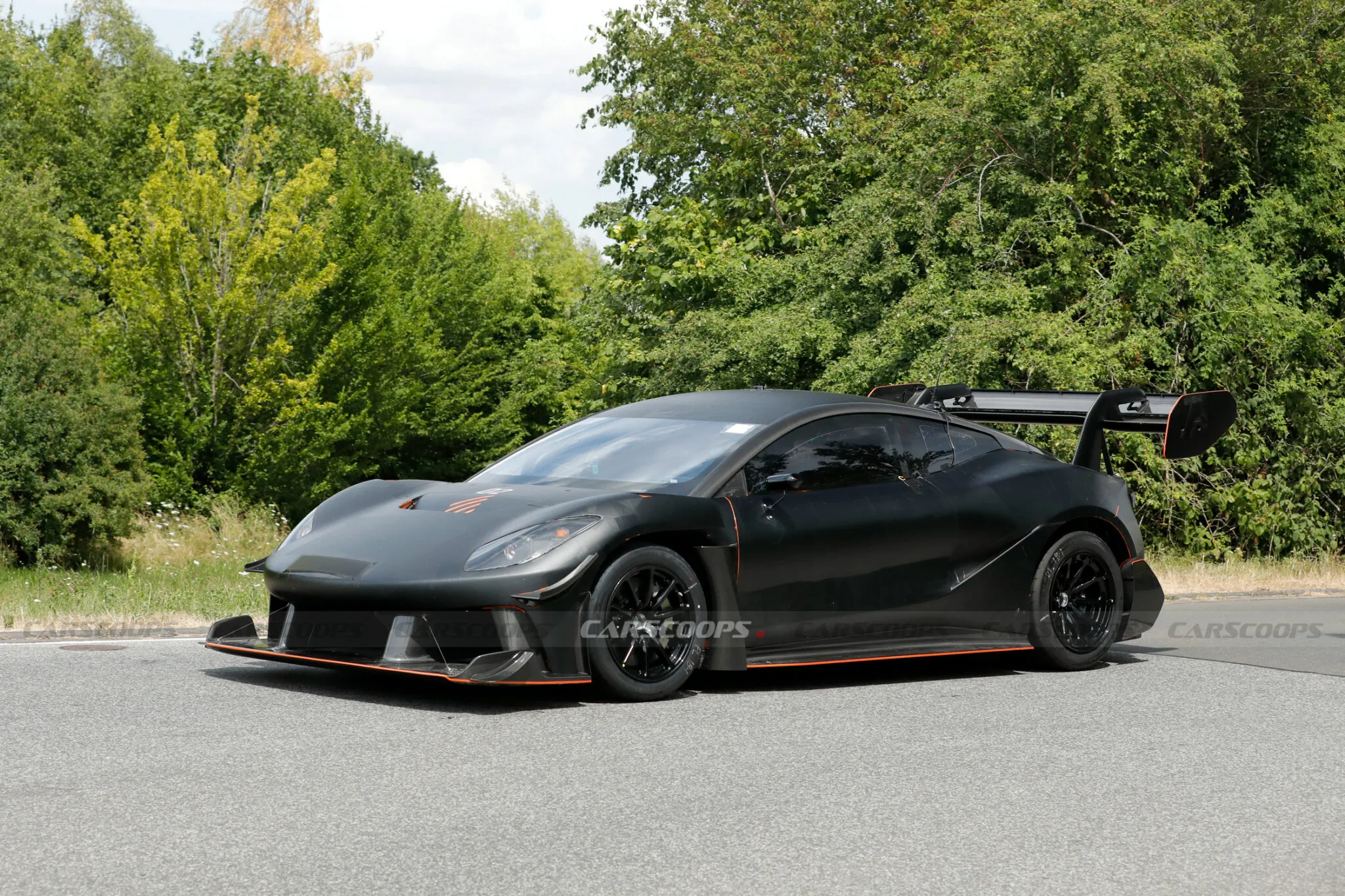
(Image source: Carscoops)
Why has Denza Z, Denza’s first all-electric high-performance hypercar, chosen to compete on the Nürburgring? How will Xiaomi frame its own narrative when pitted against the Xiaomi SU7 Ultra Extreme, another vehicle currently undergoing Nürburgring trials?
Today, DianChetong (ID: dianchetong233) breaks down these questions with all readers.
Three Motors Delivering 1471kW: Is Denza Gunning for a Nürburgring Lap Record?
Three production variants of the Denza Z are available, all equipped with Denza’s Three-in-One EV technology, with a combined three-motor output of 1180kW.
The three configurations are listed below:
Hardtop Coupe: 0-100 km/h acceleration in 2.25 seconds, pre-sale price of 680,000 RMB
Soft-top Spider convertible: 0-100 km/h acceleration in 2.3 seconds, pre-sale price of 780,000 RMB
Racing track edition: 0-100 km/h acceleration in 1.96 seconds, pre-sale price of 1,180,000 RMB
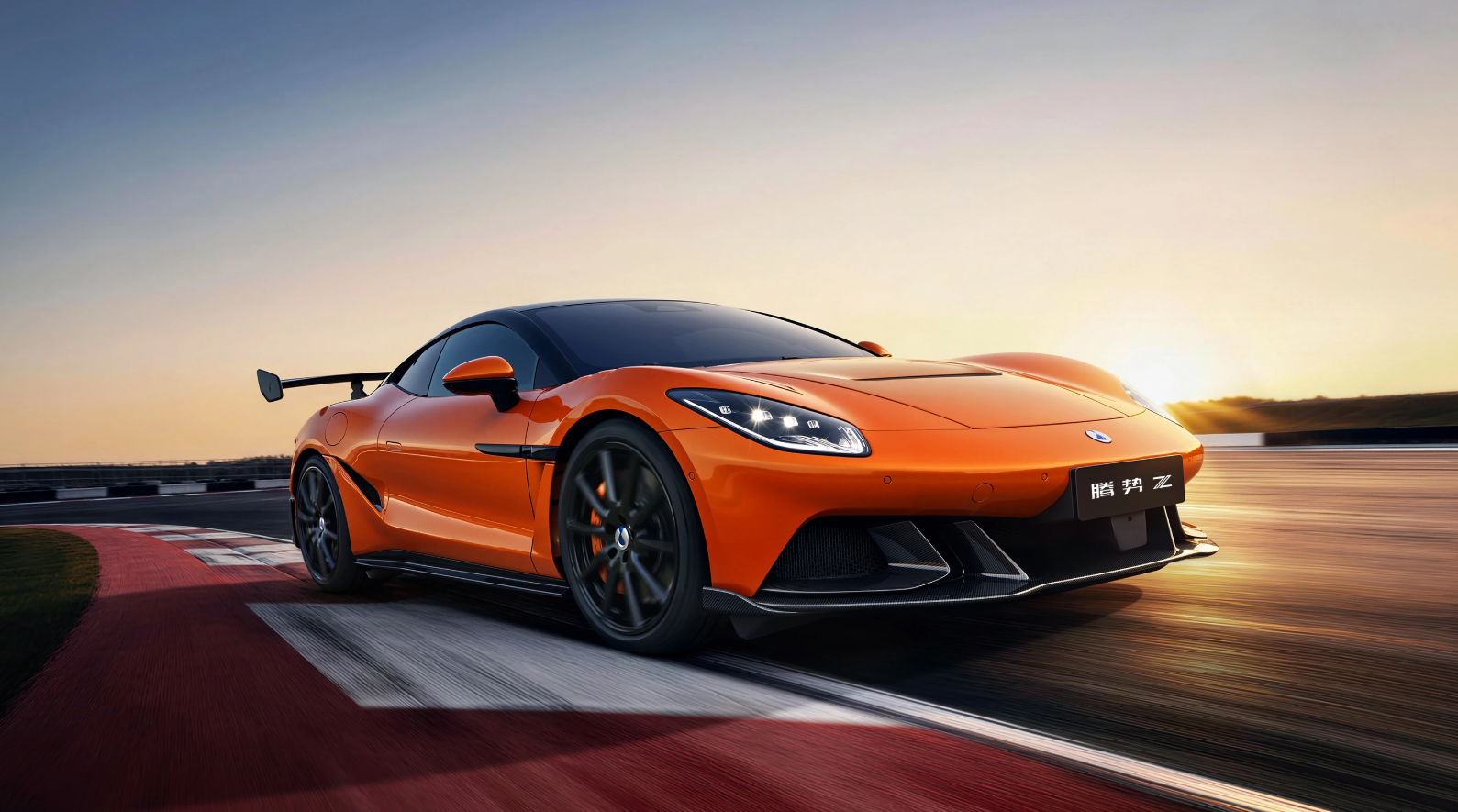
(Image source: Denza)
The Denza Z Special Edition undergoing Nürburgring testing is upgraded from the Racing variant with optimized performance and aerodynamic design, plus carbon fiber replacements for part of the vehicle’s body panels.
Public information shows the Denza Z Special Edition is equipped with a three-motor setup delivering a combined total power output exceeding 1471 kW, enabling 0-100 km/h acceleration in under 1.7 seconds. It also features redesigned front splitter, body widebody kit, double-deck rear wing and rear diffuser, expected to greatly boost aerodynamic efficiency.
DianChetong (ID: dianchetong233) holds the view that as the most powerful trim in the Denza Z lineup, the Denza Z Special Edition is built for track performance. Its positioning within the Denza Z family is comparable to that of the Xiaomi SU7 Ultra in the Xiaomi SU7 product line.
To set a competitive Nürburgring lap time, the Denza Z Special Edition faces two major benchmarks to surpass. The first is the 6:59.157 lap record set by its high-end sibling Yangwang U9X. The second is the existing production all-electric Nürburgring lap record of 6:55.553 held by the Porsche Taycan Turbo GT.
As a fully electric hypercar, the Denza Z Special Edition needs to outpace the 3,000-horsepower Yangwang U9X and the Porsche Taycan Turbo GT, a proven Nürburgring veteran. This places extremely stringent requirements on vehicle lightweighting as well as sustained high-power output from its battery and motors.
Therefore, the Nürburgring trial of the Denza Z Special Edition serves not only as a test of speed and performance but also a rigorous comprehensive assessment of the brand’s overall vehicle engineering capabilities.
We will have to wait patiently to see what final result Denza can achieve.
Denza’s Equivalent of the SU7 Ultra
For Denza, the Denza Z Special Edition occupies an equivalent role to the Xiaomi SU7 Ultra within Xiaomi’s automotive portfolio.
By releasing Nürburgring lap times for both prototype and production versions, the Xiaomi SU7 Ultra has showcased Xiaomi’s focus on performance, handling and mechanical refinement, lifting sales of the standard SU7. This success proved pivotal for Xiaomi, an automotive newcomer.
As Denza’s first two-door hypercar, the Denza Z needs more than solid fundamentals such as styling, interior design and power figures to win genuine customer recognition. Track results carry greater weight.
The Denza Z Special Edition acts as Denza’s flagship halo model for brand building. Its final Nürburgring lap time will demonstrate the Denza Z series’ strengths in performance and handling, helping draw more buyers to the Denza Z range. This replaces the old promotional approach of listing dry technical specs and jargon in an overly technical manner.
Denza is not the only brand competing on the Nürburgring this year; the updated next-generation Xiaomi SU7 Ultra is also undergoing road tests there.
According to overseas automotive media AutoEvolution, the new model may be named Xiaomi SU7 Ultra Extreme and is likely fitted with four electric motors. Spy shots reveal major upgrades to its aerodynamic package, including a larger front splitter, rear spoiler and oversized rear wing.
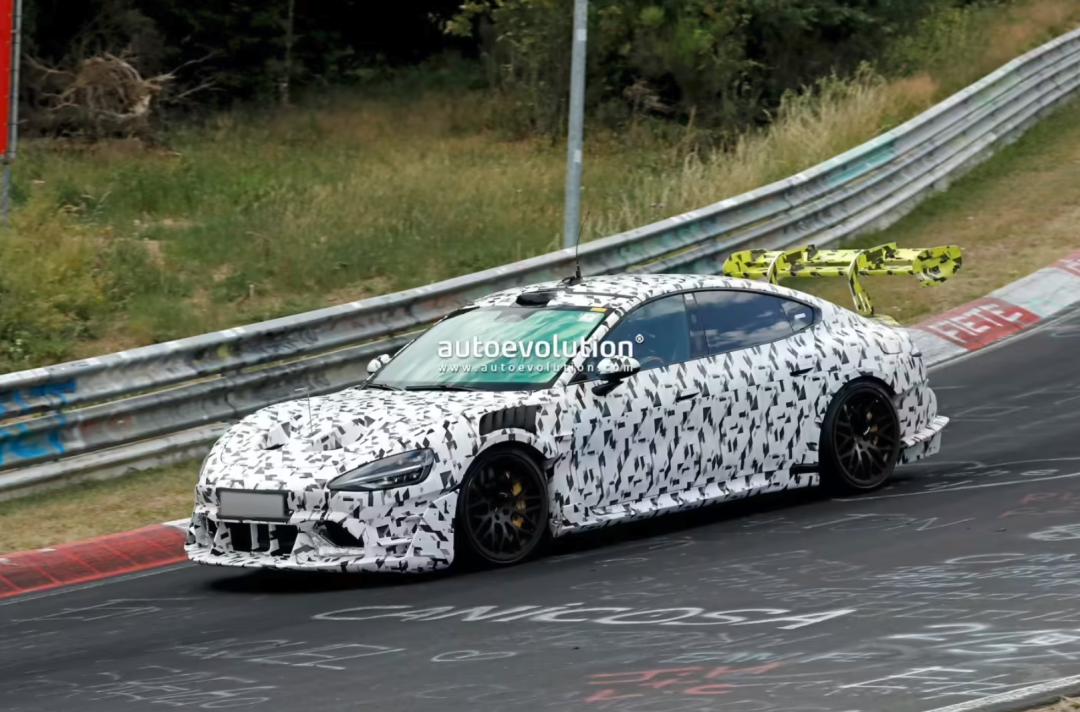
(Image source: AutoEvolution)
Optimizations to performance and aerodynamics are expected to push the lap times of the Xiaomi SU7 Ultra Extreme to new heights once again.
Judging by Xiaomi’s past promotional and marketing priorities surrounding Nürburgring lap records, the brand’s goal for the Xiaomi SU7 Ultra at the track this year is most likely to set new benchmarks. If the SU7 Ultra Extreme is positioned as a production vehicle, it will likely aim to outperform both the Yangwang U9X and the Porsche Taycan Turbo GT.
This raises a key question: both Denza and Xiaomi have opted to test their vehicles on the Nürburgring and compete head-to-head. How will Denza craft its own compelling brand narrative?
DianChetong (ID: dianchetong233) argues that the Denza Z lineup and Xiaomi SU7 Ultra are not direct competitors in the strict sense, with clear gaps between the two models in market positioning and pricing.
While Nürburgring lap times will inevitably determine which car is faster, prospective buyers of either vehicle are unlikely to switch purchase decisions simply because the rival posts a quicker lap.
For both Denza and Xiaomi, racing at the Nürburgring is largely meant to validate technical prowess and prove their mechanical capability and track performance rival established legacy automakers, rather than engage in cutthroat one-upmanship.
Therefore, Denza’s best strategy is to stay focused on its own development. By competing on the Nürburgring, the brand can raise broader awareness of the Denza Z family and translate track credentials into retail sales.
From Goodwood to Nürburgring: Chinese Carmakers Seize Clout in High-Performance EVs
Pre-orders for the Denza Z went live at this year’s Goodwood Festival of Speed.
This autumn, the Denza Z Special Edition will officially hit the Nürburgring for track testing.
The journey from Goodwood to Nürburgring reflects Chinese auto brands gaining greater command over the segment of high-performance new-energy vehicles.
There was a time when domestic manufacturers relied on foreign-sourced combustion engines, watching European legacy marques dominate racetracks with their high-performance gasoline cars. Today, homegrown all-electric sports cars including the Xiaomi SU7 Ultra, Denza Z and Yangwang U9 hold their own against international counterparts.
Many legacy overseas brands have made sluggish progress in high-performance electric mobility. Porsche has continuously tweaked the Taycan since its 2019 launch and suspended development of an all-electric 718 variant. Ferrari’s first fully electric model, the Luce, falls short of the brand’s gasoline hypercars in exterior styling, performance and design. Senior executives at BMW have even dismissed 1,000-horsepower powertrains as mere marketing gimmicks.
While Western automakers move slowly on high-performance EV technology, Chinese brands surge full speed ahead. This proves domestic carmakers have earned the capacity to claim leadership in electric performance vehicles, with successive record laps serving as final confirmation.
The Denza Z made its global debut and opened preorders at Goodwood in the UK this year. Xiaomi Auto plans to enter Europe in the second half of next year, kicking off its overseas expansion in Germany — home turf for luxury icons Mercedes, BMW, Audi and Porsche.
As the roar of internal combustion engines from European legacy automakers grows increasingly stale, the whine of electric motors from China cuts through the wooded mist of the Nürburgring and sweeps across the lawns of Goodwood’s hillsides. These electric sounds will eventually reverberate through Germany, the beating heart of global automotive manufacturing.
When Denza lifted the veil at Goodwood and Xiaomi Auto rolls into the home market of Germany’s premium automakers, Chinese high-performance vehicles bring no hostile disruption or provocation to the old automotive order. Instead, with tangible technical strength, they participate in and lead the reshaping of performance standards for the electric age on the very birthplace of the automobile industry.
The century-long legend of gasoline-powered performance is drawing to a graceful close. In the brand-new chapter of electric performance motoring, Chinese automakers are writing an indelible, remarkable story.