 雷科技
雷科技





The two-year boom in AI hardware has finally entered its second phase.
On July 17, 2026, the Ministry of Industry and Information Technology (MIIT) led the release of the first batch of test results for national standards collectively titled Classification of Intelligence Levels for Artificial Intelligence Terminals. The standards cover six major product categories: mobile terminals, microcomputers, televisions, smart glasses, vehicle cockpits and smart speakers. Sixty-six products from 17 enterprises have obtained certification for Level 3 (L3) auxiliary intelligence.
The list for mobile phones turned out as expected. A total of 11 models from eight manufacturers—Huawei, Xiaomi, OPPO, vivo, Honor, Motorola, Lenovo and Zhiyue Star—all meet L3 requirements. All mainstream smartphone brands have qualified with their AI capabilities, with no major players left out.
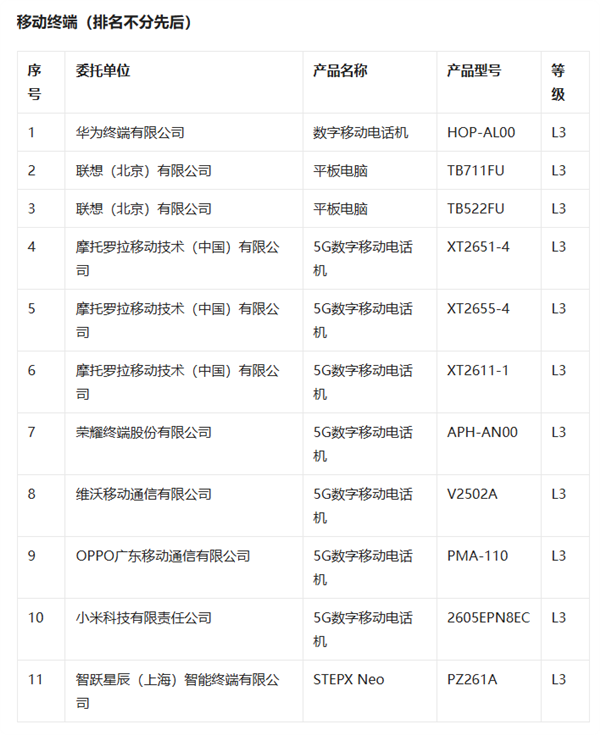
Image Source: Intelligence Grading for AI Terminals
Besides smartphones, among the 66 L3-certified products, microcomputers account for 41 units, televisions 9 units, vehicle cockpits 3 units, with smart glasses and smart speakers contributing one product apiece. Certain smart glasses and headsets remain at Level 2 (Tool Grade). Quantitatively, the intelligent upgrade of AI terminals shows clear tiered performance across categories: personal computers take the lead, followed by mobile phones, while wearable devices are still playing catch-up.
Leitech (ID: leitech) holds the view that the rollout of this grading system marks the official entry of the AI hardware boom into its second stage.
Huawei, Xiaomi, OPPO, vivo and Honor Obtain L3 Certification, Representing the Current Cutting-Edge Capabilities
Here is a brief breakdown of the differences between L1 to L4, along with an explanation for the absence of L5 from the grading roster.
L1, designated the Response Grade, refers to terminals with only passive response functions that execute pre-set commands such as voice wake-up. Siri without AI optimization roughly falls into this tier. L2 is defined as the Tool Grade. Terminals at this level can access functional tools to accomplish specific tasks and feature basic contextual awareness. Even so, users must deliver highly precise instructions; vague requests will result in failed execution. Many current AI wearables are categorized here.
L3 is the highest tier with formal specifications under the current standard framework, also named the Assistance Grade. Terminals at this level can interpret complicated user intentions and proactively ask for clarification, automatically split tasks and arrange workflow schedules, dynamically activate multiple tools to enable distributed task collaboration, generate cross-modal content, and possess both short-term and long-term memory functions.

Image Source: Doubao
L4 stands for the Collaboration Grade, focusing on autonomous cross-device collaboration and proactive scenario awareness. Nevertheless, the official criteria for L4 have not been fully finalized and will be gradually refined alongside industrial advancement.
It is worth noting that the early Research Report on Terminal Intelligence Classification released by the Telecommunications Terminal Industry Association once proposed an L5 tier. Under L5, after the AI finishes perception and planning, it could complete payments and orders autonomously without user confirmation. However, this tier was excluded from the final national standard.
The core reason lies in the ambiguous boundary of proactive services. For instance, if the AI places an order for a graphics card on your behalf while you are still hesitant, users may face unmanageable data security and financial risks. For this reason, humans retain ultimate decision-making power. The originally planned L5 can be regarded as the evolutionary limit of AI hardware: AI is allowed to assist, but never replace human users.
In summary, L3 reflects the actual technical ceiling of mass-produced AI terminals for the time being, while L4 remains in the phase of engineering verification and standard deliberation.
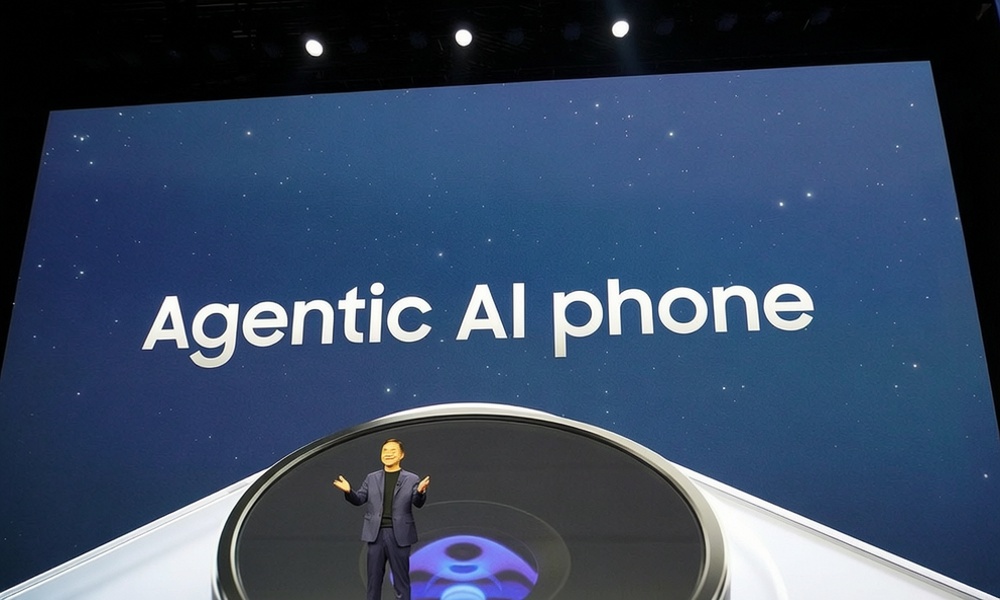
In terms of technical routes adopted by different brands: Huawei’s Celia ambient AI prioritizes end-side computing and privacy protection. With user authorization, it delivers proactive services instead of waiting passively for wake-up commands. Xiaomi built the Xiaomi Miclaw intelligent agent based on its self-developed MiMo on-device large model, claiming access to over 50 system tools and supporting multi-step task orchestration across apps and devices. Honor’s YOYO agent, vivo’s Blueheart large model and OPPO’s Andes large model have all invested heavily in research and development for on-device inference and multimodal interaction.
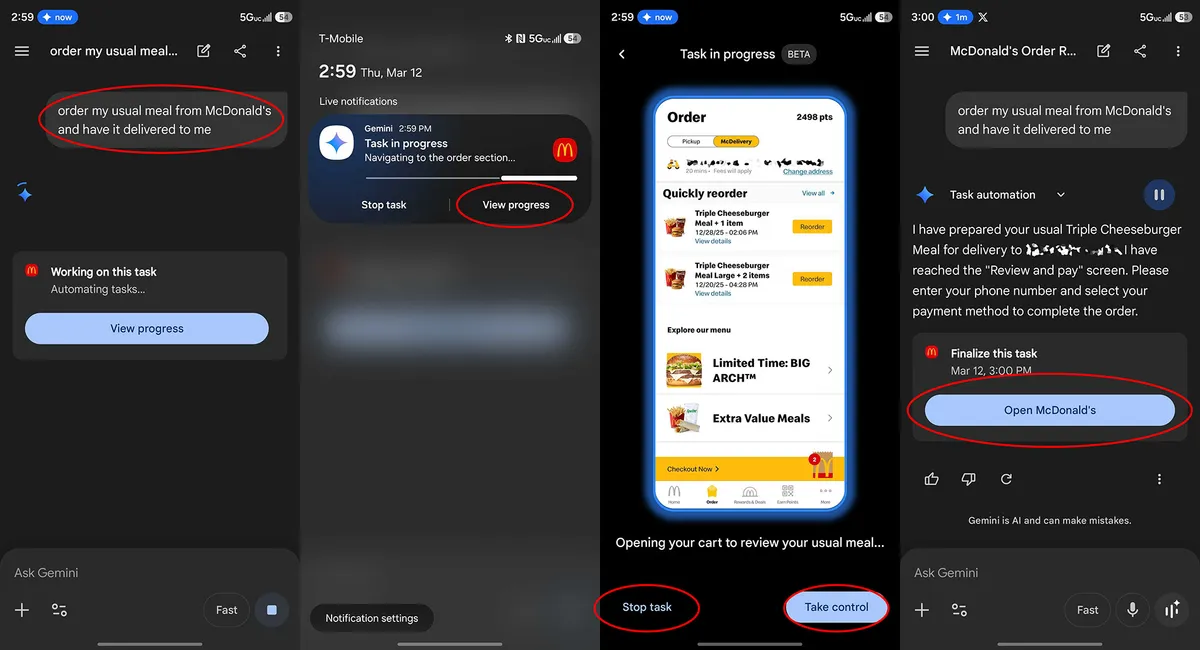
Image Source: Android Central
However, all the above technological reserves are capped at L3 for now. This is not an issue specific to any single manufacturer, but a technical challenge confronting the entire industry. Computing density on-device, model inference efficiency, and the maturity of multi-Agent collaboration frameworks together form the technical barriers separating L3 from L4.
Coincidentally, the autonomous cross-device collaboration defined by L4 is exactly the futuristic vision repeatedly outlined by brands at product launches. Examples include Xiaomi’s full-scenario vehicle-home-mobile ecosystem and Huawei’s 1+8+N architecture. The frameworks have long been established, yet practical implementation in consumer products will take time.
41 L3 Certifications Awarded to PCs; Unbranded White-label Products May Face Elimination
Let us circle back to the Classification of Intelligence Levels for Artificial Intelligence Terminals. Categories beyond smartphones also warrant detailed discussion.
With 41 certified models in total, personal computers hold an overwhelming advantage over other product types. This mainly stems from brands such as Lenovo boasting comprehensive commercial product lines and extensive SKU portfolios. Lenovo alone accounts for 37 certified AI PCs. Additionally, PCs inherently feature high-computing chips, ample heat dissipation room and well-developed operating system ecosystems, making them one of the most ideal carriers for deploying on-device large models.
Lou Chao, Vice President of iFlytek, voiced a similar judgment on-site at WAIC: “PCs bridge technological innovations including domestic computing power, operating systems and large models on one side, and tangible demands covering government affairs, education, healthcare and corporate office work on the other. They act as a critical driver propelling the growth of the AI terminal sector.”
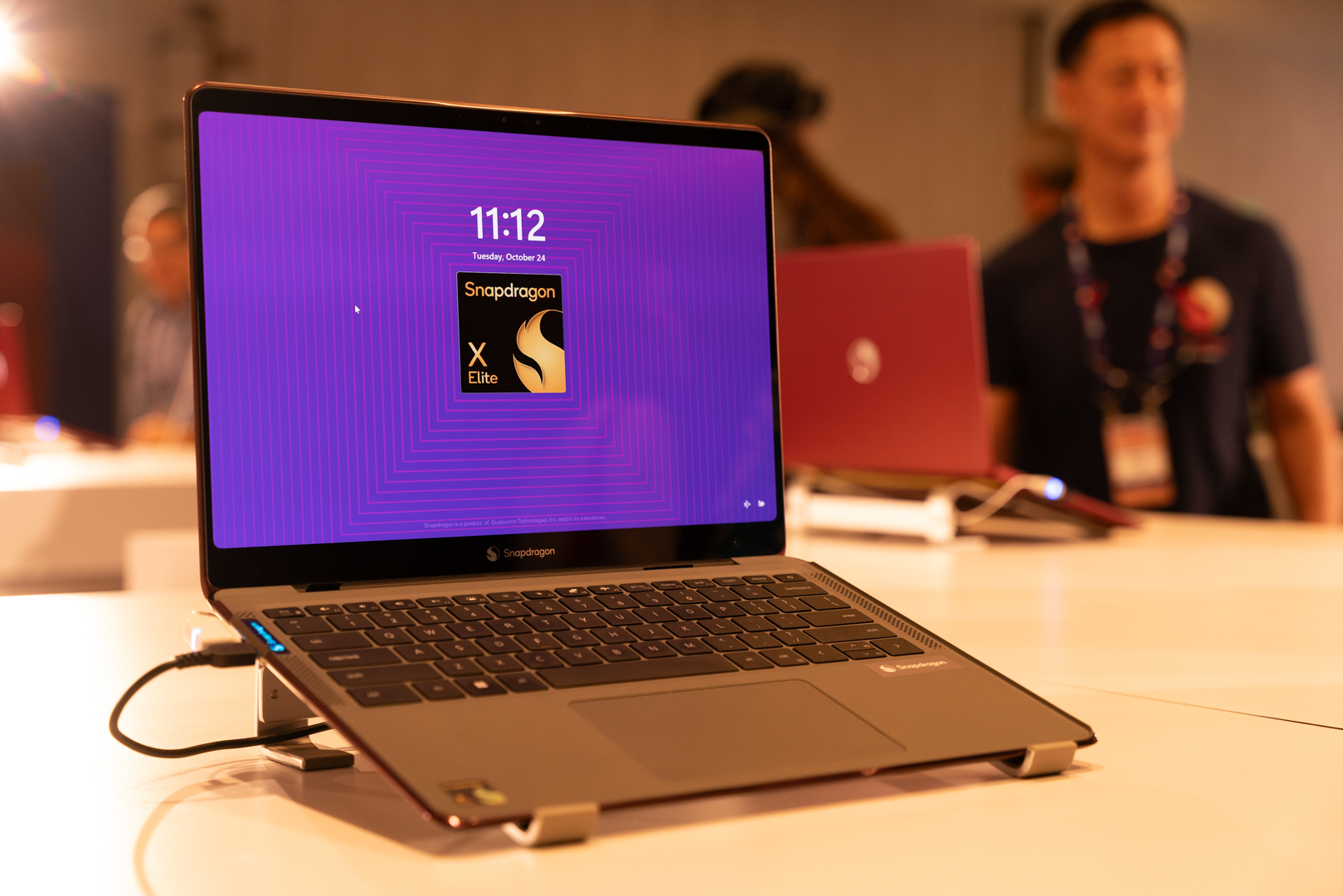
Image Source: Photographed by Leitech
Smartphones face hurdles in power consumption ratio and heat dissipation. Running on-device large models within palm-sized space imposes extremely strict requirements on chip energy efficiency.
Wearable devices are likewise constrained by size and volume. Most AI smart glasses are designed to weigh between 40 and 80 grams. Under such physical limitations, the available chip computing power, battery life and heat dissipation capacity are severely restricted. The mainstream industry solution adopts an architecture combining on-device collection with cloud or smartphone processing: smart glasses handle voice pickup, image capture and user interaction, while core AI tasks are offloaded to mobile phones or cloud servers.
This does not mean the intelligent upgrading of AI glasses lags behind market demand. On the contrary, AI glasses rank among the fastest-growing consumer electronics categories in 2026. IDC statistics indicate global shipments hit 3.566 million units in Q1 2026, marking a year-on-year increase of 130.1%.
Consumers show higher acceptance of AI glasses than other AI hardware products. According to Xinhuanet, sales of AI glasses in Huaqiang North, Shenzhen surged by 70% to 80% during the 2026 Spring Festival compared with regular days. The number of local dealers jumped from zero to over one hundred. This observation was verified during Xiaolei’s previous field trip to Huaqiang North.
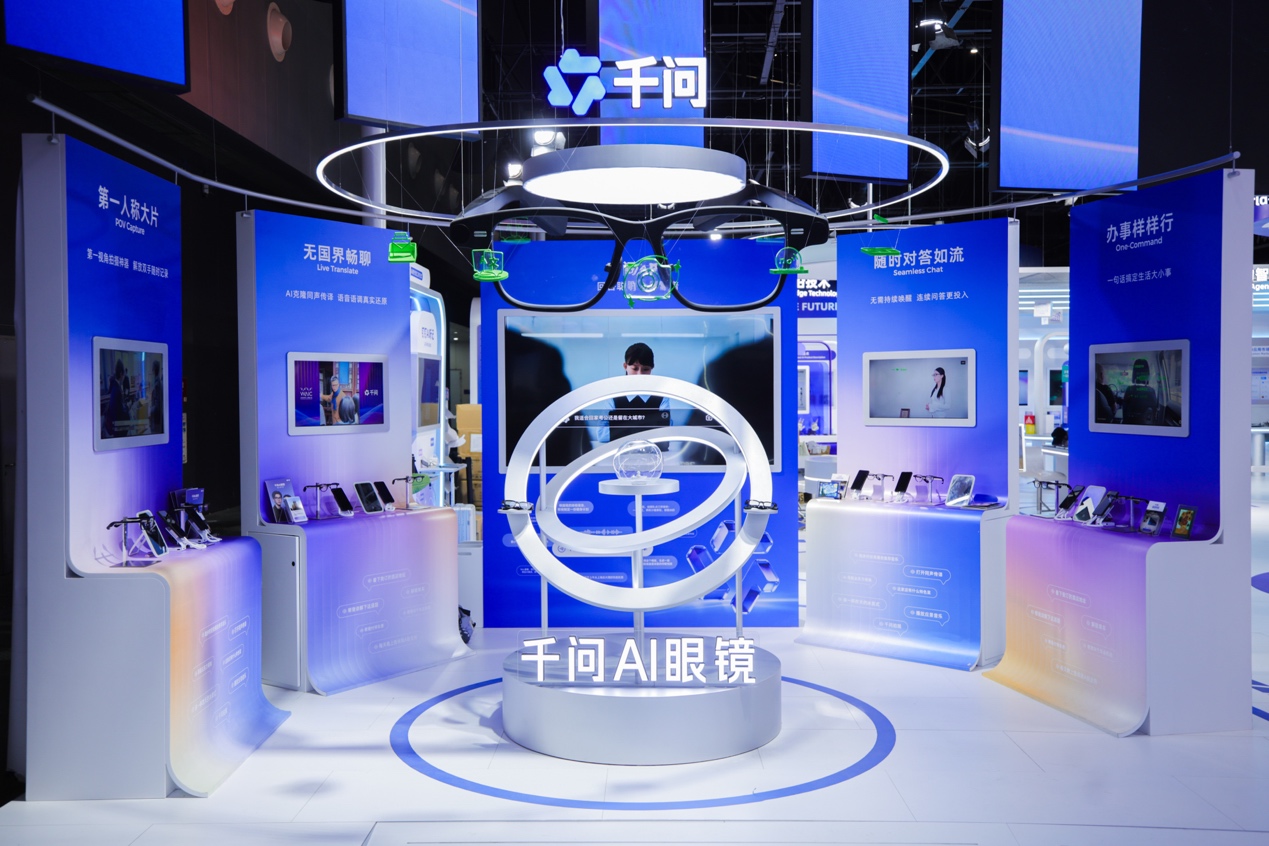
Image Source: Qwen
With continuous breakthroughs in energy efficiency ratios of on-device AI chips and the maturation of MicroLED plus optical waveguide display technology, smart glasses are only a matter of time away from upgrading from L2 to L3. While brands progress at different paces, they all head in the same direction.
The AI grading system may exert its most profound impact on the white-label AI hardware ecosystem epitomized by Huaqiang North.
Looking back on the 20-year history of energy efficiency grading for home appliances: once grading labels become core factors guiding consumer purchases, sales channels will automatically weed out inferior products. E-commerce platforms and offline retail stores have no incentive to let L2 products compete alongside L3 offerings, forcing white-label manufacturers to rethink their future development paths.
Standards Draw Clear Boundaries, Yet AI Innovation Can Transcend Limits
Every coin has two sides. Under the L1–L4 grading framework, the industry has formulated a fixed definition of intelligence. To earn L3 certification, products must support intent comprehension, task decomposition, multimodal interaction and persistent memory; devices failing to meet these criteria are categorized as L2 or even L1.
This evaluation logic works well for smartphones and PCs, yet the creative potential of AI hardware extends far beyond these two categories.
Recall the unconventional AI hardware launched over the past two years that break the mold of traditional terminals. The short-lived Humane AI Pin replaces physical screens with laser projection and relies entirely on voice and gesture controls for interaction. The Rabbit R1 redefines smartphone usage by leveraging large models to operate mobile applications. Though user experience fell short of expectations, such exploratory attempts deserve recognition.
Judged against the current L1-L4 standards, most of these products can barely scrape by as L2. They lack frameworks for invoking system tools and do not prioritize cross-modal generation. Instead, they pioneer possibilities outside the established grading framework.
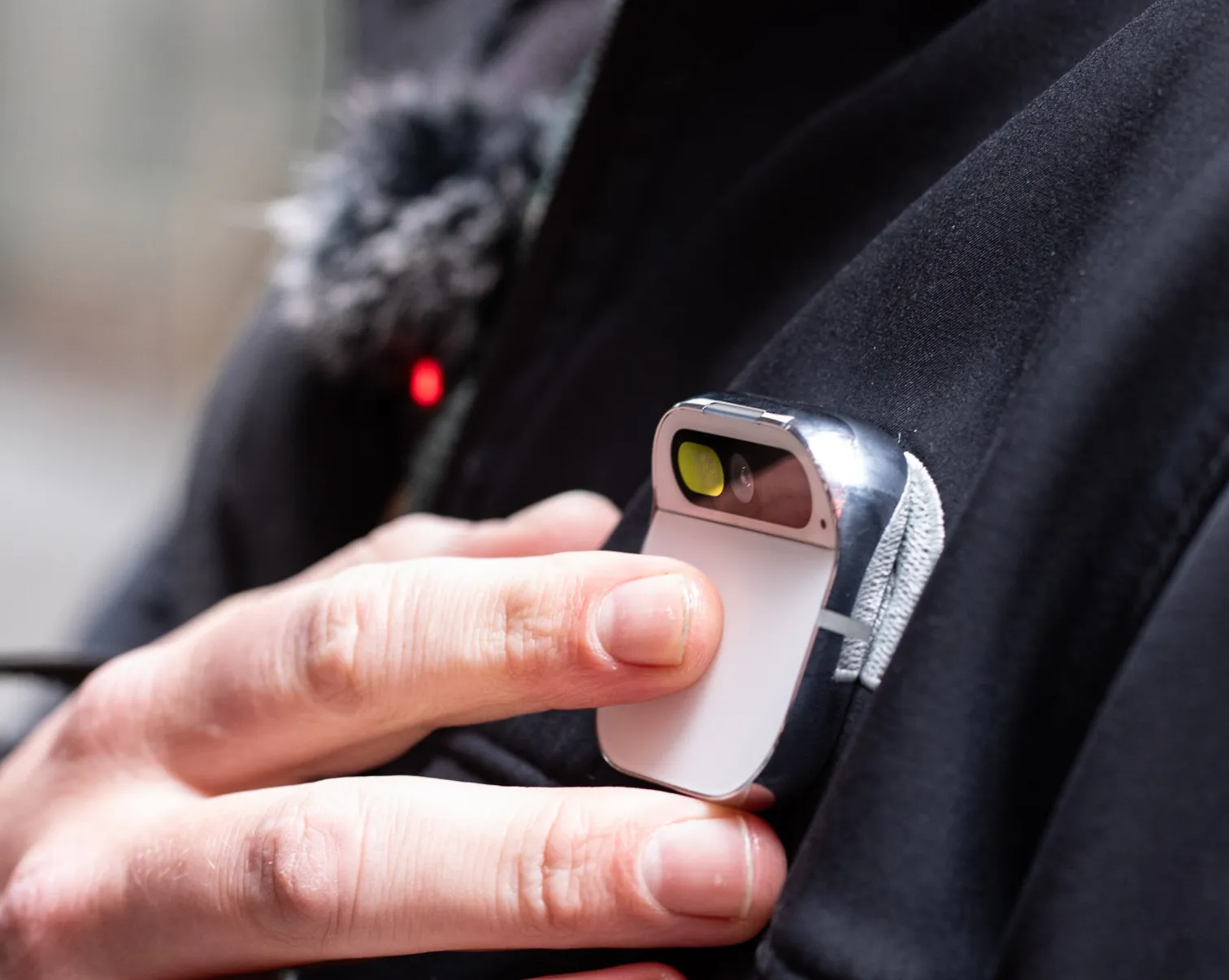
Image Source: AI PIN / Humane
This is not nitpicking on my part. Standards are inherently a posteriori; they only summarize technologies and products that already exist. No one can predict what innovations will emerge or what development paths the industry will take in the future.
For example, if a smartphone standard had been drawn up back in 2007, physical QWERTY keyboards, styluses and hardware navigation keys would almost certainly have been listed as mandatory features, with devices lacking these components deemed non-smart.
Yet the iPhone overturned all these definitions with nothing but a glass touchscreen. AI terminals are now at a similar crossroads. Technical routes are far from converging, and product forms are still undergoing trial and error. Under such circumstances, forcing all hardware products into four fixed tiers raises a critical question: are items that fail to fit the framework substandard, or merely outside the scope of current rules? The fine line between these two interpretations is a major pitfall brands may stumble into.
Conversely, standards are indispensable. Over the past two years, the label "AI" has been wildly overused. Everything from cheap 9.9-yuan toys to flagship phones gets marketed as AI-enabled. The tiered grading system at last delivers universally accepted market criteria and puts an end to indiscriminate AI branding.
If future revisions to L4 and L5 standards keep pace with technological evolution and accommodate emerging product categories in a timely manner, the grading system will act as an industry accelerator. By contrast, if standards are updated only once every five years and the product category list remains unchanged for a decade, the rules will sooner or later turn into rigid barriers holding innovation back.
Ultimately, Classification of Intelligence Levels for Artificial Intelligence Terminals marks an excellent starting point. The ultimate test of how forward-thinking this standard truly lies in whether it can stay open and flexible enough to avoid branding future innovations like AI Pin and Rabbit R1 as unqualified the moment they launch.
All in all, this is China’s first formal standardized blueprint for AI hardware. Its value lies not in the tier ratings themselves, but in turning the vague adjective "intelligent" into quantifiable metrics. Moving forward, brands claiming industry-leading AI capabilities in product launches must first pass the national grading assessment.
Still, the standard should never be treated as the finish line. PCs and smartphones lead the L3 pack while wearables play catch-up; time is needed to iron out the development gaps across device categories. The long-term fate of this framework — whether it becomes a ceiling limiting innovation or a fresh starting line for growth — hinges on its openness: its capacity to embrace unconventional gadgets beyond phones and computers, and its agility to iterate quickly amid technological leaps.