
 雷科技
雷科技







Price hikes for digital gadgets are hardly breaking news. Prices of smartphones, laptops and game consoles have risen in lockstep.
Against this backdrop of widespread price inflation, digital cameras—once jokingly hailed as the best annual asset for value preservation—have refused to follow the upward trend. Instead, their prices have tumbled across the board. Many popular mirrorless cameras, which once required thousands of yuan in markup fees and a waiting list of more than half a year, are now readily available in stock. E-commerce platforms even sell them below original retail price with discounted offers.
Why have phones, personal computers and game consoles grown increasingly expensive at the same time, while cameras buck the trend and slash prices? Leitech (ID: leitech) shares its analysis today.
Core Reason Cameras Avoid Price Hikes: Minimal Reliance on Storage Components
To figure out why camera prices stay stable, we first need to pinpoint what fuels cost hikes for phones and laptops. If we break down all hardware costs of a smartphone or notebook computer piece by piece, we will find a shared culprit behind this round of price surges: storage chips.
In previous years, weak global demand for consumer electronics prompted major upstream storage chip suppliers to roll out large-scale production cuts to prop up profits. However, the AI era has brought massive expansion in AI infrastructure, sending demand for storage soaring. Chipmakers allocate limited production capacity primarily to AI-related orders, creating a supply shortage of storage chips for consumer electronics.
Skyrocketing storage costs hit smartphone manufacturers hard. Mid-range phones now mostly ship with a baseline configuration of 12GB RAM + 256GB storage, while flagship models commonly adopt 16GB RAM + 1TB storage. As procurement costs of LPDDR5X RAM and UFS 4.0 flash memory keep doubling, overall device costs inevitably climb.
Cameras feature a drastically different bill of materials compared with phones and PCs. Their three pivotal hardware components are the CMOS image sensor, lens assembly (optical system), and digital signal processor (DSP).
Cameras contain no built-in mass storage. For mirrorless cameras, aside from tiny onboard cache memory reserved for firmware operation, they carry virtually no high-capacity storage hardware. Cameras do not come bundled with large-capacity flash memory; consumers must purchase SD memory cards separately at their own expense.
No matter how steep flash chip prices surge, such cost pressures fall entirely on consumers buying extra memory cards. Cameras’ factory production costs remain largely insulated from fluctuations in storage pricing.
Additionally, camera chips are far less sensitive to semiconductor process nodes than mobile hardware. Camera image processors (including Sony’s BIONZ XR and Canon’s DIGIC X) keep upgrading with stronger computing power to process high-frame-rate 8K footage and sophisticated AI autofocus algorithms. Crucially, cameras do not need to pursue the extreme balance of power consumption and compact size mandatory for smartphones.
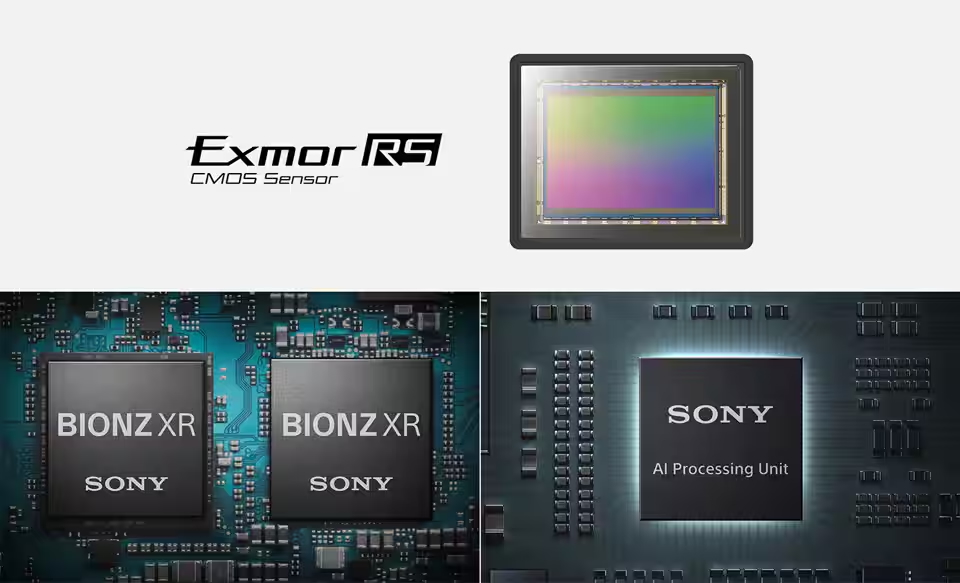
(Image source: Sony)
Cameras feature more internal room for heat dissipation and come with dedicated battery power supplies. Accordingly, most camera DSP chips are manufactured using mature process nodes such as 14 nm, 22 nm and even 28 nm via foundry services. There is no need whatsoever to compete with smartphone brands for expensive, limited production capacity for advanced semiconductor processes.
The biggest cost drivers for cameras actually lie in optical glass, lens grinding, mechanical shutters, image stabilization motors, CMOS sensors and other components, which fall under precision manufacturing and optical materials engineering. Raw materials for optical glass, coating technologies and mold development all follow lengthy technology iteration cycles, supported by an extremely stable industrial chain. As long as factories run at full capacity with consistent yield rates, manufacturing costs for these components remain steady with no drastic fluctuations.
In short, smartphones and personal computers are held hostage by wafer manufacturing processes and memory costs, whereas cameras are not. Such physical differences result in entirely distinct cost structures.
Camera price drops stem from the burst of earlier premium markup bubbles
At this point, many readers may wonder: Camera prices skyrocketed wildly just a couple of years ago. Products including the Fujifilm X100V and Sony A7M4 could only be purchased with markups of several thousand yuan.
In truth, the drivers behind camera price hikes in previous years differ entirely from those pushing up smartphone and PC prices today. The steep camera price surges back then were never caused by rising production costs; instead, they stemmed from scalper-fueled market economics driven by supply-demand imbalance in the secondary market. Current camera price reductions are not due to manufacturers becoming more consumer-friendly; they simply reflect the bursting of the market bubble.
The abnormal boom in the camera market two years ago arose from a confluence of several special factors.
First came the explosive growth of visual social media. Photography and vlogging boomed on Xiaohongshu and Douyin, drawing hordes of consumers with no prior interest in photography (young people and female users in particular) into the camera market. Tags such as "Fujifilm color profile" and "vintage street photography" became highly shareable viral trends with strong social appeal, transforming the once niche camera sector into a mainstream consumer market.
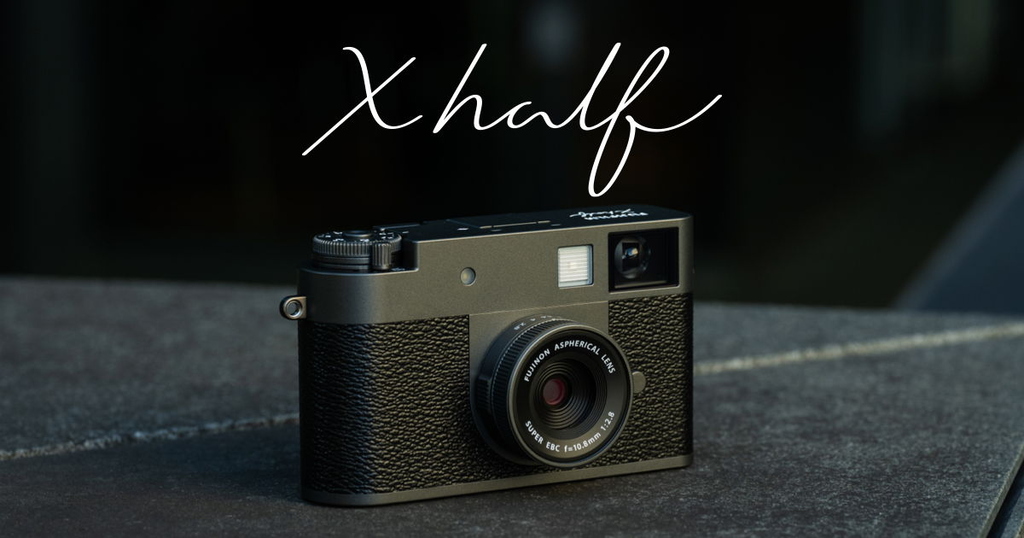
(Image source: Fujifilm)
Second, the camera supply chain ran into troubles back then. For instance, global logistics were disrupted for special reasons, while industries including the automotive sector competed for mature-process chips such as power management ICs, severely restricting camera production capacity.
Furthermore, scalpers aggravated the supply-demand imbalance artificially. Sharp-eyed scalpers flooded the secondary market. They hoarded popular camera models on a large scale to deliberately create artificial scarcity. Consumers could hardly buy cameras at official prices through authorized channels and had no choice but to pay extra on second-hand marketplaces and social media platforms.
So why have camera prices fallen nowadays? These contributing factors have all reversed.
Camera brands including Sony, Canon, Nikon and Fujifilm have fully resumed production lines and even greatly expanded output for best-selling models. With continuous new units flowing into the market, scalpers bore the brunt first.
Besides, consumers have become far more rational when purchasing cameras. Many trend followers who bought Fujifilm and Ricoh cameras found their devices ended up gathering dust most of the time. As production capacity surged on the supply side and market demand cooled off gradually, the markup bubble was bound to burst.
To avoid being stuck with unsold inventory, scalpers had to sell their stock at original prices or even at a loss. E-commerce platforms rolled out various subsidies and discounts off official retail prices to boost sales volume. Consequently, cameras once treated as overpriced collectible assets have lost their inflated value, with prices sliding steadily.
With such divergent pricing trends, what exactly are consumers paying for?
Prices of smartphones, personal computers and game consoles keep rising, while cameras are getting cheaper. On the surface, this stems from inherent physical differences in their supply chains. At a deeper level, various electronic devices are taking divergent paths amid the AI era.
For consumers buying flagship smartphones or laptops in 2026, a large portion of their spending goes to the mandatory "AI premium" charged by manufacturers. To run local on-device large language models and process AI Agent tasks, modern smartphones and PCs require not only larger storage space but also AI computing hardware such as NPUs.
All these additional costs have been factored into product pricing in advance. Consumers are not merely purchasing communication or productivity devices; they are also paying for access to the AI era.

(Image source: Microsoft)
Cameras, by contrast, are in a sense old-fashioned gadgets standing apart from the AI boom. While mobile phone photography inevitably leans heavily on computational photography and even relies on AI to create visual details out of thin air, cameras adhere to the traditional principle of capturing authentic light and shadow due to their fundamental optical design logic. In an online world flooded with AI-generated content, cameras capable of documenting real scenes have instead become comparatively scarce.
Moreover, ordinary consumers have distinct demands for smartphones, PCs and cameras.
Smartphones and personal computers have long become daily necessities for modern people, essential above all else. They serve either as "digital extensions of human bodies" used constantly every day or core productivity tools irreplaceable in work routines. This underpins an enormous consumer market for these devices.
Cameras tell a different story. For most buyers, camera purchases stem largely from personal hobbies rather than genuine necessity. If camera prices had remained sky-high while consumers grew more pragmatic, brands keeping the unreasonably steep premiums seen in past years would push shoppers to give up buying cameras entirely or use phones to cover photography needs instead.
Furthermore, evaluating total device lifespans reveals gaps in purchase and long-term usage costs.
Smartphones and similar electronics feature shorter service lives. Even high-end flagship phones suffer gradual performance degradation caused by battery wear, system updates and other factors, with an optimal usable lifespan of only two to three years. Their resale value steadily declines on second-hand markets, rooted in the extremely fast upgrade cycle of smartphones; handsets quickly transition from cutting-edge to outdated within a short window.
Cameras hold value far better by comparison. An entry-level mirrorless camera priced at roughly 10,000 yuan will experience virtually no abrupt decline in mechanical and optical performance over five to six years, provided it boasts healthy shutter life with no water damage or mold growth. Even after two or three years of use, it may still resell for around 6,000 yuan on second-hand platforms.
To sum up: the high cost of phones and computers comes paired with steep depreciation rates and premiums tied to memory hardware. The current affordability of cameras not only lowers the barrier to entry but also translates to superior long-term asset retention as optical equipment.