
 雷科技
雷科技





In 2026, a new gadget has popped up in the smartphone world: magnetic rear screens. While the concept is far from brand-new, OPPO, Insta360, Honor and Hisense have all either launched or are gearing up to release their own versions. Though called "rear screens", they are essentially compact displays that attach magnetically to the back of a phone — they can display photos, serve as a viewfinder for rear-camera selfies, and even clip onto bags as decorative accessories.
Priced at several hundred yuan for such a tiny screen, I (Xiao Lei) initially wrote them off as nothing but an overpriced gimmick. But after reading through plenty of user reviews and hands-on experiences shared online, I’ve realized magnetic rear screens are far more sophisticated than they first appear.
Insta360 & Hisense double down on functionality; OPPO & Honor lean into emotional companionship
All four brands market their products as magnetic rear screens, but they follow vastly different product philosophies and target distinct user groups. Let’s break them down briefly.
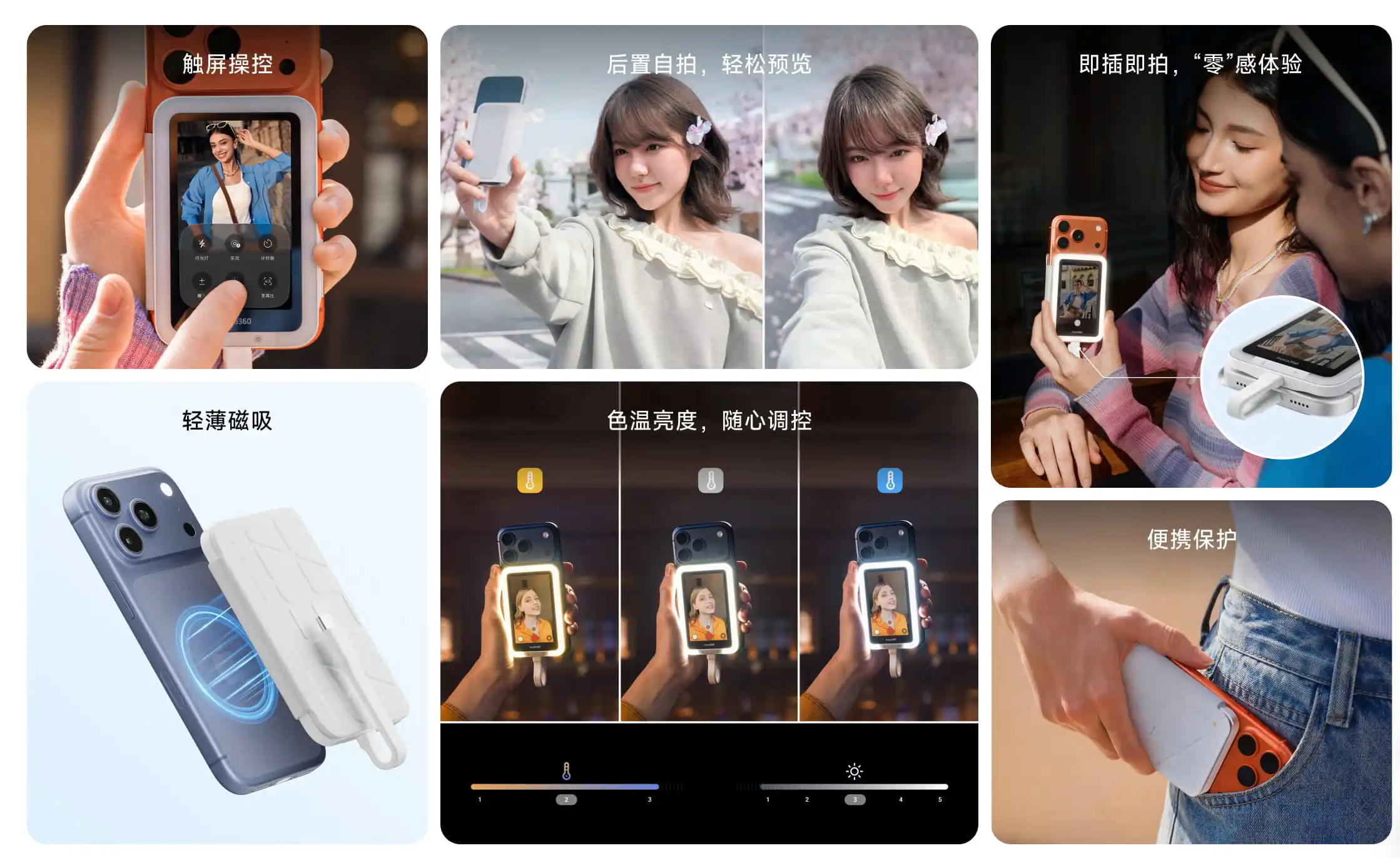
First to market is the Insta360 Snap, the earliest-released model of the four. It sports a relatively understated, functional design: a 3.5-inch magnetic touchscreen that connects to the phone via USB-C. Its biggest perk is that it needs no separate battery — it draws power directly from the handset, so it works as long as the phone has charge, and no Bluetooth pairing is required. The trade-off, of course, is that it drains the phone’s own battery. When it comes to features, it stays laser-focused: once plugged in and the camera app is opened, the Insta360 Snap displays a live view feed from the phone’s rear camera in real time.
(Image source: Official Insta360)
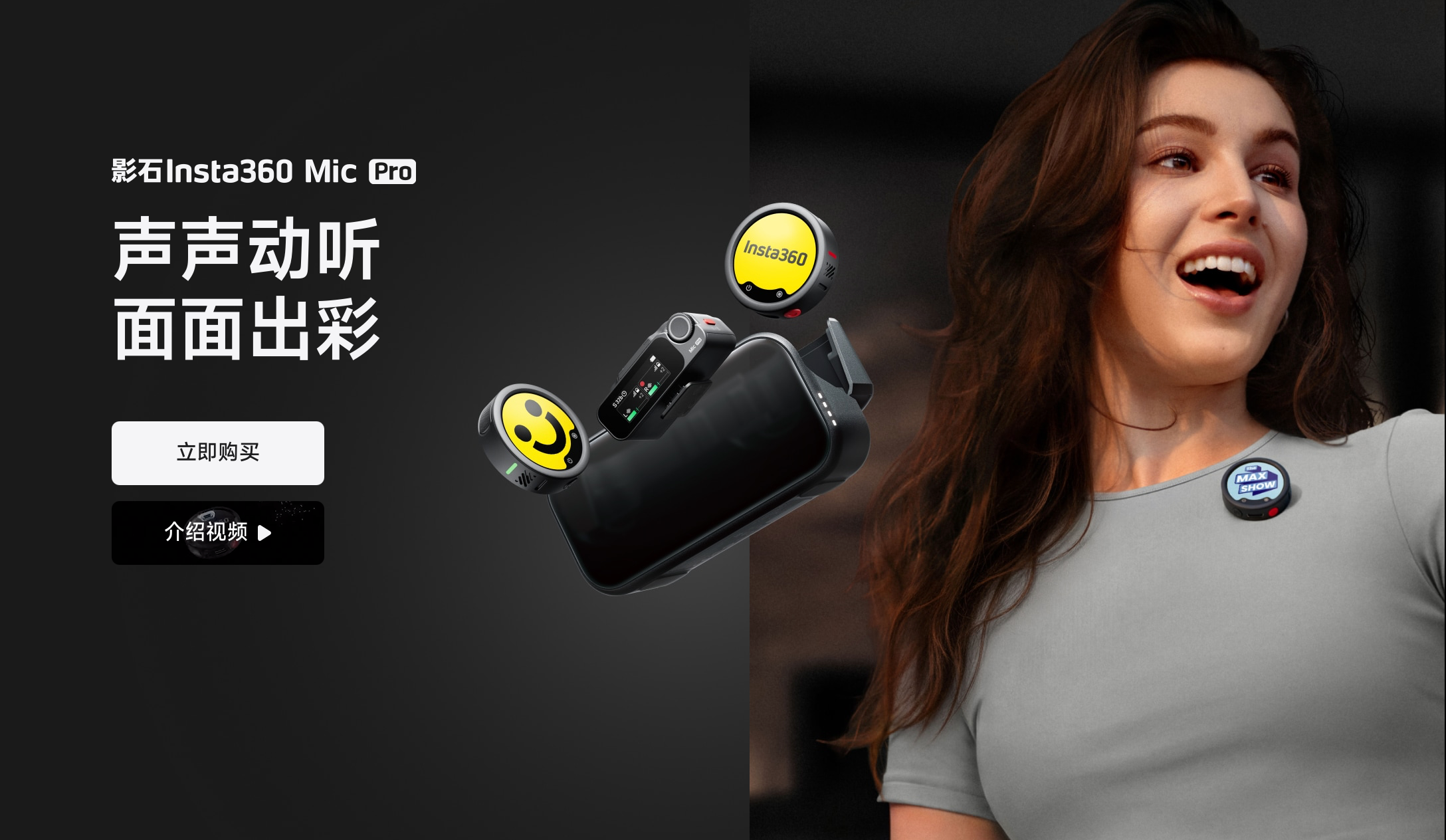
It is fairly affordable, with the single-transmitter kit starting at 528 yuan and the top-spec dual-transmitter, single-receiver set priced at 1,698 yuan — you essentially get the screen as a complimentary add-on when buying the microphone.
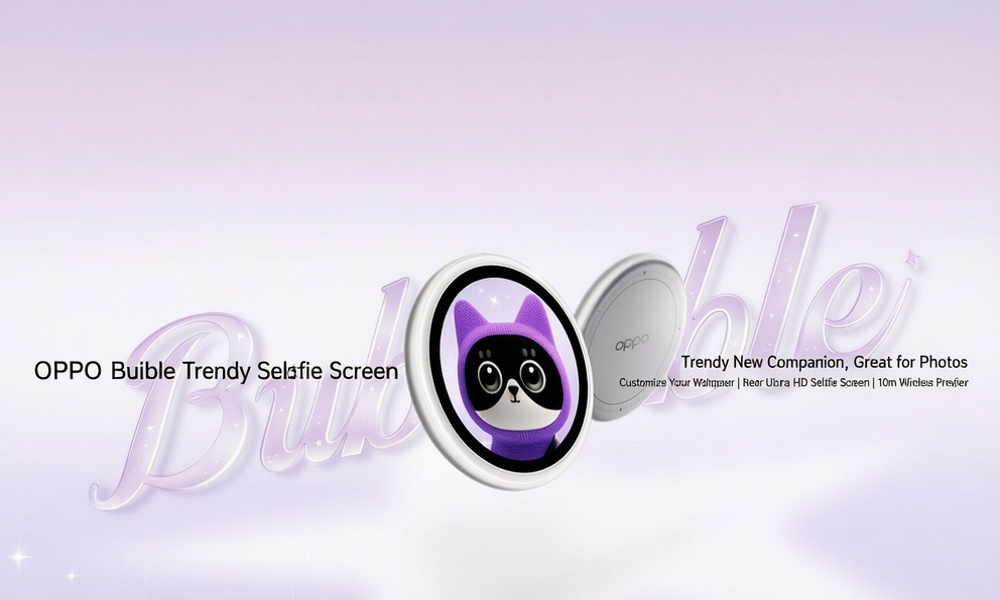
Next up is the OPPO Bubble. It features a 1.73-inch round AMOLED display with a 466×466 resolution, measuring just 7mm thick and weighing 27.5 grams. It serves a wide range of use cases: besides connecting to smartphones via Bluetooth, it can display static images, Live Photos and short video clips on its screen. It also doubles as a viewfinder for the rear camera during selfies, allowing users to frame their shots on the compact display.
 (Image source: Insta360 official)
Pricing starts at RMB 528 for a single-transmitter kit, rising to RMB 1,698 for the top-tier dual-transmitter + receiver configuration—effectively “buy a mic, get a screen free.”
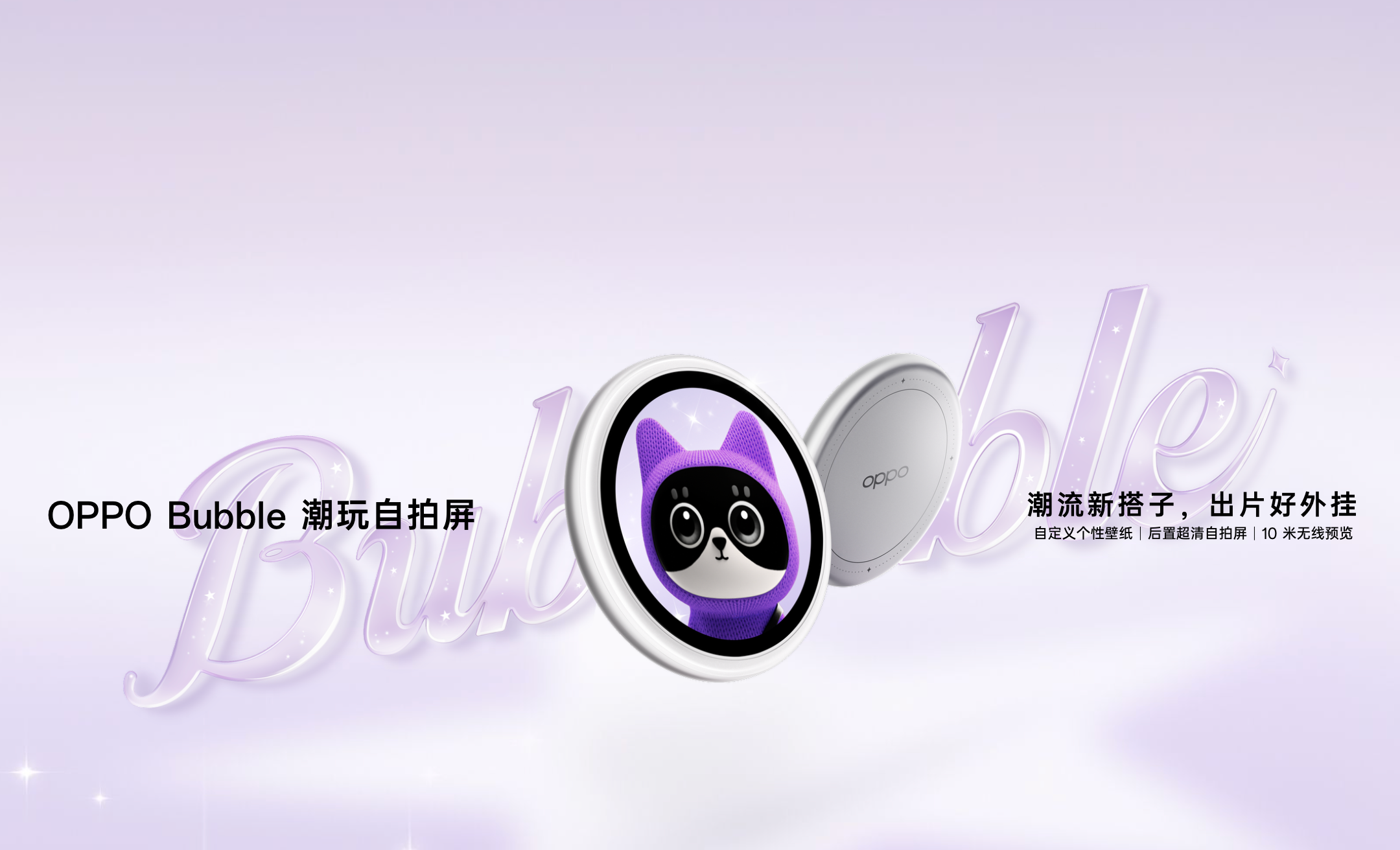
Next is OPPO’s Bubble—a 1.73-inch AMOLED circular display with a resolution of 466 × 466 pixels, just 7 mm thick and weighing only 27.5 g. Its use cases are diverse: it connects to phones via Bluetooth, displays static images, Live Photos, and short videos, and doubles as a rear-camera viewfinder during selfies—enabling precise composition framing.
(Image source: Official OPPO)
Priced at 499 yuan, the OPPO Bubble comes bundled with a protective case, lanyard and magnetic ring. However, it is currently only compatible with OPPO’s Reno and Find series, with no plans to extend support to devices from other brands. Clearly, OPPO positions it more as a digital novelty than a practical functional accessory.
Honor’s versatile magnetic secondary screen follows a similar playbook to the OPPO Bubble: both are compact round displays that attach magnetically to the back of smartphones and support customized content. What sets it apart from the Bubble is an added 4-level ring fill light, making it better suited for travel photography and social sharing scenarios. It can also act as a remote control to scroll feeds, like content and switch videos on Douyin. At 399 yuan, it offers the best cost-performance ratio among all products from these brands.

(Image source: Official Honor)
The Hisense A10 is a rather interesting take on this trend. It is essentially an e-ink smartphone, featuring a 6.13-inch monochrome e-ink display on the front for eye-friendly reading. It is paired with a magnetically attachable LCD color secondary screen for the back: users can snap it on to view color images and stream videos, or detach it for distraction-free reading.Hisense’s design rationale is that rather than permanently integrating an extra screen that would only add unnecessary thickness to the device, it leaves the choice of when to use the secondary display entirely up to users.
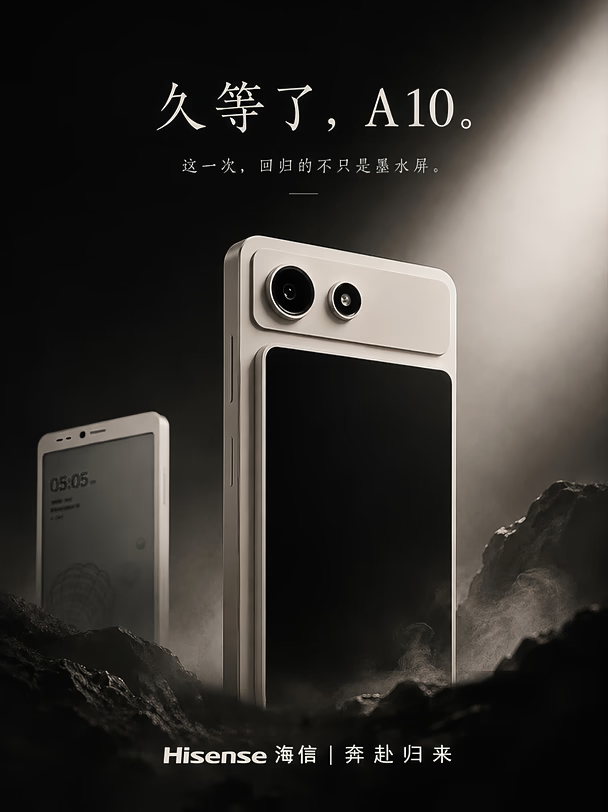
(Image source: Official Hisense)
Hisense has yet to announce pricing, but industry estimates put the full set between 2,000 and 3,500 yuan. It remains unclear whether the magnetic secondary screen will be sold separately.
These five products boil down to two core product philosophies. One is the function-driven approach taken by the Insta360 Snap: a straightforward selfie viewfinder built solely to meet users’ shooting needs. The other is the emotion-driven route pursued by OPPO Bubble and Honor, where selfie functionality is just a bonus feature, and the real selling point is that "you can wear it as a digital badge on the back of your phone." As for the Insta360 Mic Pro and Hisense A10, both must be bundled with their respective core devices, making them more of nice-to-have add-ons.
But as we raised at the outset: does anyone actually need this kind of accessory?
Let’s start with the selfie viewfinder function. In my view (Xiao Lei), this feature does solve a genuine pain point. Modern smartphones are packed with top-tier rear camera hardware — their bokeh effect and image quality already match or even outperform some point-and-shoot cameras. Front cameras, however, are held back by limited physical space and sensor size. Their output lags far behind rear setups, and can mostly only be improved through computational algorithms.
Taking selfies with the rear lens, meanwhile, means shooting completely blind. You’d likely delete 8 or 9 out of every 10 shots you take. A rear screen fixes this directly: it lets users shoot selfies with the phone’s best camera while seeing the framing in real time. This works on essentially the same logic as the cover-screen selfie feature on foldable phones.
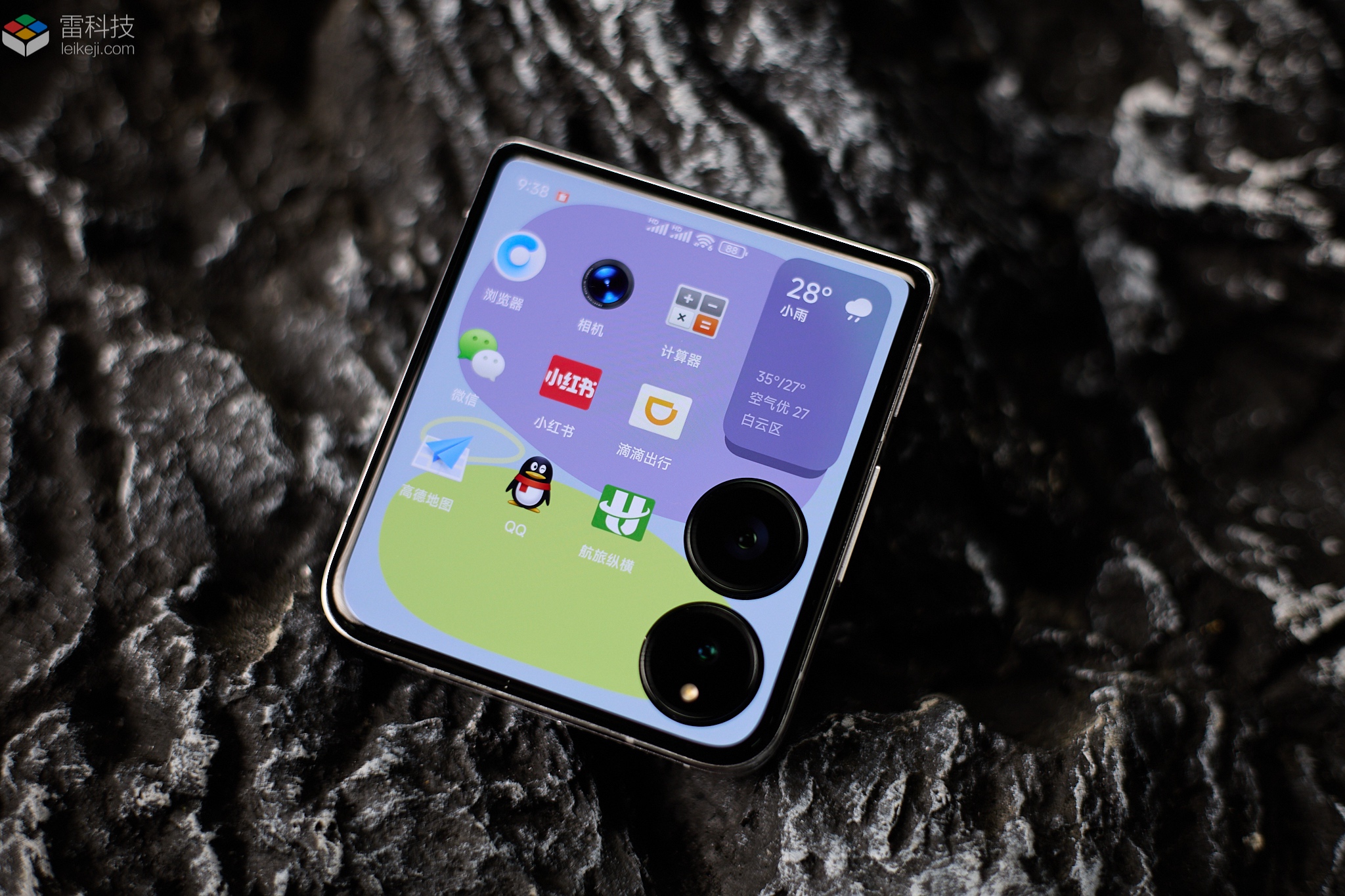
(Image source: LeiTech)
Honestly speaking, if you take fewer than ten selfies a year and barely use the front camera when going out, this function will be nothing but useless decoration for you. More importantly, searching for wireless monitor screens on e-commerce platforms reveals cheaper alternatives priced at just over 100 yuan that can fulfill selfie needs equally well.
You have probably noticed that the Insta360 Snap costs 499 yuan and at least comes with a large 3.5-inch screen, while the OPPO Bubble is also priced at 499 yuan yet only equipped with a small round screen smaller than two inches. What accounts for the price gap? Simply put, the premium lies in emotional value.
Why emotional value? For average consumers, the magnetic auxiliary screens made by OPPO and Honor are nothing more than glowing stickers. However, for numerous anime fans, users can upload images and videos of beloved characters to the screen and switch graphics anytime, amounting to owning countless anime badges. Additionally, the screen can be hung on bags, clipped to waists or placed on desks, serving as a luminous fashion accessory. From this perspective, buyers pay not merely for a display panel, but for unique personal style.
Why Are Manufacturers Reviving Secondary Screens All Over Again?
Smartphone brands are no strangers to rear-mounted secondary screens. Back in 2017, Meizu rolled out the Meizu PRO 7 equipped with a rear "small auxiliary screen", which supported selfie preview and notification alerts. The concept was remarkably forward-thinking, yet it came with multiple drawbacks: thicker phone bodies, higher production costs, shorter battery life and greater power consumption. Coupled with mediocre overall product competitiveness, this feature became the final straw that dragged down Meizu’s smartphone business.
In 2021, Xiaomi made another attempt. It embedded a tiny secondary screen right in the center of the rear camera bump of the Xiaomi 11 Ultra. It offered more functions than Meizu’s version, including customized always-off display images, rear-camera framing preview and battery level indication. Even so, Xiaomi stuck to the built-in design logic. The Xiaomi 11 Ultra itself was an all-out camera flagship packed with top-tier hardware. Its thumbnail-sized rear screen was nothing more than a trivial embellishment; few customers would purchase the phone solely for such a minuscule display. This secondary screen was short-lived and exclusive to the 11 Ultra lineup, with all succeeding models removing the feature entirely.
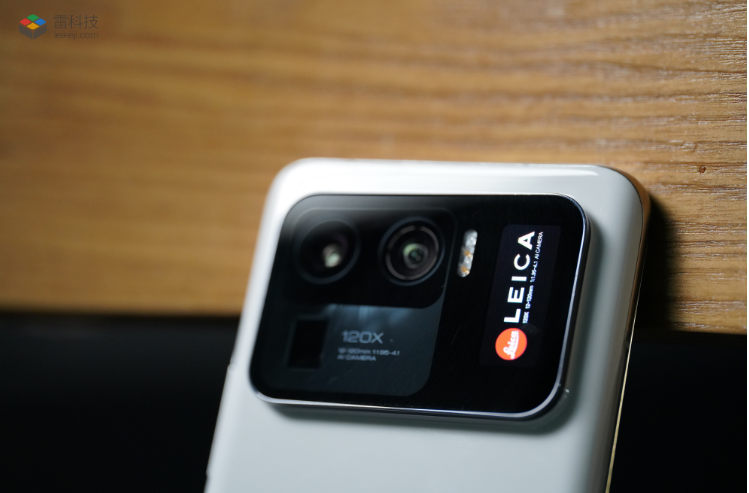
(Image source: LeiTech)
These two devices made manufacturers realize that integrating secondary screens into phones, whether big or small, forces consumers to compromise on overall device thickness, weight, cost and battery life for a display that most people barely use.
Therefore, brands have shifted strategies this time: instead of built-in screens, they adopt magnetic external attachments. The secondary screen is no longer an inseparable part of the phone but an optional accessory for purchase only when needed. This strategic shift eliminates the awkward downside of built-in designs, where users have no choice but to keep the screen even if they never use it. Additionally, round screens are inherently well-suited to serve as ornaments. Equipped with a lanyard, they become standalone charms that can be hung on bags or keychains without being attached to a phone. Such flexibility was beyond the imagination of Meizu and Xiaomi back in their attempts.
Another notable factor is the market’s growing acceptance of such gadgets. Over the past two years, online merchants selling comparable accessories have racked up sales exceeding 10,000 units per item on e-commerce platforms, proving genuine market demand that previously lacked big-brand participation. The four manufacturers’ latest launches aim to capture this niche market, and I am convinced more brands will follow suit.
Manufacturers innovate accessories amid the smartphone saturation era
Circle back to the core question: are magnetic rear screens worthwhile? In my opinion, it depends entirely on the user. For frequent selfie-takers, spending several hundred yuan eliminates guesswork when framing shots with the main camera, making the accessory highly functional and well worth the cost. For anime enthusiasts, a customizable digital badge beats traditional metal pins by a wide margin. For the general public, however, rear auxiliary screens fall into the category of items that feel exciting for only three days after purchase and are entirely unnecessary otherwise. They have never been essential smartphone hardware and are unlikely to become indispensable in the future.
That said, this matters little. The true value of magnetic rear screens lies in smartphone brands exploring a new business path: what products can be sold when phone sales hit a plateau?
Manufacturers used to rely on cramming more high-end hardware into handsets, yet now they pivot to accessory development, shifting from forcing features onto users to offering optional add-ons customers actively choose to buy. This developmental direction makes sense in my view, though these small screens are not robust enough to become the next blockbuster hit. Even so, brand experimentation carries minimal financial risk while opening up potential new avenues if successful.
Skip this purchase if you are neither an avid selfie shooter nor an anime fan. Saving 500 yuan for a nice meal is far more rewarding than buying a tiny round screen destined to gather dust in a drawer two months later. If you simply want to experiment with the fun novelty, go ahead. In an era where smartphones grow increasingly homogeneous and dull, gadgets that bring playful novelty have become hard to come by.
The WAIC2026, themed “Smart Partners, Co-Creating the Future,” has concluded.
The AI narrative has evolved—from stacking model parameters toward tangible Agent-driven productivity gains; heterogeneous computing and photonic computing continue pushing computational limits upward; embodied intelligence accelerates real-world deployment, bringing robots into homes and factories—turning physical AI into reality.
The LeiTech WAIC exhibition team has returned to Guangzhou and is now conducting intensive post-event analysis. Stay tuned!