 雷科技
雷科技




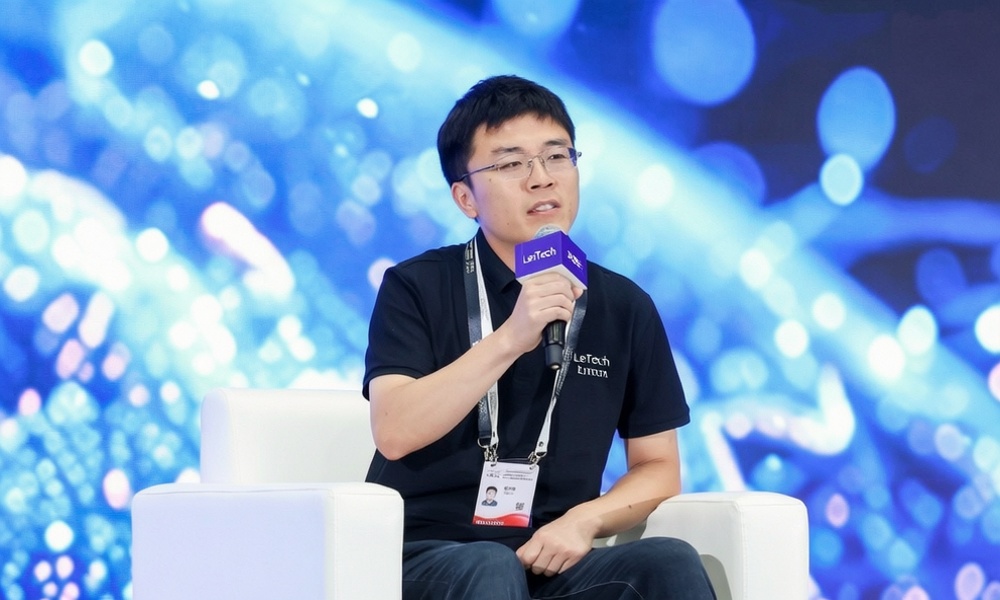

At the WAIC 2026 World Model "Six Dragons" Summit Forum, Xia Zhongpu, co-founder and CTO of Boundless Dynamics, together with multiple technical leaders across the industry, held in-depth discussions on the theme of "How to Drive Physical AI from Comprehension to Execution". Instead of focusing on niche use cases such as robots serving tea or folding clothes, participants centered their debate on a core question: How can robots truly grasp physical laws and make autonomous decisions in unfamiliar environments?
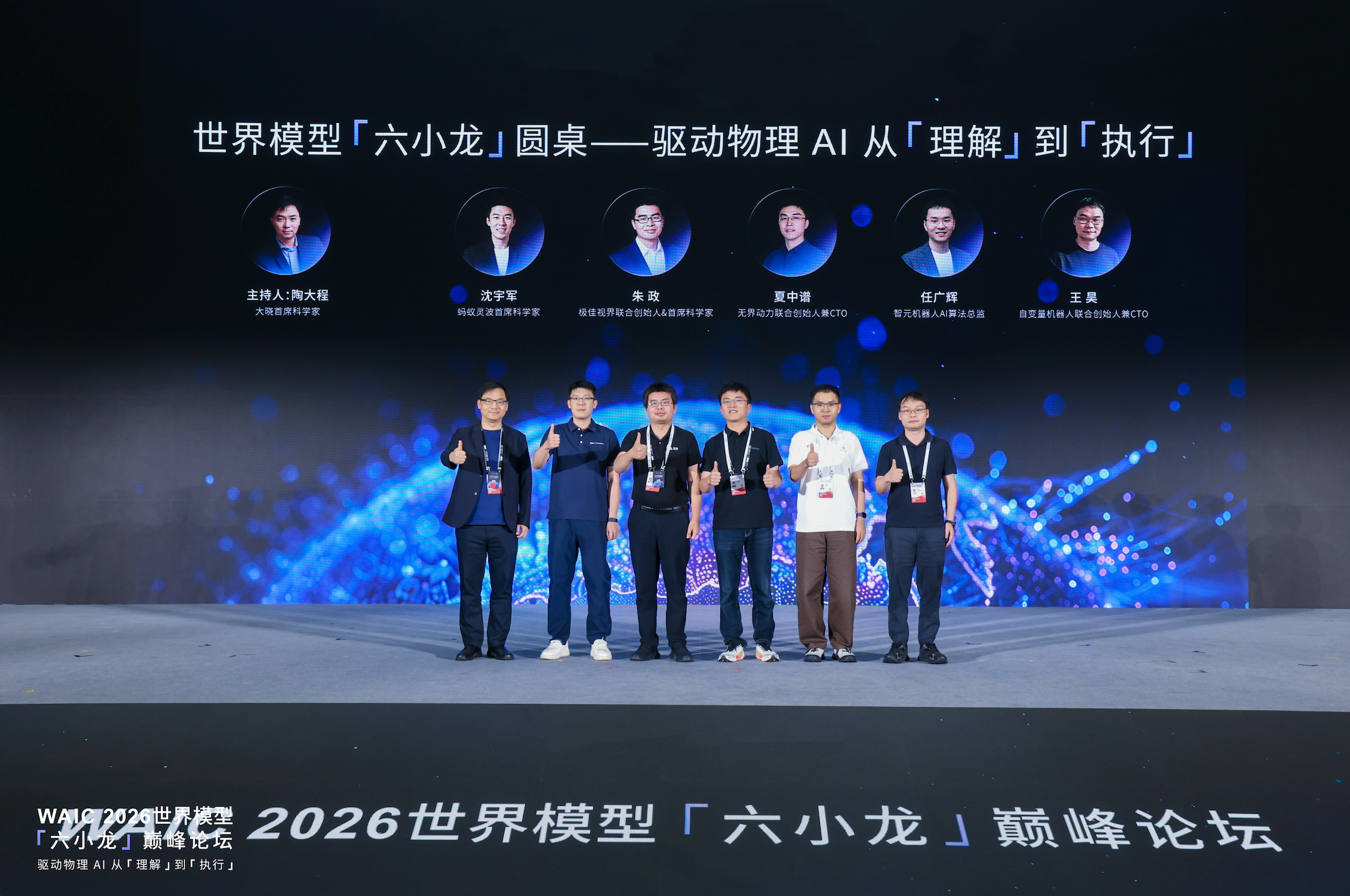
Image source: WAIC
In the past, mentions of world models mostly brought to mind applications including video generation and 3D environment rendering. It was widely assumed that if a model could predict the next video frame, it had effectively "understood the world". However, as the robotics industry matures rapidly, robots are in urgent need of models capable of perceiving the real physical world — frame-prediction-only models fall far short of meeting this demand.
According to Xia Zhongpu, video-related applications are merely one byproduct of world models rather than their core essence. Much like large language models learn linguistic structures and logic by predicting the next word, world models are designed to master the transitional relationships and causal rules governing state changes in the physical world.
Put simply, robots can pre-plan movements only when the model extrapolates future conditions based on current states, rather than rigidly following preprogrammed commands. This marks the most prominent distinction between embodied intelligence and conventional automated machinery.
For instance, traditional industrial robots repeat fixed motions on dedicated production lines yet malfunction once object positions, ambient lighting or operating procedures shift. True embodied intelligence enables robots to proactively adjust behaviors amid environmental uncertainties and variations to complete scheduled tasks.
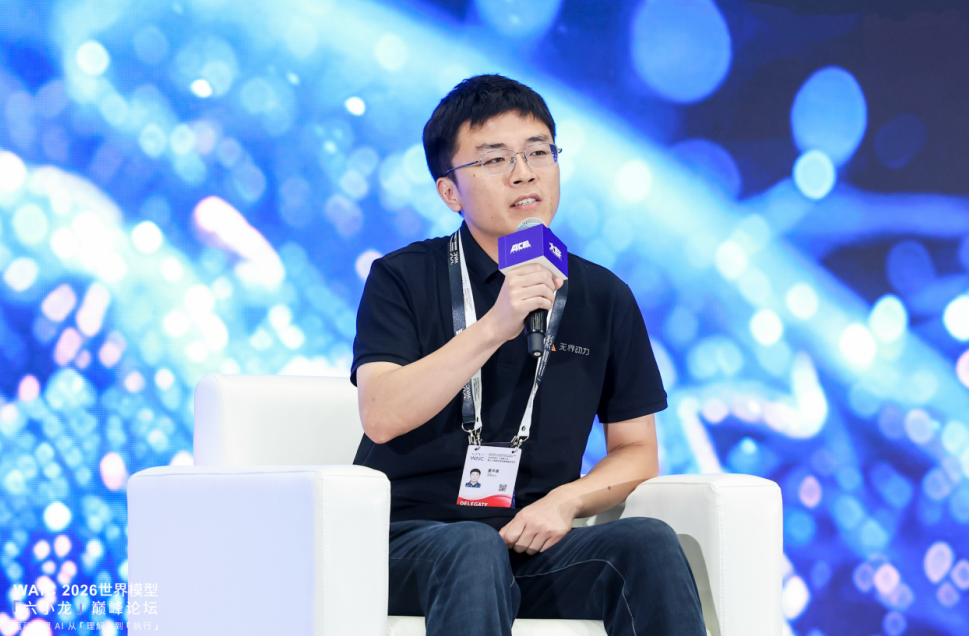
Image source: WAIC
Scaling up model parameters alone cannot deliver such predictive capabilities. Against this backdrop, Boundless Dynamics adopts a technical path combining latent-space world models with reinforcement learning.
The latent-space world model builds the robot’s "world cognition", enabling it to interpret environmental conditions, physical rules and causal connections. Reinforcement learning, by contrast, shapes the robot’s "decision-making logic". Via continuous trial and error plus reward feedback, it guides robots to optimize execution strategies.
To summarize, the latent-space model empowers robots to perceive the physical world, while reinforcement learning handles action decision-making, ultimately granting robots full autonomous mobility.
Drawing on this framework, Boundless Dynamics recently launched the MWA General Embodied Brain. Instead of predicting frame-by-frame visuals in pixel space, MWA calculates state transitions within a unified latent space to filter redundant data and cut computing overhead.
Additionally, it incorporates long-term sequential action modeling, which infers multiple consecutive movements in a single run and enhances consistency during long-duration tasks. This functionality proves vital: robots deployed in factories, households and other real-world settings routinely tackle complex assignments consisting of dozens or even hundreds of steps, and long-task processing capacity is a prerequisite for commercial adoption.
From an industrial perspective, world models have ushered embodied intelligence into a new competitive era. Previously, manufacturers competed over hardware specifications such as robot cost, durability and battery life. With most hardware bottlenecks resolved, competition has shifted to AI "brains" and tangible real-world implementation.
Boundless Dynamics holds clear advantages in this field. Its business covers industrial production lines, commercial premises and household scenarios, with cumulative global orders worth 100 million US dollars.
With deeper integration between world models and robotics, genuinely embodied intelligent robots may soon become commonplace in daily life.
The WAIC 2026, themed “Intelligent Partners, Co-Creating the Future,” is now underway!
The AI development paradigm has evolved—from stacking model parameters toward deploying agent-based productivity; heterogeneous collaboration and photonic computing continue pushing the boundaries of computational performance; and embodied intelligence is accelerating real-world adoption, bringing robots into homes and factories to turn Physical AI into reality.
The LeiTech WAIC Exhibition Coverage Team has arrived in Shanghai to capture this year’s pinnacle moment of AI industrialization—stay tuned!