
 雷科技
雷科技




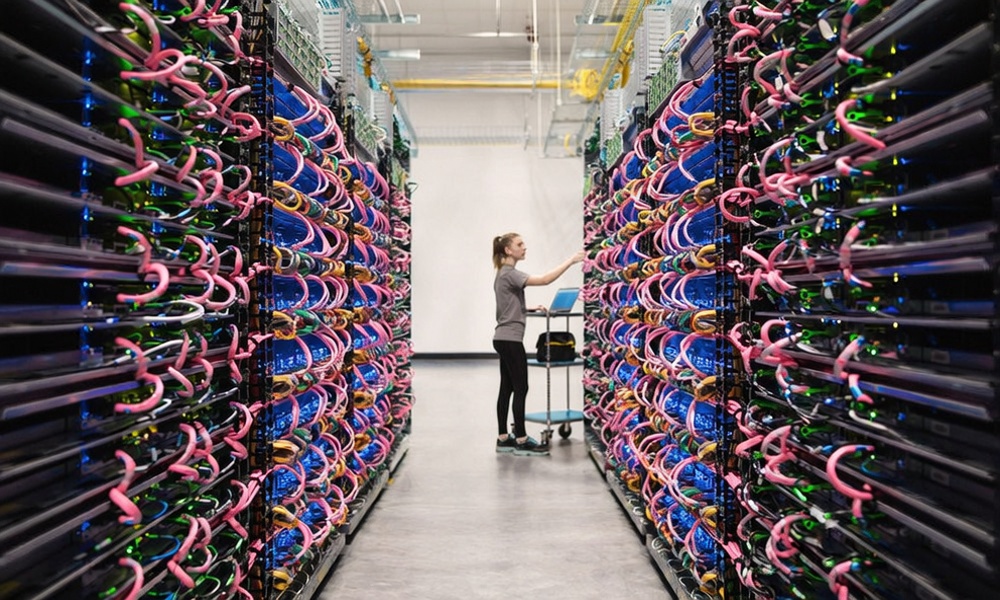

Can You Earn Passive Income by Running GPUs at Home? The Truth Behind Sunrun’s Distributed Computing Plan.What would you think if a company claimed you could make easy passive income just by installing a tiny gadget in your electricity meter? A scam? A money grab? That is probably what most people would assume at first. But what if the proposal came from Sunrun, one of the largest solar energy companies in the United States?
According to the plan unveiled by Sunrun, the model is fairly straightforward. Any household enrolled in the program that is equipped with solar power generation and home energy storage systems can apply to have GPU computing nodes installed. These nodes primarily handle AI inference tasks. Sunrun centrally manages device scheduling, energy distribution and computing power sales, and sells the aggregated computing capacity to enterprise clients.
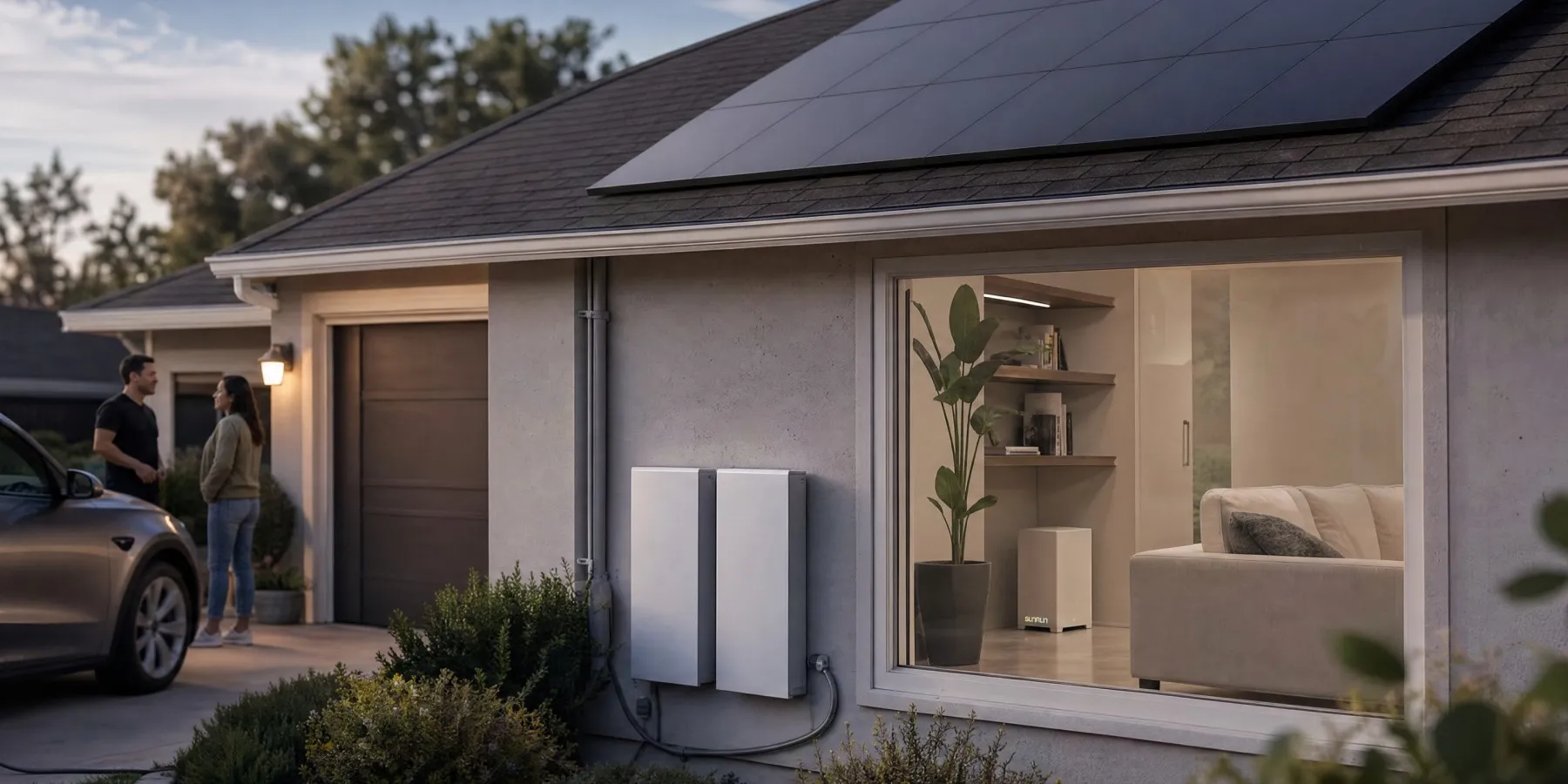
Image source: Sunrun
Admittedly, the idea is intriguing and seems to hold considerable promise. After all, many U.S. tech companies have been planning to build new computing power centers, but progress has been slow due to issues around electricity supply and environmental protection. For example, New York State announced a statewide moratorium on construction approvals for large data centers, initially for one year. Meanwhile, the city of Monterey Park in California passed a ballot measure banning the construction of data centers within city limits.
Local residents’ opposition is not purely driven by environmental concerns. Many cities and states in the U.S. already face power shortages, and the arrival of data centers would only worsen the problem — not only severely disrupting residential electricity access, but also driving up utility bills sharply.
According to information compiled by Leitech (ID: leitech), cloud computing giants such as Microsoft and Amazon have even begun building their own power plants to meet the energy demands of their data centers. In a sense, China and the U.S. face opposite headaches when it comes to computing power: China has surplus electricity but lacks high-end GPUs, while the U.S. has plenty of graphics cards sitting idle in warehouses due to insufficient energy supply.
That is where Sunrun steps in with a bold claim: building data centers the traditional way is too slow. With so many households and solar installations already in place, deploying computing nodes across them could create a massive computing cluster with millions of nodes — all powered by free, clean solar energy. Sounds tempting? Hold on, let’s break this down properly.
Sunrun Wants to Run GPUs Using Residential Electricity
Distributed computing networks are hardly a new concept. As AI models’ demand for computing power has grown, numerous companies have explored this technology. Huawei, for instance, has rolled out many edge computing nodes integrated into base stations and telecommunications equipment. These nodes not only supply computing resources for local devices, but can also contribute spare capacity to form ad-hoc computing networks when needed.
Sunrun, however, is looking to go a step further. The edge computing devices it deploys will serve solely to continuously “generate” computing power, which is then sold to AI companies. Yet Sunrun has not yet revealed its profit-sharing model, raising questions over whether the scheme is actually financially viable.
While solar power is theoretically “free”, equipment depreciation and maintenance costs still have to be factored in. What’s more, these computing nodes consume electricity that could otherwise be used by the household or sold back to the grid. Combined with the upfront cost of the computing hardware itself, insufficient profit margins could mean the investment never pays off before the equipment reaches the end of its lifespan.
In our view, the reason Sunrun hasn’t rolled out the service on a large scale right away is likely that pricing negotiations with AI companies have yet to reach an agreement. Large enterprises have little interest in fragmented, distributed computing power, while small and medium-sized businesses may not have the demand for it. To mitigate risks, companies also tend to prefer established cloud service providers.
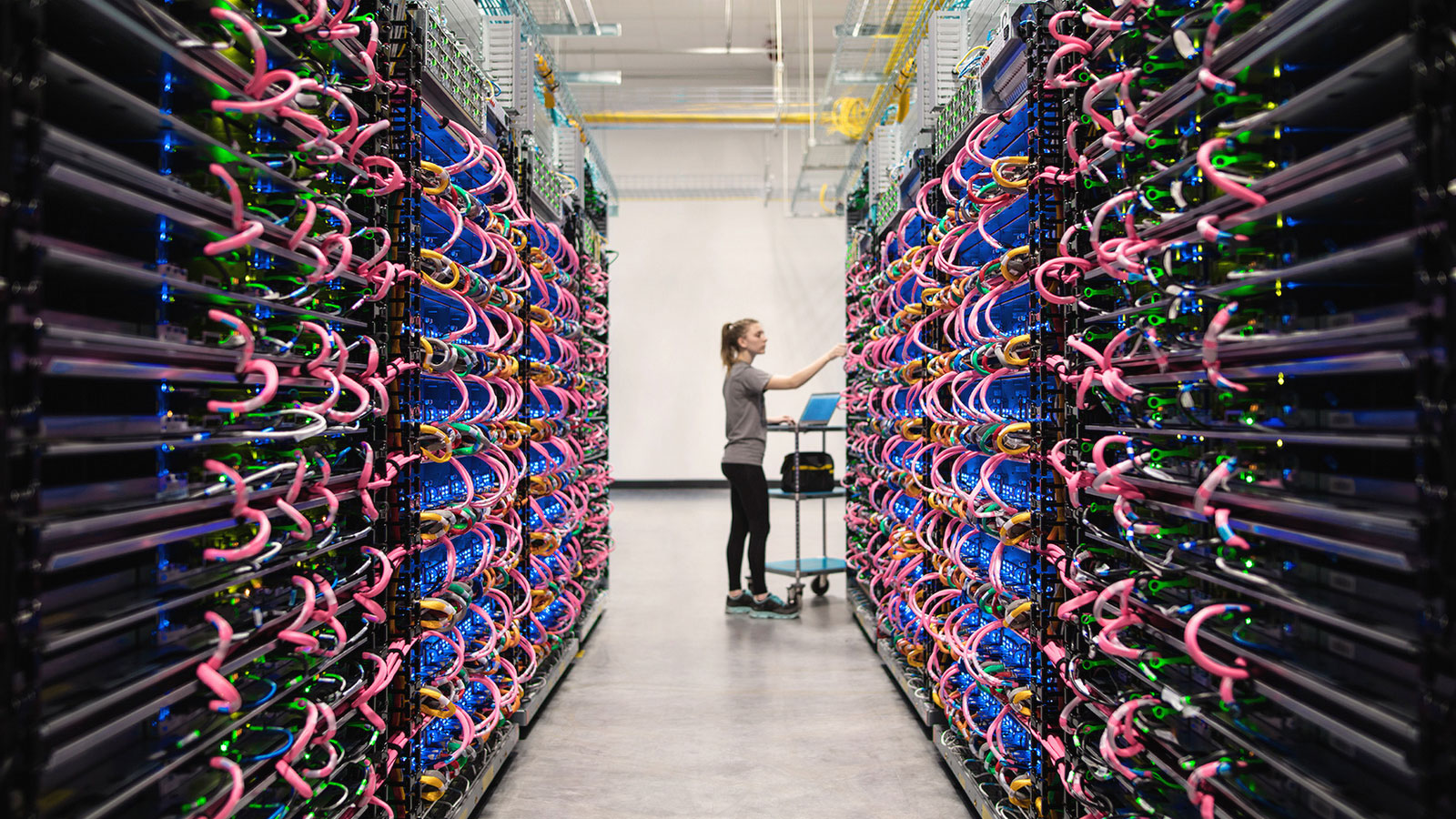
Image source: Google
In reality, we believe this Sunrun project will most likely fail. From a computing usage perspective, distributed computing networks can only meet edge-side AI inference demands. For this to work, AI companies and Sunrun would need to build an efficient, intelligent computing allocation architecture that lets users quickly locate the nearest available computing node when calling AI inference services, and tap into its processing power.
Why can’t this computing power be used for model training? The answer is simple: latency. Model training requires massive, frequent data exchanges, which means latency between computing nodes must be minimized to avoid “dead time” — when the chip is running but no data has arrived yet.
To improve training efficiency, NVIDIA and data center operators spent years reducing latency in ultra-large computing clusters down to microseconds, making it possible to train models with trillions of parameters. That is exactly why AI giants like OpenAI spend huge sums building massive computing clusters with tens or even hundreds of thousands of nodes, rather than stitching together existing data centers into one big computing network.
Realistically, Sunrun can only negotiate with these giants to see if its distributed computing capacity can be integrated into their networks, sold at a lower cost than traditional data center computing. But with reports emerging of OpenAI developing its own custom chips and Google selling TPU computing clusters externally, it is far from certain that Sunrun’s computing costs will undercut those of purpose-built AI chips.

Image source: OpenAI
Sunrun is far from the first company to explore deploying home-based computing units to form a distributed network. SPAN, another company specializing in smart power distribution equipment, previously announced a program called XFRA. The company purchased a batch of RTX PRO 6000 GPUs and deployed them in homes and small commercial locations to serve as both computing nodes and cloud gaming nodes.
In our view, this model is somewhat more feasible, since SPAN can sell both computing power and cloud gaming time. The RTX PRO 6000 offers gaming performance roughly on par with the RTX 4090. With capped resolution and frame rates, it can easily support 3 to 4 PCs running AAA games simultaneously.
While we are not optimistic about Sunrun’s current plan, the core idea deserves recognition. In the future, distributed computing networks could well become another “AI brain” alongside traditional data centers.
From Base Stations to Satellites: Compute Is Getting Closer to You
Strictly speaking, the “computing power crunch” in the AI industry today stems from two separate shortages: insufficient computing capacity for model training, and inference computing power located too far from end users — which drives up response latency and data transmission costs.
While distributed computing networks cannot solve the first problem, they have the potential to address the second. This is especially true as AI agents become more widespread, making edge computing power increasingly critical.
First, looking at use cases: AI agents typically require continuous inference and may access hardware such as cameras, microphones and displays. These tasks are granular and demand low latency, making it impractical to handle them entirely in the cloud or on end devices — especially when the ideal AI terminal is envisioned as a device even smaller than a smartphone.
That is where edge computing devices serve as the perfect complement. These more powerful, geographically close nodes can act as temporary external brains for AI agents, handling initial inference and task decomposition before offloading more complex work to cloud data centers — reducing the strain on central facilities.
That said, such nodes require fast response times and high reliability — standards that residential deployments struggle to meet. This is why Huawei has opted to integrate computing nodes into base stations: base stations already serve as local “data hubs” for their coverage areas, and their inherent reliability makes them naturally suited for edge computing.

Image source: LeiTech
Beyond base stations, another unexpected type of “edge” node may emerge over the next decade: computing satellites, part of the Star Hub Program announced at this year’s WAIC.
The first phase of the program will launch 2 computing satellites and 12 edge computing satellites to form an initial space-based computing network. The second phase will expand to 50 computing satellites and 100 edge computing satellites, ultimately building a 24/7 computing center made up of thousands of satellites.
Some readers may be confused at this point: “You just said the advantage of edge computing is low latency and reliability. Wouldn’t satellite computing be even slower?” That is true, but space-based computing centers are not built for ordinary consumers. They serve sectors where ground-based computing power is hard to reach, such as weather forecasting, disaster monitoring and maritime shipping.
In these scenarios, edge computing networks solve the basic problem of access. For tasks that do not require real-time responses, the latency of satellite computing is acceptable — and certainly better than having people haul heavy computing nodes around remote, rugged terrain.
What’s more, on a broader scale, edge computing doesn’t necessarily have to be “closest to people”.
For smartphones, cars and smart glasses, the nearest edge node might be a nearby base station. For ocean-going cargo ships, equipment in uninhabited areas and low-altitude aircraft, the closest node might instead be a satellite passing overhead. Therefore, the “edge” in edge computing is not a fixed geographic concept. It is a relative term, referring to computing nodes that are closer to where data is generated and can process tasks faster than large cloud data centers.
Is a Layered Computing Network the Endgame for AI Computing?
Therefore, what really deserves attention is not whether Sunrun’s project will succeed, but the broader trend it represents: computing power is “spilling out” from a small number of large data centers and gradually dispersing across all kinds of edge computing devices.
If we compare the early internet to a large tree, users are the leaves on its branches. Data travels from the “leaves” and eventually converges on the trunk — the cloud data centers. But as AI devices such as agents, autonomous vehicles and robots proliferate, relying entirely on cloud computing for every task is clearly impractical.
No matter how fast networks become, it is impossible for billions of devices to access data centers simultaneously with zero latency, and doing so would also waste huge amounts of computing power. This is where independent “branches” off the main trunk are needed to handle these demands — much like a banyan tree, where distant branches grow new aerial roots as the tree matures.
As a result, the AI computing network of the future will most likely be a layered system: smartphones and PCs handle the simplest local tasks; residential and base station nodes process low-latency continuous inference work; large data centers take on complex models and high-load tasks; and satellites fill the gap for remote areas and special scenarios.
From this perspective, Sunrun’s home computing node plan is not entirely far-fetched — it is just overly idealistic, and faces major obstacles to widespread adoption at this stage. That does not mean the direction is wrong, though. It is similar to electric vehicle charging stations in their early days: it will inevitably go through a long period of exploration and standardization before it can become a mature business model.
Perhaps one day, our computers and smartphones will also be able to act as computing nodes when idle. By then, computing power may become an even more ubiquitous resource than electricity.
The WAIC2026, themed “Intelligent Partners, Co-Creating the Future,” is now underway!
AI narratives have shifted—from stacking ever-larger model parameters toward tangible Agent-driven productivity gains; heterogeneous collaboration and photonic computing continue pushing compute limits upward; embodied intelligence accelerates real-world deployment, bringing physical AI to homes and factories.
LeiTech’s WAIC2026 reporting team has arrived in Shanghai, delivering live coverage of AI’s annual industrialization milestone—stay tuned!