
 雷科技
雷科技





The 9th World Artificial Intelligence Conference (WAIC) officially opened at the Shanghai World Expo Center on July 17. As the annual flagship event of the AI industry, this year’s conference once again gathered leading large language model companies, AI application developers and hardware manufacturers from home and abroad. Leitech AGI (leikejiagi), the AI-focused new media outlet under Leitech (ID: leitech), also sent a reporting team to Shanghai for on-site coverage.
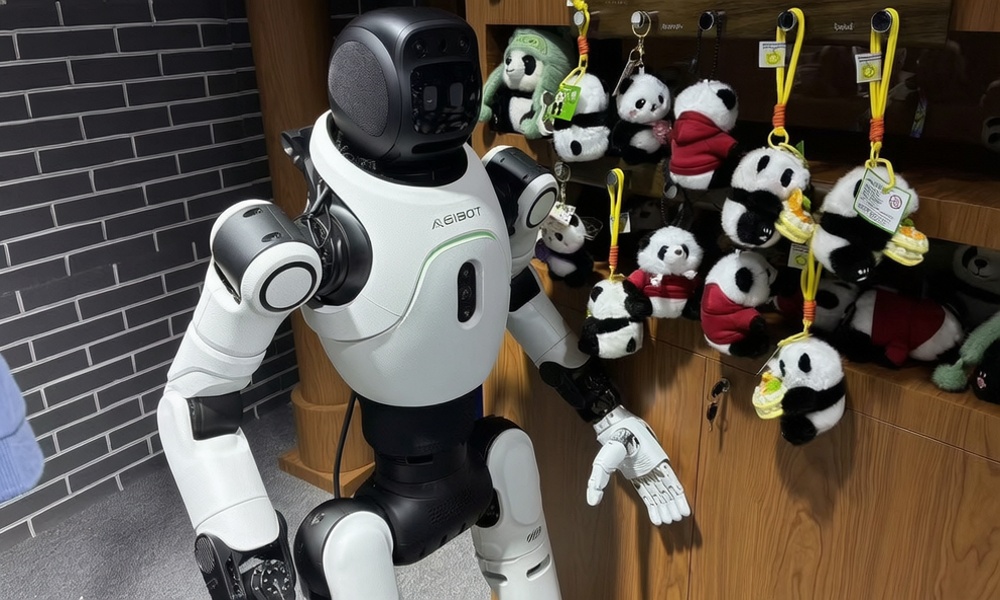
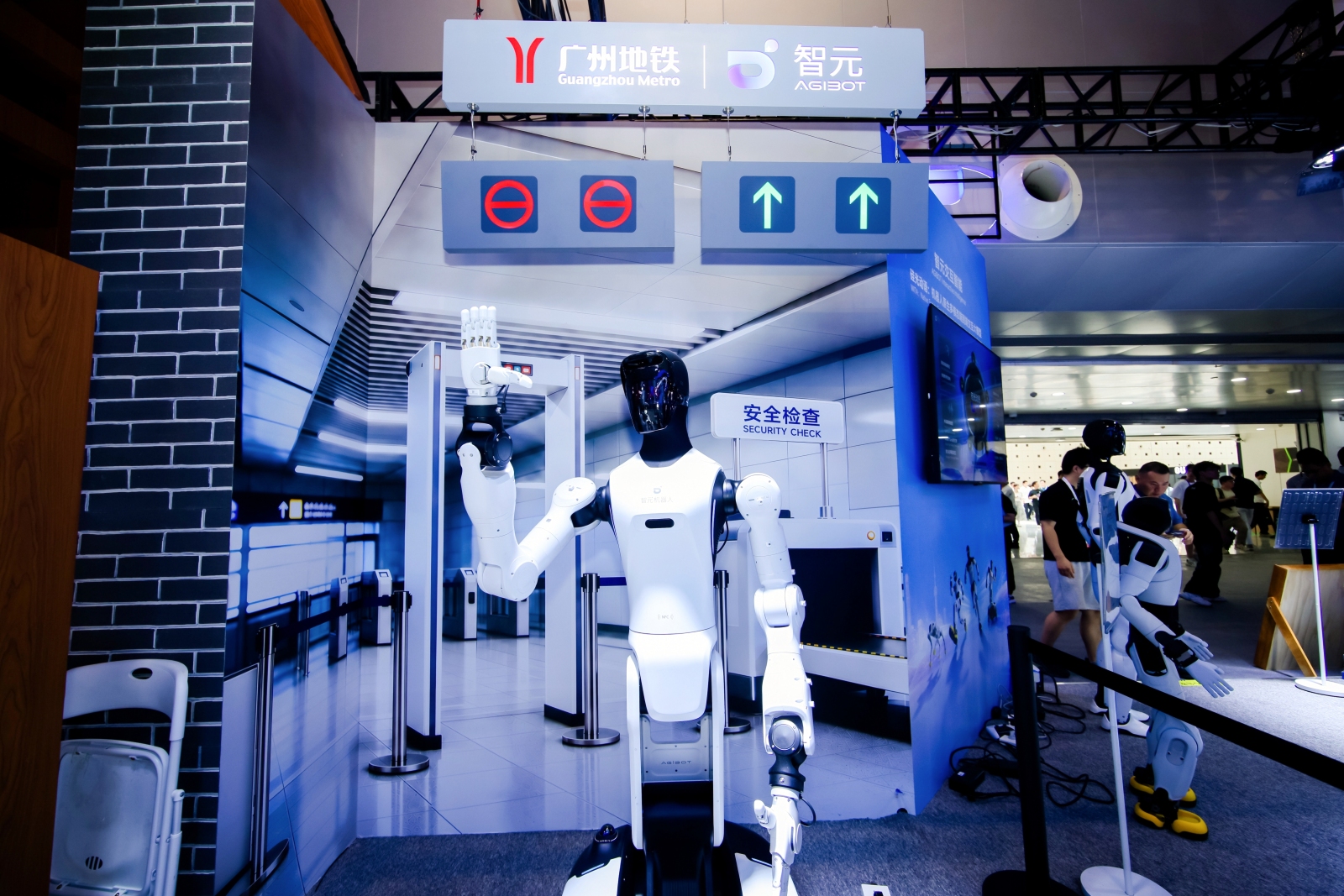
At the WAIC venue, we spotted a sign marked “Star Exhibit of the Show” standing beside a 1.74-meter-tall AgiBot humanoid robot. According to AgiBot staff, it is the only embodied AI robot selected for the “Star Exhibit” list at this year’s WAIC. The company also noted that 60 AgiBot robots are deployed across the exhibition hall for public services including guidance, tour navigation and item transportation throughout the conference. In other words, the entire expo center serves as AgiBot’s showcase floor.
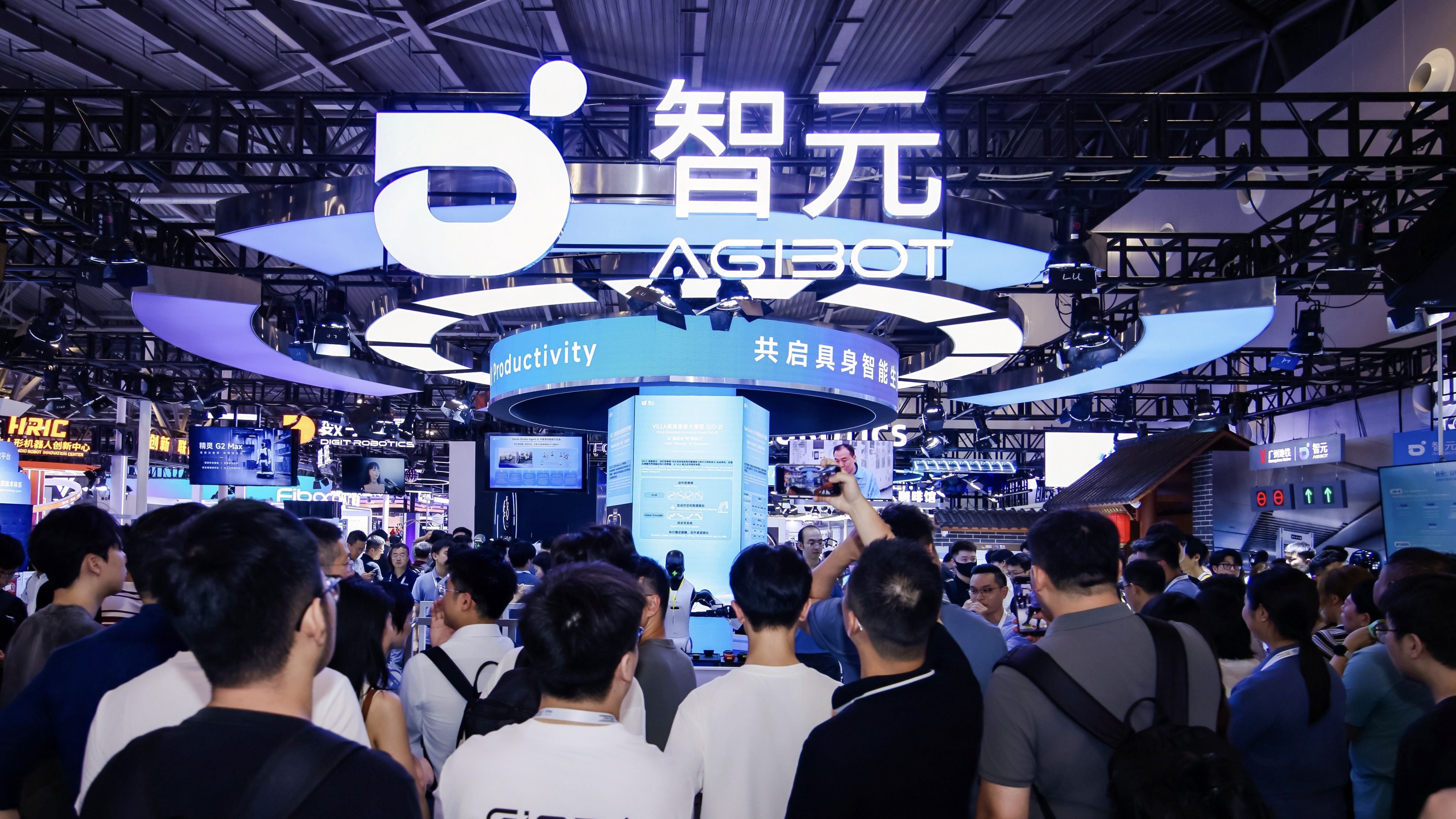
(Image source: Official Zhiyuan)
The award-winning Expedition A3 Ultra boasts impressive specifications: standing 1.74 meters tall and weighing 60 kilograms, it features 51 degrees of freedom across its body, a 5kg payload per single arm, and is powered by the NVIDIA Thor chip delivering 700 TOPS of computing power. It supports hot-swappable dual battery packs for non-stop battery replacement, enabling 8 to 10 hours of continuous operation. Its modular design allows for easy part replacement in case of malfunctions, and it comes with a full suite of features including autonomous charging, unattended operation and four layers of active safety protection.
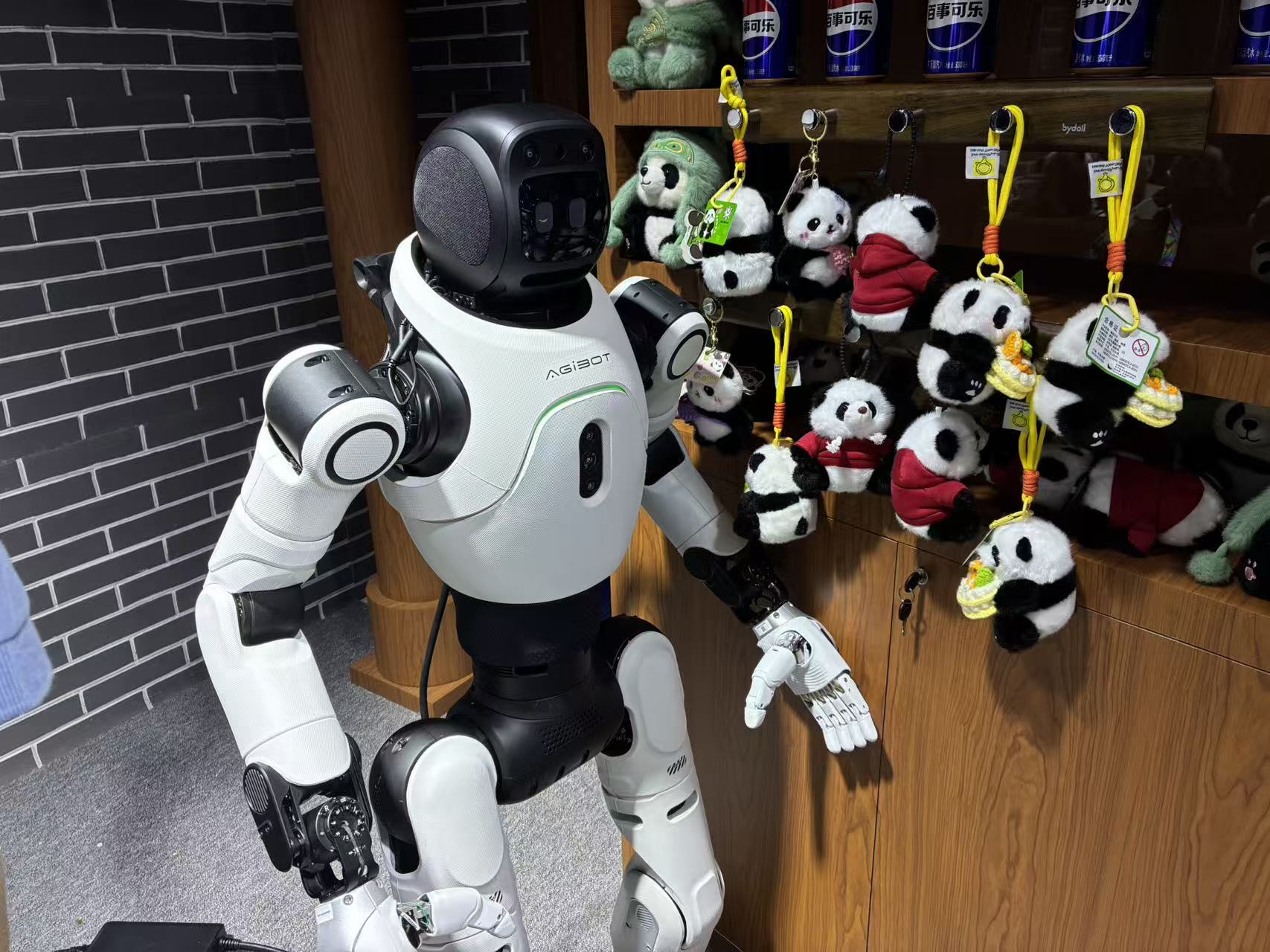
(Image source: On-site photography by LeiTech)
In short, this robot is not just a static display for photos — it has fully functional working capabilities and can even operate 24 hours on duty. Peng Zhihui, CTO of AgiBot (widely known as “Zhihuijun”), stated at the venue that the industry should no longer judge humanoid robots by whether they can pull off a single impressive demo, but by whether they can be mass-produced, delivered to customers, and truly integrated into daily operations.
Talk is cheap, however. Whether robots can actually perform real work can only be proven on factory floors. AgiBot announced that eight Elf G2 robots have been running continuously on a tablet quality inspection production line for 105 days, with a 99.99% operation success rate and an efficiency reaching 80% to 90% of human workers. Each work cycle takes 18 to 20 seconds, translating to 310 units per hour. Scene calibration can be completed in as fast as 15 minutes, production line reconfiguration and retraining takes no more than 4 hours, and equipment reuse rate reaches 95%.
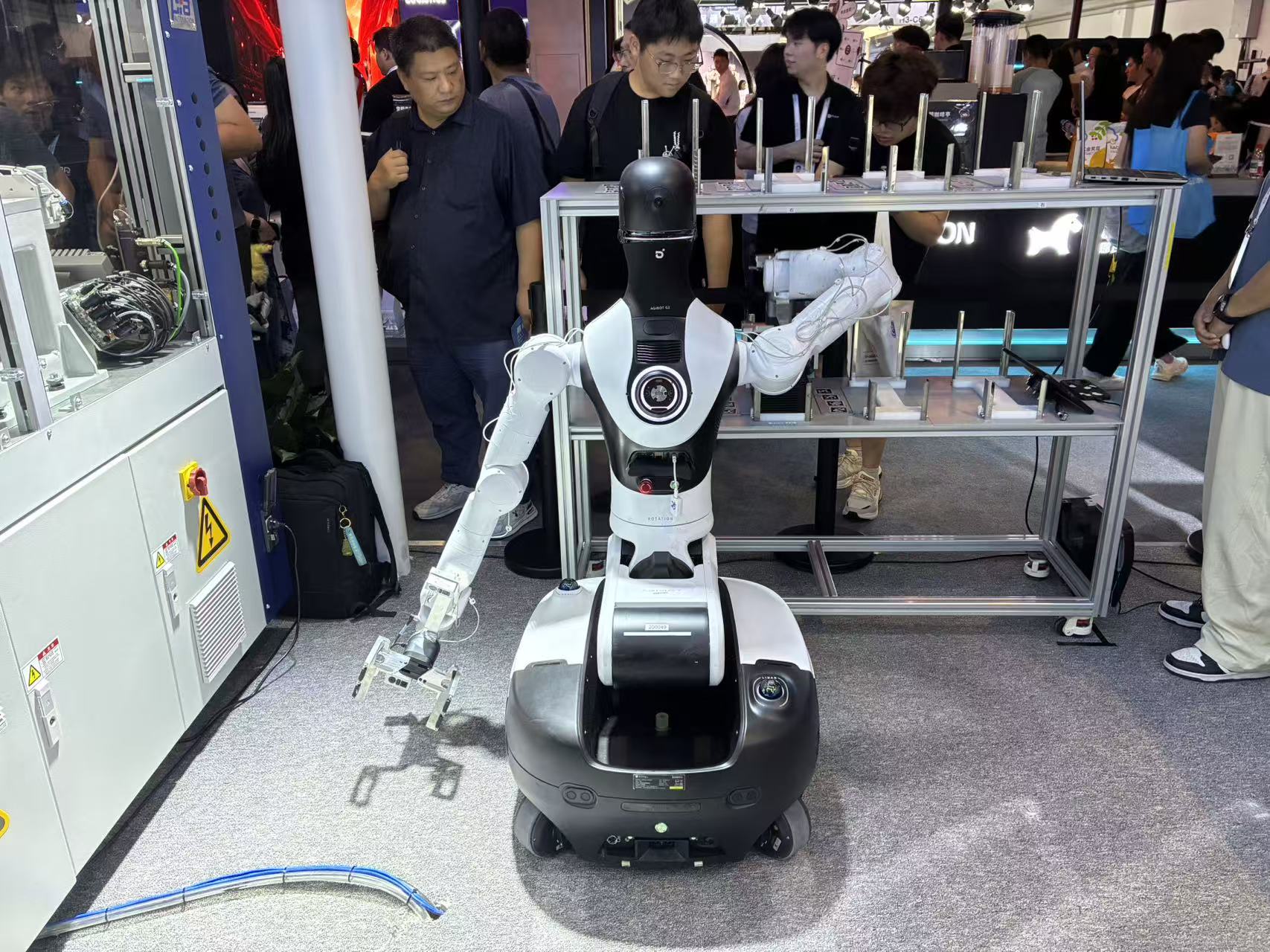
(Image source: On-site photography by LeiTech)
Even more critical is the deployment speed. AgiBot said the first robot took four months from factory arrival to full production line integration, while the second unit took only one week. Li Long, head of the robotics business unit at AgiBot’s partner Longcheer Technology, revealed plans to deploy nearly 1,000 robots in the factory. Four units are already running stably on site, with the number set to expand to 100 in the third quarter.
For the past two years, footage of humanoid robots in factories has mostly been limited to short videos, with few manufacturers daring to host live broadcasts or publicize real operations. AgiBot not only took the plunge, but held a cumulative 140-hour unedited, unrehearsed live broadcast. When a robot can work nonstop for over 100 days without glitches, it evolves from a photo-worthy “exhibit” into a productive “employee”.
Full Product Matrix: Four Form Factors for Four Scenarios
Beyond these two models, AgiBot unveiled several new products at the show:
Expedition A3 Ultra, focused on public services and commercial reception
Elf G2 Max, a heavy-duty industrial model with a 50kg peak dual-arm payload, developed with JD Logistics for warehouse palletizing
Lingxi X2 EDU, designed for science and education with a detachable modular structure
Critical Point OmniHand 3 Ultra-M, a dexterous hand brand spun off as an independent entity in January this year, which closed three funding rounds in six months and reached a valuation of USD 1 billion
Kuotuo, a riding robot
The four form factors correspond to four scenarios: full-size humanoids for service and interaction, wheeled dual-arm units for factory floors, dexterous hands for precision end-effector operations, and quadruped robots for special inspection tasks.
It is clear that AgiBot wants to convey that the robotics industry has shifted from simply “selling robots” to “delivering tangible results”. As Peng Zhihui put it, “Customers don’t care what models or technologies you use. They only care if you can help them cut costs and get the job done.”
By the numbers, AgiBot’s growth is undeniably remarkable: 6 units in 2023, 1,000 units by early 2025, 5,000 units by the end of 2025, the 10,000th unit in March 2026, and the 15,000th unit on June 28 — tripling from 5,000 to 15,000 in just half a year. For comparison, the Ministry of Industry and Information Technology (MIIT) estimates total annual humanoid robot shipments in China at 100,000 units, meaning AgiBot alone accounts for one-sixth of the market.
(Image source: Official Zhiyuan)
AgiBot is far from alone. At this year’s WAIC, robotics manufacturers across the board unveiled striking data: Leju Robotics presented a perfect replica of a real factory production line, while Zhishen Technology announced 15,000 units in quadruped robot shipments — all backing up their claims with hard, verifiable figures.
AgiBot’s growth trajectory is not without hurdles. In automotive factories, where traditional robotic arms already handle 90% of standardized processes, humanoid robots can only fill gaps in narrow spaces and flexible scenarios. In 3C manufacturing plants, one humanoid robot replacing two workers saves around 140,000 yuan in labor costs per year, but equipment depreciation and maintenance run 180,000 yuan annually — giving it a longer investment payback period than industrial robotic arms.
This means that in the near term, humanoid robots will find their biggest stage in public services and specific industrial workstations, rather than fully replacing human labor. As Peng Zhihui himself noted, what the industry lacks most is data. Compared to large language models trained on the entire internet, embodied AI still lags 3 to 5 orders of magnitude in data volume. What is more, it requires high-dimensional data from the physical world, which carries extremely high collection costs. That is why AgiBot open-sourced one million hours of data this year, and plans to expand that to 10 million hours next year.
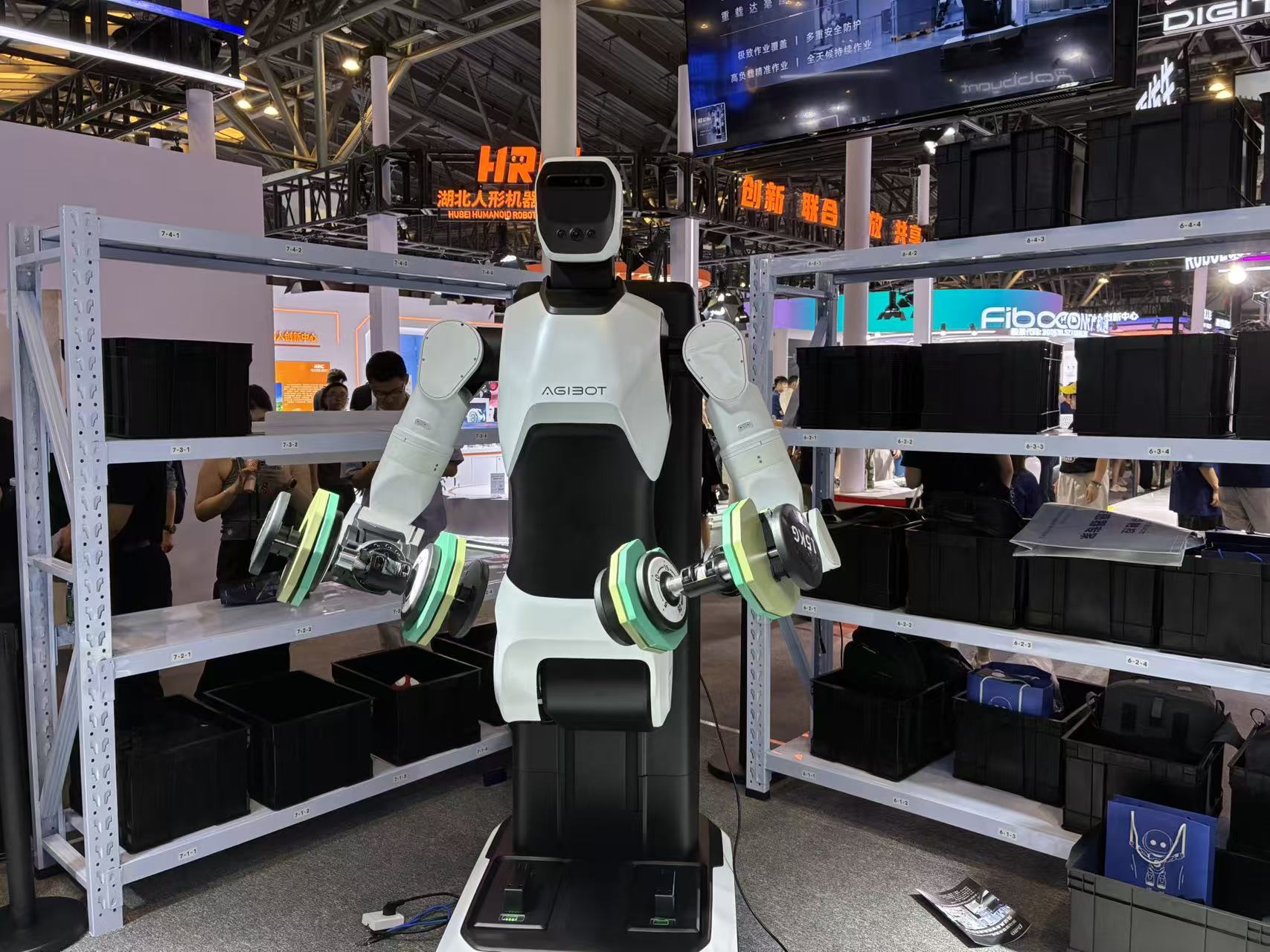
(Image source: On-site photography by LeiTech)
For a company founded only three and a half years ago, hitting 15,000 units in mass production, seeing annual revenue surge from 60 million yuan to 1.05 billion yuan, winning the Star Exhibit award at WAIC, and deploying robots that work 105 consecutive days in leading factories — these achievements firmly place AgiBot at the forefront of the industry. Whether it can maintain this momentum over the next year remains to be seen.
The WAIC2026, themed “Intelligent Partners, Co-Creating the Future,” is now underway!
The AI narrative is shifting—from stacking model parameters toward tangible Agent-driven productivity gains; heterogeneous collaboration and photonic computing continue pushing computational ceilings higher; embodied intelligence accelerates real-world adoption, bringing robots into homes and factories to make Physical AI a reality.
LeiTech’s WAIC exhibition reporting team has arrived in Shanghai to capture the annual pinnacle of AI industrialization—stay tuned!