
 雷科技
雷科技






July 17, 2026 witnessed the official opening of the World Artificial Intelligence Conference (WAIC) at the Shanghai Expo Center. As an annual grand event for the AI industry, WAIC is comparable to a comprehensive proficiency test for this sector. Model developers, chip makers, terminal brands and robotics enterprises converge here, showcasing their most competitive products and technologies developed over the past year in Shanghai.

Image source: LeiTech
To keep up with cutting-edge trends in the AI industry, Leikeji (Account ID: Leikeji) sent its team to Shanghai this year to bring audiences first-hand updates on the AI sector.
Just like previous years, large models remained a core highlight at this year's WAIC. Kimi unveiled its 3T-parameter K3 model ahead of WAIC’s opening. FaceOn continued embedding MiniCPM into mainstream hardware devices to deliver intelligence to edge terminals. Companies including StepFun, Doubao and Honor integrated models into mobile operating systems, turning AI from an isolated feature into a system-level assistant capable of controlling apps and handling various tasks.
Nevertheless, from Leikeji’s perspective, the focal points of WAIC have shifted notably compared with past editions.
At the Agibots booth, the GO-2 embodied foundational model powered robots to complete loading, unloading and boxing work on assembly lines. Magic Atom’s Magic-VLA K02 demonstrated on-site capabilities such as box stacking, glue sealing and clothes sorting. More than 60 Agibots robots even took charge of on-site guidance services throughout WAIC. A growing number of large models are stepping out of the digital realm and advancing toward physical AI that interacts with the real world.
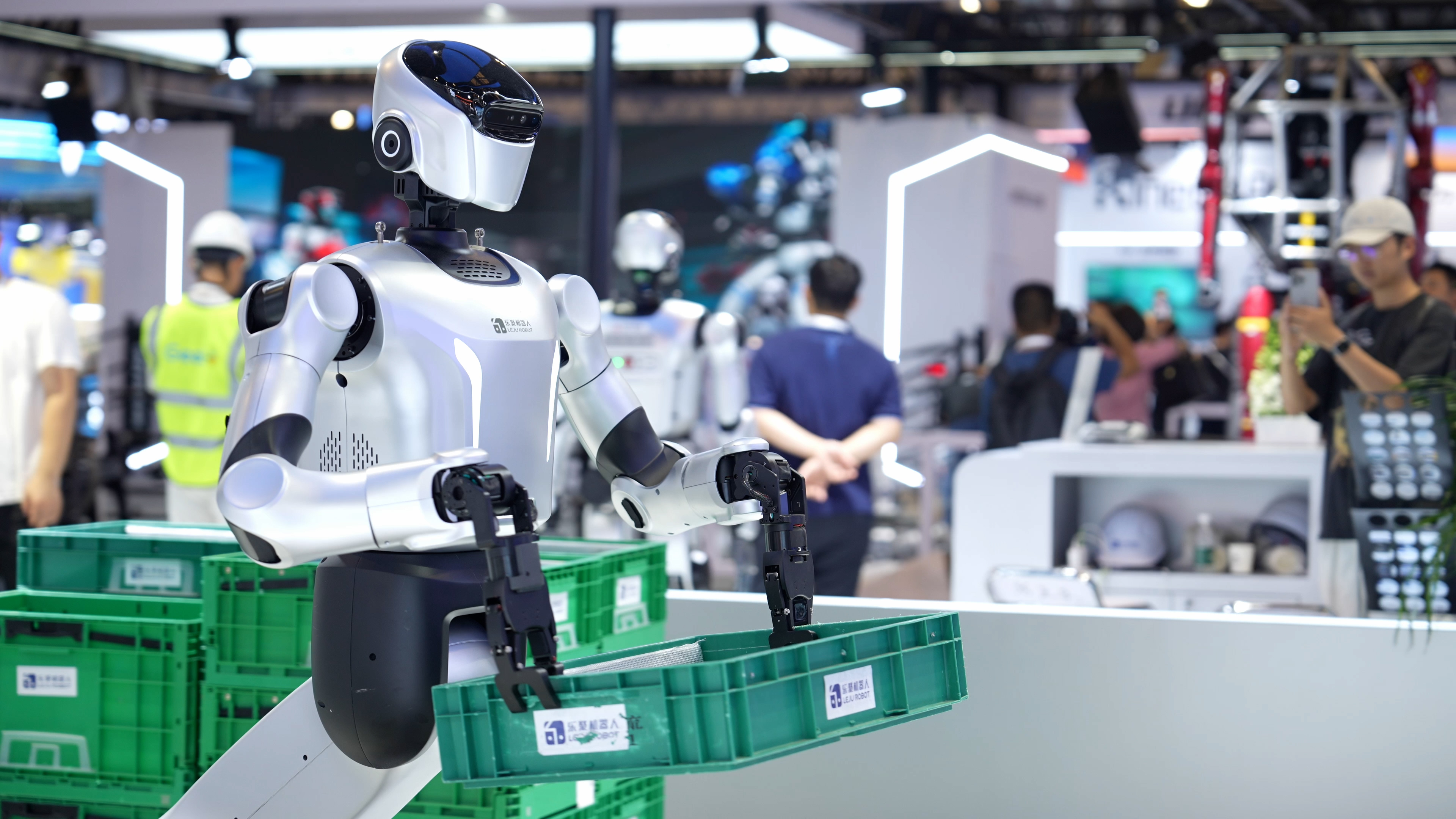
Image source: Aqrobotics
It is worth recalling that when large model technology saw its explosive growth in 2023, competition in the AI industry revolved around larger model parameters and broader format compatibility. Even in 2025, manufacturers mainly competed on models’ context window capabilities and inference performance. Almost overnight, large models previously confined to apps and APIs have broken out of chat interfaces and extended into the physical world. Even industry terminology has shifted; the term once known as the "large model base" is now widely referred to as the "foundational model".
In LeiTech’s opinion, the transition from the digital world to the physical world is the most remarkable trend at this year’s WAIC.
AI Competition No Longer Focuses on Model Parameter Volume
The shift from the digital space to the physical world has first and foremost altered how we evaluate large models.
For example, whenever new models were launched in past years, public attention centered largely on parameter size, context length and benchmark test results. When FaceOn exhibited MiniCPM at WAIC, it also demonstrated the model’s performance against other models of the same parameter scale.
Nevertheless, parameters cannot be directly converted into tangible user experience for ordinary consumers. Users will not adjust their daily routines such as booking tickets, checking the weather and making spreadsheets merely due to an expanded model context window. No matter how many AI functions a smartphone carries, if users still need to manually switch back and forth among map software, payment tools, chat apps, document editors and browsers, it cannot be defined as a genuine AI device. It is nothing more than an ordinary cellphone installed with AI applications.
This gave rise to the concept of AI Agent. Users only need to inform the AI of their demands, and the model is capable of not only understanding requirements but also independently invoking relevant services to accomplish tasks on users’ behalf. The Agent-powered smartphones showcased at this year’s WAIC precisely reflect this trend:
StepFun embedded its personal AI agent Amoo into the underlying layer of the STEPX Neo mobile system. Doubao and Nubia continued to upgrade GUI Agent technology, enabling models to fulfill cross-application tasks by identifying screen content and simulating human operations. Beyond smartphones, this industry-wide shift toward Agent adoption is even more evident across diverse sectors.

Image source: StepFun
Take previous AIoT hardware as an example. Many so-called AI hardware devices in the past were nothing more than Android phones equipped with customized operating systems, such as the Rabbit R1. However, numerous AI devices tested by LeiTech this year have started to feature Agent capabilities.
Embodied Intelligence Serves as AI’s Real-World "Agent"
Some readers may wonder why AI Agent is brought up amid the era of embodied intelligence. The logical connection is easy to clarify:
Classified by the capability evolution of large models over recent years, the first phase focused on language comprehension and content generation, while the second centered on Agent functionality. Embodied intelligence and world models represent the core pursuits of large models in the third phase.
In the era of embodied intelligence, foundational models are required not only to interpret human speech but also to perceive the physical world and respond autonomously, with VLA serving as a typical example. Encouragingly, the practical deployment of embodied intelligence and world models was clearly demonstrated at WAIC 2026.
AI companies including Agibots, Magic Atom and Lex Robotics exhibited embodied intelligence solutions applied to factory assembly lines during the exhibition. QY Robotics went a step further by deploying robots to provide on-site visitor guidance services at WAIC. Admittedly, repetitive assembly-line tasks are less visually striking than robot dancing or martial arts performances. From an industrial perspective, nevertheless, these mundane manufacturing tasks better embody the practical value of embodied intelligence and world models compared with demonstrative performances.
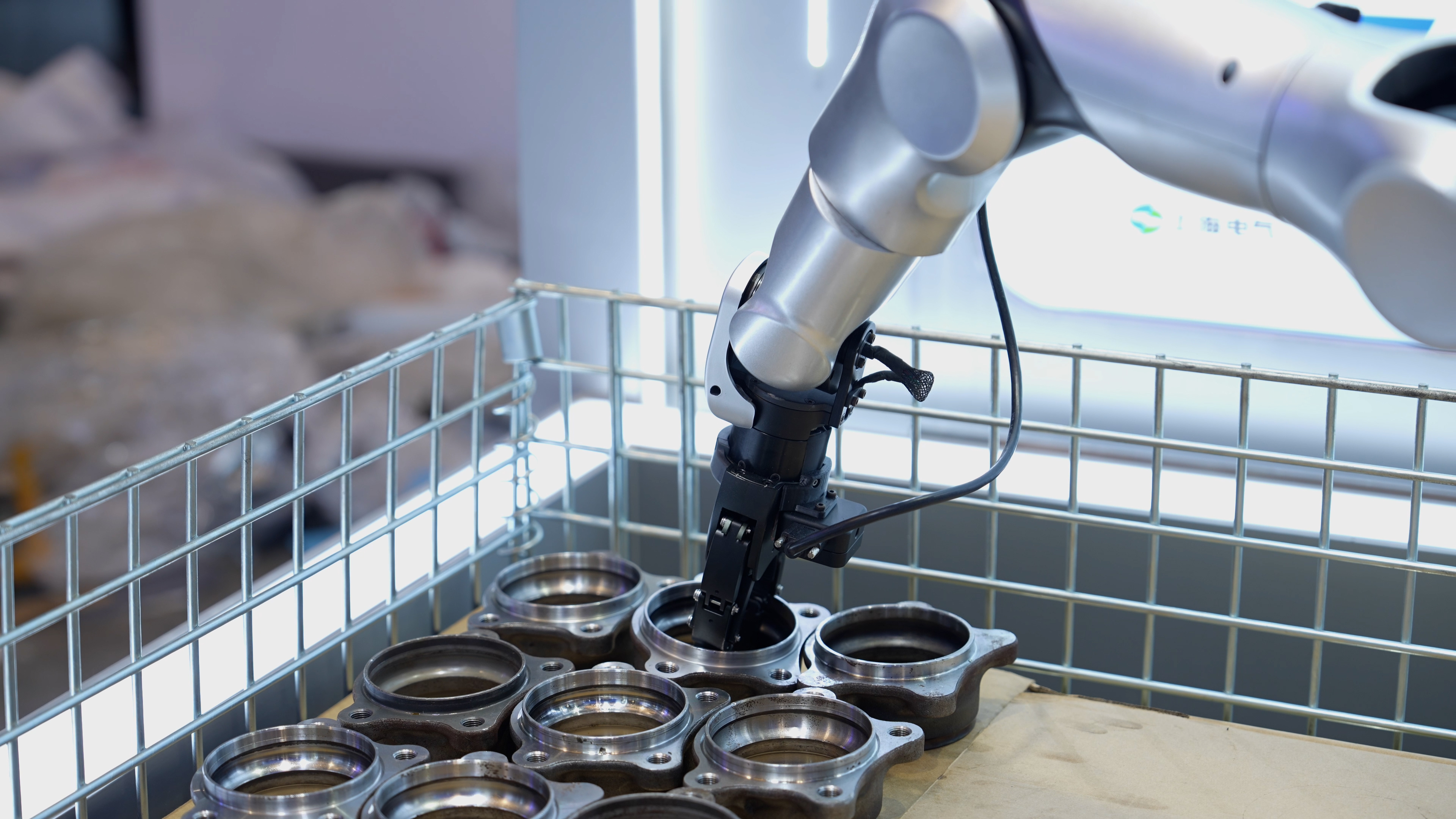
Image source: Aqrobotics
Moreover, these repetitive assembly-line tasks align well with the current development status of embodied intelligence. Compared with household scenarios, factory tasks are relatively fixed. The assembly-line model allows workflows to be broken down infinitely, and there are clear criteria for judging whether tasks are completed.
More importantly, such scenarios can supply authentic data for large models within a relatively controllable environment. Robots operate in scenarios with relatively well-defined rules. Enterprises identify problems and accumulate data from real-world operations, further train models with the collected data, and ultimately extend such capabilities to more complex tasks.
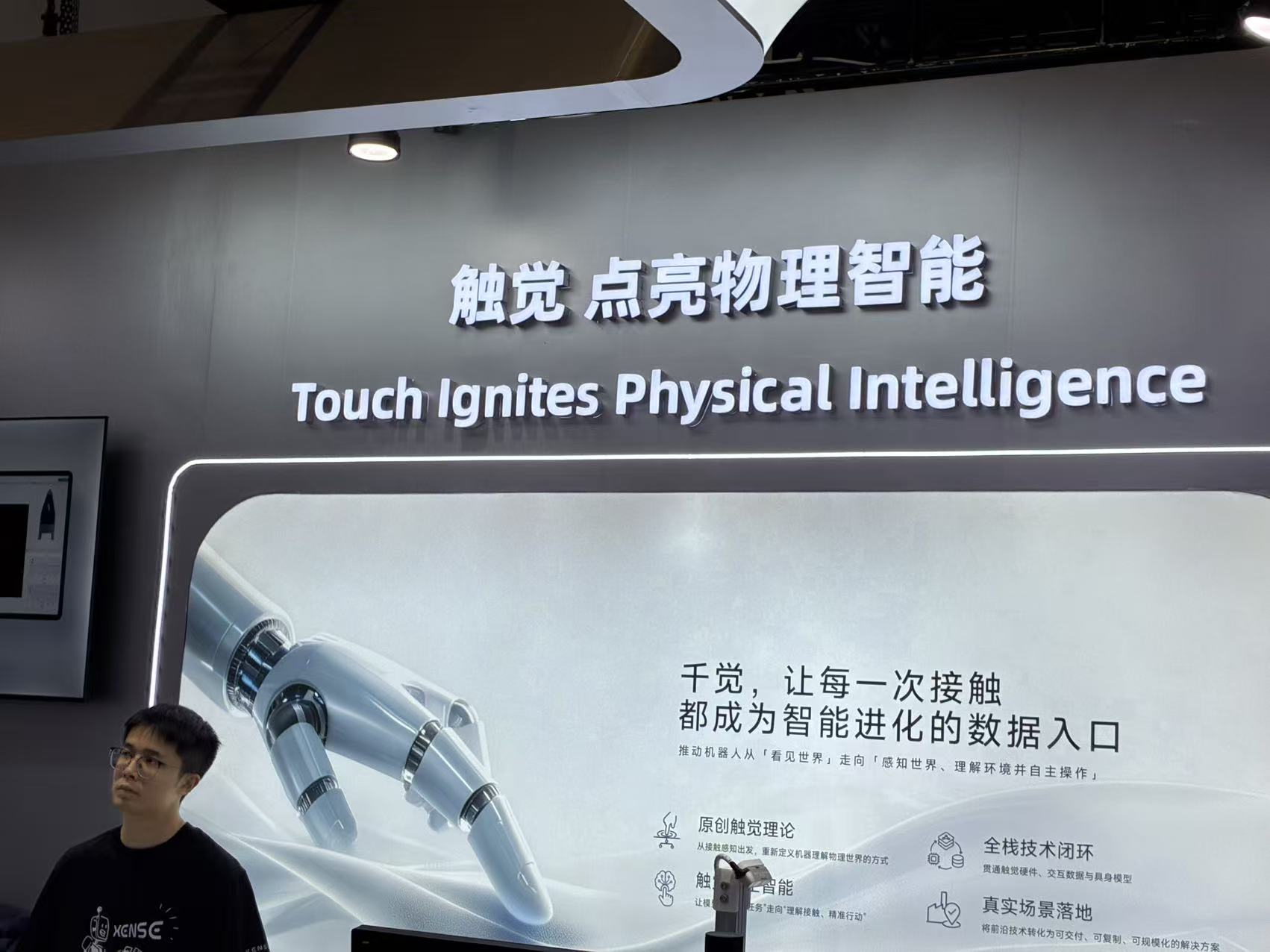
Image source: LeiTech
For this very reason, a growing number of mainstream large AI model enterprises discussed embodied intelligence and world models at this year’s WAIC, highlighting that their products are poised for large-scale rollouts covering tens of millions of units. From LeiTech’s perspective, "stepping out of screens and embracing the physical world" has become the industry-wide consensus across the AI sector in 2026.
Entering the Physical World Demands New Capabilities for Large Models
Naturally, the adoption of embodied intelligence in real-world scenarios imposes new capability requirements on large models.
Take thinking and response latency as an example. In scenarios such as chatbot conversations and AI image generation, users generally face no severe consequences when waiting an extra few seconds. By contrast, every single second of delay for large models may trigger grave outcomes in physical scenarios represented by embodied intelligence.
On factory assembly lines, the impact of each second of latency gets multiplied, dragging down overall production efficiency. When it comes to autonomous driving, response speed bears a direct relation to users’ life safety.
Accordingly, more model developers have revisited the concept of edge intelligence at this WAIC. Leveraging the merits of local on-device deployment for edge models, they cut down response latency for embodied intelligence models.
Take FaceOn, the only large model firm among the New Six Little Tigers specializing exclusively in edge intelligence. Back in 2024, FaceOn proved via MiniCPM that compact edge models can deliver robust high-level capabilities. Unlike edge models built by other competitors, FaceOn’s edge models are built on an edge-native AGI architecture. Instead of being simplified variants derived via knowledge distillation from full cloud-based models, they are independently developed and natively designed for edge devices.
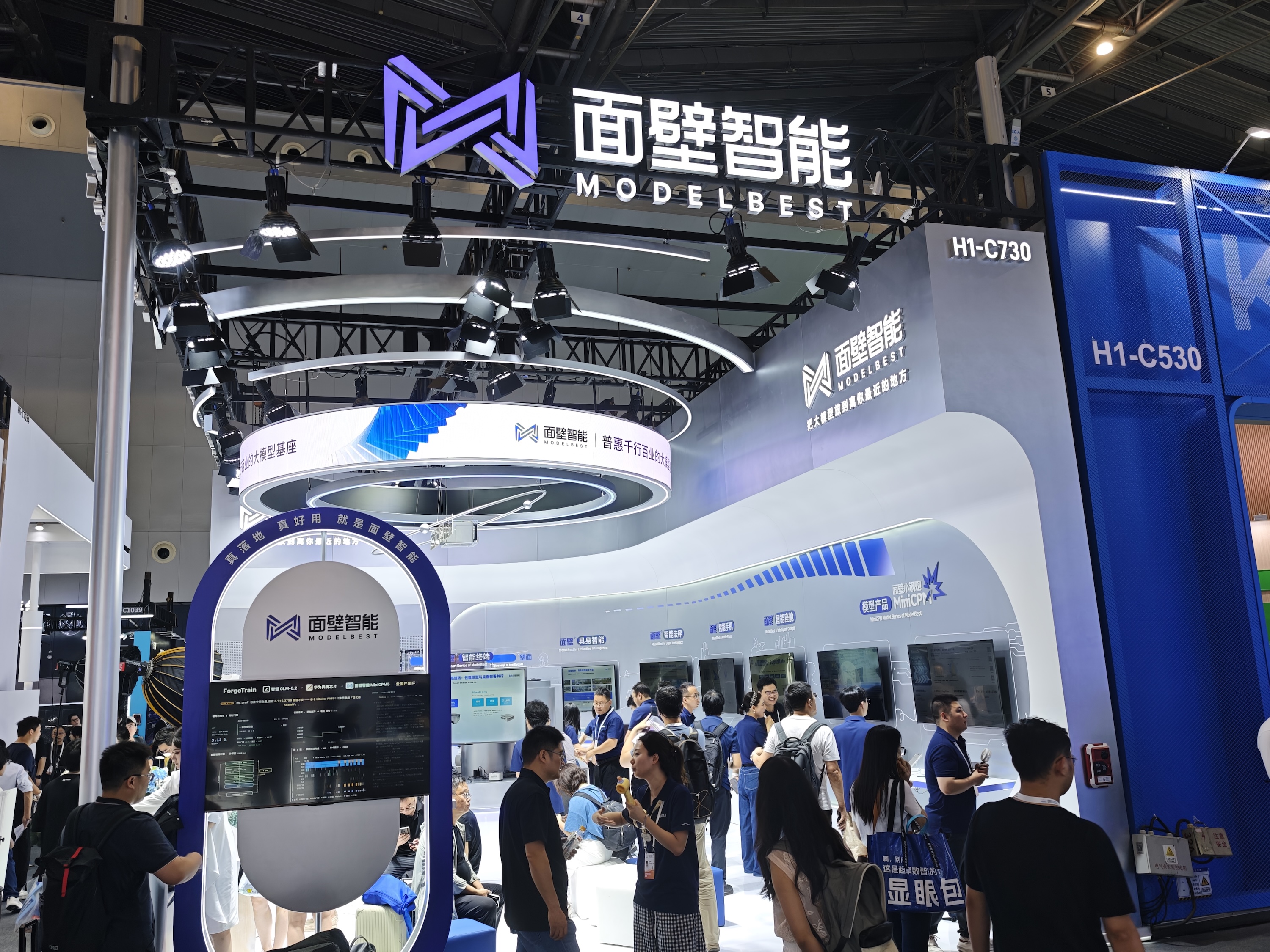
Image source: LeiTech
Thanks to such native edge-side attributes, FaceOn’s edge models deliver fast response and authentic inference capabilities without network access. While many other enterprises were still exploring ways to cut model latency to adapt large models to physical scenarios, FaceOn had taken the lead in mass-producing and delivering edge-side AI agents for the automotive sector.
Nevertheless, much like the mental arithmetic joke, response speed is only part of the equation. Any model capable of functioning reliably in the physical world must also learn to perceive dynamic changes in real environments.
World Models and Vision-Language-Action (VLA) have emerged as mainstream research directions in embodied intelligence precisely because they integrate perception, comprehension, reasoning and execution within a unified framework.
When a user commands "move this box onto the shelf", the model first parses the instruction, locates the box and shelf via camera vision, then commands the robotic arm to grasp and place the item. This process requires tight collaboration among language models, vision models and robot control systems. Disconnection in any link will compromise overall performance.
This cascading workflow makes full-stack models a critical shortcut for large models to land in physical scenarios. VLA connects vision, language and motion; world models predict potential outcomes of actions; edge models enable low-latency on-site responses. D-Robotics showcased its Xuri S600 chip at WAIC, which perfectly embodies this full-stack hardware development mindset.
Is WAIC 2026 a Watershed Moment for Large Model Industrial Adoption?
After touring this year’s WAIC covering models, end devices and robotics, our team at LeiTech has noticed a clear shift in industry competition priorities.
Parameters, context windows and inference performance remain vital, as they largely determine the upper limits of model capacity. However, three factors set the baseline for real-world deployment: edge deployment capability, world model performance and full-stack competence. These attributes are also top priorities for clients in the embodied intelligence era.
Against this backdrop, the thematic shift of WAIC 2026 is entirely logical. Large model vendors discuss edge deployment and world models; robotics firms advance technical commercialization; chip developers tailor hardware products for robotic applications. These once-separate technological pathways have converged under the framework of embodied intelligence.

Image source: LeiTech
It is certain that the AI industry has entered a more advanced stage.
LeiTech holds the view that large models in this phase will step out of their "student era", where they merely cater to consumer-level applications, and achieve implementation in more rigorous industrial scenarios. Faced with new requirements for higher efficiency, greater stability and enhanced security, whichever player completes this transformation first stands a chance to take the lead in setting industry standards and seize a more advantageous position in the next round of AI competition.
Judging from the performance of various enterprises at WAIC 2026, China’s AI industry is fully prepared for this shift.
The WAIC 2026, themed “Intelligent Partners, Co-Creating the Future,” is underway!
The AI narrative has shifted—from stacking model parameters to delivering tangible Agent-driven productivity; heterogeneous computing and photonic computing continue pushing computational ceilings upward; embodied intelligence accelerates adoption, bringing physical AI into homes and factories.
LeiTech’s WAIC reporting team has arrived in Shanghai to capture the pinnacle moment of AI industrialization—stay tuned!