
 雷科技
雷科技




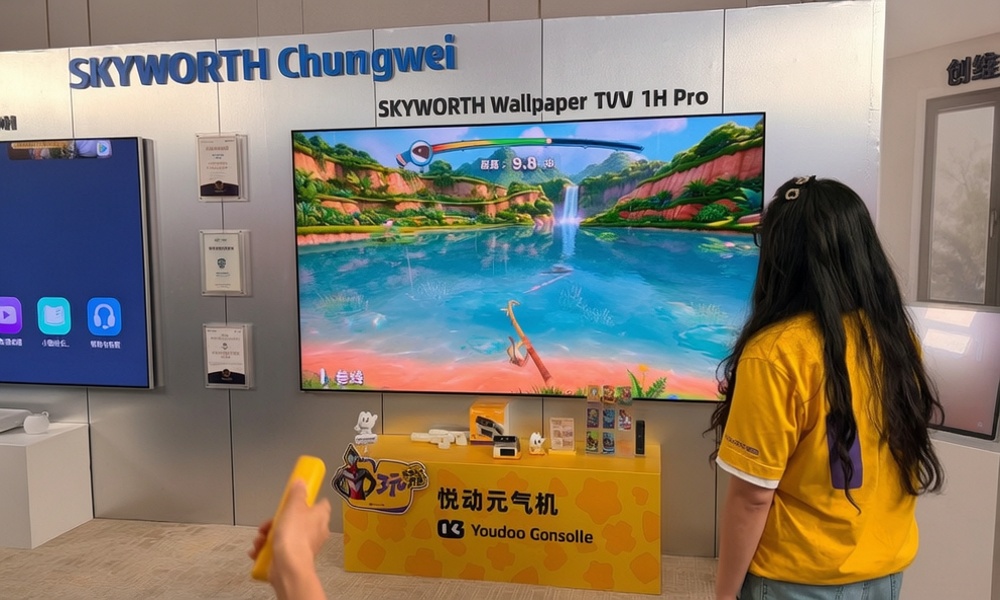

On July 22, Skyworth held its 2026 All-Scenario New Product Launch Conference. The venue proved quite surprising. Ordinarily, conferences bearing a year prefix are large-scale events, which would conventionally require venues such as stadiums or hotels. However, Skyworth picked an unexpected location: the Party and Mass Service Center within Skyworth Innovation Valley, simply a meeting room in an office compound.
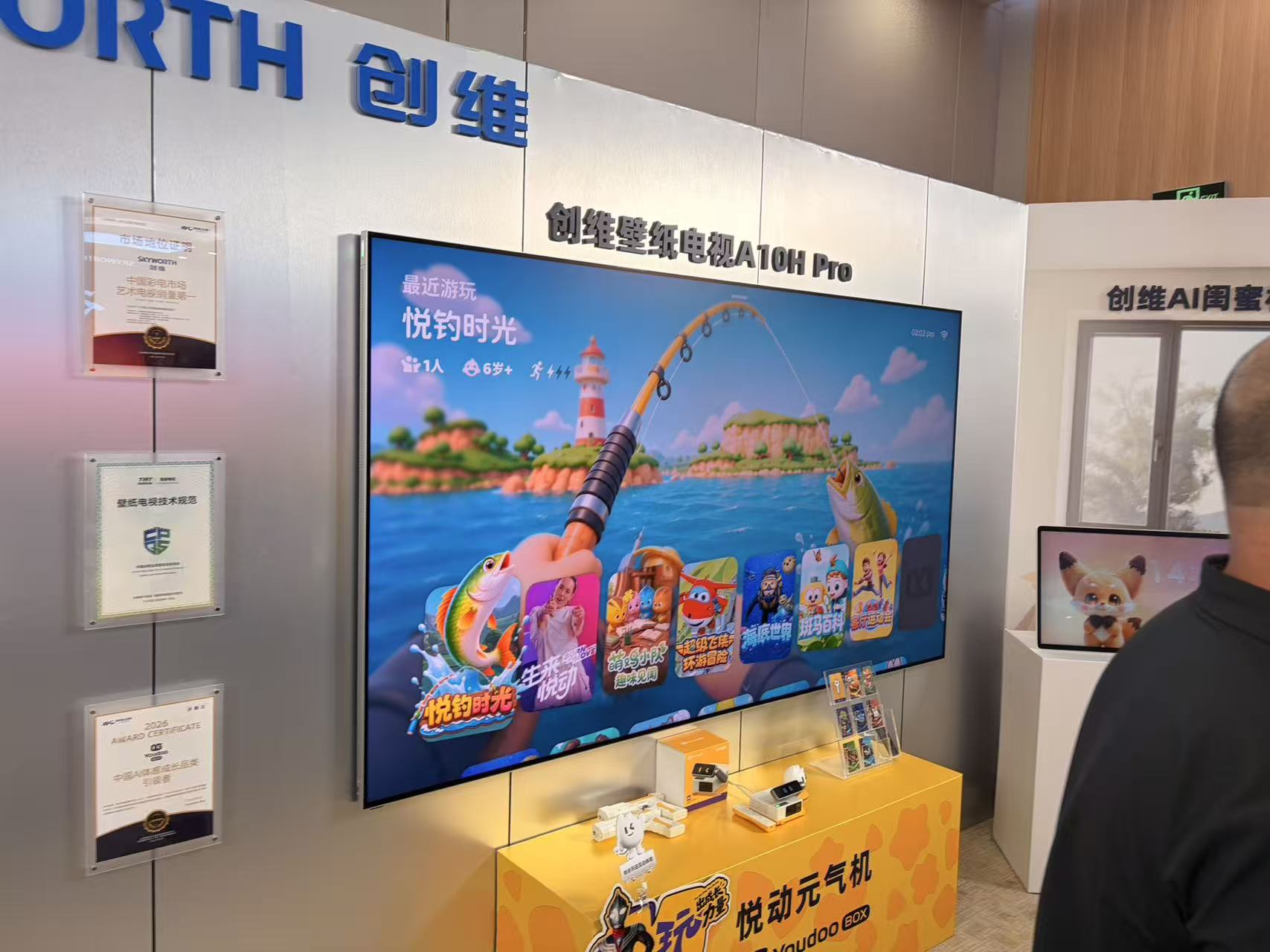
Image source: photography by Leitech
This is arguably one of the most pragmatic press conferences LeiTech (ID: leitech) has ever covered. There is no negative connotation whatsoever. Instead, such a down-to-earth event fills people with full confidence in the newly unveiled products, perfectly matching my long-standing impression of Skyworth: pragmatic, results-oriented and realistic.
Now let’s take a closer look at all the highlights rolled out at this launch event.
Wallpaper TV Q9H: 27.9mm Ultra-Slim Profile, Production Standards Benchmarked Against Apple
First up is Skyworth’s Wallpaper TV lineup, its fastest-growing television product category by far. According to on-site data, Skyworth shipped around 50,000 Wallpaper TVs across all sales channels in 2024. The figure climbed to roughly 100,000 units in 2025, and exceeded 100,000 units in just the first six months of 2026. Its full-year sales target is set at 500,000 units. Against the overall downward trend of TV market sales, such growth stands out prominently.
The booming sales of Wallpaper TVs are mainly driven by the home renovation sector. Skyworth’s research shows that 80% of home renovation orders come from whole-house renovation channels. That means consumers decide whether to install a TV at home while reviewing renderings with interior designers, rather than making decisions inside home appliance stores.
A TV stands a good chance of being selected if it fits well within interior design drawings; otherwise, it gets ruled out. Boasting an ultra-slim flush-wall design and a frame-like appearance, Wallpaper TVs are inherently tailored to whole-house renovation scenarios. Skyworth is among the earliest brands to develop Wallpaper TVs. It has spent nine years refining this product line and retained top Wallpaper TV sales volume for nine consecutive years.
The newly launched flagship Q9H is a Wallpaper TV equipped with a separate external host. Its innovations can be broken down into three dimensions: aesthetics, performance and entertaining features.
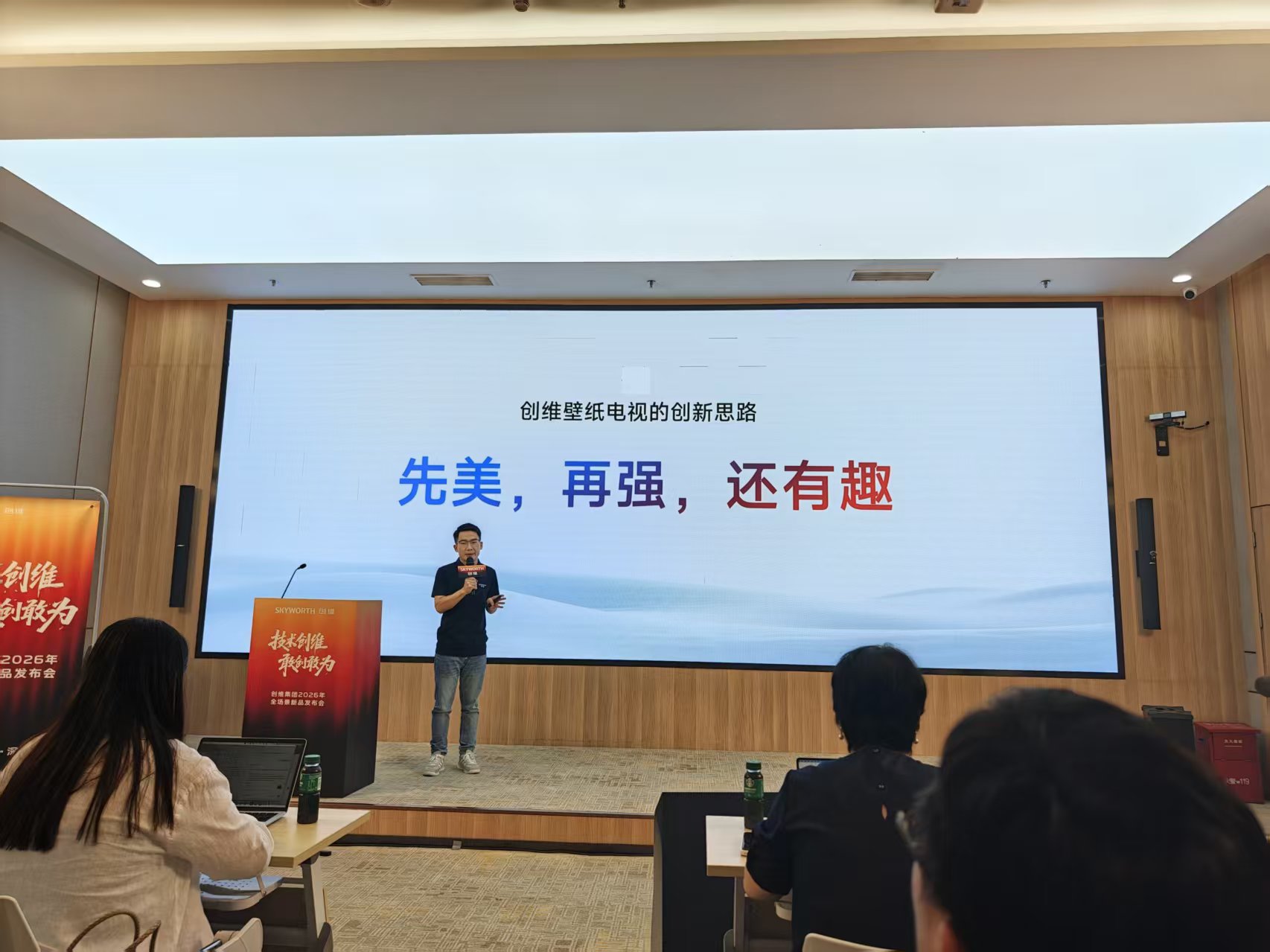
Image source: LeiTech
In terms of aesthetics, the overall thickness of the Q9H reaches 27.9 millimeters, while comparable products from rival brands generally measure around 50 millimeters, nearly half as thick. Breaking the industry norm of dark color schemes, Skyworth adopted Starry Silver. Light-colored finishes easily reveal surface imperfections; producing the same part in black requires merely 10 working procedures, whereas Starry Silver demands 135 processes.
To tackle this challenge, Skyworth introduced manufacturing techniques applied to iPhones to the television industry for the first time. The metal middle frame features the identical 180-mesh sandblasting process used on MacBook devices. Its rounded corners deliver smooth transitions with G3 continuous curvature. The top panel of the host unit employs the same ultra-ceramic crystal glass found on the iPhone 17, delivering strong impact resistance and fingerprint-proof performance.
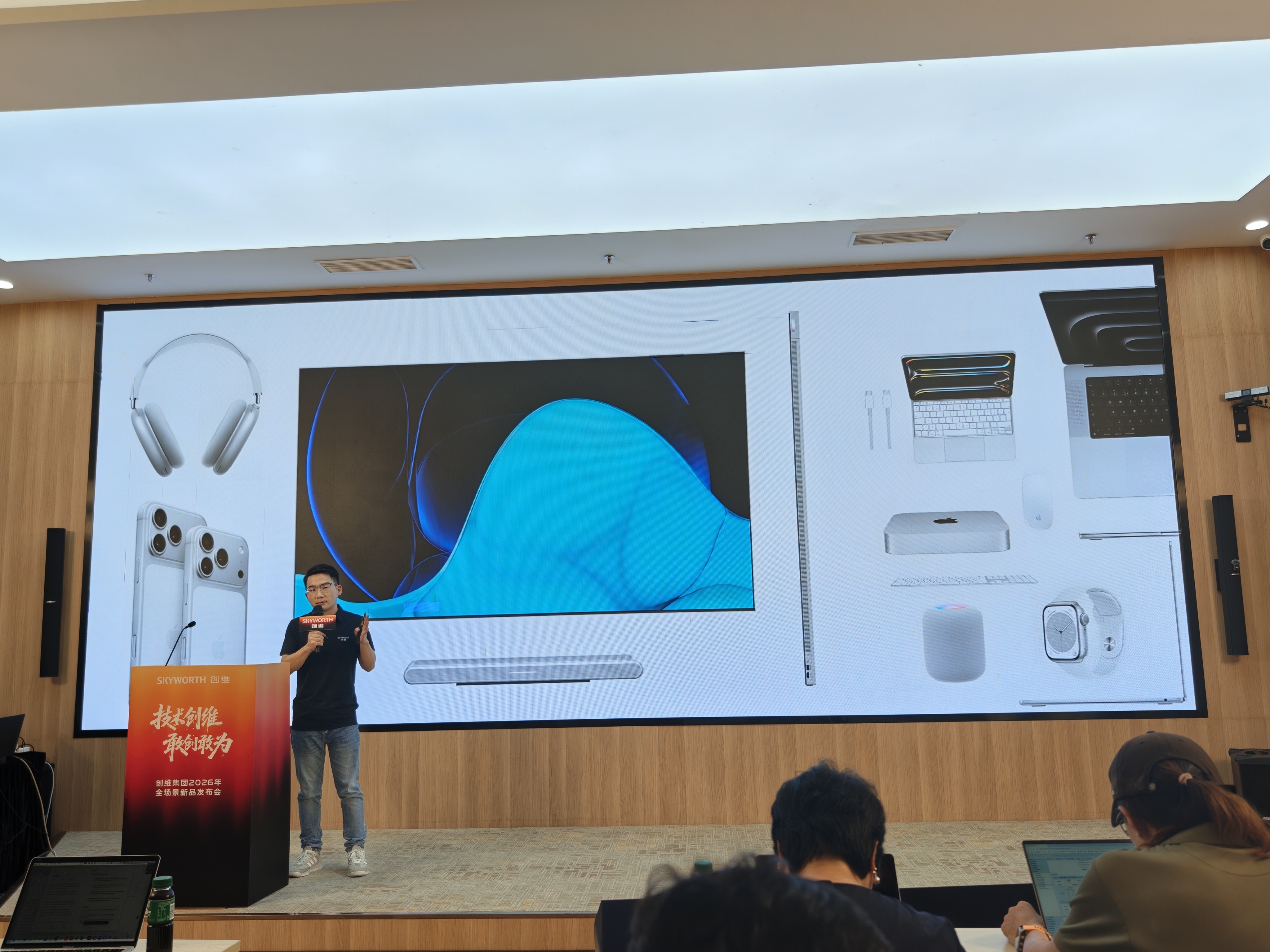
Image source: LeiTech
The side sound-emitting area is covered with see-through fabric with three-proof treatment. This material has never been adopted in the home appliance sector before and can only be found on Apple HomePod. Evidently, the Q9H follows a design path distinctly different from other top-tier flagship TVs on the market.
Most televisions available today predominantly feature dark colorways. Dark finishes are easier to manufacture with higher yield rates and controllable costs. By opting for Starry Silver, Skyworth trades higher crafting difficulty for distinctive recognition at the ultra-premium flagship price bracket. Judging by the finished look of the Q9H, its appearance is undoubtedly outstanding and stunning at first glance.
In terms of image quality, the ultra-slim build of wallpaper TVs turns into an edge for picture performance in the Mini LED era. As televisions get slimmer, the optical light mixing distance of Mini LED shortens, which necessitates higher bead density. This brings improved luminous efficiency and narrower light beam shapes, leading to inherently superior display performance. The Q9H cuts this light mixing distance down to 6 millimeters, roughly half that of competing products in the same class.
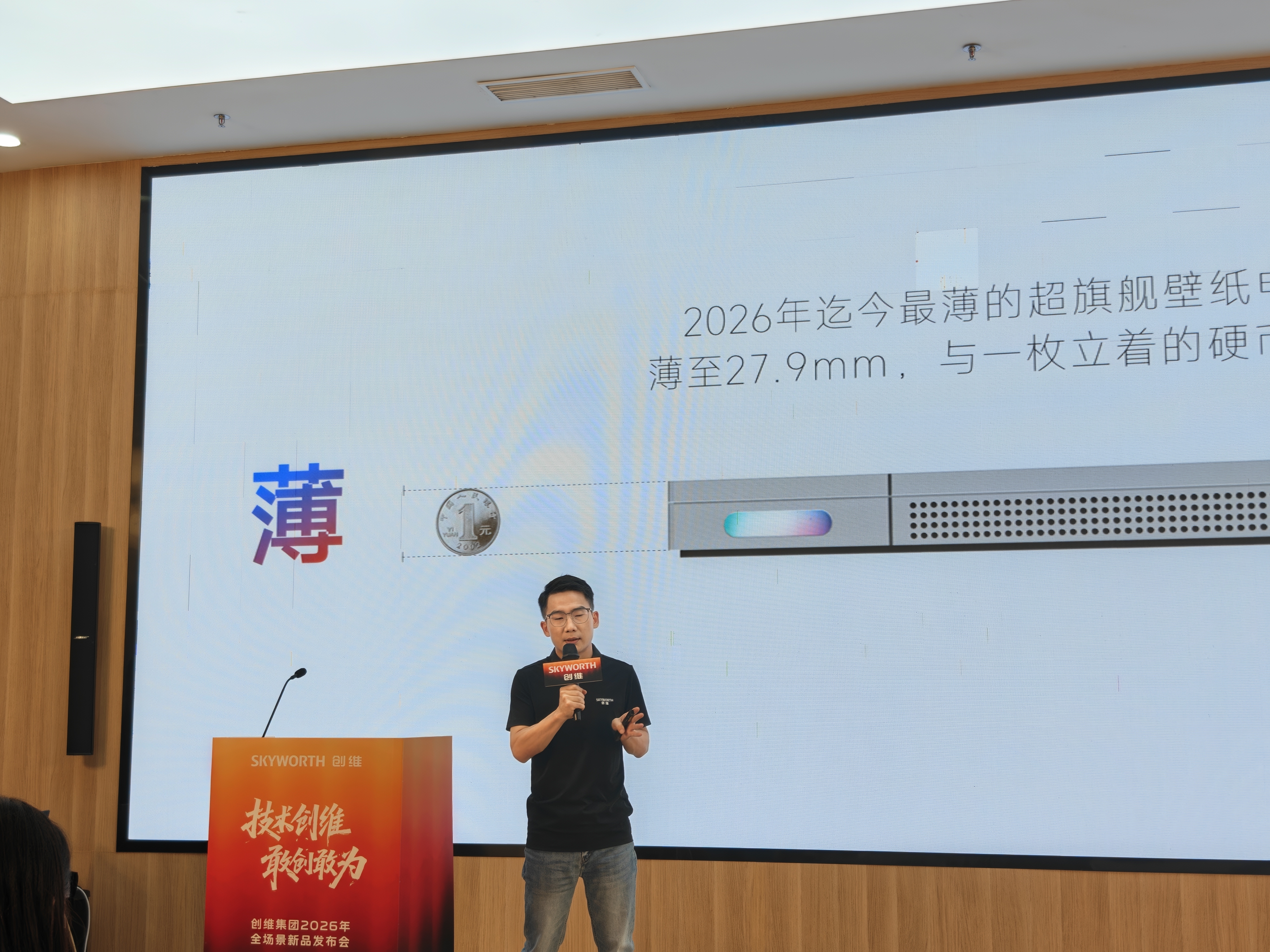
Image source: LeiTech
Slimming down comes with drastically increased heat dissipation pressure, which is the core reason why rival brands refrain from pursuing thinner designs. The slimmer the television, the less internal space it has, making thermal management far more challenging. To make this breakthrough possible, Skyworth has accumulated 418 patents related to ultra-thin heat dissipation over the past decade. It independently developed a front-end architecture covering four major systems: ultra-thin optics, ultra-thin power supply, ultra-thin acoustics and ultra-thin thermal dissipation. In addition, the split host design relocates heat-generating components from the display panel to the external host, effectively resolving thermal bottlenecks.
There has long been an industry debate over two high-color-gamut backlight solutions: RGB and QD (Quantum Dot). Skyworth has opted for the QD quantum dot screen solution.
Three factors account for this decision. First, color stability. The backlight chips of both RGB and QD systems may develop color cast with prolonged use, whereas quantum dot panels remain immune to this flaw. Second, consistent color gamut performance. Conventional backlight solutions can reach full 100% coverage of ITU-R BT.2020 on solid-color images, yet the gamut coverage drops to roughly 80% for mixed content. Quantum dot panels sustain steady 100% BT.2020 coverage across all types of footage. Third, precision of light control. Local dimming performance is capped by zone quantity; a panel with 5,000 dimming zones only delivers 5,000 levels of adjustment. This creates a massive numerical gap against the screen’s 8.3 million physical pixels and easily triggers color crosstalk. Quantum dot panels enable pixel-level color modulation without such drawbacks.
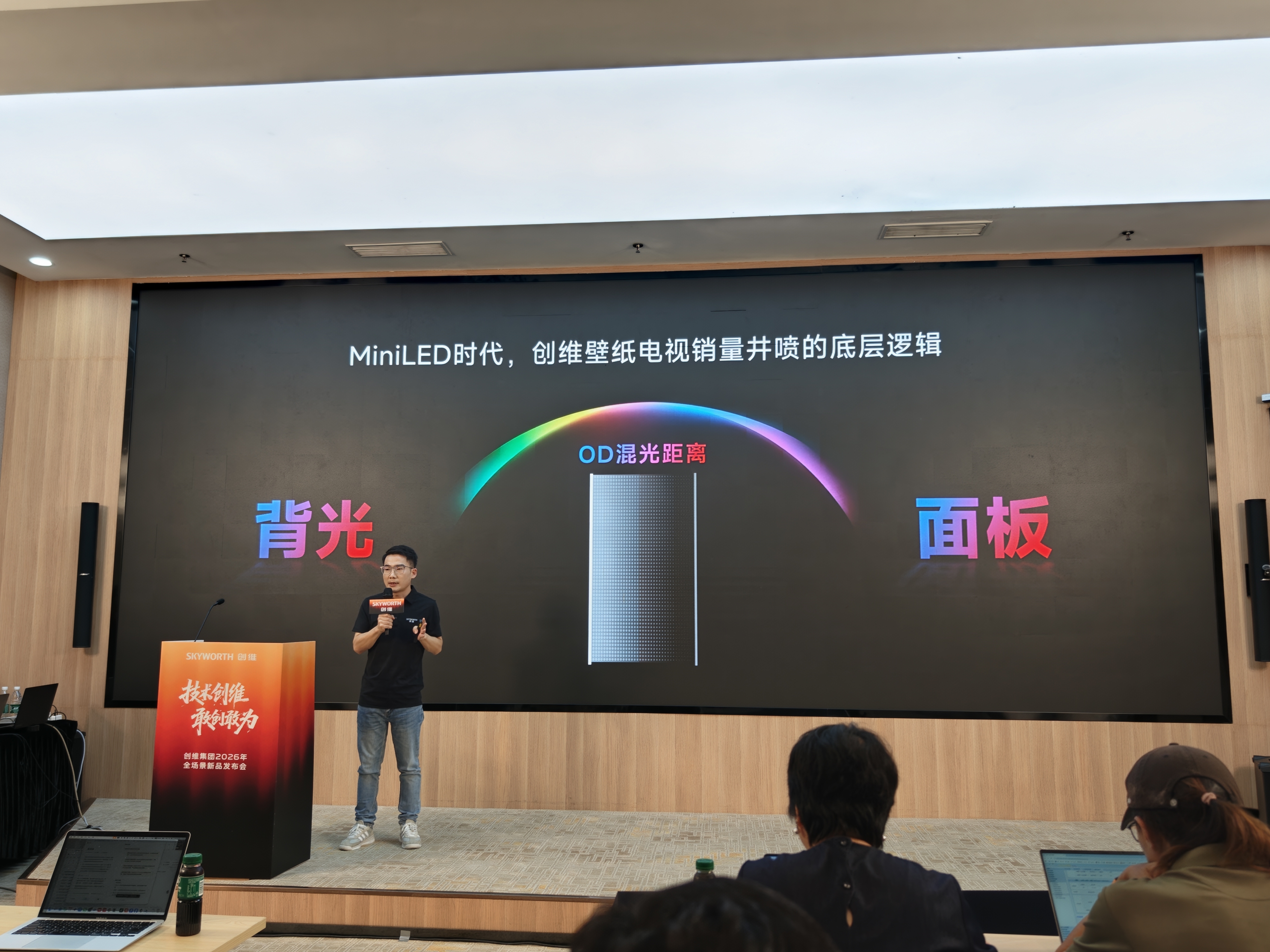
Image source: LeiTech
Pre-orders for the Q9H have kicked off at all Skyworth retail outlets nationwide. Pricing stands at 14,999 yuan for the 75-inch model, 21,999 yuan for the 85-inch variant, and 32,999 yuan for the 100-inch version. In addition, the A10H Pro series launched this past March (19,990 yuan for the 85-inch model and 29,999 yuan for the 100-inch model) secured top online sales against rival products at matching price points for six consecutive weeks after release.
The "fun" dimension stems from a motion-sensing entertainment product co-developed by Skyworth and Tencent. Skyworth partnered with the team led by Luo Dan, former Vice President of Tencent Game R&D, to oversee content operation. During his tenure at Tencent, Luo Dan headed major projects including QQTang and Asura.
The two companies spent roughly one year developing this motion-sensing entertainment hardware fitted with a pop-up camera and powered by on-device AI motion recognition. Positioned as a family companion that fosters children’s growth through motion-based entertainment, it currently offers 27 playable games, with another 40 titles under development. Skyworth plans to roll out one new game every week moving forward. This also marks the first joint content operation collaboration between Skyworth and Tencent.
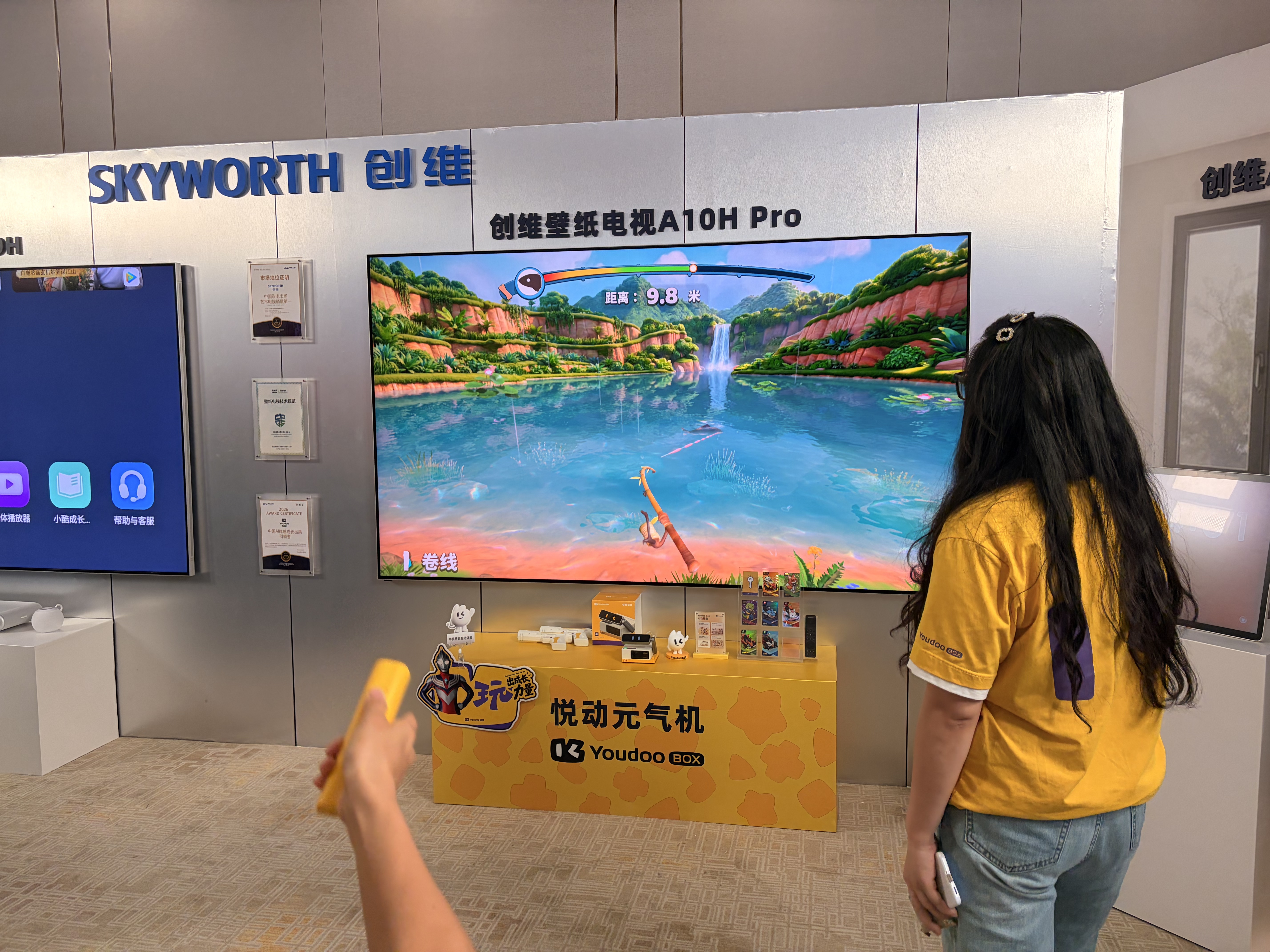
Image source: LeiTech
Sleep Breeze Air Conditioner: Solving Two Major Industry Pain Points — Direct Blowing and Elderly-Friendly Use
The highlight of Skyworth’s air conditioner lineup is the new Sleep Breeze series. Direct cold airflow is the most prevalent complaint among air conditioner users. Skyworth arranges 2,858 diversion holes on the air outlet to disperse airflow evenly and soften cold air layer by layer. Combined with AI gentle breeze sensing technology, the unit monitors temperature differences in real time and actively adjusts the wind deflector angle and wind speed with four adjustable speed levels available.
Specifically, the AI sleep mode automatically adjusts operation according to ambient temperature at night, preventing temperature fluctuations in the small hours from ruining sleep quality.
Elderly-oriented design is another standout feature of the Sleep Breeze air conditioner. Skyworth pioneers an industry-first voice broadcast function on its AC remote controller. Every button press triggers voice feedback stating the selected temperature and operating mode, addressing seniors’ troubles of blurry vision on the remote and inaccurate button operation.
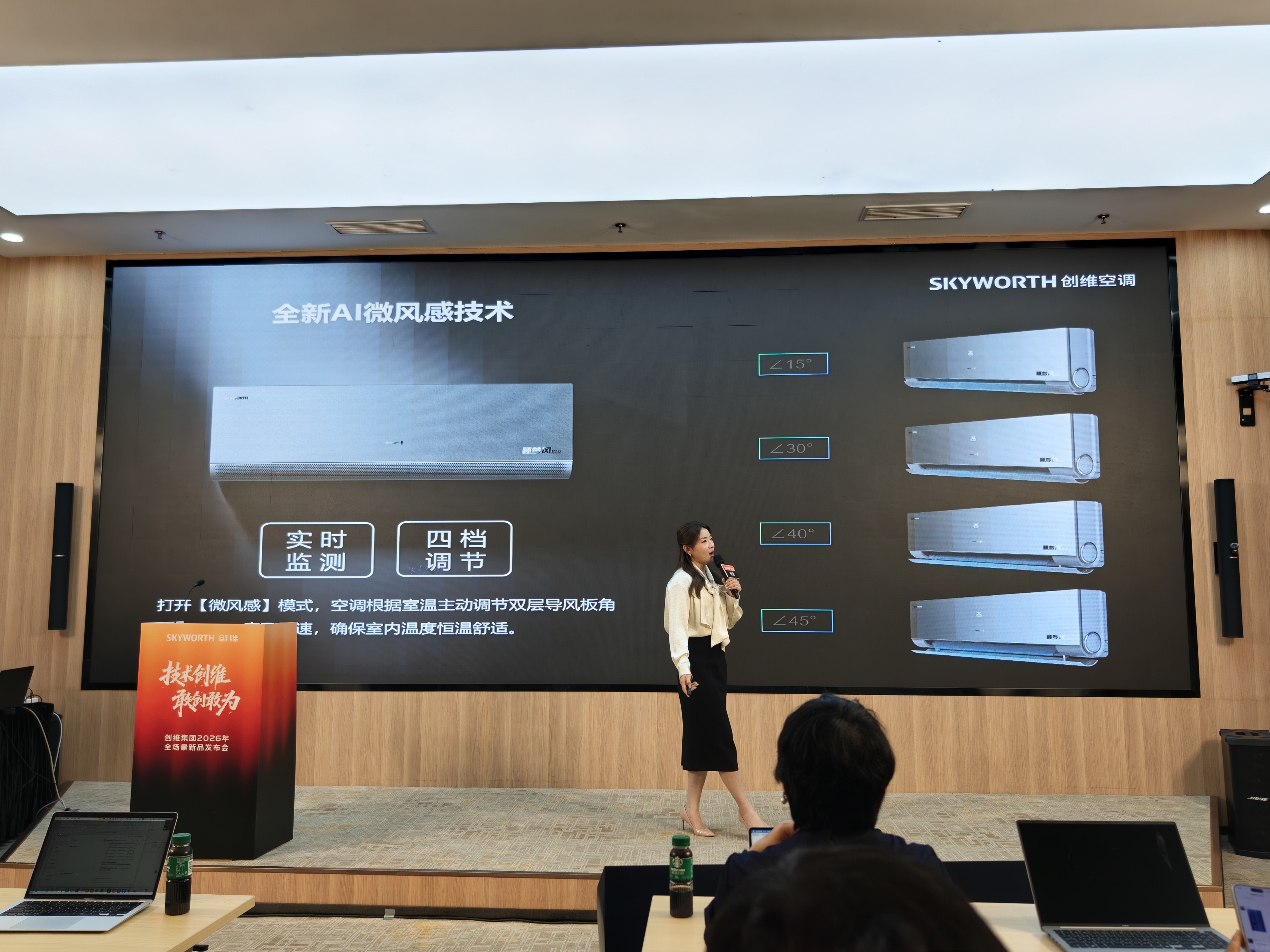
Image source: LeiTech
Notably, the voice control function works offline without network access, so operation remains unaffected even when home internet is disconnected. Remote control is enabled via WeChat Mini Programs, with no need to download dedicated mobile apps. Office workers can power on the air conditioner in advance before getting off work, and remotely verify whether the air conditioner is set to the correct mode for elderly family members.
In terms of health performance, the Sleep Breeze air conditioner is equipped with a 4-stage intelligent self-cleaning system and an independent high-temperature baking function. The high-temperature baking feature dries out the evaporator after operation to prevent mold growth.
The floor-standing model boasts an airflow volume of 1,880 cubic meters per hour (m³/h) and an air throw distance of 20 meters, making it ideal for combined living and dining areas. All models come with a 10-year full-unit free warranty, an above-average after-sales standard in the industry that largely relieves consumers’ concerns over maintenance expenses in later use.
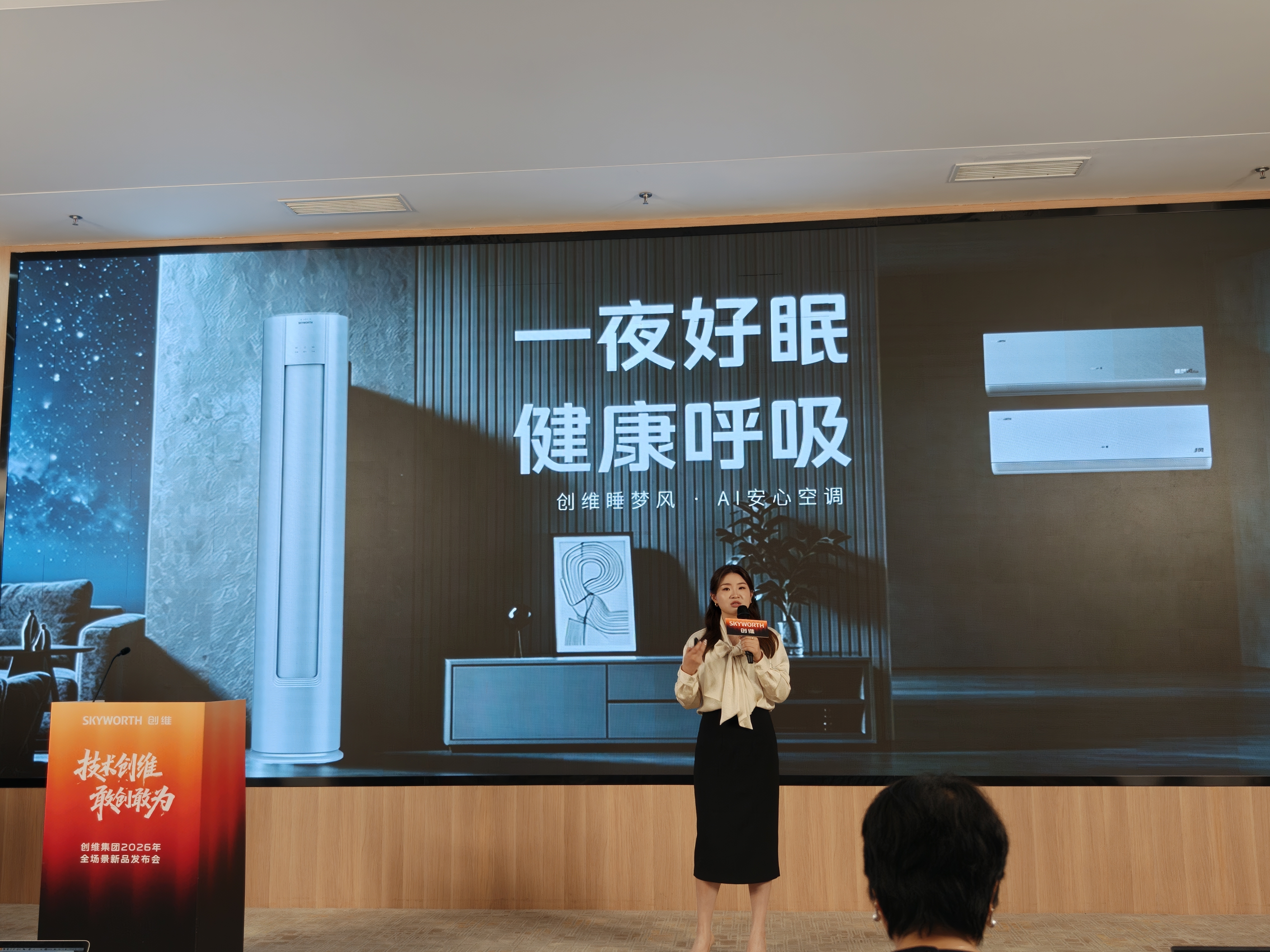
Image source: LeiTech
The wall-mounted units of the Sleep Breeze series come in two color options: Ice Lattice White and Frost Silver. They adopt a four-layer overlapping pattern texture process, which is more eco-friendly than conventional ink laminated panels. The floor-standing variant features a low-saturation Twilight Purple finish.
Appearance has long been overlooked in the air conditioning sector, with most air conditioners only meeting basic aesthetic requirements. Skyworth’s dedicated efforts in appearance design serve as a distinctive advantage. As an appliance occupying considerable space in the living room, air conditioners truly deserve thoughtful exterior design.
Companion Screen F3: 32-inch Movable Large Screen Hits the Market Starting at 3,999 Yuan
Beyond the living room, many household spaces including bedrooms, studies and balconies require a portable large display that can move along with users. The Companion Screen F3 is equipped with a 32-inch 4K screen adopting IPS and full glass lamination technology, paired with anti-fingerprint and anti-glare coating.
Its audio system consists of a 140W three-way speaker set compatible with Windows spatial audio algorithms. It also debuts an industry-exclusive one-tap karaoke mode.
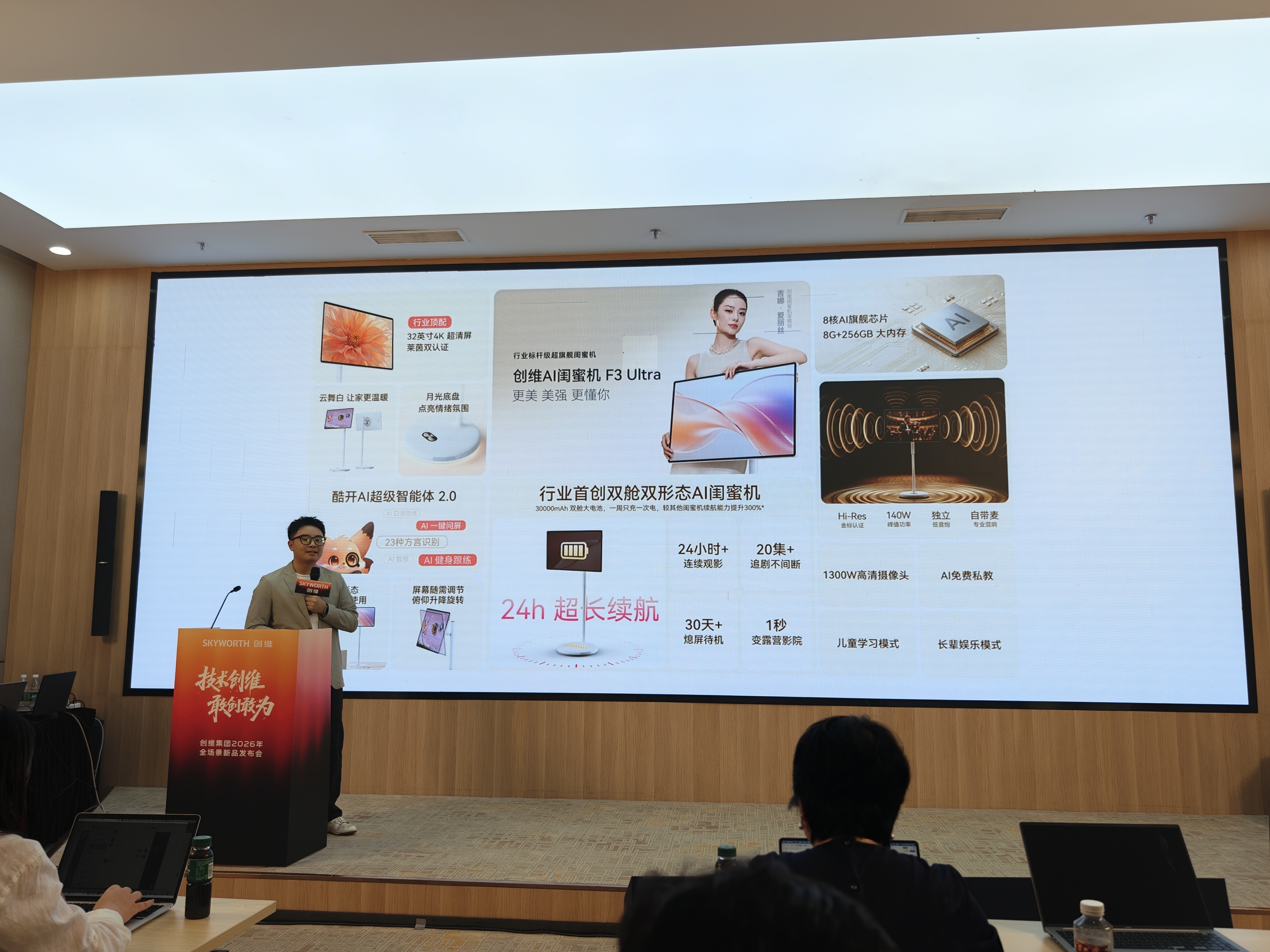
Image source: LeiTech
In terms of AI capabilities, the 13-megapixel camera captures 19 skeletal landmarks. It supports an AI split-screen follow-along workout mode: one side plays tutorial videos, while the other generates a real-time motion recognition overlay through algorithms. Users can truly follow and replicate movements instead of merely watching tutorials.
Though branded a Companion Screen, this device also features an Elderly Mode and a Kids Mode. The Elderly Mode enlarges fonts by 1.5 times and simplifies interactions. The Kids Mode grants access to over 1,000 synchronized textbooks and more than 22,000 hours of courses covering preschool through junior high school, alongside built-in anti-addiction restrictions.
For battery life, it is equipped with a dual-chamber 30,000 mAh battery. A full charge delivers up to 24 consecutive hours of use, topping the industry rankings.

Pricing-wise, the 256GB version of the F3 costs 6,499 yuan, the 128GB version is priced at 5,799 yuan, the F3 Pro retails for 4,999 yuan, and the base F3 model is 3,999 yuan. Flagship products of the same tier from competing brands are priced as high as 7,999 yuan, giving Skyworth clear price competitiveness. Pianist Gina Alice was invited to serve as the brand ambassador for the event, though she unfortunately did not attend the venue in person.
Additionally, electric shavers and K projectors were unveiled on site, among which the electric shaver was arguably the most unexpected product of the entire launch.
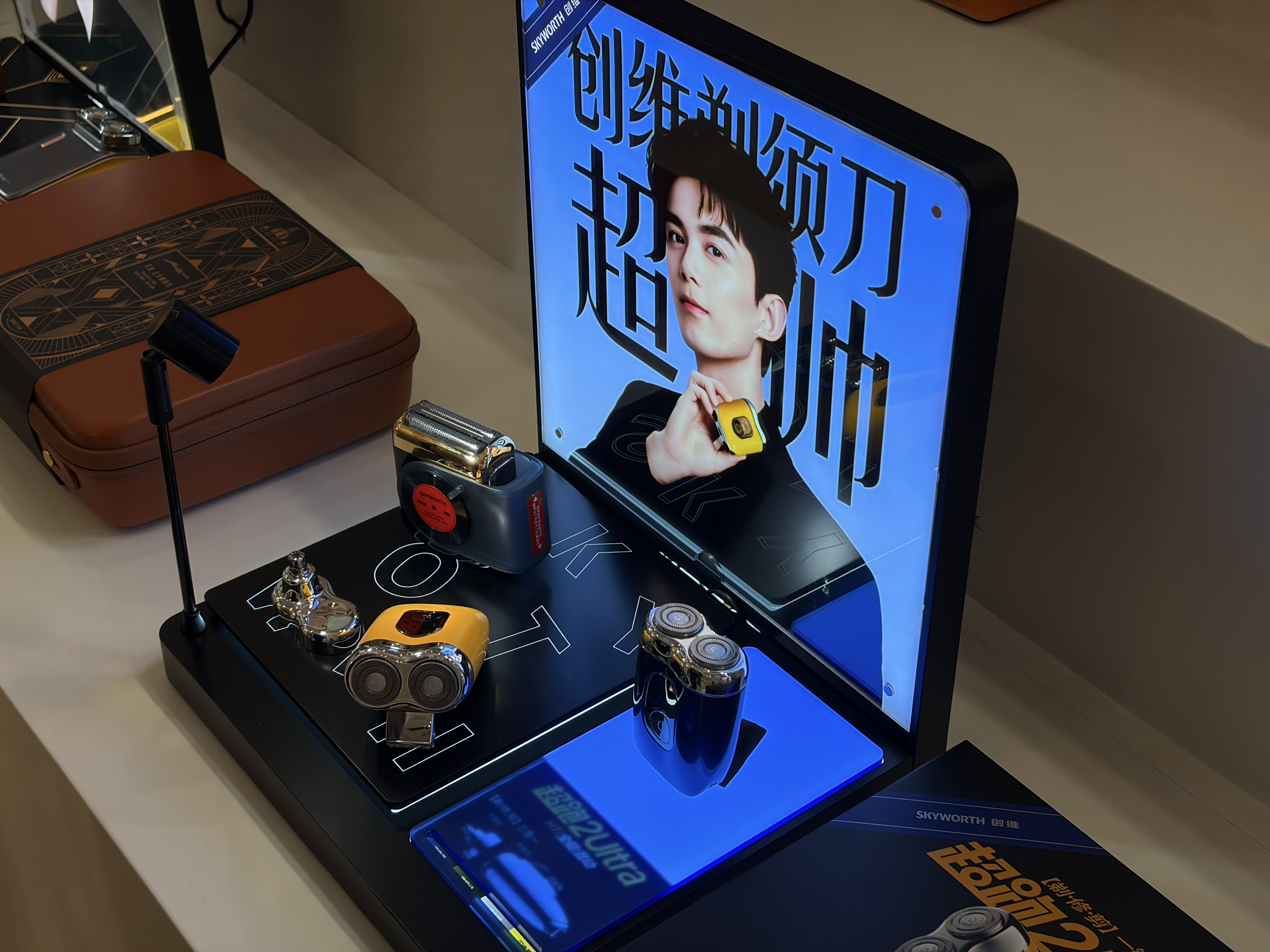
Image source: LeiTech
Skyworth has been in the electric shaver business for three years, with total cumulative sales exceeding 18 million units, ranking fourth in online market share. The newly released Golden Brick Shaver adopts PVB real gold plating to achieve a golden-brick appearance, certified by the National Gemstone Testing Center (NGTC). Its magnetic suction design enables easy disassembly, assembly and cleaning.
In my opinion, Skyworth intends to turn its electric shavers into social currency and gift options. The golden brick symbolizes good fortune, making the product well-suited for business gifting, holiday presents and personal use.
AI Adds the Finishing Touch; Robust Hardware Technology Forms Core Competitiveness
After observing the entire event, this launch avoids the prevalent trend of attaching AI to every conceivable product. AI is never the sole selling point of any product here.
The AI temperature sensing function of air conditioners, AI motion workout tracking of the companion screen, and AI motion games for the TV are all embedded as supplementary upgrades. Skyworth does not hype AI as a marketing gimmick. This approach is far more pragmatic than products that repeatedly brandish AI for publicity. Meanwhile, it means each product line must compete head-to-head with rivals relying on intrinsic product quality, with AI merely serving as an enhancement. The fundamental strength lies in the hardware itself.
Naturally, televisions remain Skyworth’s core business. The Q9H achieves further upgrades in appearance and performance. Air conditioners and companion screens expand Skyworth’s coverage across household scenarios: air conditioners deliver thermal comfort, while companion screens meet demand for portable large displays. Though electric shavers seem like a dramatic cross-category expansion, Skyworth has secured unique differentiating advantages for them.
All in all, Skyworth’s launch stands out as a breath of fresh air amid today’s AI craze. LeiTech has covered countless conferences this year, and it has become rare to find products centered purely on design, functionality and usage scenarios. Nevertheless, these elements constitute the absolute core of hardware devices. Only with solid fundamentals can AI add value; otherwise, enterprises put the cart before the horse.
On July 31, the highly anticipated ChinaJoy 2026—themed “Journeying with AI”—will officially commence.
With 900 pan-entertainment exhibitors—including Tencent, NetEase, Sony, Qualcomm, MaiCong, and QingXian—the event will showcase a global feast of entertainment innovation.
How will AI-enhanced hardware brands—from devices and peripherals to robotics, displays, and chips—collaborate with game developers to pioneer next-generation entertainment experiences?
Led by Founder & Editor-in-Chief Luo Chao, the LeiTech ChinaJoy 2026 Reporting Team will descend upon Shanghai to deliver comprehensive, real-time coverage. Stay tuned.