
 雷科技
雷科技





The 9th World Artificial Intelligence Conference (WAIC) officially kicked off at the Shanghai World Expo Center on July 17. As an annual grand event for the AI industry, this year’s conference still brought together domestic and foreign large model enterprises, AI application developers and hardware manufacturers. Leitech (ID: leitech) dispatched a reporting team from its AI-focused new media arm, Leitech AGI (leikejiagi), to cover the event live on-site in Shanghai.
When artificial intelligence is brought up, the first thing that comes to most readers’ minds is robots — especially humanoid robots that can walk, dance, hold cups and hand out bottled water. To be honest, we’ve seen plenty of such demos over the past two years, so they’ve grown a little stale to watch.
(Photograph credit: LeiTech on-site production)
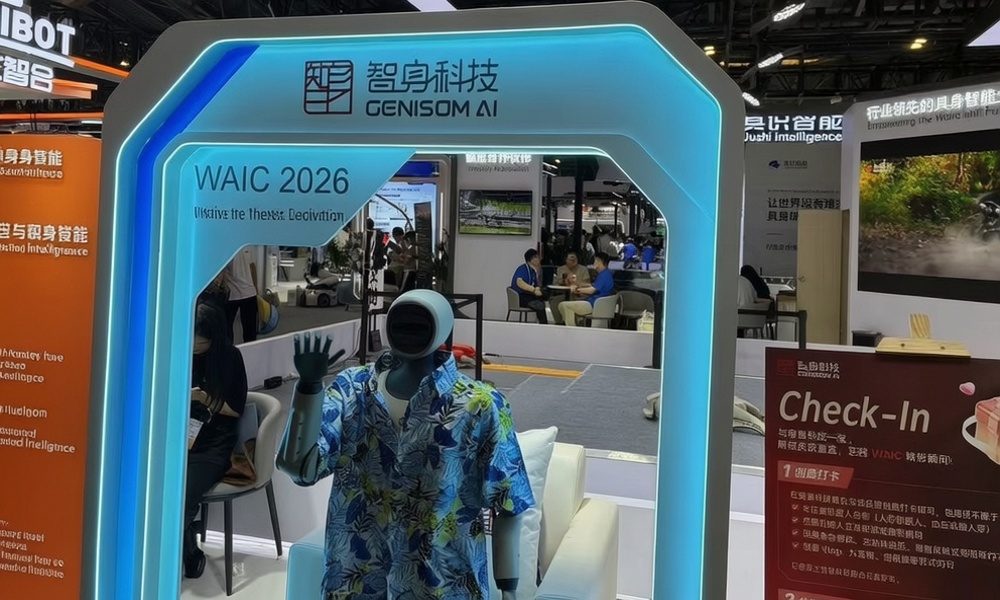
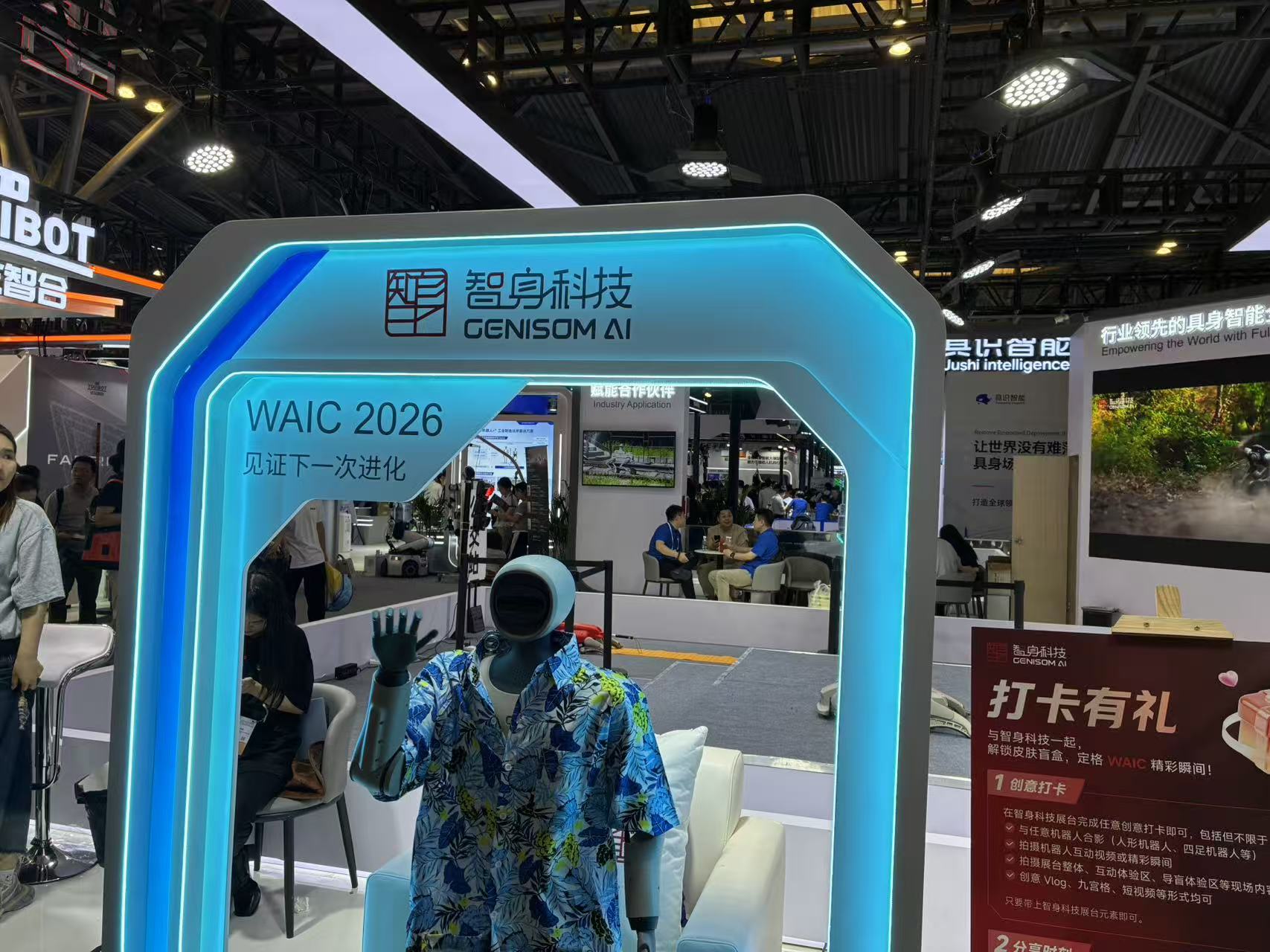
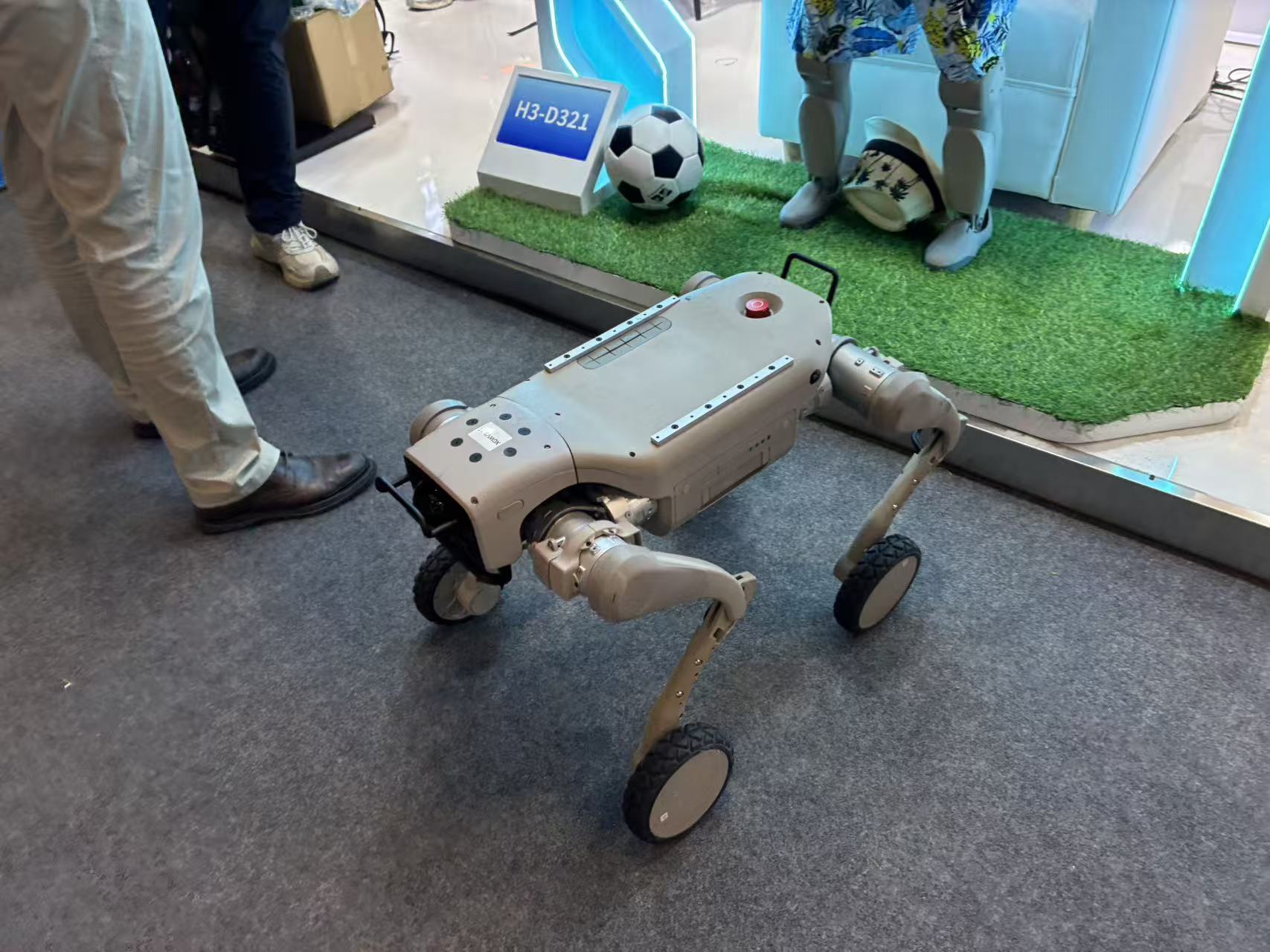
As an emerging player in the robotics market, Zishen Technology refuses to stick to those overused, conventional products the public has long grown accustomed to. On its exhibition booth, visitors can find not only humanoid robots, but also quadruped robots, explosion-proof inspection robot dogs, joint modules, simulation platforms and more. Most crucially, all these products have entered mass production without exception.
Official statistics show that as of June 2026, Zishen Technology has rolled out a total of 15,000 mass-produced units. This is an outstanding achievement for a company founded only at the end of 2023.
(Photograph credit: LeiTech on-site production)
What’s more, Genisom AI’s products boast remarkable technical prowess. At this year’s Beijing Yizhuang Robot Half Marathon, Windbreaker RX, its humanoid robot, finished the entire 21-kilometer race with zero malfunctions, zero falls and zero robot replacements. According to official sources, all core joint motors powering this robot are identical to those mass-produced for Genisom’s quadruped robots, proving its core power components have passed rigorous real-world validation through large-scale shipments.
More notably, Genisom completed the full development cycle of this robot—from project initiation to race readiness—in merely over two months, with a core project team of only five members. This demonstrates Genisom AI has built a mature integrated technology and manufacturing system, enabling seamless migration of its in-house mass-produced robotic motion control algorithms, environmental perception systems and simulation training platforms to humanoid robots.
At the same competition, Genisom’s quadruped robot Hammer M1 dominated the Robot Warrior Challenge. It autonomously navigated and cleared all 17 high-difficulty obstacles, including wading terrain and pipeline traversal. The robot swept all top honors in the quadruped robot category: 1st place in autonomous navigation, most awards overall, highest total score and fastest completion speed. Another model, Hammer M1 Pro, served as the world’s first autonomous pace-setting robot dubbed the "closing rabbit". It maintained a steady pace of 9 minutes per kilometer with an accuracy margin of ±5 seconds per kilometer, accompanying human runners to finish the entire half-marathon without remote manual control.
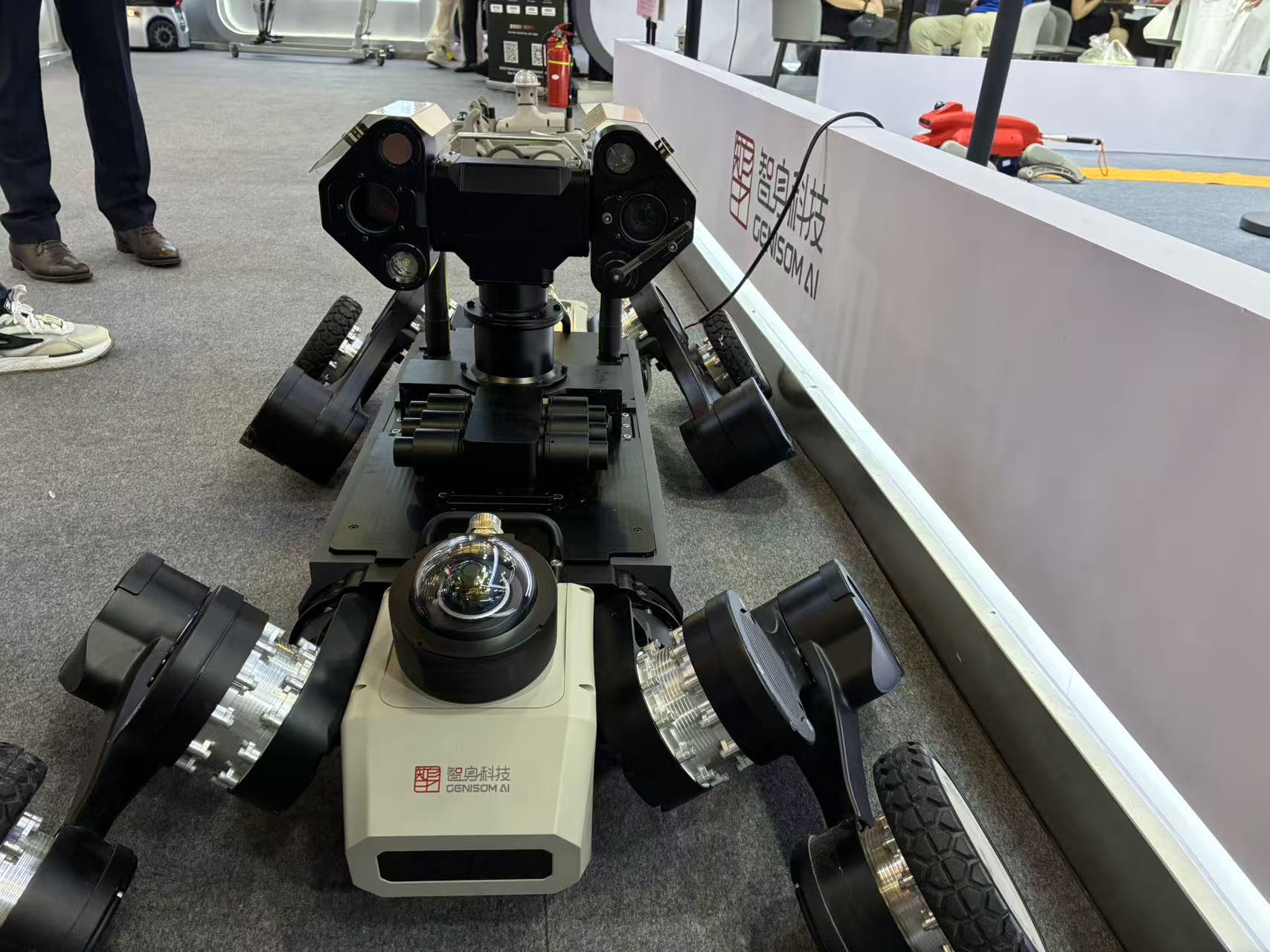
Back at the exhibition booth, the industry-grade quadruped robot Genisom Coin L2 drew the greatest crowds. Its standout specifications set a high industry benchmark: a continuous payload of 16 kilograms, maximum operational battery life of 5.5 hours, IP66 ingress protection rating, wide operating temperature range from -20°C to 55°C, an 86 TOPS computing platform, plus 720-degree omnidirectional fused multi-sensor perception. Every single parameter stands among the top tier of the robotics industry.
(Photograph credit: LeiTech on-site production)
Nevertheless, the Genisom Coin L2’s true strengths lie beyond its specifications. Traditional quadruped robots follow a business model of "selling the robot body first before customized integration". This means every new application scenario requires bespoke engineering work, resulting in high deployment costs and lengthy lead times. The Coin L2 is equipped with the next-generation RoamerX intelligent navigation system, the industry’s first GLUE omnidirectional autonomous follow technology, standardized interfaces and expandable modular components. Simply put, what customers receive is not an unfinished "bare shell" that demands secondary development, but a fully refined, ready-to-operate product that can be put to work straight out of the box.
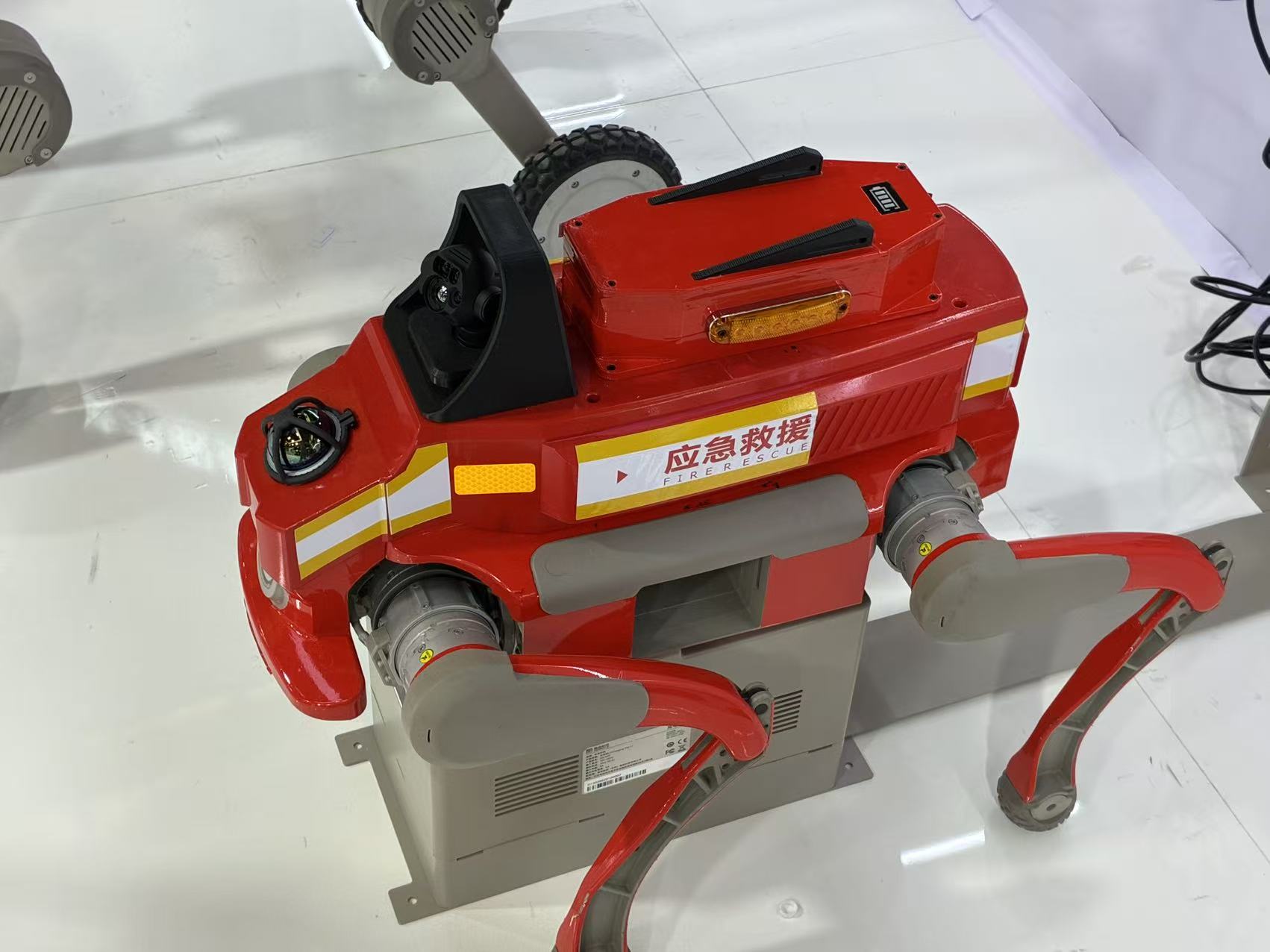
Next up is the Genisom Shot SP1, an explosion-proof quadruped inspection robot. This model is engineered for high-risk work environments such as petrochemical plants and energy stations, specifically Class 1 and Class 2 hazardous locations with explosive gas atmospheres. The Shot SP1 has obtained high-grade explosion-proof certifications. Adopting a hybrid wheel-legged locomotion design, it supports all-weather unmanned inspection across complex, high-risk terrains.
(Photograph credit: LeiTech on-site production)
When it comes to humanoid robots, aside from Windbreaker RX that completed the half-marathon, Genisom AI also unveiled its brand-new humanoid robot Genisom Silverwill NE01 at this exhibition. The underlying core capabilities of control algorithms are shared between quadruped and biped robots. The launch of Silverwill NE01 marks the further refinement of Genisom AI’s product lineup for embodied intelligence.
Last but not least is MATRiX 2.0, the world’s first open-world high-fidelity simulation platform. It addresses the prevailing bottlenecks facing embodied intelligence research: training robots in the physical world incurs exorbitant costs, and real-world scenarios cannot be replicated consistently. With MATRiX 2.0, robots undergo massive rounds of training and iteration within a virtual environment before being seamlessly deployed to the physical world. Windbreaker RX, mentioned earlier, relied heavily on MATRiX 2.0 for its development.
After exploring all these products, what strikes me as most compelling is not merely the robots themselves, but the underlying operational architecture powering them. Genisom AI has categorized this architecture into four core intelligent systems: motion intelligence, spatial intelligence, interaction intelligence and swarm intelligence.

(Photograph credit: LeiTech on-site production)
To put it simply, motion intelligence enables robots to run and jump. Spatial intelligence empowers them to perceive their surroundings and navigate autonomously. Interaction intelligence allows robots to understand human language and independently plan tasks. Swarm intelligence refers to groups of robots working collaboratively to generate capabilities far beyond those of a single unit.
Spatial intelligence stands out as the core growth driver at present. RoamerX, Genisom AI’s self-developed end-to-end navigation model, is undergoing continuous iterations. It enables robots to make autonomous decisions in complex, unstructured environments — a critical capability for commercial implementation. Hammer M1’s full autonomous navigation through all 17 obstacle courses during the challenge serves as a direct demonstration of this technology.
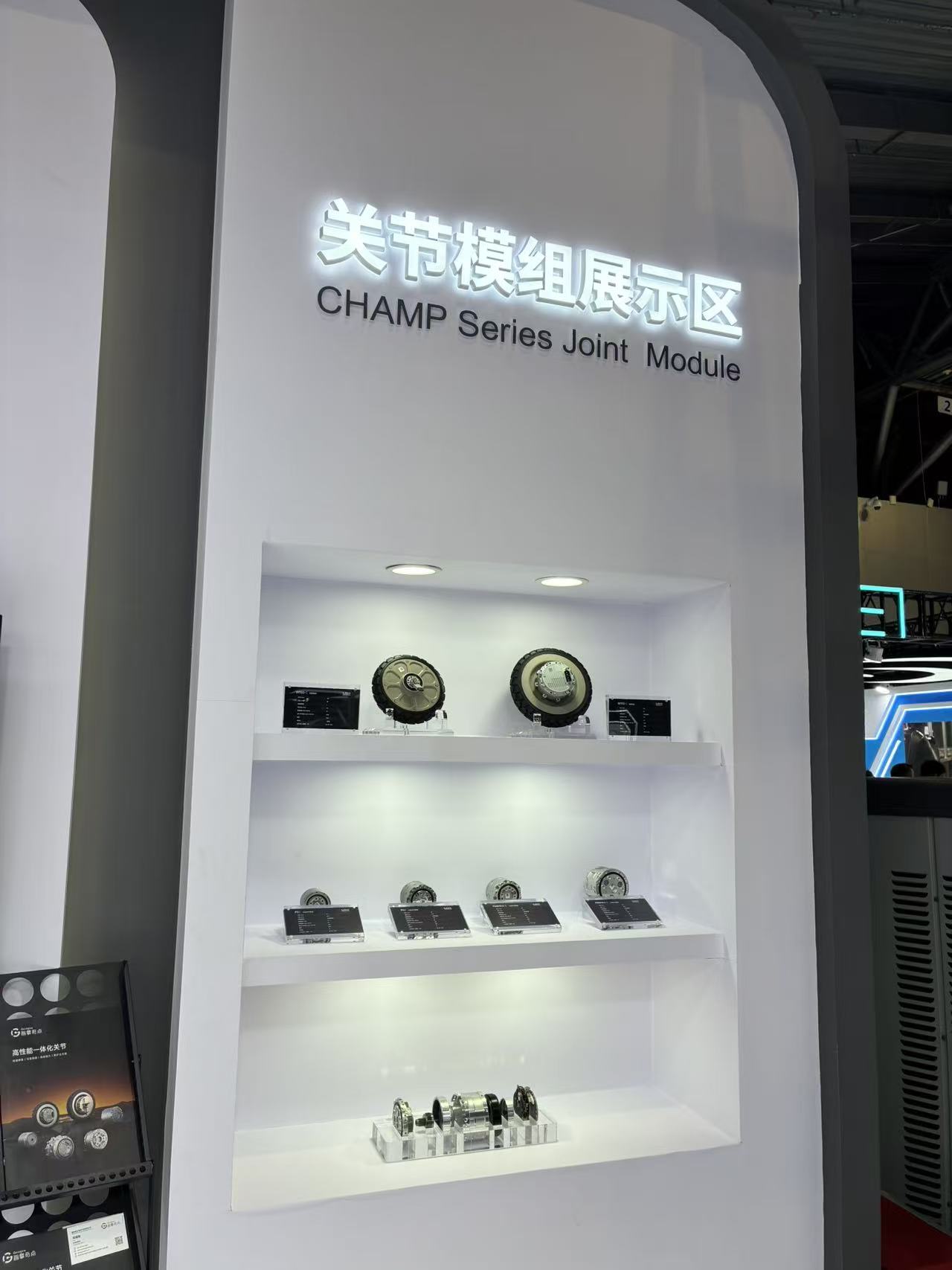
Nevertheless, in my opinion, the most eye-catching exhibit at Genisom AI’s booth is the CHAMP Series integrated joint modules. These self-developed high-power-density integrated joint modules support an annual production capacity plan of up to one million units. This means Genisom AI not only manufactures robots for its own product line but also supplies these joint modules to industry peers, accelerating the overall development of the robotics industry.
(Photograph credit: LeiTech on-site production)
This business model follows the ancient wisdom: Give a man a fish and you feed him for a day; teach a man to fish and you feed him for a lifetime网易有道. At this critical juncture where embodied intelligence is shifting from technical validation to large-scale commercial rollout, this approach may be far more worthy of investment than merely selling finished robots.
Of course, Genisom AI still faces notable challenges. Its new humanoid robot Silverwill NE01 has only just been unveiled, and its commercial deployment still requires time to prove its value. Uncertainty also lingers over whether the company’s proven advantages in quadruped robots can be fully transferred to the humanoid robot track. Frankly speaking, however, for a firm founded less than three years ago, its track record vastly outperforms the industry average.
In the embodied intelligence race, the true dividing line lies in who can achieve mass production at scale — and Genisom AI has already sprinted out ahead of competitors.
The WAIC2026, themed “Intelligent Partners, Co-Creating the Future,” is now underway!
AI narratives are shifting from stacking model parameters toward tangible Agent-driven productivity; heterogeneous collaboration and photonic computing continue pushing computational limits upward; and embodied intelligence is accelerating real-world adoption—bringing robots into homes and factories, making physical AI a reality.
The LeiTech WAIC reporting team has arrived in Shanghai to capture the annual pinnacle of AI industrialization—stay tuned!