 雷科技
雷科技





The 9th World Artificial Intelligence Conference (WAIC) officially opened at the Shanghai Expo Center on July 17. As an annual grand gathering for the AI industry, this year’s conference drew large model enterprises, AI application developers, hardware makers and robotics firms from home and abroad. Dianchetong (ID: dianchetong233), affiliated with Leitech (ID: leitech), also sent a reporting team to Shanghai for on-site coverage.
Although automobiles are not the highlight of WAIC, they garnered extensive attention at this year’s event as a vital medium bringing AI into the physical world.
Most people are familiar with the statement: “The first half of the new energy vehicle industry centers on electrification, while the second half hinges on intelligence.” AI holds the key to realizing automotive intelligence. At WAIC, Leitech and Dianchetong witnessed not only cutting-edge technologies and innovative products, but also the future development path of the new energy vehicle sector.
Zeekr 8X Launches Super Eva, JD Targets Auto Aftermarket
There are two core pillars of automotive intelligence: intelligent driving and intelligent cabin. From smart cockpits and large models deployed in vehicles to automotive Agent integration, all these transformations serve one ultimate goal — enabling cars to better understand users.
At the StepStar booth during WAIC, a display model of the Zeekr 8X co-developed by Geely, StepStar and Qianli Technology was showcased. Numerous journalists and visitors came to experience Super Eva, the comprehensively upgraded intelligent agent.
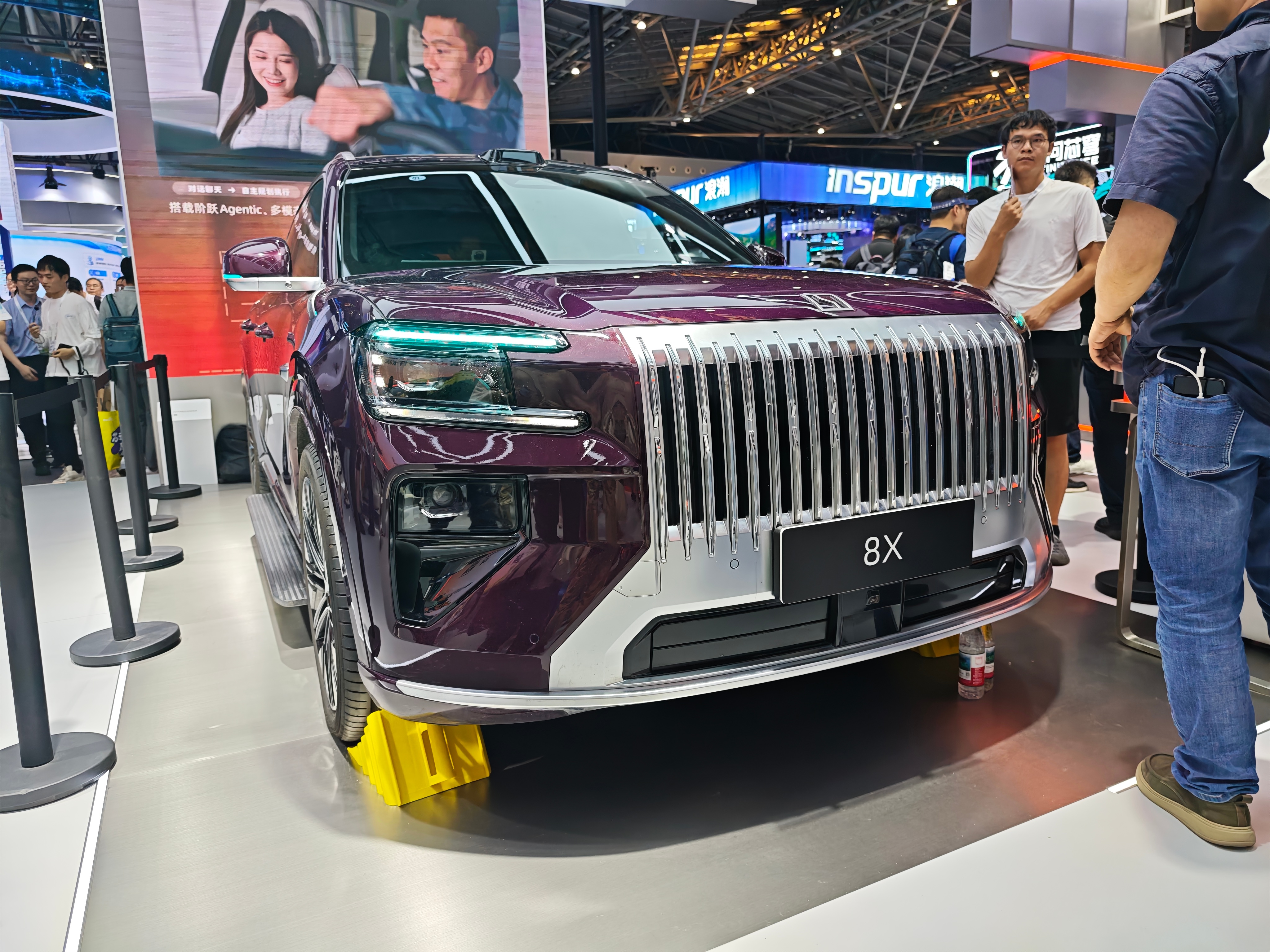
(photography by DiancheTong)
Early this year, OpenClaw became a hit and was adapted for vehicles, lifting consumers’ expectations for in-car intelligent agents. Built on StepStar’s newly launched Step hierarchical edge-cloud collaborative large model system, Super Eva outperforms ordinary large models in comprehension and execution. Supported by powerful computing capacity of Step Edge edge terminal, Super Eva can learn according to users’ usage habits.
At present, vehicle-mounted intelligent agents are no longer restricted to passively responding to voice orders and controlling in-car equipment. They are capable of proactive planning and finishing various complex tasks. Take Super Eva for instance. It can turn on assisted driving with one click. Besides, it links up with all-scenario life ecosystems and autonomously completes daily services including restaurant reservations, coffee orders and movie ticket purchases.
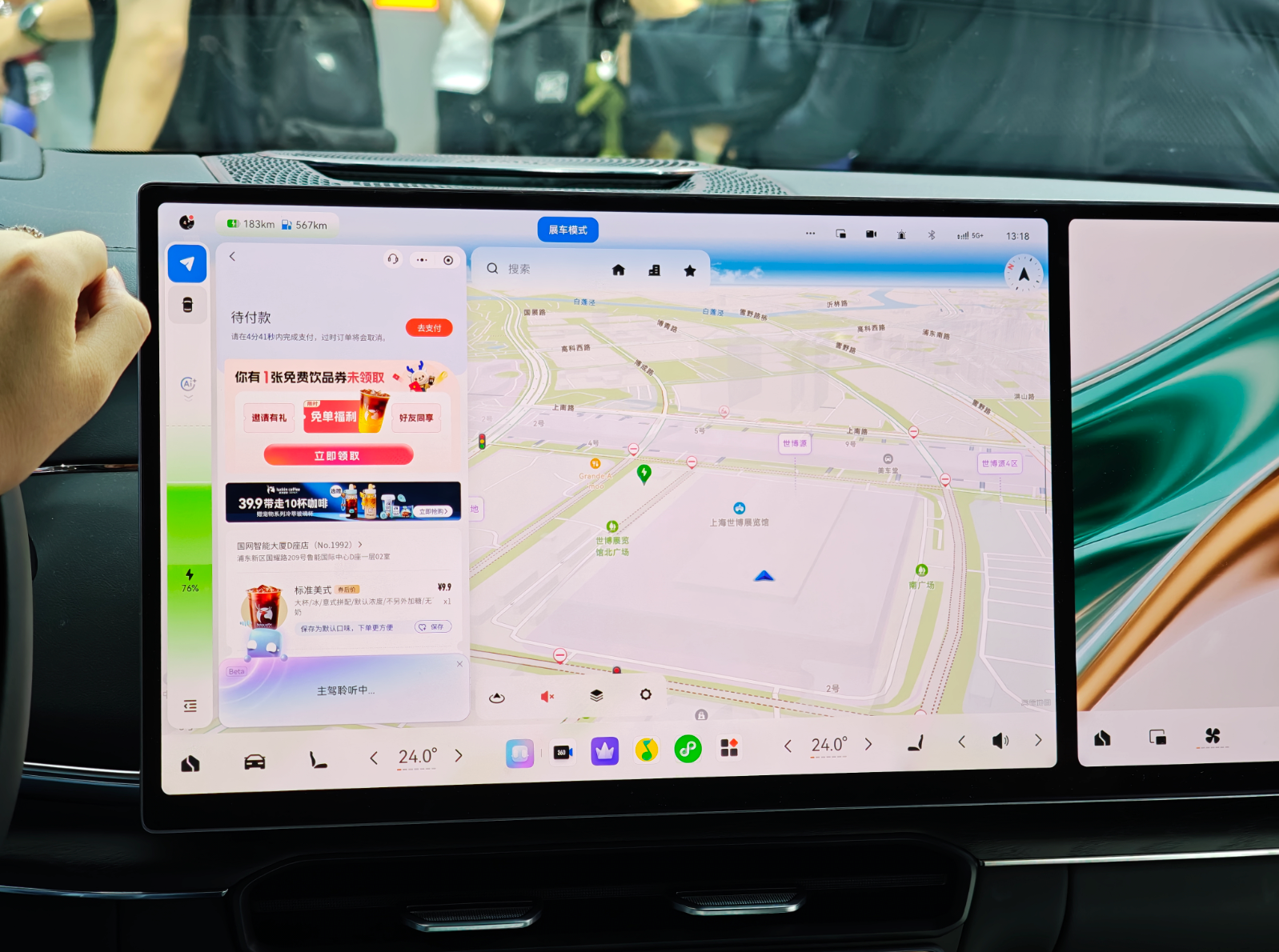
(photography by DiancheTong)
The popularization and iteration of Agents on new energy vehicles have become normal within the industry, with nearly all automakers developing relevant technologies. Even JoyInside, an intelligent ecosystem brand under JD.com, has partnered with Cami, an in-vehicle intelligent robot brand, to launch a customized product named Cami JoyInside, which caters to users of fuel vehicles and low-intelligence automobiles.
This retrofit device enables real-time synchronization of vehicle operating conditions to guarantee driving safety. Drawing on JD’s ecosystem, Cami JoyInside delivers one-stop mobility services including fuel card top-ups, offline maintenance appointments and car wash reservations. Powered by Cami’s self-developed edge-side in-vehicle large model, the device can detect drivers’ moods and offer emotional companionship. It also supports basic mobile office functions, offering a low-cost solution to upgrade the intelligence of older vehicles.
From the perspective of Dianchetong (ID: dianchetong233), the integration of OpenClaw and automotive Agents alongside interconnection with various “vehicle-home-human” smart devices represents an inevitable industry trend. Companies including Geely, NIO, Li Auto, Xpeng and HarmonyOS Intelligent Mobility are all blazing their own trails along this promising path.
China’s total number of registered motor vehicles has hit 366 million, most of which are low-intelligence models. Many car owners have no immediate plans to replace their vehicles due to personal needs, budget constraints and other factors, yet they still demand smarter driving experiences. Targeting a massive market covering hundreds of millions of cars, Cami JoyInside is expected to extend the service life of less intelligent vehicles.
World Model Competition: Geely & WeRide Race to Boost Cognitive Ability
Sensors such as cameras, LiDAR, ultrasonic radars and millimeter-wave radars enable smart cars to perceive the world, while large models allow them to understand the world. The world model serves as the bridge connecting automotive systems to the physical reality.
Geely’s All-scenario AI 2.0 incorporates a world behavior model to realize scenario comprehension and reasoning, delivering upgraded spatial awareness and causal reasoning performance. WeRide follows the same development path. Its self-developed world model WeRide GENESIS achieves four major capability breakthroughs: pixel-level recreation of physical scenarios, accurate learning of traffic physical rules, intelligent deduction of scenario causality, and dynamic preview of temporal and spatial trends.
At this exhibition, WeRide unveiled its brand-new physical AI cognitive large model WeRide WITT. Leveraging the strengths of vision-language large models, it pioneered the concept of the Minimum Physical Fact Unit. It connects multi-modal data including images, videos and texts, breaking down dynamic and complicated road conditions into identifiable and verifiable basic information units.
WITT features four core functions: scenario extraction, logical reasoning, credibility verification and data classification. When confronted with intricate traffic conditions, the system decomposes environmental information and recognizes fundamental physical units. Its reasoning module sorts out behavioral logic of road participants such as vehicles and pedestrians to predict road hazards in advance, continuously feeding data back to fuel iterative upgrades of autonomous driving algorithms.
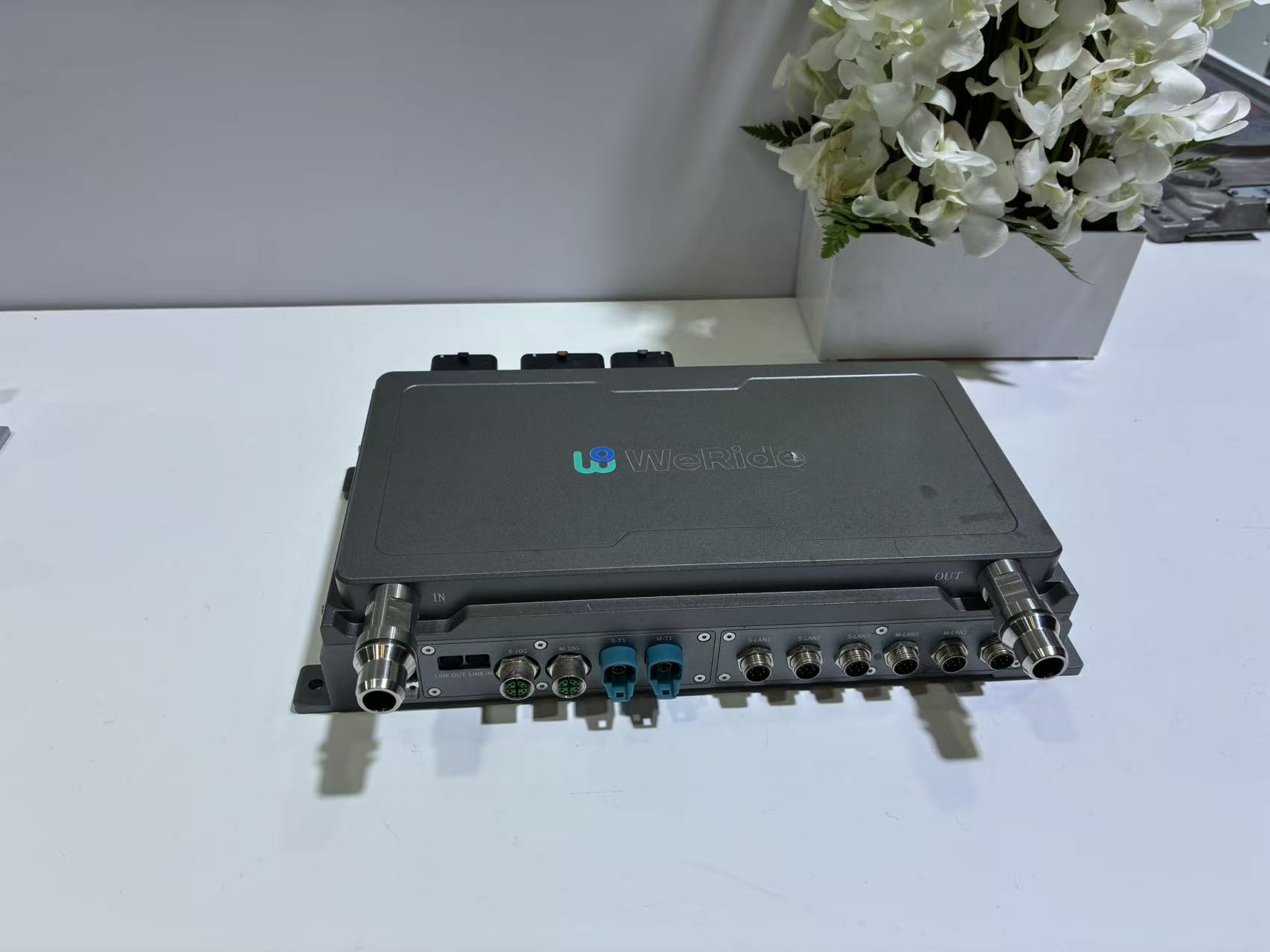
(photography by DiancheTong)
The model verifies output content across six dimensions: pedestrian status, ego vehicle operations, movements of surrounding vehicles, overall road conditions, information completeness, and roadside supporting facilities. Based on confidence thresholds, it filters out logical flaws, AI hallucinations, missing information, chronological disorder and other defects. In addition, the system automatically classifies materials according to their training value for road scenarios, distinguishing high-frequency commuting scenarios from rare extreme road conditions to maximize the training value of every driving data segment.
WeRide has built a collaborative closed-loop system. WITT processes real road test data to extract, verify and categorize information; GENESIS leverages standardized data to build high-fidelity simulation environments and mass-generate rare extreme driving scenarios. The two systems conduct joint training to steadily upgrade vehicle-mounted autonomous driving performance.
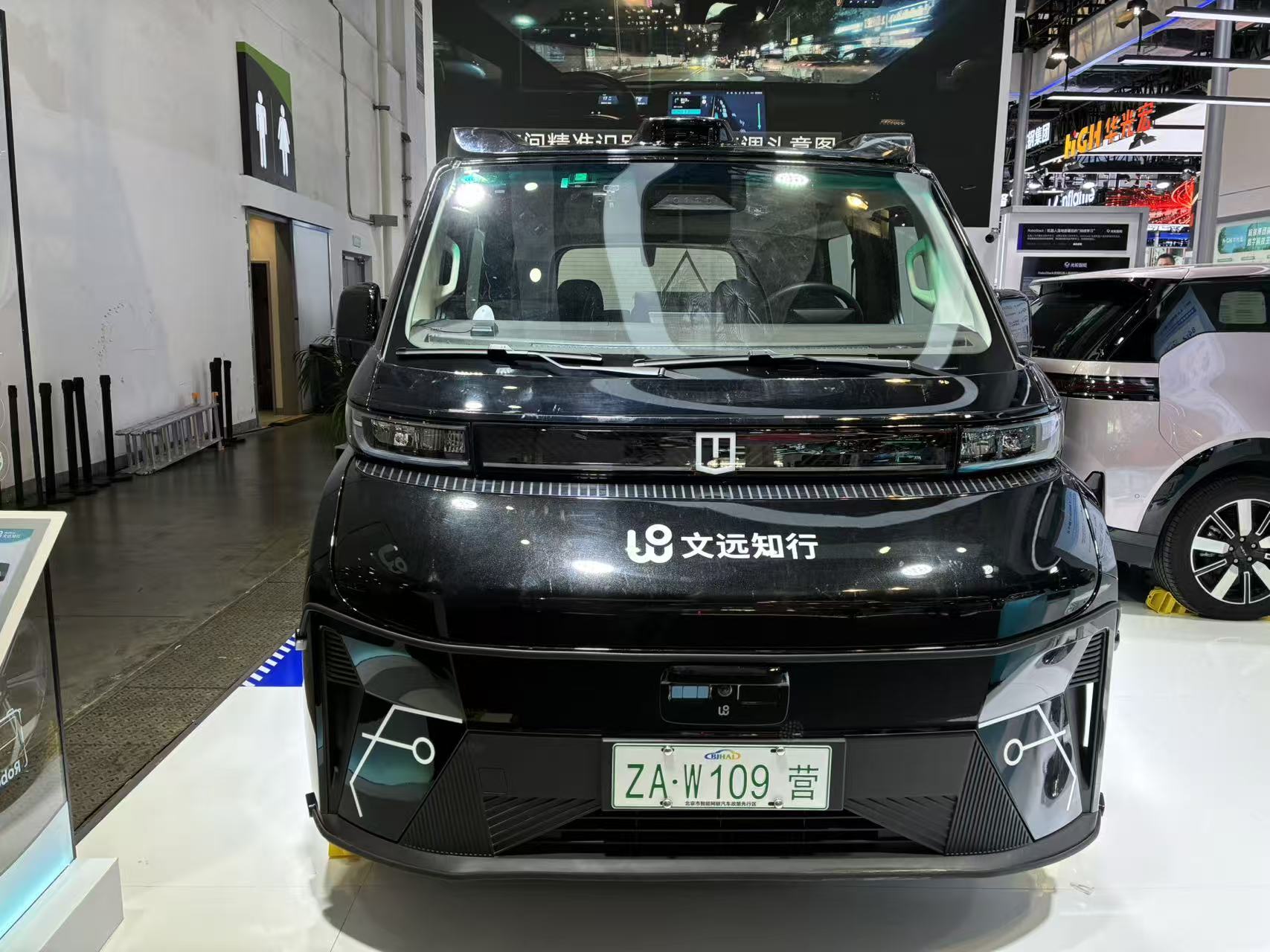
(Photograph by DiancheTong)
Currently, major carmakers are racing to develop and upgrade world models to boost vehicles’ perception and comprehension of the physical real world. Various vehicle-mounted sensors can only capture road visuals and environmental data. Serving as the core medium linking vehicles to reality, world models work with large models to enable in-depth interpretation of driving scenarios.
Geely All-scenario AI 2.0 integrates a world behavior model to strengthen spatial perception and causal deduction. WeRide has built a cloud-based dual-model collaboration system. GENESIS reconstructs real road conditions and predicts traffic changes, while its new cognitive model WITT breaks down information into Minimum Physical Fact Units, conducts multi-dimensional data verification, and efficiently sorts training materials.
The two models coordinate with each other. High-fidelity simulation scenarios are generated from real road test data to facilitate constant iteration of vehicle intelligent driving models. The industry leverages world models to break down barriers between perception and cognition, reduce AI hallucinations, improve training for long-tail scenarios, and steadily raise autonomous driving’s accuracy in understanding real-world road conditions.
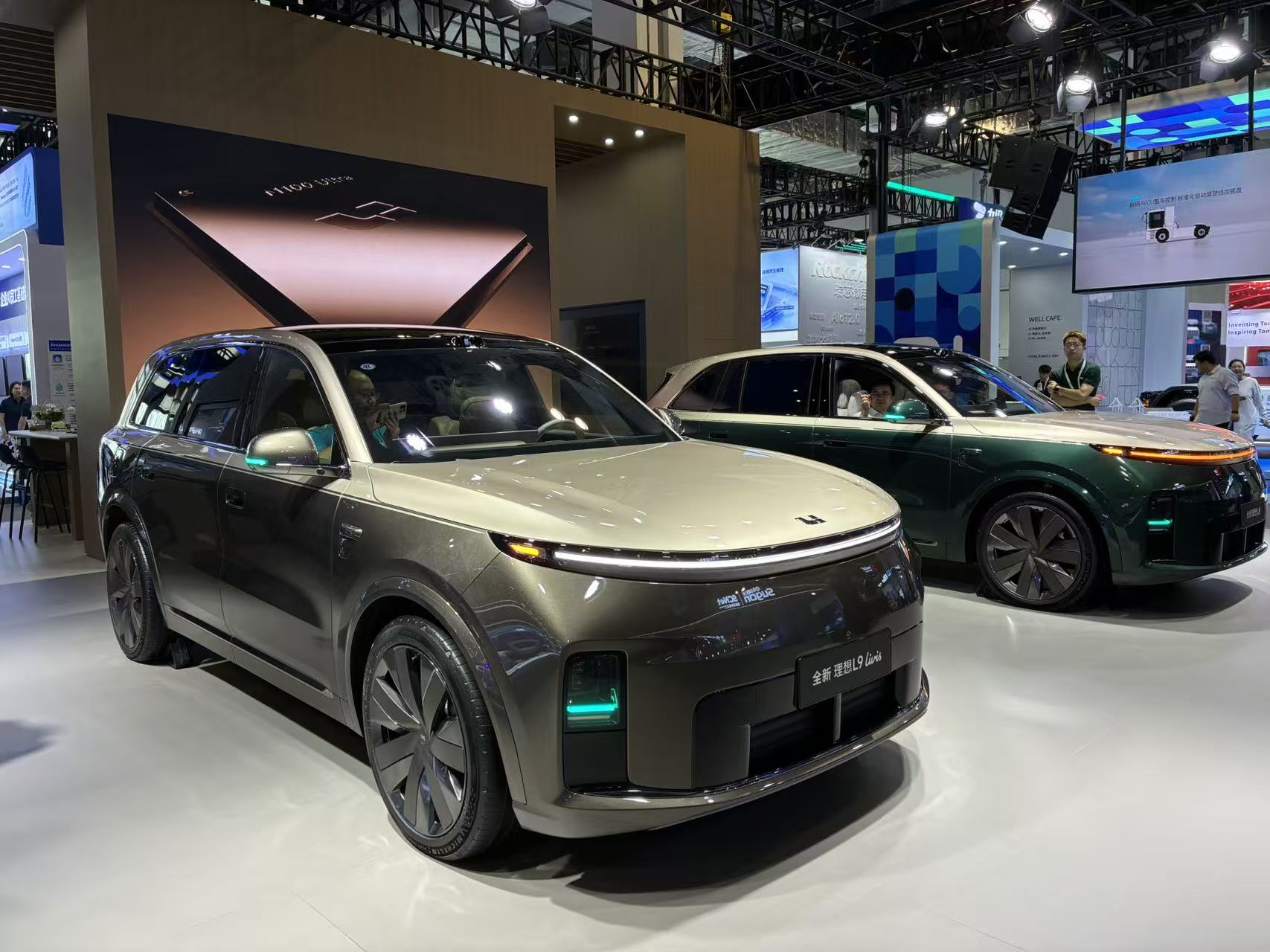
(Photograph source: DiancheTong)
Sensors allow cars to "see", large language models enable cars to "understand", and world models are emerging as the core bridge linking virtual training to real-world driving, shifting intelligent driving from passive reaction to active cognition. In 2026, the industry has moved beyond mere parameter comparisons to fierce competition centered on the in-depth implementation of physical AI and world models.
Dianchetong (ID: dianchetong233) holds the view that competition over world models is essentially a contest of capabilities to comprehend physical laws and the efficiency of edge-cloud collaboration. WeRide’s dual-model architecture builds unique advantages in fact verification, data efficiency and simulation generation, making it one of the most engineering-viable technical paths available today. The industry is transitioning from brute-force data accumulation to physical cognition. Whichever player enables its model to truly understand the physical world will take charge of the second half of intelligent driving development.
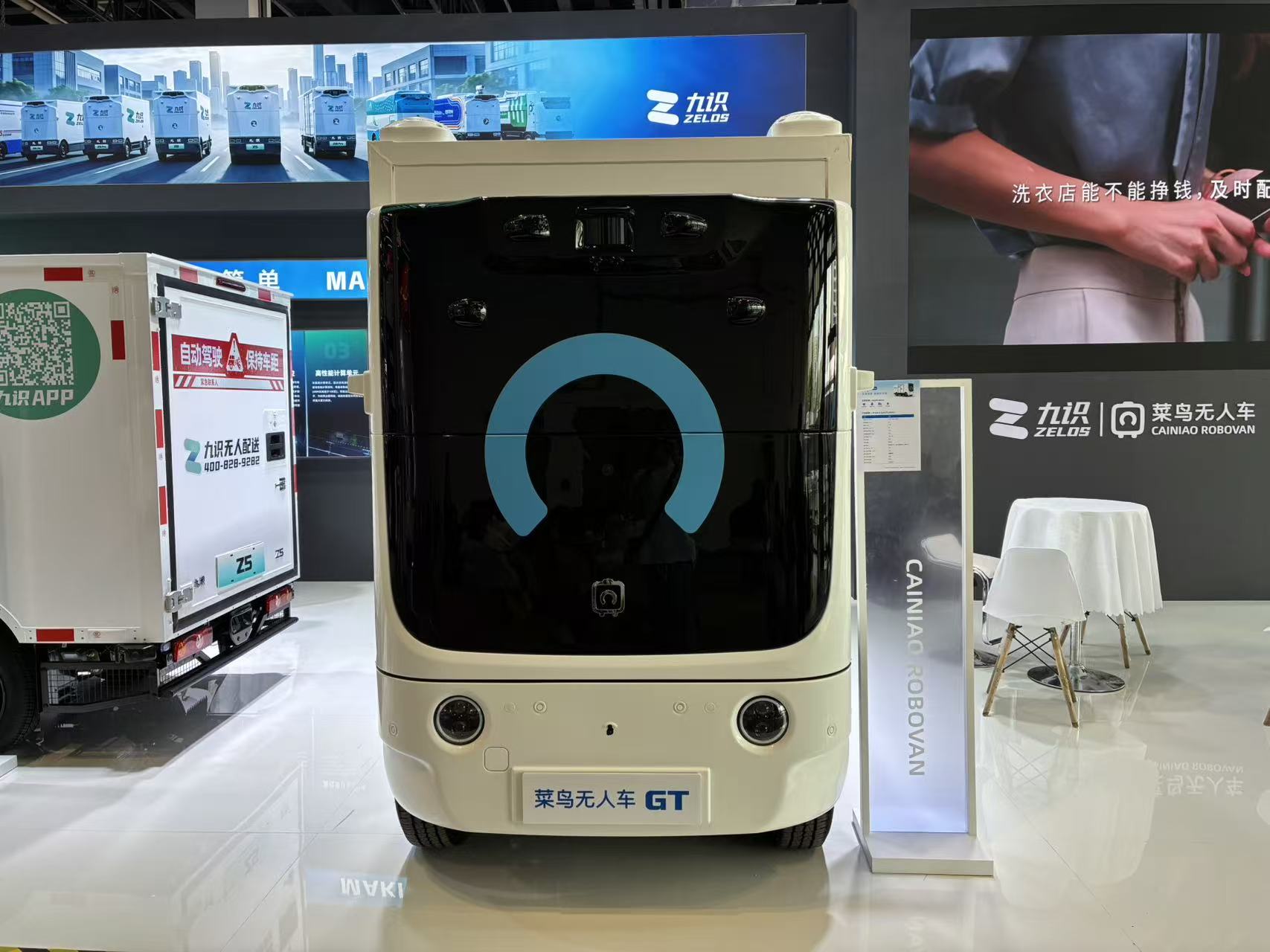
Additionally, an increasing number of enterprises have acquired test permits for Level 3 and Level 4 autonomous driving in recent years, yet the timeline for fully realized autonomous driving remains uncertain. At WAIC, ZELOSTECH announced the world’s first large-scale mass production of a mapless Level 4 driving solution. The new technology features drastically reduced costs compared with its prior generation and eliminates reliance on high-definition maps.
(Photograph by DiancheTong)
However, ZELOSTECH solution has been applied not to passenger vehicles, nor to Robotaxis showcased by WeRide, but to Cainiao’s unmanned logistics delivery vehicles. Compared with Robotaxis, Cainiao’s autonomous delivery vehicles operate within more limited scenarios, with lower technical barriers and safety risks for intelligent driving. Such vehicles indeed serve as an optimal testbed for Level 4 autonomous driving.
Physical AI, World Models and Super Intelligent Agents: Three Key Cards for the Second Half Era
Centered on artificial intelligence, this exhibition features relatively few automotive exhibitors, and most displayed products and technologies are tech-oriented. Judging from the technologies and exhibits unveiled by various companies, competition in the next phase will center on physical AI, world models, intelligent agents, edge-cloud collaboration and other tracks.
Intelligent cabins have entered the era of super intelligent agents. Co-developed by StepStar and Geely, Super Eva leverages an edge-cloud collaborative large model to support proactive task planning. It has evolved from merely recognizing voice commands to independent execution, interconnecting cabin-driving systems with lifestyle service ecosystems. Meanwhile, Cami JoyInside, jointly launched by Cami and JD.com, taps into the 366-million-unit stock vehicle market via a low-cost retrofit solution, filling the intelligence gap for low-end smart cars.
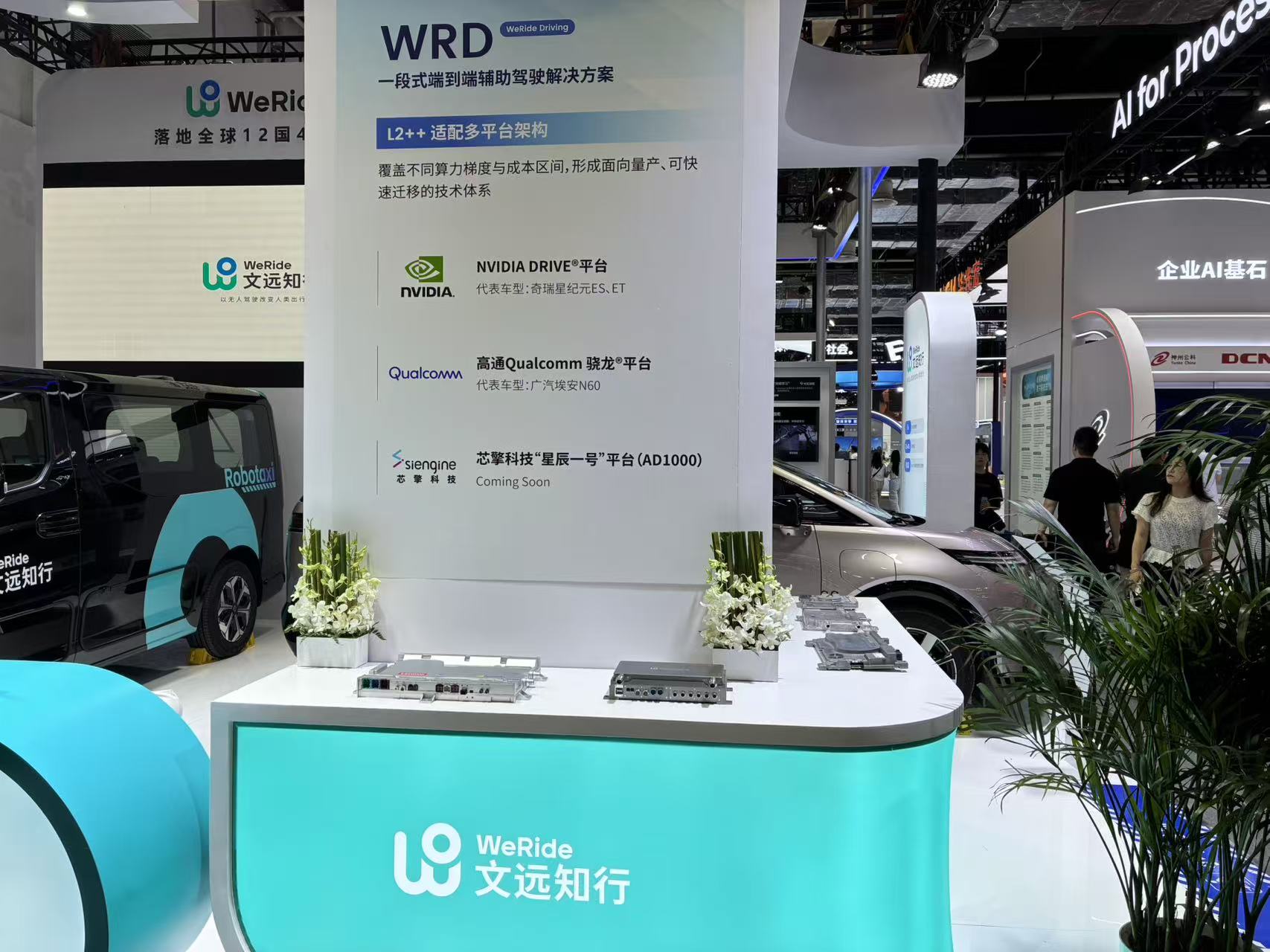
In intelligent driving, world models and physical AI stand out as key breakthrough drivers. WeRide’s newly released WITT large model reconstructs cognition based on the Minimum Physical Fact Unit. It realizes information extraction, logical reasoning, credibility verification and intelligent data classification. Paired with GENESIS for generating high-fidelity simulation scenarios, it builds an efficient closed loop consisting of real-world data, verified physical facts, virtual training and vehicle-side algorithm iteration. This drastically cuts data costs and addresses AI hallucinations as well as challenges brought by long-tail driving scenarios.
(Photograph by DiancheTong)
ZELOSTECH has taken the lead in large-scale mass production of a mapless L4 autonomous driving solution. Free from reliance on high-definition maps, it offers a new low-cost, widely applicable pathway for the commercialization of autonomous driving.
Today, automotive intelligence has moved beyond hardware-spec stacking—centering instead on “understanding the world and comprehending user needs.” It strategically addresses segmented consumer demands via dual-track strategies. New vehicles feature proactive intelligent cockpits; legacy vehicles receive affordable aftermarket AI upgrades. Intelligent driving leverages Physics-AI to enhance safety across diverse use cases—from new passenger cars to commercial delivery fleets—deploying diversified technical pathways to deliver human-centered intelligent mobility for all users and all scenarios.
Nonetheless, WAIC is not primarily an automotive show. Broader automotive applications of these technologies—and deeper automotive industry developments—may be unveiled instead at next April’s Shanghai Auto Show. DiancheTong (ID: dianchetong233) will be there on-site, delivering timely and reliable coverage.
The WAIC2026, themed “Intelligent Partners, Co-Creating the Future,” is underway!
The AI narrative has evolved from stacking model parameters to deploying AI Agents for tangible productivity gains; heterogeneous collaboration and photonic computing continue to push computational limits upward; embodied intelligence is accelerating real-world adoption—robots entering homes and factories are turning Physics-AI into reality.
The LeiTech WAIC reporting team has arrived in Shanghai to capture the pinnacle moment of AI industrialization—stay tuned!