 雷科技
雷科技





The main forum of WAIC 2026, namely the 2026 World Artificial Intelligence Conference and High-Level Meeting on Global AI Governance, was officially held from July 17 to 20. As an annual grand event for the AI industry, this year’s conference brought together major domestic and foreign large-model enterprises, AI application developers and hardware manufacturers. Leitech AGI (leikejiagi), the AI-focused new media under Leitech (ID: leitech), dispatched a reporting team to cover the event on-site in Shanghai.
On the first day of the conference, discussions onstage revolved predominantly around foundation models, AI agents, world models and embodied intelligence. Yet as experts, academics and business leaders dug deeper into the topics, they circled back repeatedly to one identical question.
What roles will humans play as machines grow increasingly capable? This is arguably the biggest question lingering on ordinary people’s minds today, yet one with answers rarely found at a tech conference.

Image source: LeiTech
Over the past few years, the industry’s most common response has been: “AI will not replace humans; people who master AI will replace those who do not.” This statement is not wrong, yet in 2026, when AI agents can execute continuous tasks and artificial intelligence has stepped into scientific research and the physical world, this view is no longer sufficient. The real changes go far beyond learning an extra tool. More and more answers, operations and even decisions that once relied on humans can now be taken over by machines.
Humans are certainly unable to outperform machines in every single link. However, this does not mean ordinary people have no choice but to keep learning cutting-edge tools while waiting for their jobs to be revalued. After reviewing public speeches, roundtable discussions and on-site dialogues at WAIC, I summarize the solution into four core principles:
Stop competing with machines for answers; retain ownership of questions and goals.
Do not spend all the time freed up by automation on extra work.
Humans may authorize AI to carry out tasks, but cannot outsource values and accountability.
Always reserve an option to pivot to new paths.
Humans Need Not Compete Against Machines for Answers
“Asking good questions is tremendously important, arguably even more important than having answers.”
At the AI for Science roundtable of WAIC, Professor Xipeng Qiu from Fudan University condensed his advice for young people into this sentence. It may sound like a cliché, but it carries new weight today, when AI is capable of coding, conducting research and calling external tools.
In the past, many occupations set entry barriers based on “possessing answers”. Those with broader knowledge, better command of workflows and faster document output could climb higher within organizations. Large language models have upended this dynamic: standard answers and standardized deliverables have quickly become cheap and accessible.
Turing Award laureate Richard S. Sutton also cautioned that current AI mostly leverages human knowledge and feeds it back to humans. AI can write, draw and compute, yet it lacks first-person experience that enables goal-oriented action and iterative improvement based on real-world feedback. He even stated plainly that existing AI remains “rather weak and unreliable”.
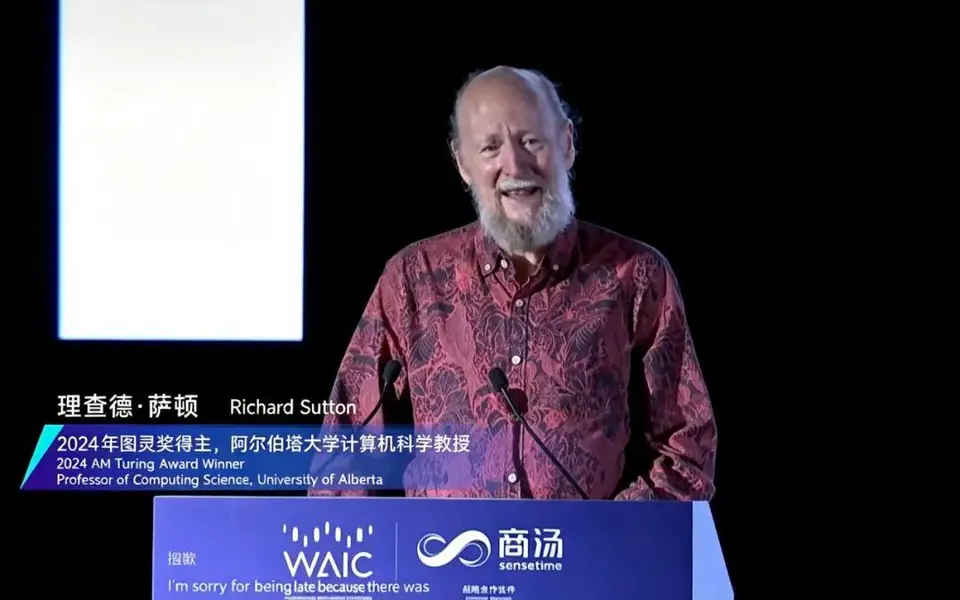
Image source: WAIC
The thing is, Sutton does not believe such limitations will persist forever. AI is transitioning from the static "era of human data" to an "era of experiential learning", where systems learn through taking actions. Once machines become capable of independent prediction, action-taking, feedback acquisition and self-adjustment, the advantages ordinary people gain from knowledge memorization and proficient procedural execution will keep diminishing.
At this juncture, people ought to focus on cultivating more advanced capabilities: defining problems to tackle, laying out required criteria for outcomes, identifying unacceptable costs, and evaluating whether AI-generated answers are truly meaningful.
This also accounts for why Omar M. Yaghi, Nobel laureate in Chemistry, acknowledged during the same roundtable that AI drastically speeds up chemical research that once took weeks or months to complete. Meanwhile, he voiced concerns that scientists who fail to conduct proactive trials and verifications may end up letting AI agents dictate how scientific research ought to be carried out.
AI yields an abundance of answers, yet shifts the challenge to decision-making: figuring out which questions merit inquiry, which research avenues deserve investment, and which findings deserve real-world application.
Wang Jian, Member of the Chinese Academy of Engineering, founder of Alibaba Cloud and Director of Zhijiang Laboratory, illustrated this shift from another perspective. Modern large language models have absorbed massive volumes of papers, books and web content, yet a wealth of knowledge about the natural world is embedded in spectrums, remote sensing signals, seismic waves, gene sequences and experimental datasets.
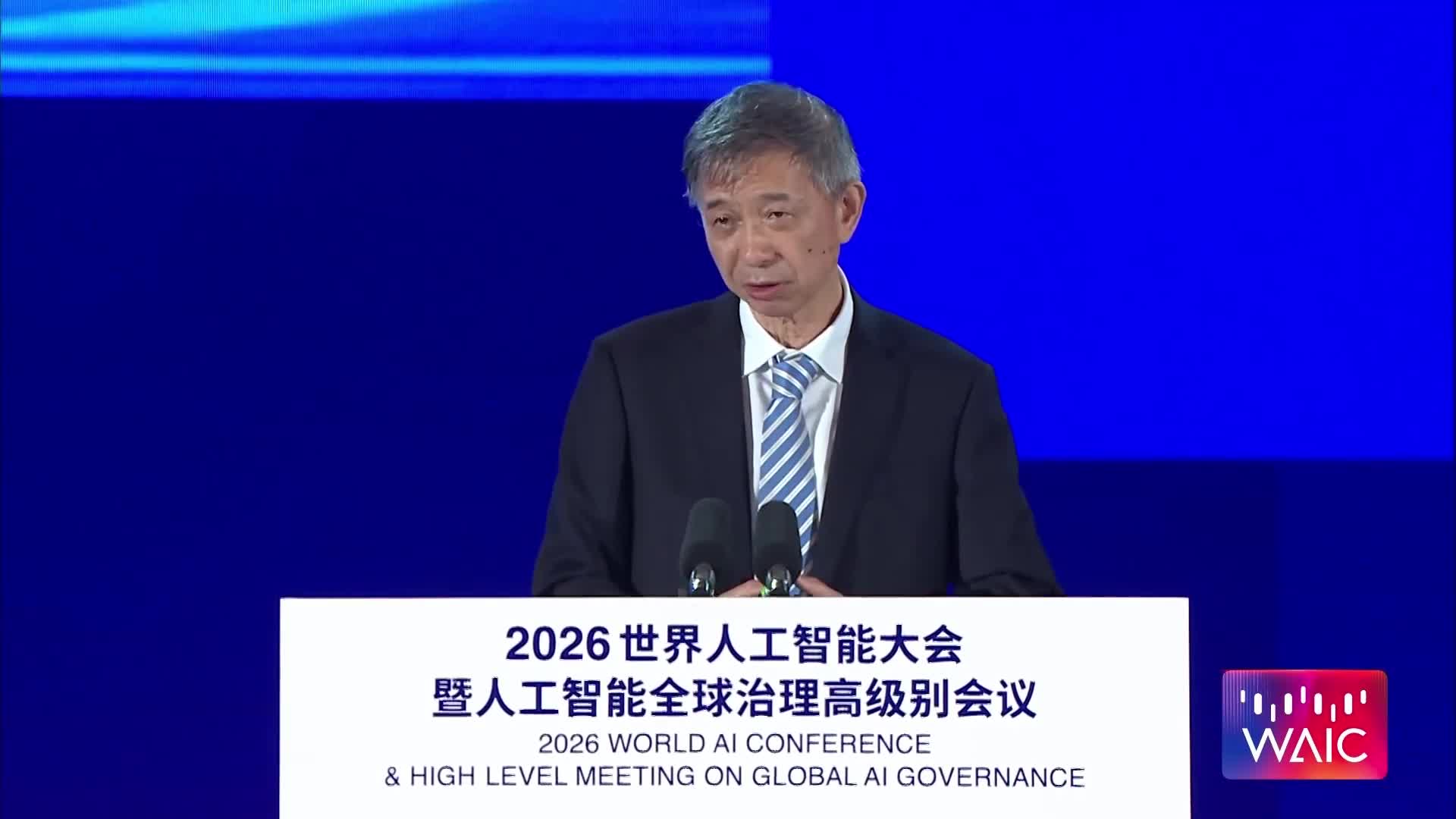
Wang Jian; image source: WAIC
If next-generation foundational scientific models gain the ability to directly interpret such data, AI will no longer merely repeat conclusions written by humans; it may also identify new research questions from historical datasets.
When that day arrives, humans may lose exclusive dominance over discovery. Still, for a long time to come, humans must remain responsible for deciding which discoveries merit pursuit, how findings should be verified, and where they ought to be applied.
Accordingly, the first mindset adjustment ordinary people need amid the AI era is to let go of anxiety about competing to become faster machines. Shift focus from whether I can accomplish a task to why this task needs to be done. Being capable of drafting a plan is undoubtedly valuable, yet defining the real-world problems the plan needs to solve matters far more. It is easy to prompt AI to generate ten solutions, but figuring out what the eleventh question should be is an increasingly rare skill.
The Time Freed Up by AI Must Not Be Filled with Extra Work
“The mission of physical intelligence is to give humanity back to humans,” stated Hao Su, Dean of the Institute of General Physical Intelligence at Fudan University.
In his vision, robots take charge of turning elderly patients in bed, hauling heavy loads, and undertaking high-risk work at heights, underground, or in high-temperature environments. Protected from hazards, humans retain roles centered on companionship, emotional care, judgment and creation. This division of labor is ideal and widely agreeable.
Office work, however, often unfolds differently. When AI cuts one hour off a workload, companies rarely return that hour to employees’ personal lives; instead, they tend to pile two additional assignments into the saved time. If an individual leverages AI agents to match the output capacity of an entire team, employers may in turn question the necessity of keeping the original team intact.
This is the most overlooked flip side of “AI liberating humans”. Technology eliminates repetitive labor, yet it cannot automatically allocate saved time to workers, nor guarantee improved wellbeing for employees.
Qi Yin, Chairman of StepFun, predicts that engineers, designers and researchers will each have dedicated AI agents in the future, allowing “one person to deliver the productivity of an entire team.” As a business leader, he sees massive opportunities for individual capabilities to expand tenfold. From an ordinary worker’s perspective, however, this outlook requires a crucial addendum:
If personal output multiplies ten times, how will profits be distributed? Will workload intensity also surge tenfold?
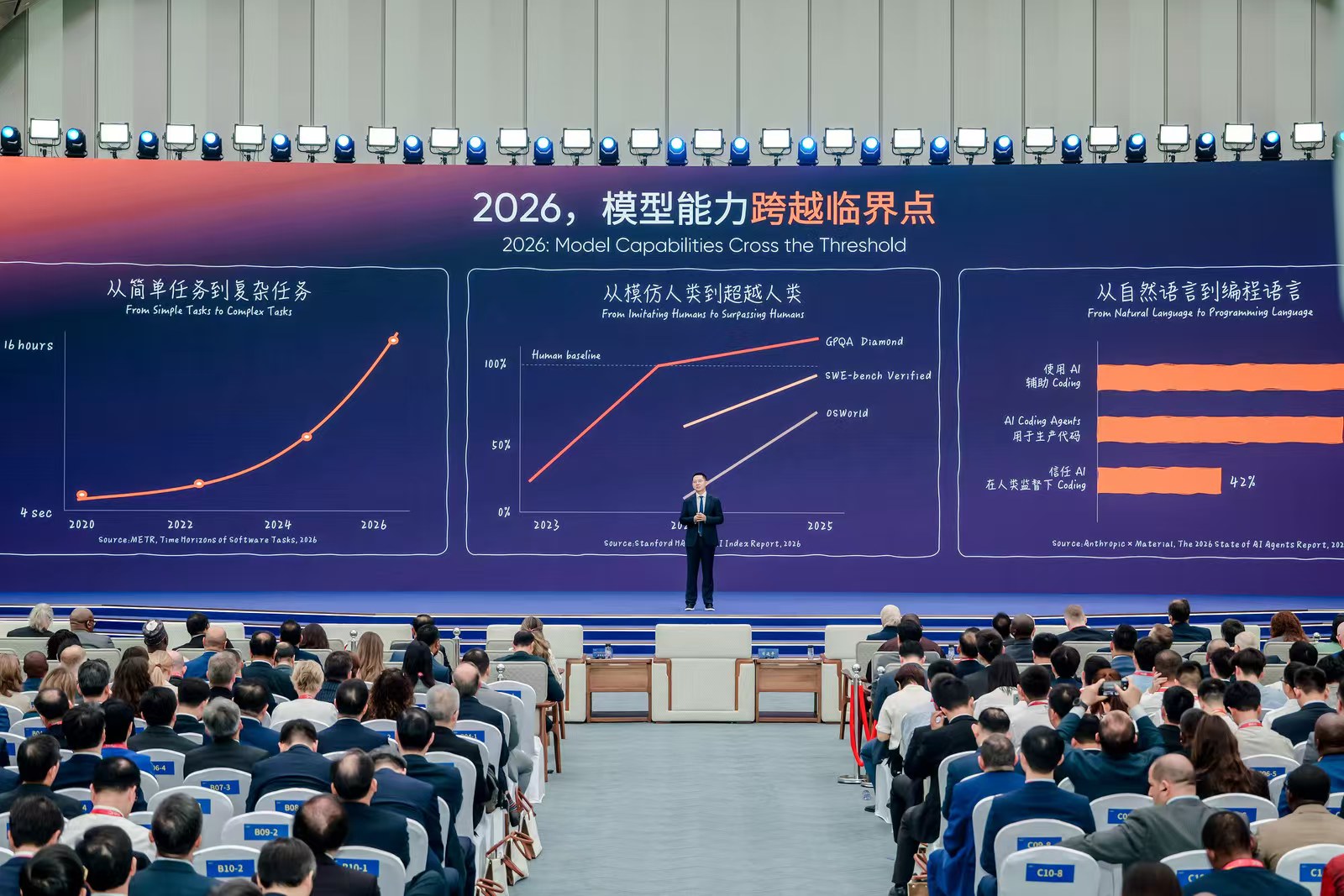
Image source: StepN
Good AI should augment human capabilities, expand human boundaries, and enable people to acquire knowledge, competence and growth through usage, rather than fostering overreliance on products. This yardstick applies not only to evaluating AI products but also to reflecting on one’s own work. After using AI for some time, you may reflect on three concrete questions:
Without this tool, do I gain a clearer understanding of the original problem? Have I acquired transferable methodologies applicable to other scenarios? Has the time saved by AI been channeled into new creation, interpersonal bonding and rest, or merely filled with extra workload?
If the answer consistently falls into the latter category, AI has boosted efficiency yet failed to return humanity back to people.
When addressing education on-site, Turing Award laureate John Hopcroft noted that the fundamental mission of universities is to help students discover their passions and pursue career paths that allow them to realize self-worth. In an era where technological shifts can hardly be predicted accurately, cultivating adaptable people constitutes a more reliable strategy than chasing fleeting trendy skills.
Passion here is no empty romantic rhetoric. It means that even when well-honed skills get automated rapidly, you retain the drive to raise further questions, learn new things, and restructure your workflow. AI can carry out an increasing number of procedural tasks, yet an individual’s long-term focus ultimately determines what kind of experience and achievements they accumulate.
Let AI Execute Tasks, Never Outsource Accountability
Large language models chiefly reshape who supplies answers, whereas AI agents redefine who undertakes execution. In his speech, Yin Qi proposed that computers, smartphones, automobiles and robots function as the physical avatars of one unified intelligent agent across diverse scenarios. Beyond calling various tools, AI agents may possess independent identities, capabilities and credibility, capable of proactively finding collaborators, organizing teamwork and even completing transactions.
Critical concerns remain: on whose behalf do agents act? Who bears responsibility for consequences? Can their identities be trusted? Are permissions controllable? Can all behaviors be traced?
These may sound like industry governance issues, yet they closely touch ordinary people’s lives. Revising text via AI allows easy revisions if mistakes emerge. However, authorizing AI to send emails, operate accounts, submit paperwork or generate medical advice may trigger irreversible errors affecting real-life relationships, finances and formal institutions.
Xue Lan, Dean of Schwarzman College at Tsinghua University and Director of Tsinghua Institute of AI International Governance, put it more bluntly at the main forum: “Matters involving value judgment must never be delegated to AI.”
When humans err, intent and negligence can be distinguished, with corresponding accountability and penalties enforced. AI itself lacks legal and moral personhood to bear liabilities. Once accidents happen, accountability traces back to specific individuals and organizations throughout the full chain of AI development, deployment, operation and usage.
Therefore, for everyday users of AI agents, polished prompts matter far less than clear boundary-setting. For activities involving public publication, personal identity, privacy, finance, healthcare and legal affairs, access privileges ought to be minimized. Mandatory manual confirmation should be required for key steps; processes must remain transparent and all operations reversible.
This stance stems from prudent risk awareness rather than excessive caution. As President Xi Jinping pointed out in the opening address of the conference, intelligent agents represent a new form of AI products and services. It is imperative to clarify their decision-making authority and behavioral boundaries, establish mechanisms for behavior tracing and risk alerts, strengthen inherent security of AI agents, and mitigate derivative risks arising from application.
At its core, granting AI authorization only means delegating tasks to machines, not surrendering human judgment and accountability. The more AI resembles a reliable helper handling chores, the clearer humans must be about scenarios requiring personal intervention.
Always Reserve a Path for Career Pivoting
Learning AI remains necessary for the general public.
But what’s truly worth learning isn’t button locations on a specific model, a particular prompt format, or even today’s hottest workflow. Tools evolve rapidly—binding yourself to a single platform or process risks mastery just before the next overhaul.
What truly merits learning, however, is not the button layout of a specific model, a fixed prompt template, nor even the most popular workflows of the moment. Tools update at breakneck speed; tying yourself exclusively to one platform or workflow may render your skills obsolete right after mastery.
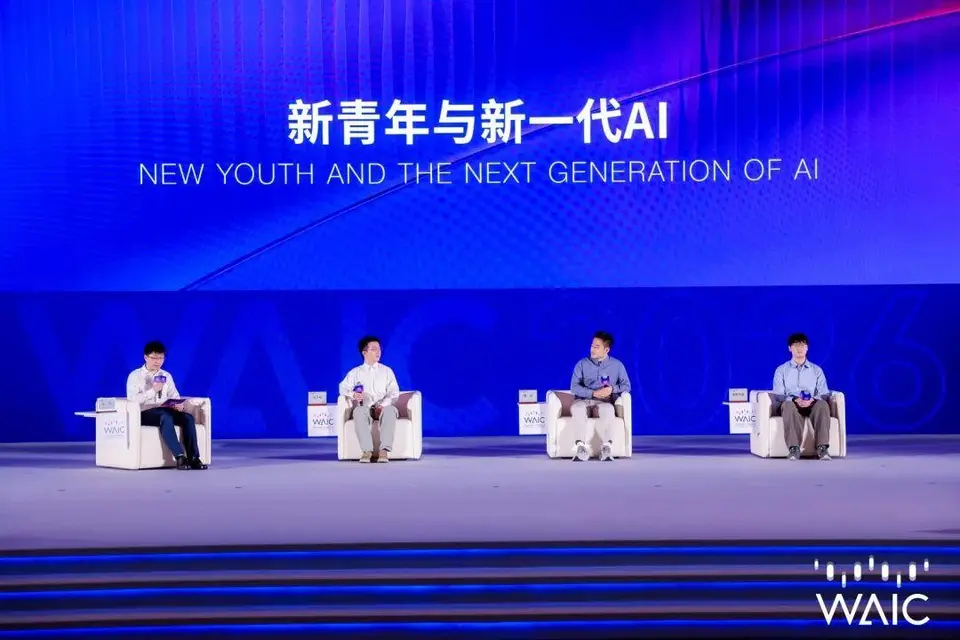
Youth Scientist Dialogue; image source: WAIC
During the Youth Scientists Dialogue at WAIC, Ziming Liu, Assistant Professor at the School of Artificial Intelligence, Tsinghua University and Chief Scientist of MetaRing Intelligence, added: The definition of the "new generation" bears no relation to age. What truly matters is whether people rigidly apply outdated experience to tackle emerging problems. Mingchen Zhuge, founding member of Recursive, also pointed out that AI today is drastically different from what it was five years ago. "Always keep a new path open for yourself," rather than reacting passively after new technologies exert impacts.
Keeping alternative options available does not necessarily mean quitting jobs and switching careers. It can involve actively integrating AI into real work to identify its applicable scenarios and flaws; sustaining lifelong learning alongside core occupations; or avoiding locking all documents, workflows and personal knowledge onto a single platform, so you retain flexibility to switch tools.
More importantly, do not limit AI learning to chatbox interactions. Sutton regards experience as the source of intelligence, while Hao Su describes the physical world as "the most impartial examiner". Both arguments boil down to the same logic: all seemingly polished AI outputs must ultimately stand real-world validation.
Practical metrics include whether people are willing to adopt the proposed solutions, whether codes can run properly, whether content holds up to factual verification, and whether decisions inflict harm on specific individuals. Such real feedback can never be fully replaced by repeated prompting of AI models.
In the AI era, people cannot gain a sense of security by mastering every new tool — an impossible goal anyway. Security more often stems from timeless capabilities: posing valuable questions, verifying outcomes, running real-world trials and errors, distinguishing judgments that cannot be delegated to AI, and rerouting when outdated experience fails.
None of these guarantees complete immunity against technological disruption. Still, ordinary people can hold their ground before universal systemic solutions emerge. There is no need to compete with machines to become more robotic. Nor should people surrender their goals, accountability and entire lives simply because AI can handle more tasks. Let AI take over repetitive, hazardous and draining work, and redirect the freed time to nurture relationships, exercise judgment, pursue creation and embrace new choices.
This is arguably the most tangible meaning of "restoring humanity to humans" for the general public.
The WAIC 2026, themed “Intelligent Partners, Co-Creating the Future,” is underway!
The AI narrative has shifted—from stacking model parameters to delivering tangible agent-driven productivity. Heterogeneous collaboration and photonic computing continue pushing computational limits upward. Embodied intelligence accelerates real-world applications, bringing robots into homes and factories—making physical AI a reality.
LeiTech’s WAIC exhibition coverage team has arrived in Shanghai, capturing the annual pinnacle of AI industrialization—stay tuned!