
 雷科技
雷科技





It’s still about agents.
The 2026 World Artificial Intelligence Conference (WAIC 2026) was officially held from July 17 to 20. As an annual flagship event for the AI sector, this year’s conference drew numerous domestic and international large-model enterprises, AI application developers and hardware suppliers. LeiTech AGI (leikejiagi), an AI-focused new media platform under LeiTech (ID: leitech), dispatched a reporting team to Shanghai for on-site coverage.
Inside this year’s WAIC exhibition halls, conversations barely got going without mentions of Agents. Even so, what intrigued me most was whether head-mounted hardware could truly accommodate functional AI Agents.
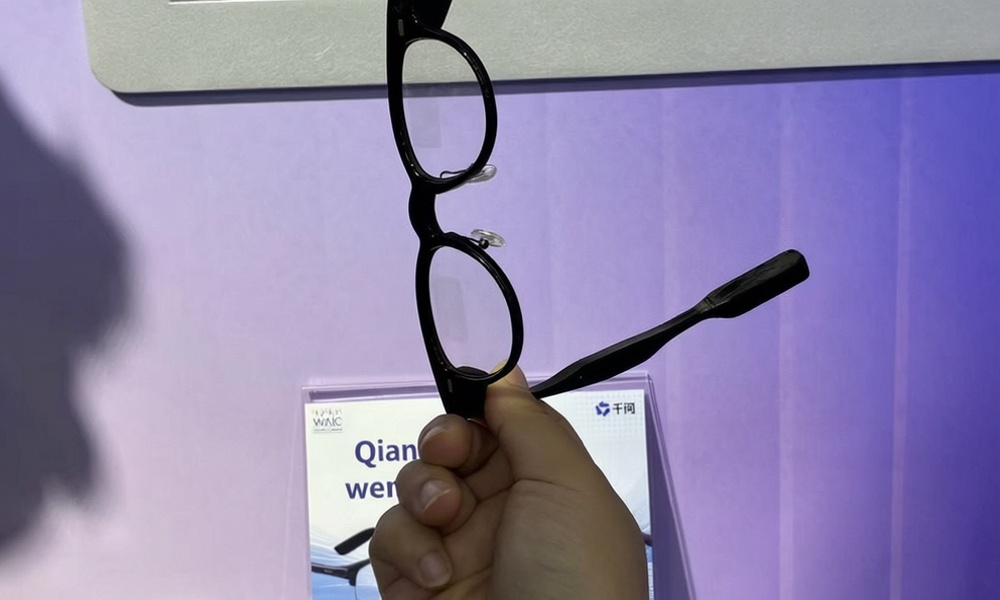
Qwen announced today that its AI glasses have been officially upgraded into "Agent Smart Glasses". Put simply, the original Qwen AI glasses operated more like a facial-mounted AI assistant: users voice queries, the device collects data via cameras and microphones, and feedback responses accordingly.
Post-upgrade, the glasses can not only comprehend user requests, but also call third-party Skills and Agents on demand to deliver more comprehensive services and decision support.
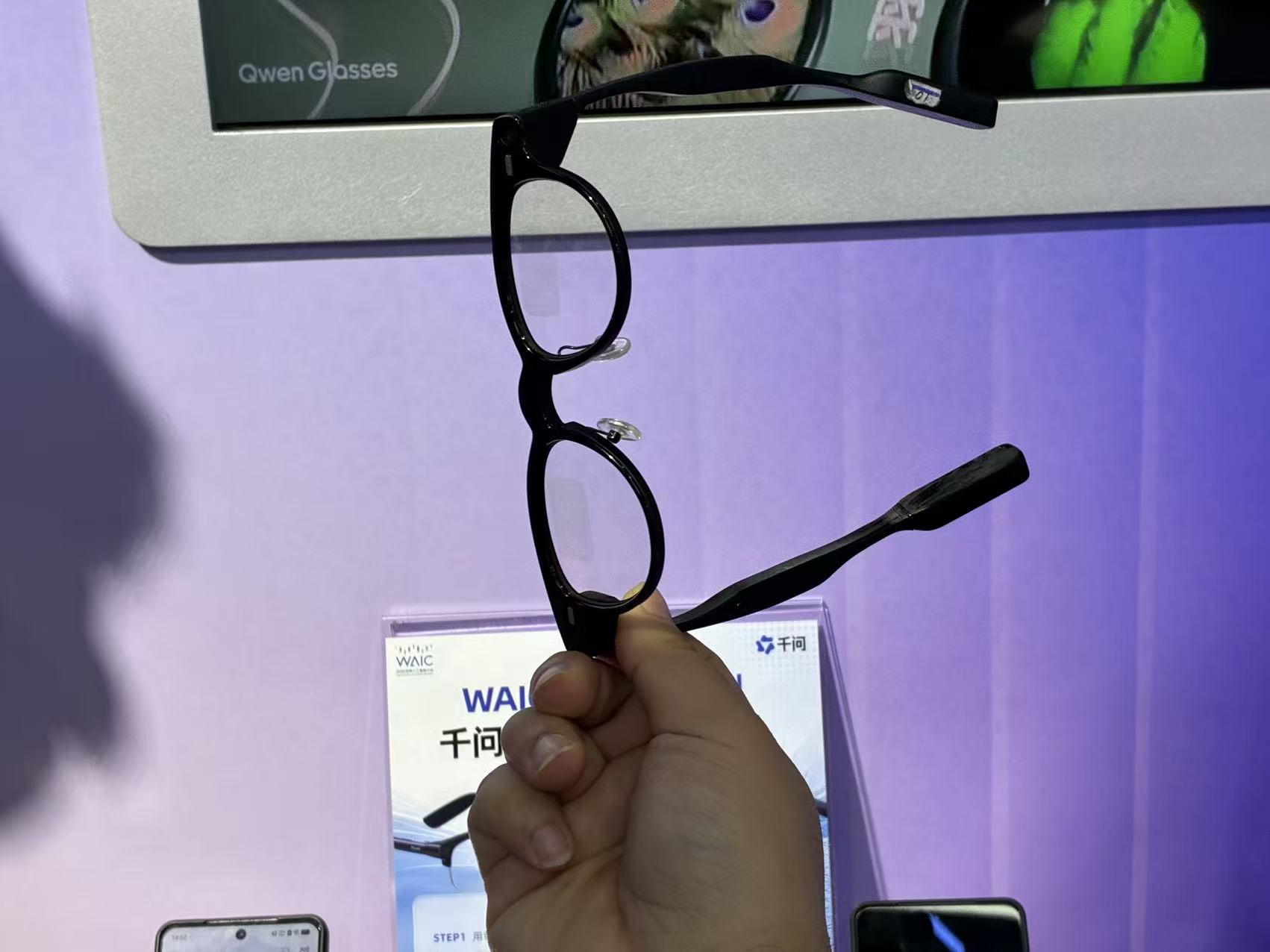
Image source: LeiTech
However, equipping smart glasses with functional AI Agents requires more than simply adopting a more powerful model. While smartphone-based Agents can access screen content and call mobile applications, smart glasses operate amid an ever-changing physical world. They need to identify what users are seeing and hearing, and even monitor users’ physical conditions.
Following follow-up inquiries on site, LeiTech found a suite of new sensing technologies equally noteworthy.
Traditional voice assistants on AI glasses work on a question-and-response basis with noticeable pauses in between. Qwen has upgraded its full-duplex voice model architecture this time. In practical use, the glasses can listen and speak simultaneously while judging users’ interactive intentions in real time.
When you issue commands amid surrounding chatter, the device can accurately distinguish whether you are addressing the glasses or casually talking with friends.
Qwen has integrated eye-tracking technology and an always-on visual sensing system, enabling the glasses to continuously interpret users’ line of sight and ambient surroundings. In collaboration with Ant Group, iris identity verification has been introduced to deliver high-security authentication for identity-sensitive scenarios including payments and account operations.

Image source: LeiTech
Visual upgrades are even more dramatic. Qwen has introduced eye tracking and an always-on visual sensing system. It also partnered with Ant Group to roll out iris authentication. Simply put, the glasses can not only capture visuals but also verify the wearer’s identity. Going forward, high-risk operations such as payments and access to private data may only require a glance for identity confirmation.
That said, the most intriguing highlight of this upgrade lies in physical sign monitoring.
Most AI glasses manufacturers in the industry compete fiercely on camera hardware and display performance. In contrast, the Qwen team has embedded PPG and temperature sensors inside the glasses to measure heart rate, blood oxygen level, HRV (Heart Rate Variability) and other physical indicators. This marks the industry’s first real-time physical sign monitoring capability built into AI glasses. Critically, it supplies the AI Agent with a brand-new dimension of data beyond audio and visual inputs.
According to on-site briefings, these metrics are not merely compiled into static health reports. When users work or read for long stretches, the glasses combine eye movement, blink frequency and physical status to detect eye strain. It will prompt users to rest, gaze into the distance or adjust sitting posture at appropriate times. With prolonged usage, the AI Agent can deliver more personalized analysis and recommendations based on long-term changes in health metrics.
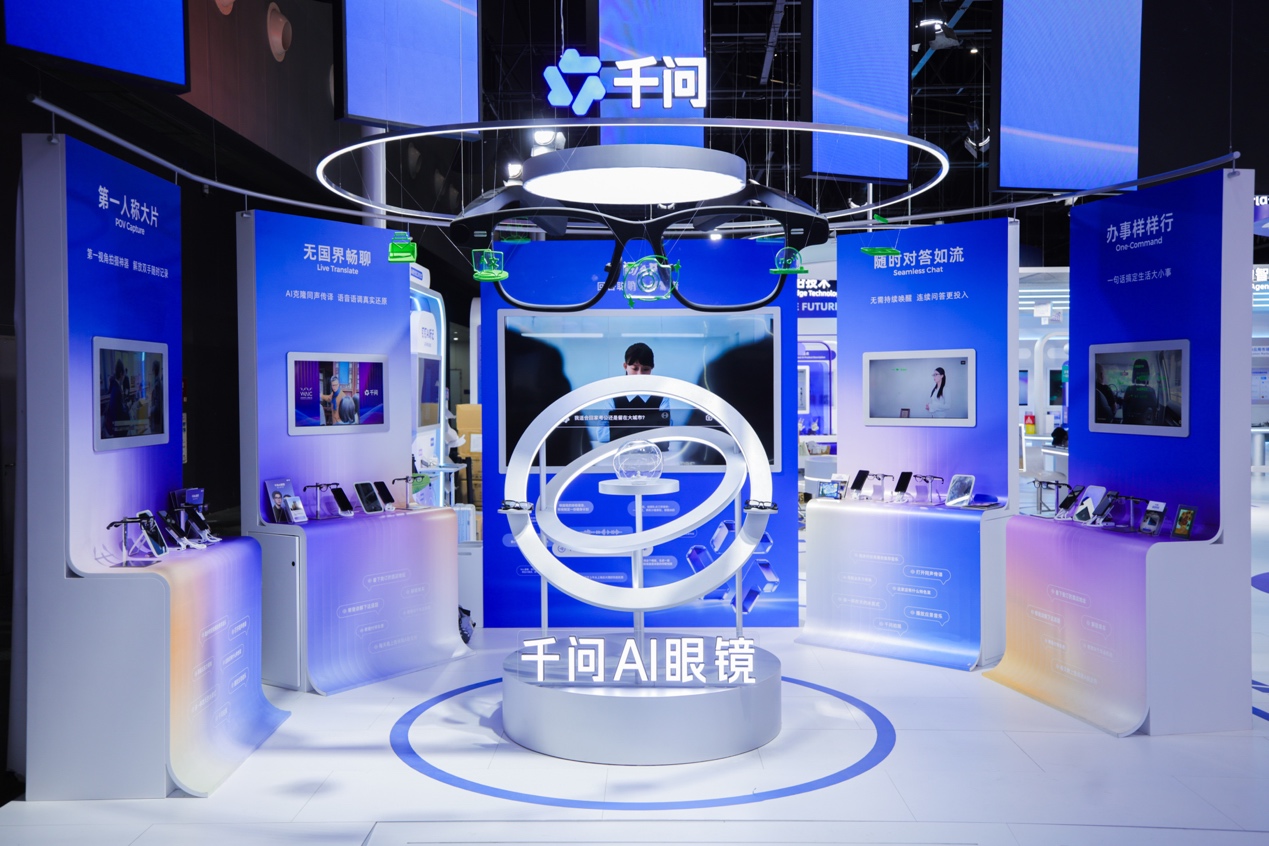
Image source: Qwen
That’s genuinely interesting.
Many previous AI glasses bear the label of "AI" yet still require users to manually wake them up and pose questions. Qwen’s showcased development path enables the glasses to continuously perceive users and deliver proactive services at appropriate moments. This also lays bare the clear divide between conventional AI assistants and AI Agents.
“An Agent without hardware cannot interact with the physical world; hardware without an Agent is nothing more than a tool,” stated Wu Jianjun, General Manager of AI Hardware Products at Qwen, during the launch event.
The logic holds true. If AI cannot access the physical world and obtain real sensor data, it is confined to chat interfaces, making its suggestions detached from real-world realities.
Naturally, hardware iteration never happens overnight. According to Qwen’s timeline, these new hardware technologies will be deployed on Qwen AI Agent Glasses within this year. Existing S1 and G1 models will receive Agent capabilities via OTA (Over-the-Air) updates. That said, functions dependent on newly added sensors, such as eye tracking and physical sign monitoring, will only be available on next-generation hardware.
In addition, Qwen unveiled its debut AI Agent earphones at the WAIC exhibition, revealing the brand’s plan for comprehensive hardware expansion.
Frankly speaking, whether the concept of Agent smart glasses can gain traction ultimately hinges on ordinary users’ willingness to wear them daily. Does the weight strain the nose bridge? Can battery life last half a full day? Is voice interaction natural enough? These pain points are rarely elaborated in product launches yet constantly compromise user experience in daily use.
Even so, Qwen’s integration of hardware sensing and Agent decision-making points in the right direction. Time and real-world user experience will determine how viable this path truly is.
The WAIC 2026, themed “Intelligent Partners, Co-Creating the Future,” is currently underway!
The AI narrative has shifted—from stacking model parameters toward tangible Agent-driven productivity; heterogeneous computing and photonic computing continue pushing computational ceilings upward; embodied intelligence accelerates real-world deployment, bringing robots into homes and factories—and turning physical AI into reality.
The LeiTech WAIC Exhibition Team has arrived in Shanghai to capture the annual pinnacle of AI industrialization—stay tuned!