
 雷科技
雷科技




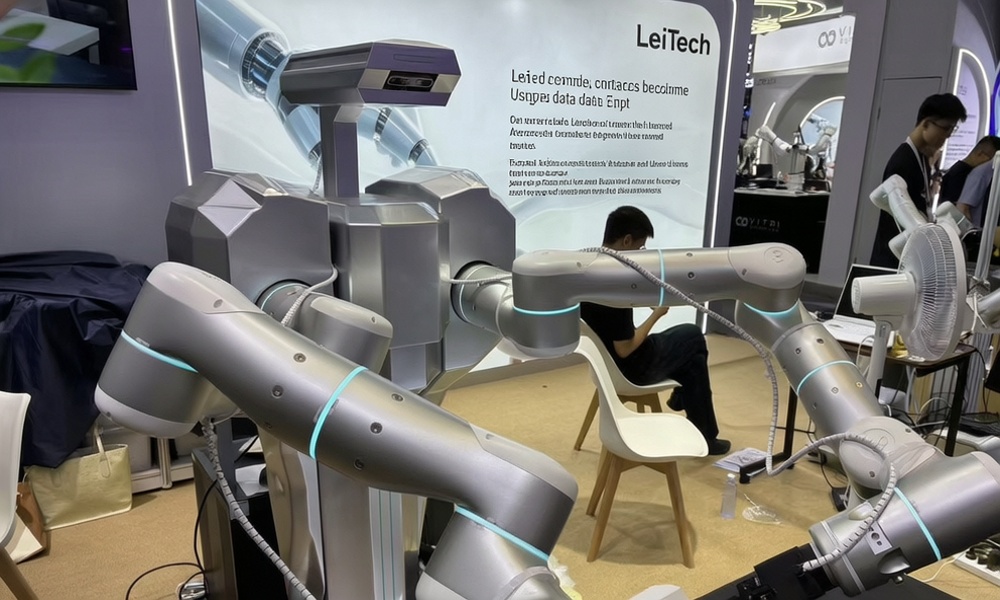


The 2026 World Artificial Intelligence Conference (WAIC 2026) was officially held from July 17 to 20. As an annual grand event for the AI industry, this year’s conference still brought together domestic and foreign large-model enterprises, AI application developers and hardware manufacturers. Lei Tech’s AI-focused new media account LeiTech AGI (leikejiagi), affiliated to LeiTech (ID: leitech), also dispatched a reporting team to conduct on-site coverage in Shanghai.
The robot exhibition area at this year’s WAIC remained bustling. Humanoid robots staged dance and boxing performances, while robotic arms mixed cocktails and made ice cream. Compared with these eye-catching demonstrations that instantly prompt visitors to take out their phones for photos, the dual-arm robot showcased at Qianjue Robotics’ booth moved much more slowly. It picked up a thin piece of cardboard, flattened it, folded the edges, and gradually pressed it into a paper box.
The truly remarkable part lay in the whole process. On-site staff reached out to disturb the thin cardboard while it was being folded. Relying on tactile and visual feedback, the robot detected material deformation and force changes, adjusted the coordinated force of its two arms, and ultimately finished the entire workflow including grabbing, flattening, edge folding and compression.
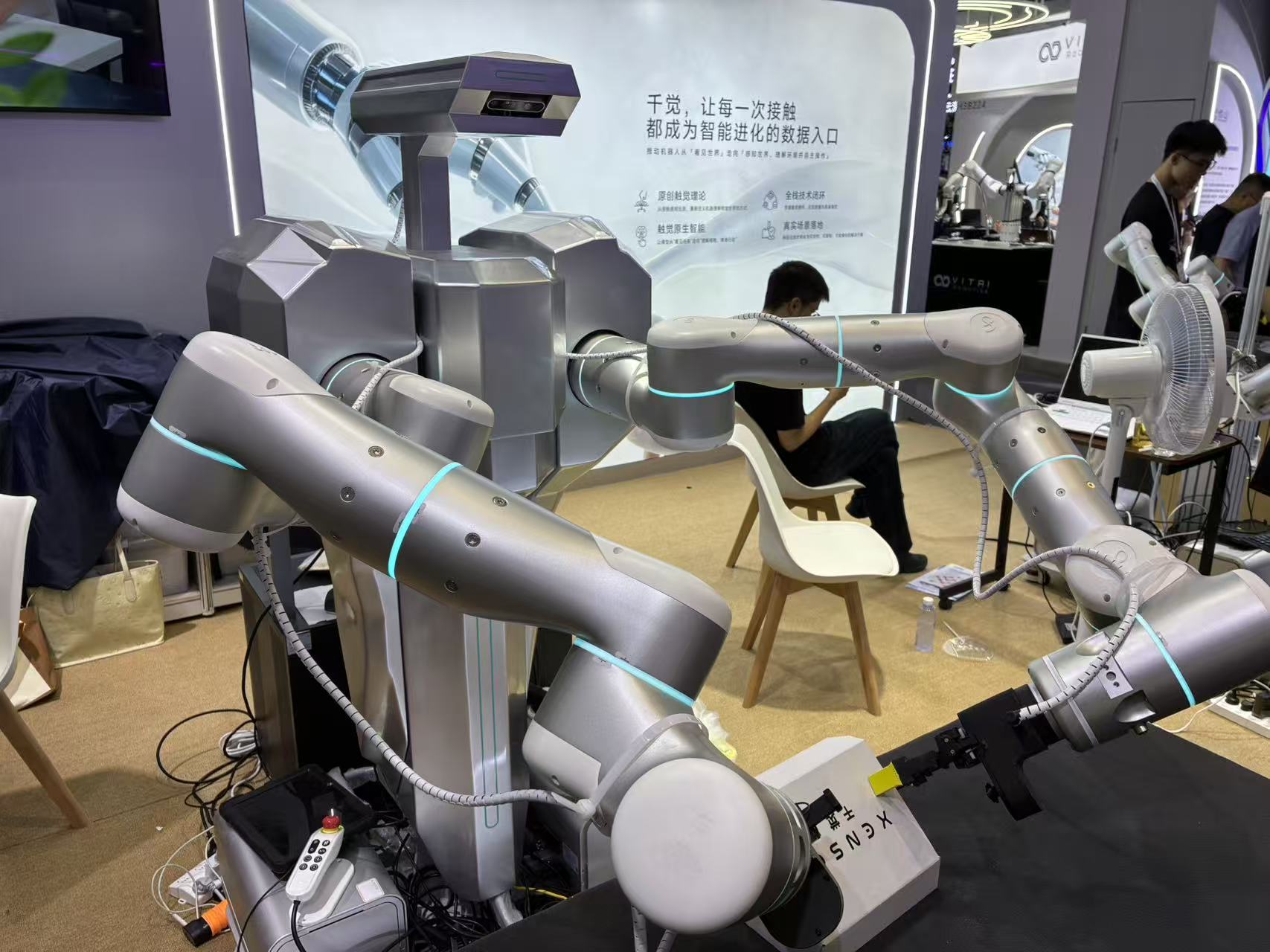
Image source: LeiTech
The process seems nothing more than folding paper boxes, yet it hinges on contact perception, a major hurdle hard for robots to overcome.
Cameras can capture the position and outline of cardboard, but struggle to continuously detect slippage, proper crease alignment and real-time applied force. Thin cardboard deforms when grasped. Pre-programmed motion trajectories easily break down amid manual interference. Qianjue’s solution leverages visuo-tactile sensors to record contact positions, force conditions and material deformation. Its model then modifies movements in real time based on visual and tactile feedback.
The precision headphone assembly demonstration on the other side of the booth better simulates actual industrial manufacturing. When handling tiny irregular components with extremely low error tolerance, the robotic arm dynamically adjusts its pose after positional deviation, jamming or edge collision. Cardboard folding tests operations on flexible materials and long action sequences, while headphone assembly demands millimeter-level position correction.
The final few centimeters of movement are often the most challenging as robots transition from merely grasping objects to performing practical work.
Ahead of WAIC’s opening, Qianjue released X-TouchMind V1, a product built with extensive targeted design and engineering development to address this pain point. It is a VTLA embodied tactile model integrating vision, language, tactile sensing, motion control and robot status within one unified system. The top layer interprets assigned tasks; the middle layer generates motion paths; the bottom layer keeps recalibrating movements driven by high-frequency tactile feedback.
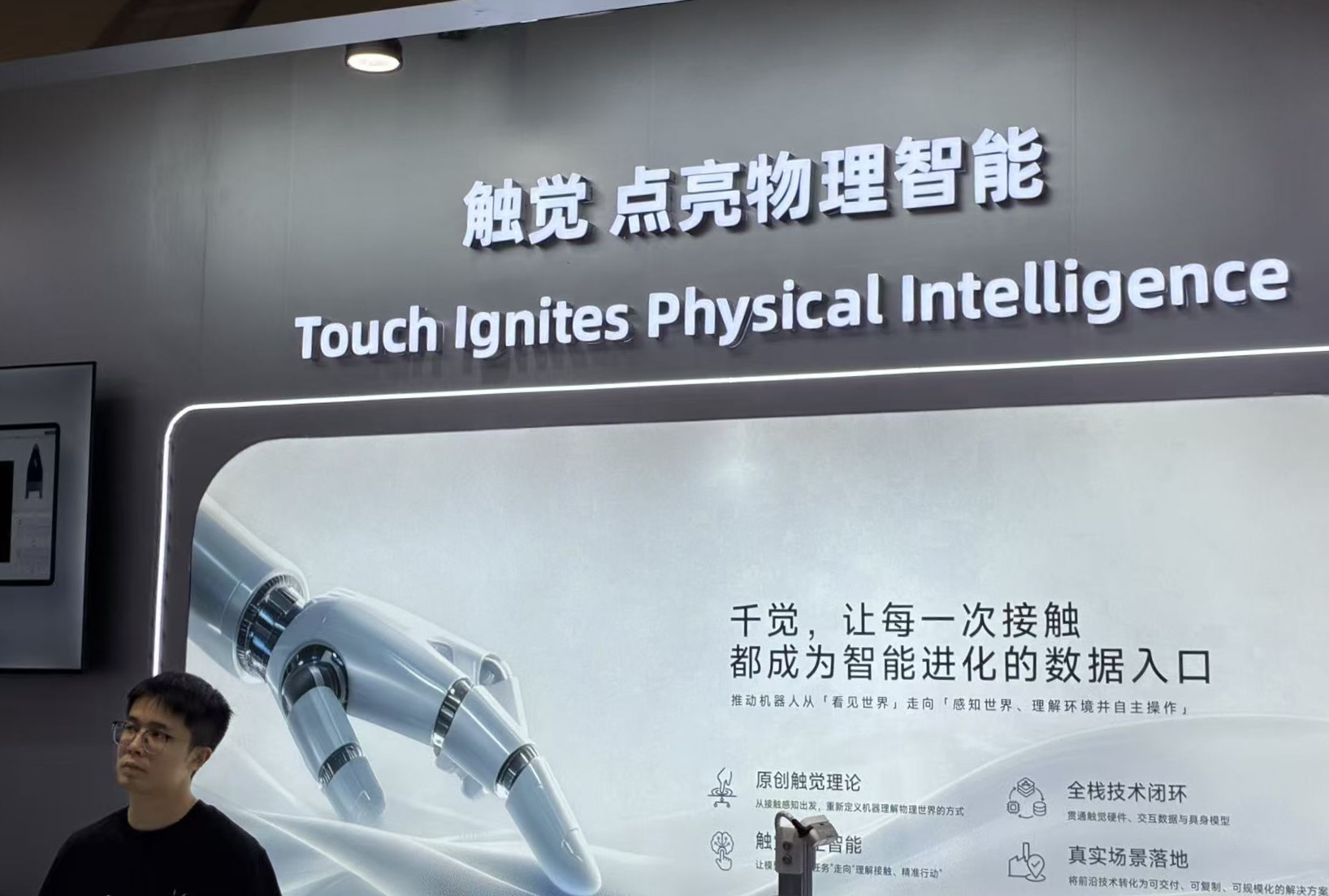
Image source: LeiTech
Simply put, the model needs to figure out not only what actions to perform and where to extend its manipulators, but also stabilize all movements once physical contact is made with objects.
Beneath the model lies the TacVerse 1k dataset. According to Qianjue, this dataset contains 1,000 hours of recordings capturing real-world physical interactions. Visual, tactile, force and pose data are collected via self-developed wearable devices. Applications for access to the initial 100-hour subset will open on July 30, covering more than 40 scenarios. The complete dataset will be released in batches starting in August, with access available on ModelScope, Hugging Face and other platforms.
This milestone carries particular significance for the robotics industry, which has long suffered from a shortage of high-quality tactile data.
Another practical demonstration easier for general audiences to understand was showcased at the expo. Qianjue partnered with Poizon (DeWu) to exhibit an AI authentication robot. A robotic arm grabs sneakers, and high-definition cameras capture detailed visuals of shoe uppers, midsoles, insoles, accessories and shoe boxes. All data is transmitted back to Poizon’s official inspection and authentication system. An authentication report is generated on screen in roughly five seconds.
The entire process that once required authenticators to repeatedly flip shoes, adjust focus and take photos is now fully automated by the robotic arm.
To be objective, the core authentication capability of this demo still mainly relies on the massive image and commodity data accumulated by Poizon. Qianjue’s primary contribution centers on stable grasping and precise physical manipulation. Even so, the case clearly illustrates the commercial potential of robotic tactile sensing. As AI expands beyond smartphone screens into factories, warehouses and quality inspection stations, algorithms must ultimately interact with tangible physical goods and make safe, steady contact with real items.
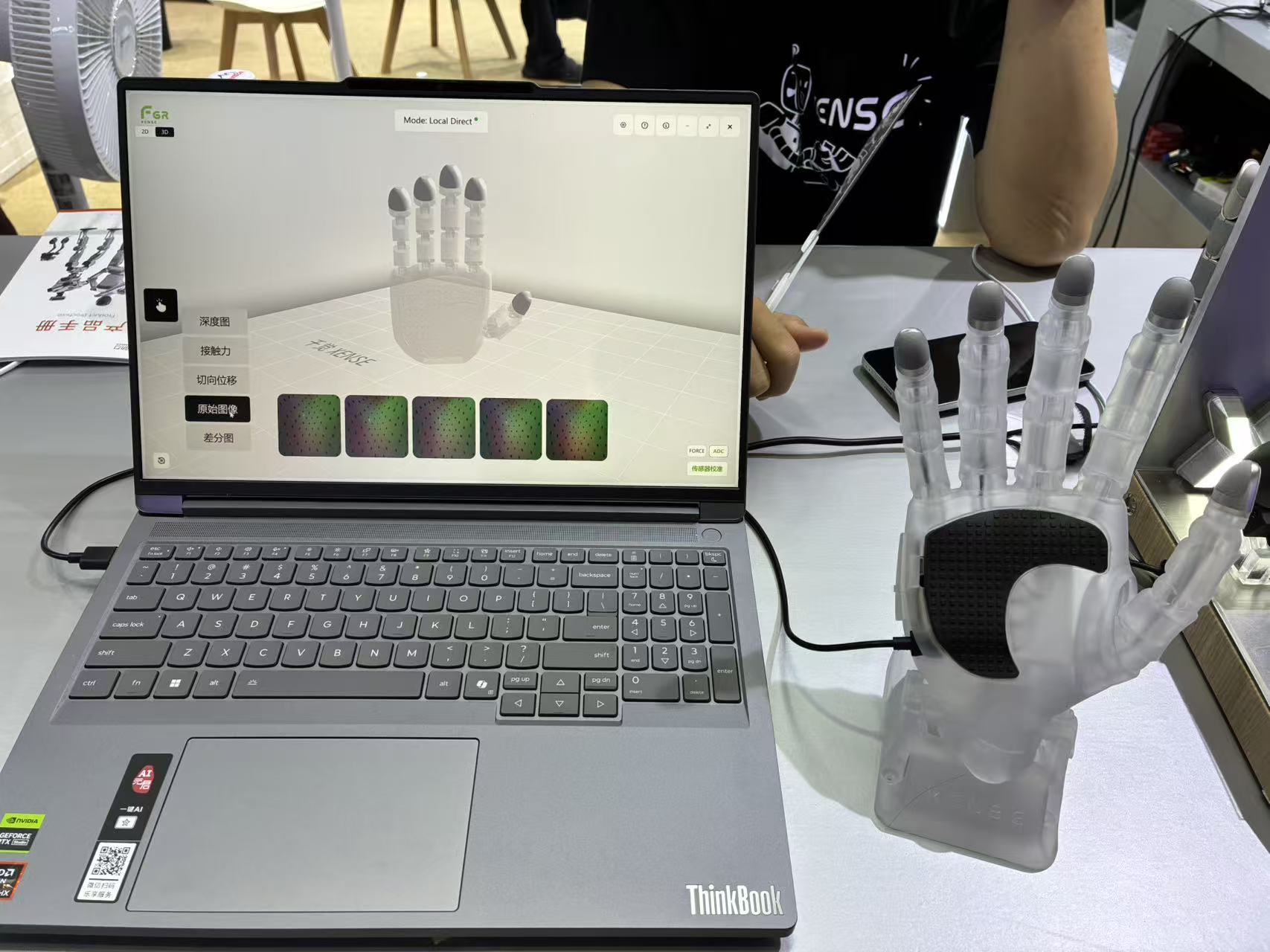
Image source: LeiTech
Qianjue was founded in May 2024 by Ma Daolin, an associate professor at Shanghai Jiao Tong University. Ma completed his postdoctoral research at MIT, and his research on tactile perception won the Best Conference Paper Award at ICRA 2021. Three days before the opening of WAIC, the company announced the completion of a financing round worth 100 million yuan. The funds will be continuously invested in visuo-tactile sensors, data collection and physical intelligence models.
Covering tactile sensor hardware, data acquisition, model training, as well as practical applications including carton folding, headphone assembly and commodity authentication, Qianjue strove to present a complete industrial chain at this WAIC event. Admittedly, the smooth demonstrations on the exhibition floor still lag behind real mass production lines. Long-term operational stability, sensor service life, calibration maintenance and deployment costs all require rigorous verification in complex actual working scenarios.
Nevertheless, while countless robots across the exhibition hall focused on showcasing their capabilities of vision, hearing and mobility, Qianjue zeroed in on a specific and increasingly critical demand: robots ought to be endowed with a true sense of touch.
The WAIC 2026, themed “Intelligent Partners, Co-Creating the Future,” is underway!
The AI narrative is shifting—from scaling model parameters toward deploying agent-driven productivity; heterogeneous collaboration and photonic computing continue pushing computational limits upward; embodied intelligence is accelerating real-world adoption, bringing robots into homes and factories to make physical AI a reality.
LeiTech’s WAIC reporting team has arrived in Shanghai to deliver frontline coverage of AI’s annual pinnacle of industrialization—stay tuned!