
 雷科技
雷科技





Over the past few years, the World Artificial Intelligence Conference (WAIC) has grown increasingly prominent and come to better embody the evolutionary trajectory of global AI. This year at WAIC 2026, we can observe that agent-enabled smartphones, AI smart glasses, robots, chips and more are stepping further into the spotlight.
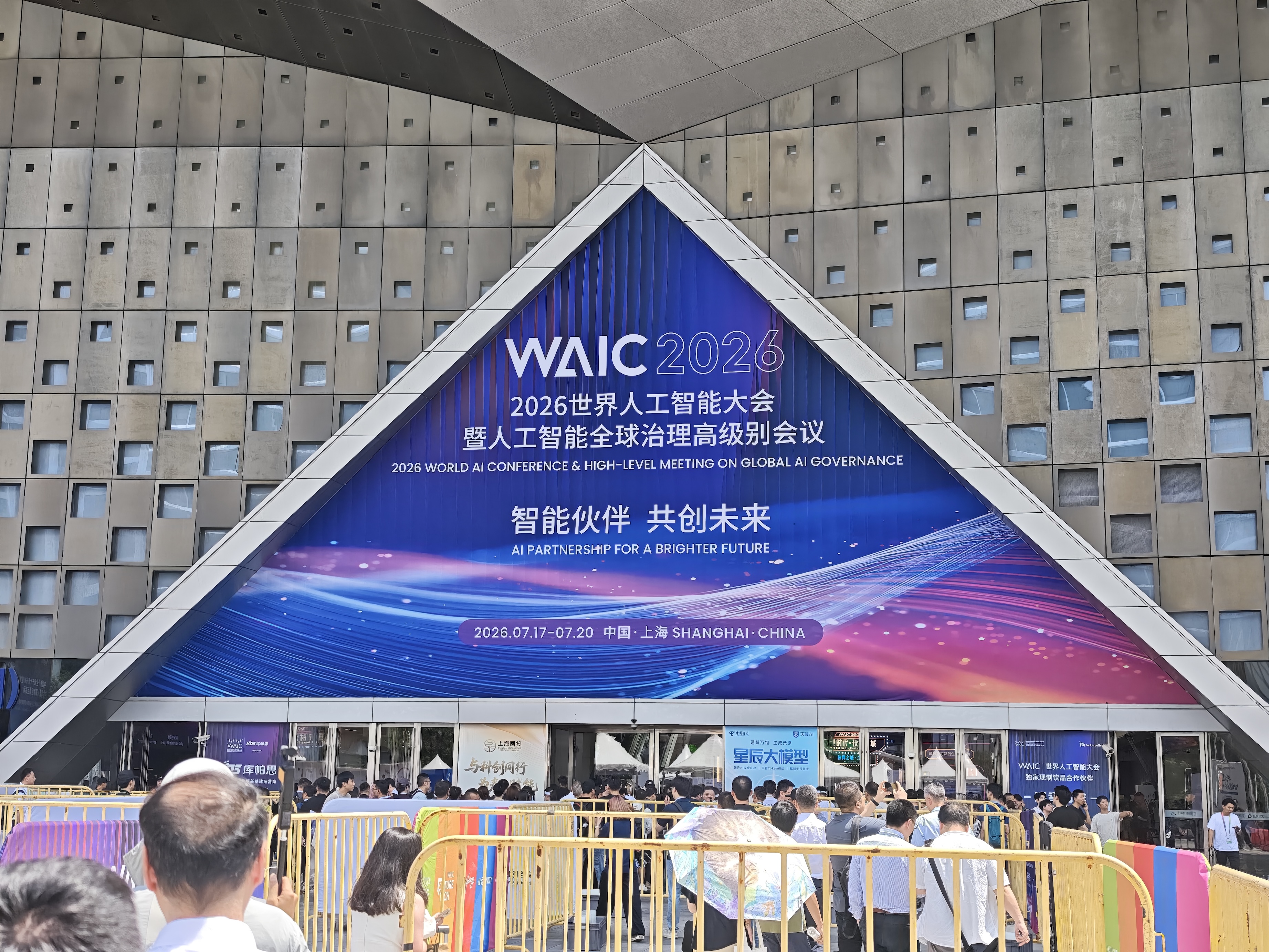
Image source: LeiTech
Both Jieting and Nubia are developing agent smartphones, yet their approaches diverge sharply: one aims to rebuild mobile operating systems from scratch, while the other seeks to let AI take direct control of existing apps. Honor took a more straightforward route, equipping its phones with a rotatable mechanical gimbal. As for the highly anticipated smart glasses, Rokid has built a dedicated AIOS for its devices and unveiled its new-generation spatial computer, the Rokid AR.
Robots have also moved far beyond simple functions like walking, dancing and somersaulting. Some can transform between humanoid and quadruped forms; others have been deployed to automotive production lines. Three robots even work in tandem to run a fully automated pharmacy. Compute power vendors have likewise outgrown merely showcasing individual chips. Instead, they have brought massive setups to exhibition halls, including 100,000-card computing clusters, supernodes, near-memory computing chips and robot development platforms.
WAIC 2026 stands as a sprawling experimental hub for AI products and cutting-edge technologies. Official figures from the conference show over 1,100 enterprises presenting more than 3,000 exhibits, of which over 300 products made their global debut. We have selected 20 standout products worthy of close attention. While not all of them will become commonplace in daily life, they collectively lay bare an undeniable trend:
AI is surging into the physical world with ever-greater momentum.
Dual Paths for Foundation Models: Advancing Embodied Intelligence and Superior General Intelligence
Beyond WAIC 2026, foundation model development has long split into two distinct, compelling branches. On one side, models such as Kimi and MiniMax keep expanding their context windows, multimodal capabilities and agent functionality. On the other, FaceAI compresses its models for edge deployment, enabling offline AI operation on mobile phones, vehicles and robots without cloud connectivity.
These two development paths are not mutually exclusive. Cloud-based models deliver peak performance and capability ceilings, while edge models excel in cost efficiency, low latency and data privacy protection. Both are indispensable to the AI ecosystem.
From Top Benchmark Rankings to Real-World Deployment: FaceAI Brings Edge AI to Every Smart Endpoint
FaceAI’s MiniCPM development roadmap has always maintained a clear focus: rather than competing with cloud models by scaling up parameter counts, it boosts the knowledge density encoded within every single parameter of edge-side models. At this year’s WAIC, however, FaceAI’s core messaging shifts away from its models themselves. The central theme at its booth is “Entering the Real World”.
Its new-generation MiniCPM5-1B model carries forward this core philosophy. It ranks first globally among sub-2B parameter models and leads all peers of equivalent size on the Artificial Analysis benchmark. More critical than benchmark rankings, however, is the real-world deployment of this technology, which has earned recognition from top global manufacturers. FaceAI has struck a partnership with Samsung Electronics, and its edge AI models will be pre-installed on multiple flagship Samsung smartphones set to launch commercially.
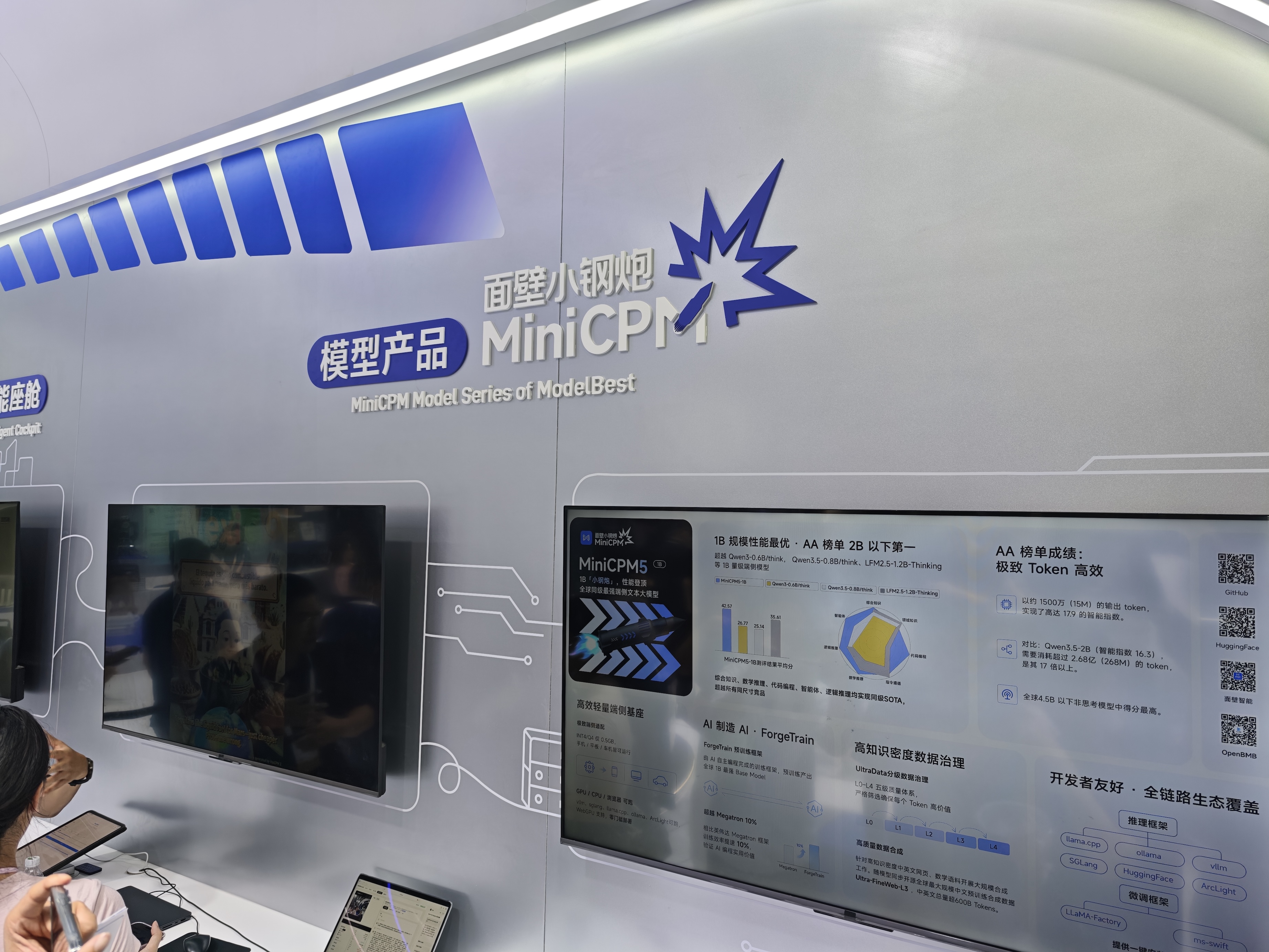
Image source: LeiTech
The value of edge intelligence lies in the simple reality that smartphones, vehicles and robots cannot wait for cloud feedback for every single action. Local models must be capable of interpreting commands, perceiving surroundings and making independent decisions.
This is precisely the confidence behind FaceAI’s official push into embodied intelligence this year. At this WAIC exhibition, FaceAI and Leju Robotics have jointly launched an exhibition guide Agent solution. It runs entirely on the edge without internet access, enabling real-time environmental perception, path planning and obstacle avoidance navigation. During park inspection missions, it can analyze sensitive footage locally, ensuring full data sovereignty for clients.
This core logic is being realized across a growing range of scenarios. SuperMate, an intelligent cockpit product, has entered mass production and hit the market alongside Changan Mazda EZ-60 and Geely Galaxy M9. PinePi, an edge AI development board, lowers technical barriers and allows users without engineering backgrounds to rapidly develop AI hardware devices.
From smartphones to automobiles and humanoid robots, FaceAI is evolving from a pioneer of edge intelligence to an industry definer — bringing intelligence out of the cloud and into the physical world.
Kimi K3: The First Open-Source Model to Break the 3T Parameter Threshold, Second Only to Top-Tier Closed-Source Models
The newly launched Kimi K3 features 2.8 trillion parameters, making it the world’s first open 3T-scale model. It natively supports multimodal vision input and boasts a 1 million-token context window.
Notably, all 2.8 trillion parameters do not activate simultaneously. Built on a sparse Mixture-of-Experts (MoE) architecture, K3 only activates 16 out of its 896 expert modules per inference run. It further boosts information transmission efficiency via proprietary Kimi Delta Attention and Attention Residuals techniques. Official test data shows its overall scaling efficiency has improved approximately 2.5 times compared with the prior K2 generation.
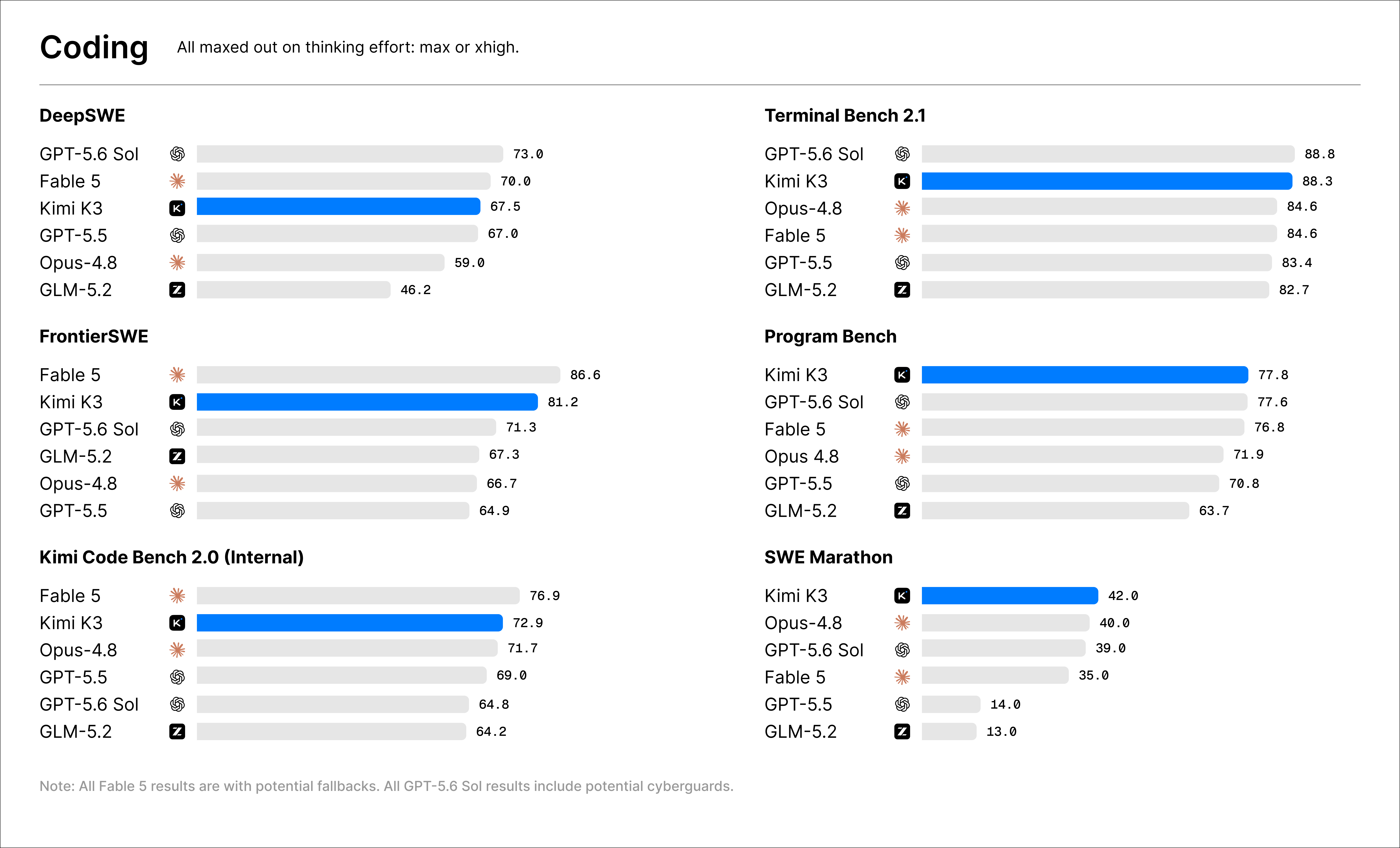
Image source: Kimi
Official benchmark test results show that Kimi K3 only falls behind top-tier closed-source models including GPT-5.6 Sol and Claude Fable 5.
Moonshot AI centers Kimi K3’s core capabilities on long-duration coding, knowledge-intensive work and deep logical reasoning. During official demonstrations, K3 ran continuously for 48 hours, completing the full design and verification of a semiconductor chip with open-source tools, which well illustrates its robust long-duration Agent capabilities.
Additionally, K3 has been rolled out across Kimi Chat, Kimi Work, Kimi Code and open APIs. Competition among open-source models has also shifted from benchmark rankings to real-world proficiency in completing complex end-to-end tasks.
Robots Are No Longer Just Performers — They Are Here to Collaborate With Humans
Robots have long been the biggest crowd draw at WAIC, and this year’s exhibition is no exception, showcasing a wide array of next-generation robots, particularly embodied humanoid robots. In past years, visitors flocked to watch them dance, spar and perform somersaults; this year, a striking shift is clear: manufacturers are striving to prove that robots are far more than short-video props.
Some are tailored for household and outdoor scenarios, others deployed to factory production lines, some tasked with pharmacy medication dispensing, while a new breed abides by no single fixed body form.
PrimeBOT T1: Upright Humanoid, Prone Quadruped "Robot Dog"
PrimeBOT T1 essentially poses a thought-provoking question to the robotics industry: Why must humanoid robots remain confined to a single bipedal form?
Indoors, it operates in a wheeled-legged humanoid configuration, gliding silently through living rooms and studies. Its zero turn radius makes it perfectly suited for narrow, tight spaces. When traversing grass, gravel, slopes or staircases, it automatically switches to quadruped mode, leveraging a lower center of gravity and more stable mechanical structure to navigate rugged, complex terrain.
This design is not a simple mechanical splicing of a humanoid robot and a quadruped dog robot. PrimeBOT adopts a unified cross-morphology motion control system to synchronously manage joints, power output, environmental perception and balance maintenance. After switching between the two body configurations, the robot can seamlessly resume its ongoing assigned tasks.
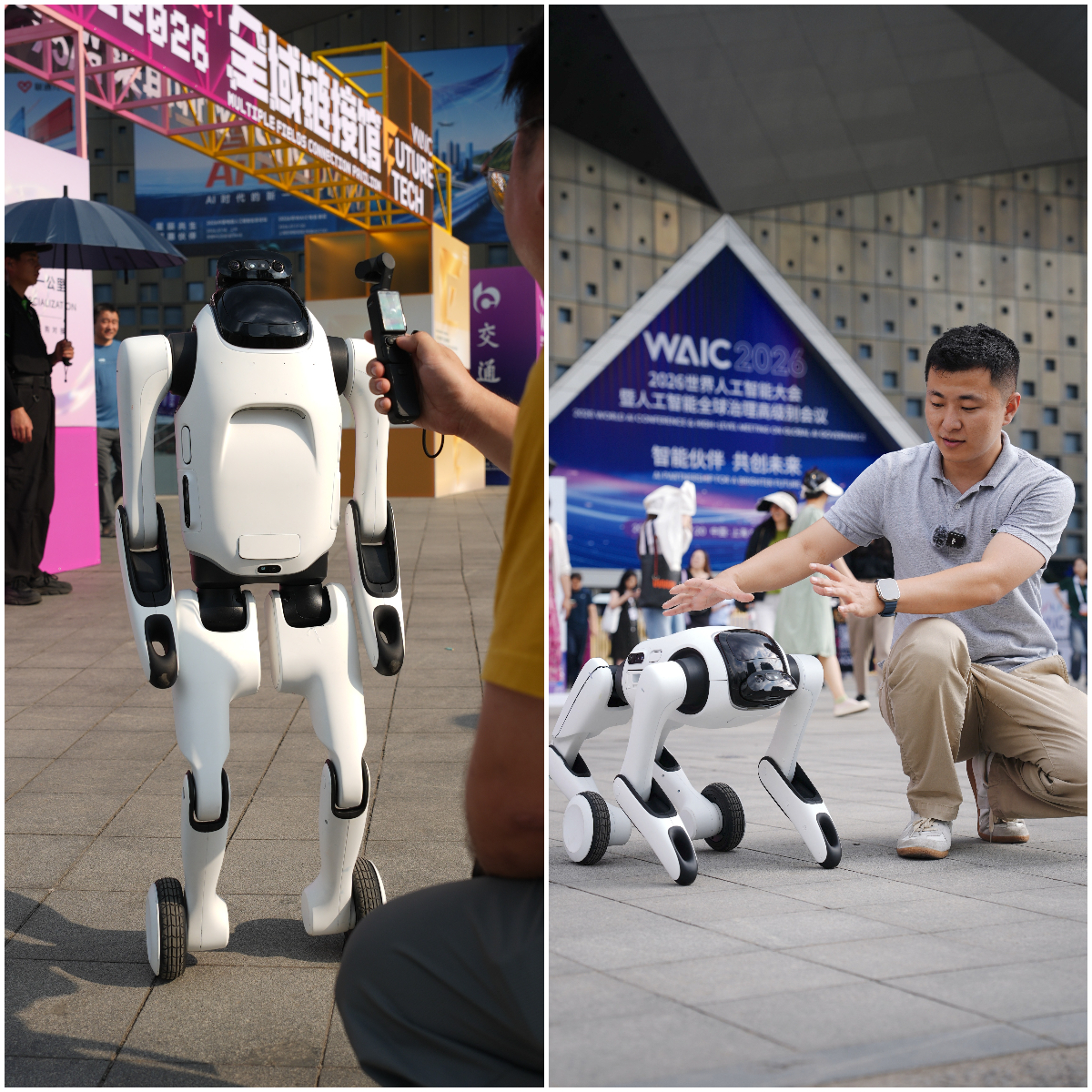
T1’s dual “human” and “dog” forms. Image source: Qiyuan
Beyond companion and follow modes, the T1 can be paired with action cameras to support voice-activated shooting, track-based camera movement and multi-camera setup. In short, it aims to be more than just a household robot — it is a mobile filming dolly that can autonomously scout optimal shooting angles.
The concept may sound radical at first glance. Yet compared with the rigid notion that robots must take human form, enabling machines to switch to the most suitable body configuration based on surroundings aligns far better with engineering logic.
Expedition A3 Ultra: Humanoid Robots Step Into Formal Industrial Roles
At this year’s WAIC, Agibots showcased five new products in a concentrated display: the Expedition A3 Ultra, Elf G2 Max, Lingxi X2 EDU Edition, Critical Point OmniHand 3 Ultra-M, and the world’s first rideable robot developed by Kuto.
The Expedition A3 Ultra features an upgraded embodied processor delivering 700 TOPS of computing power, integrated LiDAR, fisheye cameras mounted across multiple body sections, and highly dexterous multi-degree-of-freedom robotic hands. As the world’s first mass-produced full-size humanoid robot ready for commercial deployment, the A3 Ultra delivers vastly enhanced performance for real-world industrial rollout. It has also been honored as one of WAIC’s "Exhibition Centerpiece" highlights this year.
Agibots has a crystal-clear market positioning for the Expedition A3 Ultra: a full-size commercial humanoid robot built for deployment in exhibition halls, hotels, retail stores and manufacturing factories.
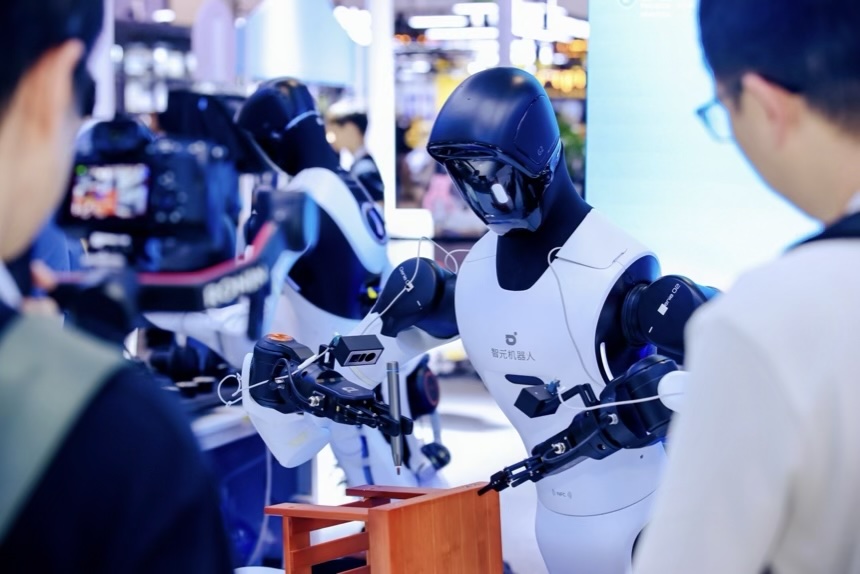
Image source: Zhiyuan
Standing at a human-friendly height of 174 centimeters, it adopts a fusion perception system combining 360° panoramic vision and LiDAR. It is capable of autonomous navigation, guest reception, exhibition commentary and retail shopping guidance. At the WAIC venue, Agibots demonstrated the Expedition A3 Ultra performing tea brewing and table tennis matches.
On-site, visitors could even see Agibots transporting an entire chip processing production line built by PIA Automation into the WAIC exhibition hall. The robots continuously execute long-sequence industrial workflows, including chip feeding, finished product box packaging and full-case transportation.
"Mass-producible" is the core keyword repeatedly highlighted for the A3 Ultra. Unlike demo robots that only achieve success occasionally, commercial robots demand long-hour continuous operation, rapid on-site deployment, convenient field maintenance and reliable safety interception. They do not need to pull off eye-catching stunts, but must consistently complete the same tasks flawlessly every single day, just like formal human staff.
From this perspective, the true rite of passage for humanoid robots may be receiving an official employee ID and being added to daily work rosters.
Robbyant Lingbo Robotic Smart Pharmacy: Three Robots Dispense One Prescription in 90 Seconds
Though lacking the striking visual impact of humanoid robots, the robotic smart pharmacy stands out as one of the most commercially viable embodied AI products showcased at this year’s WAIC.
Co-developed by Robbyant Lingbo and Sinopharm Holding Guoda Drugstores, the solution deploys three robots with distinct mechanical configurations to collaboratively process order intake, medicine retrieval and package sealing. Official data confirms a 90-second turnaround time for each prescription order. All robots are uniformly connected to LingBot-VLA, a cross-embodiment foundational model for embodied intelligence, enabling seamless collaboration around unified pharmacy tasks.
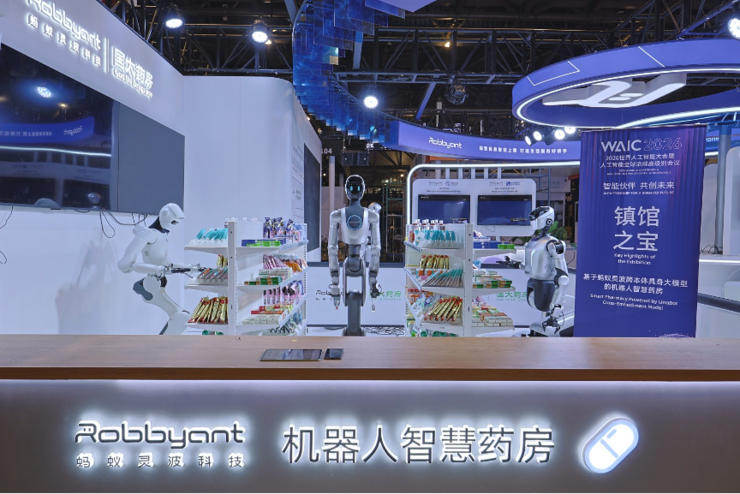
Image source: Ant Group
More importantly, the system connects robotic hardware to telemedicine consultation and electronic prescription circulation workflows. Users can complete the full journey from medical consultation, prescription generation, and medicine purchase to drug pickup, without jumping between disjointed platforms repeatedly.
When robots are deployed in medical scenarios, processing speed is far from the sole priority. Licensed human staff must retain ultimate oversight for prescription review, abnormal medication alerts, stock shortages, and failed drug retrieval. Even so, the pharmacy solution demonstrates the core value of embodied intelligence: it seamlessly unifies repetitive, standardized, error-prone workflows into one integrated pipeline.
HGR "Human · Glasses · Robot Dog": The Quadruped Robot Travels Wherever You Look
It should be clarified that HGR is a collaborative ecosystem linking human operators, AI smart glasses and quadruped robot dogs, rather than a standalone robotic product.
Human eyes sit roughly 1.6 meters above ground, while the robot dog’s cameras are merely 0.4 meters high, meaning their visual perspectives of the physical world diverge drastically. When a glasses-wearing user stares at a target location and says "Go there", the system first aligns the two separate viewpoints, then converts the user’s gaze coordinates into navigational waypoints interpretable by the quadruped robot.
During on-site demonstrations, staff only needed to gaze at the delivery parcel and issue a voice command. The robot dog would autonomously move to the pickup point and transport the parcel to the designated drop-off zone.
Parcel delivery alone may seem a trivial task, yet HGR showcases a far more natural human-robot interaction paradigm. Users no longer need to master remote controllers or coordinate systems; they simply rely on eye gaze and spoken language. Truly user-friendly robots must accurately interpret exactly what humans are observing.
AI-Era Smart Hardware: The Race to Capture the Next-Generation Computing Entry Point
Over the past two years, AI hardware has seen countless iterations across earbuds, wearable pendants and a full spectrum of portable gadgets. At WAIC 2026, however, smartphones and smart glasses remain the most promising carriers for personal AI agents. Smartphones boast mature computing power, high-quality displays and a robust application ecosystem, while smart glasses sit closest to human eyes and ears, delivering immersive sensory interaction.
New hardware releases this year move well beyond adding a lightweight AI assistant as an afterthought. Agentic smartphones empower AI to interpret screen content, call up third-party applications and autonomously complete end-to-end tasks. Meanwhile, AI smart glasses are competing to secure core advantages across operating system development, spatial perception and long-term memory storage. Though these two hardware categories follow distinct development paths, they are vying for the identical core position: to become the computing interface closest to human beings in the AI age.
STEPX Neo: The Moment Large Model Vendors Decide to Build Their Own Smartphone
It is easy to understand why StepFun selected smartphones as the debut hardware product under its STEPX terminal brand. Smartphones are inherently portable, equipped with built-in screens, and capable of delivering robust local edge computing power. When combining these three core requirements, smartphones remain the most mature hardware carrier available today.
The true highlight of the STEPX Neo, however, lies in its underlying Step AOS agentic-native operating system and Amoo personal AI agent. StepFun’s core design philosophy centers on embedding AI agents directly into the operating system layer. The Amoo agent can interpret screen content, formulate multi-step task plans, invoke third-party tools, and execute complex workflows seamlessly across multiple independent applications.
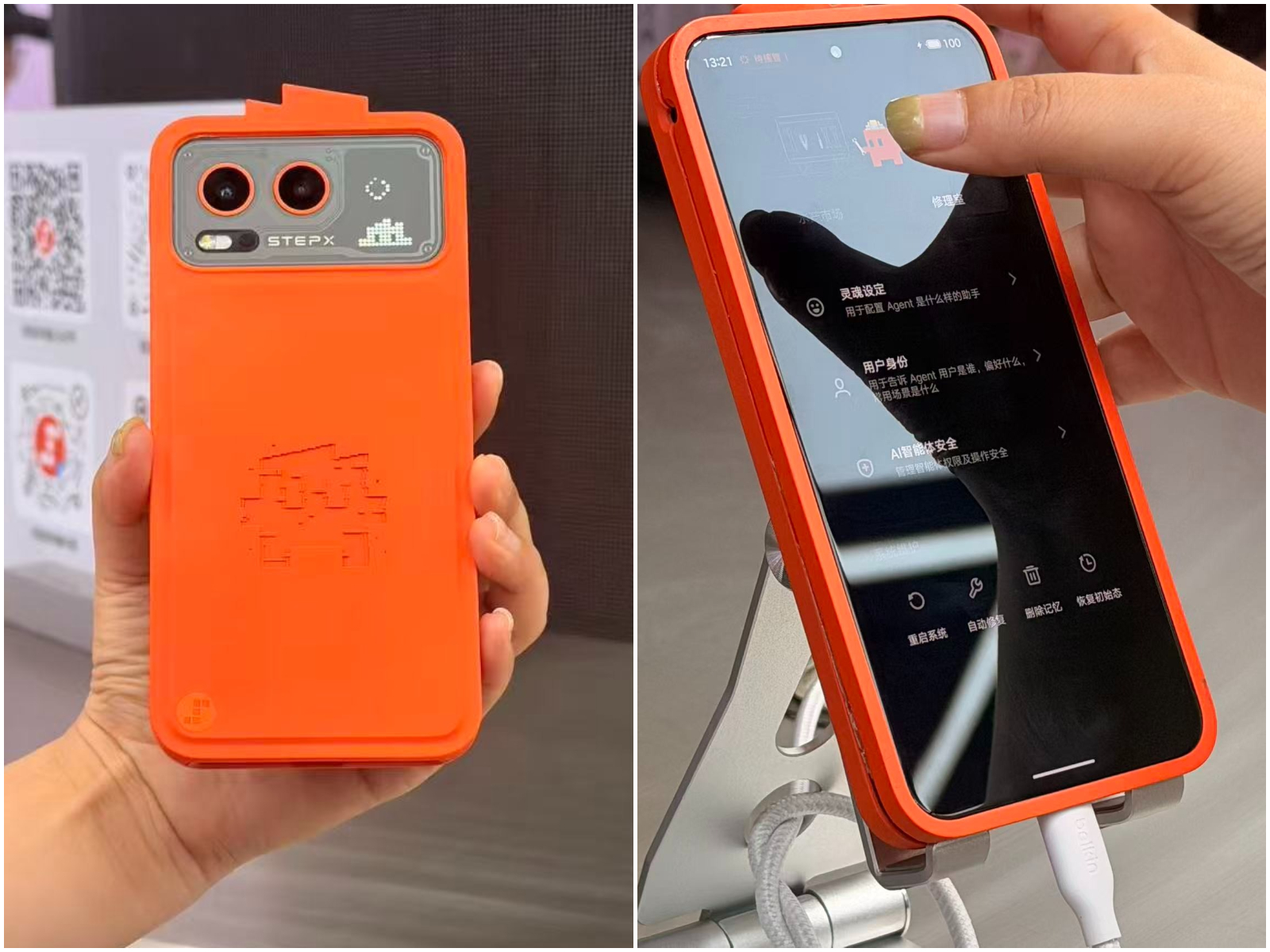
Jieyue STEPX Neo. Image source: Yicai Global
For instance, users no longer need to launch map, hotel and travel applications one by one. Instead, they can simply tell Amoo their destination and personal preferences, leaving all subsequent steps to be planned and executed by the AI agent. According to StepFun, the STEPX Neo has passed the L3-level test under the Classification Standard for Intelligent AI Terminals. It is currently the only agent smartphone holding an official test certification for this tier.
Of course, for system-level AI agents, live demonstrations are never the greatest challenge. The real hurdle lies in building a comprehensive supporting ecosystem, which entails countless unresolved technical and industrial issues.
Second-Generation Doubao Phone: Agent Smartphones Move to Mass-Produced Flagship Devices
At the end of last year, Nubia and Doubao rolled out their first collaborative product, the M153 Doubao Phone Assistant Tech Preview. Instead of requiring dedicated open APIs from every app, it leverages visual perception to analyze on-screen content and simulate human taps and swipes to complete tasks such as price comparison, food ordering and product checkout.
The upside is that it can theoretically operate any mobile application. However, an obvious drawback persists: platform operators are often reluctant to grant unrestricted access to third-party AI agents within their app interfaces.
The second-generation model unveiled at WAIC this year is no longer a limited-edition engineering prototype, but a flagship smartphone designed for mass production. It retains the system-level GUI Agent architecture and adds a dedicated physical AI shortcut key, aiming to elevate user experience from "help me check" to "finish the task entirely for me".
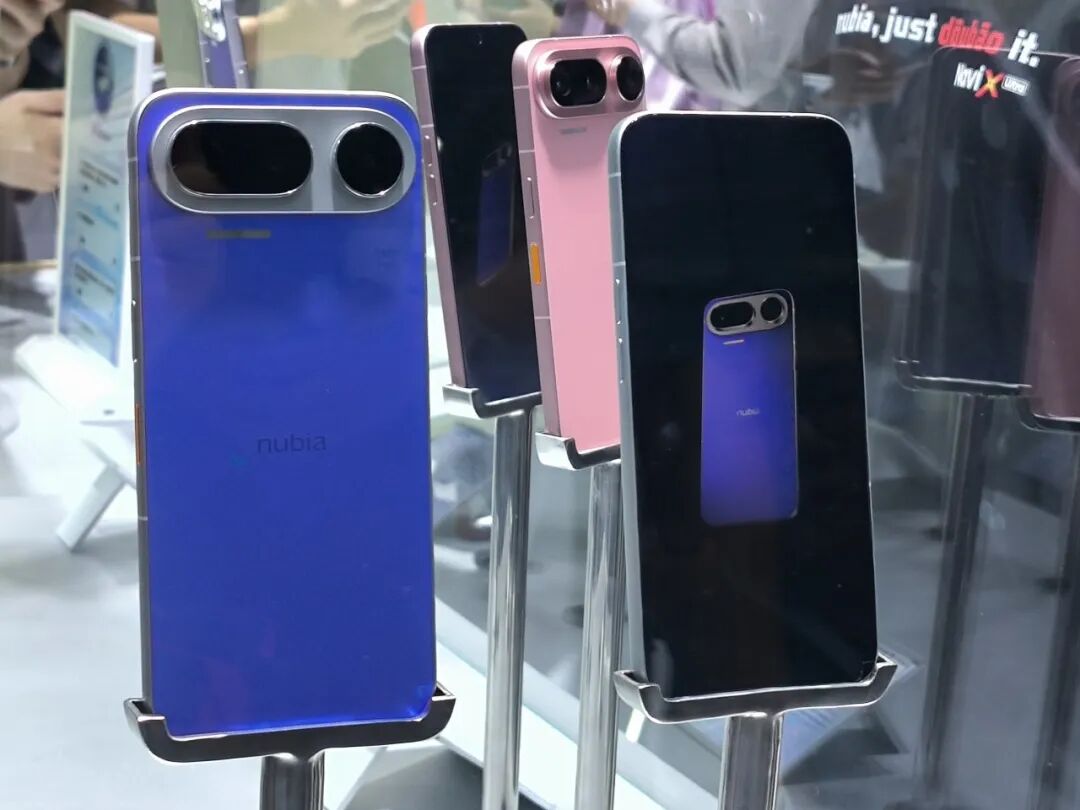
Nubia Navi X Ultra (“Second-Generation Doubao Phone”). Image source: Xiaguang Society
To a certain extent, the second-generation Doubao Phone also fundamentally aims to resolve ecosystem hurdles facing AI agents. As long as WeChat, Taobao, payment platforms and content platforms operate in isolated silos, even the most sophisticated AI may get blocked at the final step of task execution.
Honor Robot Phone: Equipping Smartphones with a Rotatable "Eye"
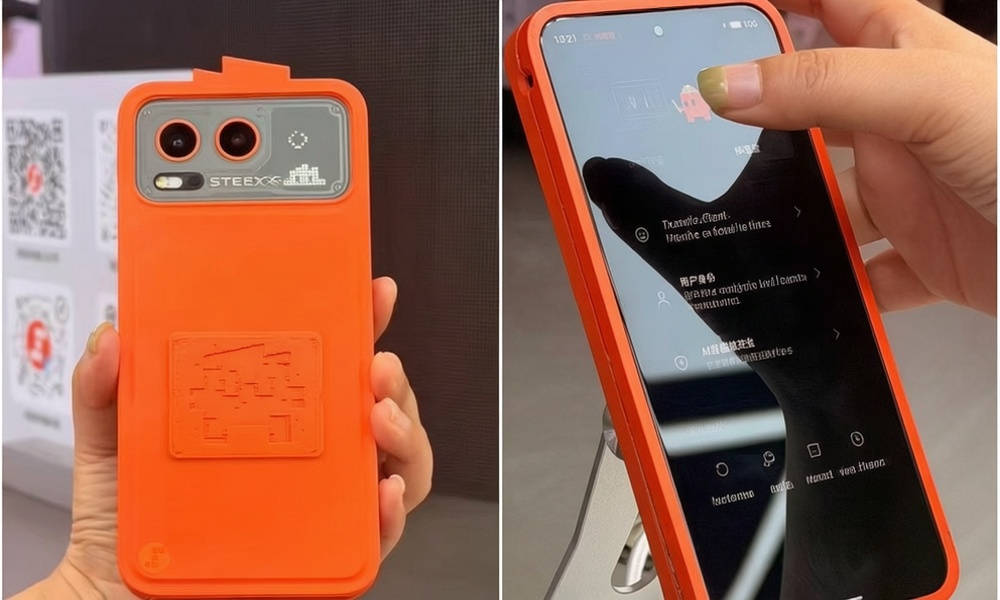
The Honor Robot Phone stands out as the most intuitive device among all showcased products. Built into its rear casing is an extendable three-axis mechanical gimbal. Instead of a stationary camera lens locked in a single direction, it can rotate autonomously, track human subjects and adjust shooting angles on demand.
For the first time, this design endows a smartphone with a tangible sense of physical embodiment. When placed on a desk, it automatically swivels to follow users during video calls. For motion footage capture, it delivers smooth auto-tracking just like a compact gimbal camera. When the lens turns toward the user and reacts to surrounding movements, the device even evokes a subtle, uncanny sensation of being "alive".
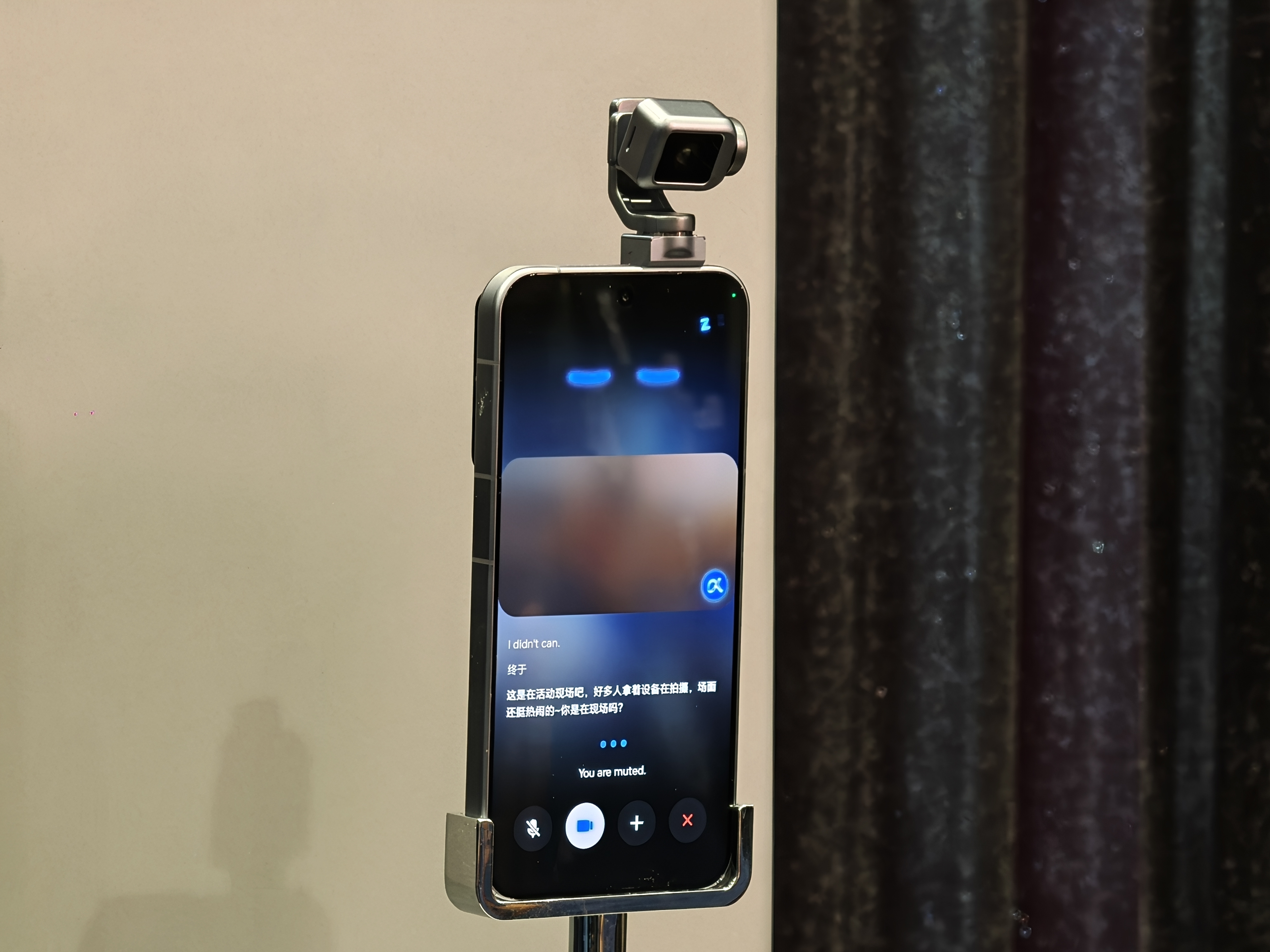
Honor Robot Phone. Image source: LeiTech
Honor has also brought ARRI’s Log-C encoding and LUT color grading profiles to mobile devices, striving to ensure this motorized rotating lens is far more than a mere gimmick, but a fully functional professional imaging system.
Nevertheless, the most intriguing aspect of the Honor Robot Phone lies in its bold exploration of new smartphone form factors. Foldable phones address the demand for larger displays, while the Robot Phone poses a completely different question: Now that AI can perceive the surrounding environment, should smartphones also gain the ability to move and reposition themselves?
Compared to smartphones fitted with a rotating camera lens, AI smart glasses take the concept a step further by directly occupying the wearer’s primary field of view. Now that cameras, microphones, speakers and real-time translation features have become standard across competing products, manufacturers are locked in competition over two more critical core matters: who will define the native operating system built for smart glasses, and under what scenarios the glasses should proactively activate and operate.
New-Generation Rokid AR: Packing a Spatial Computer Into a Pair of Glasses
The latest iteration of Rokid AR goes beyond functioning merely as a portable large-format display. It supports 6DoF spatial tracking, hand gesture recognition and spatial audio, with dual cameras working in tandem to capture both the user’s hand movements and the external physical environment.
More crucially, it is the first AR glasses equipped with Qualcomm Snapdragon Elite Spatial Computing Co-Processor. Rather than offloading all computational workloads to a connected smartphone, dedicated standalone spatial computing power enables the glasses to consistently track head positioning, interpret hand gestures and map surrounding environments. This allows virtual digital content to be stably anchored within real-world physical space.
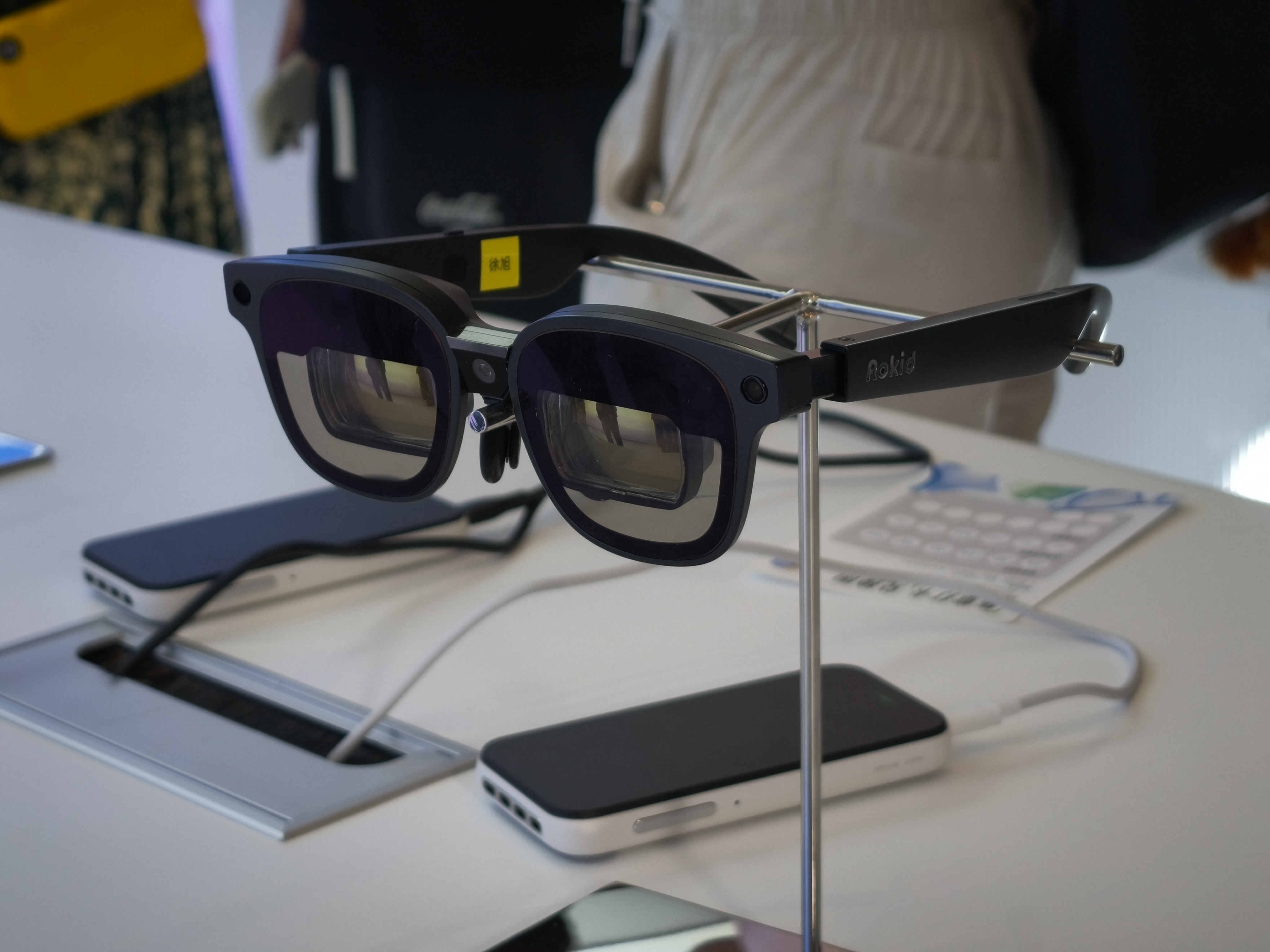
Rokid AR’s next-gen spatial computer. Image source: LeiTech
This also signals the convergence of AI glasses and AR glasses. Glasses that only support camera capture without display panels are lighter, yet limited in interactive capabilities. Devices with built-in displays and spatial awareness modules are bulkier, yet they come far closer to serving as the true next-generation computing platform — a path Rokid has clearly opted for.
YodaOS: Rokid Aims to Build the "Android Equivalent" for Smart Glasses
Beyond hardware products, Rokid has unveiled YodaOS, the world’s first dedicated AI operating system built exclusively for smart glasses.
Most AI glasses available today remain essentially peripheral accessories tethered to smartphones: captured visual data is transmitted back to mobile handsets, model computations are processed remotely on cloud servers, and application functionality is confined to a small set of factory-preinstalled features. YodaOS is designed to upend this restrictive dynamic, enabling seamless native collaboration within the glasses’ operating system across AI agents, spatial perception engines, camera modules, display panels and third-party service integrations.
For software developers, the core advantage lies in the ability to build fully standalone applications by directly accessing built-in hardware resources: cameras, microphones, spatial coordinate data and interactive control components. Only once a complete operating system and thriving developer ecosystem take shape can AI glasses evolve from limited-function hardware into extensible, continuously upgradable computing platforms.
Naturally, every tech enterprise aspires to create the Android counterpart for the smart glasses era. The decisive question remains: will developers rally to build on their platforms?
From Raw AI Compute Power to AI-Driven Scientific Research: Transformative Shifts at the Infrastructure Layer
The deeper AI products penetrate the physical real world, the less standalone individual chips suffice as underlying computing infrastructure. Robots demand low-latency real-time edge inference; large foundation model training relies on supernodes and massive computing clusters; scientific research further requires seamless interconnection between AI models and physical experimental equipment.
Horizon RDK S600: The Combined "Brain and Cerebellum" of Robots, Integrated Onto a Single Development Board
The RDK S600 is a dedicated development platform engineered for embodied intelligence. It is equipped with Horizon Robotics’ self-developed Sunrise S600 chip, delivering a peak edge inference performance of 560 TOPS, alongside an 18-core Arm Cortex-A78AE processor.
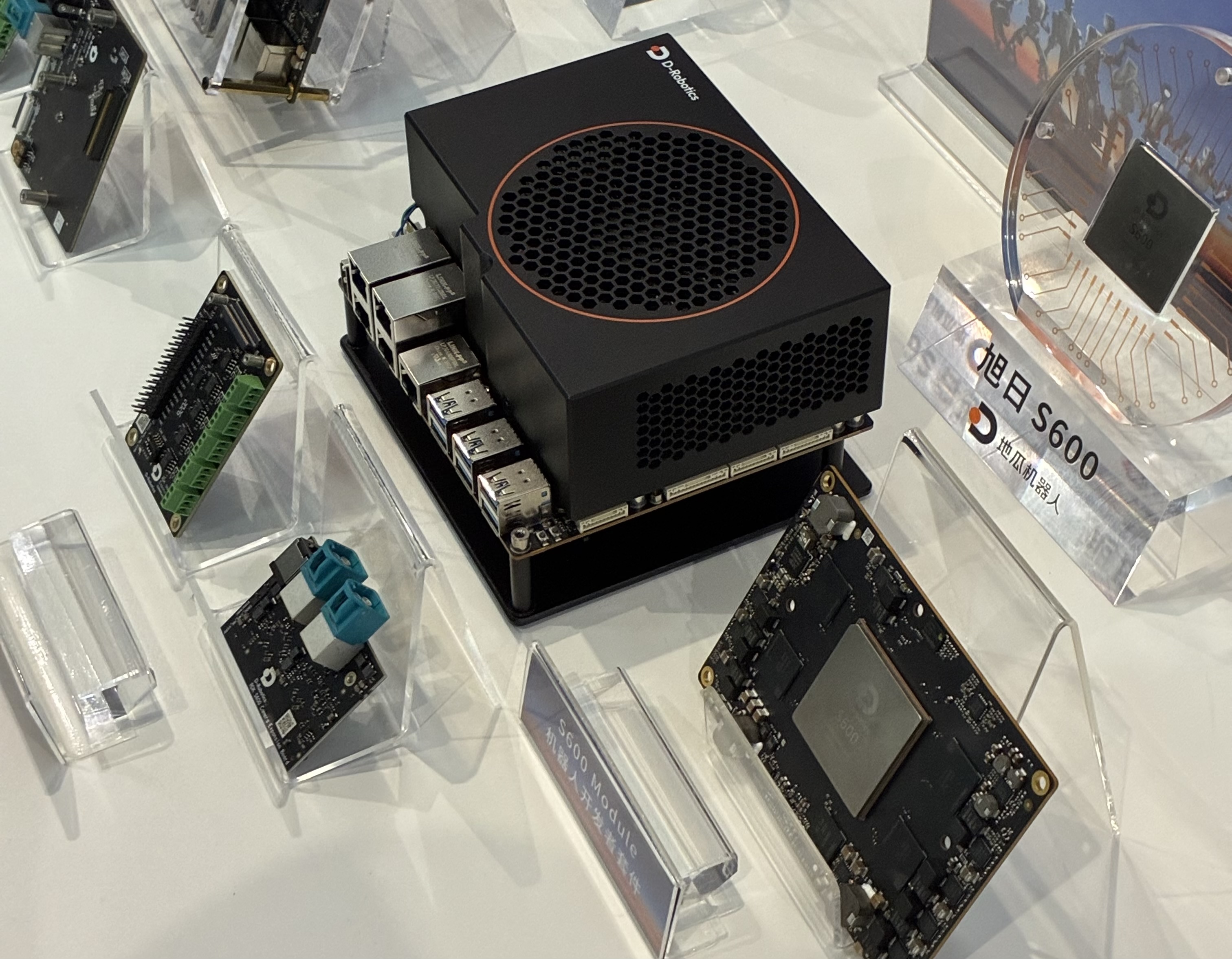
Image source: LeiTech
Its core design principle lies in integrated computing and motion control. Previously, robots generally adopted two separate hardware modules: a high-computing platform to process visual data and large model inference, paired with an independent real-time controller to govern joints and movement. This split design not only results in bulky hardware, but also creates intricate compatibility challenges between software and hardware. The heterogeneous architecture of the RDK S600 is engineered to concurrently handle environmental perception, model inference and real-time motion control, consolidating the robot’s "main brain" and "cerebellum" onto a unified single platform.
The development board is equipped with six MIPI camera interfaces, six USB 3.0 ports and four PCIe 3.0 interfaces, enabling developers to effortlessly connect cameras, LiDAR sensors and diverse robotic actuators. More importantly, the Sunrise S600 chip has entered mass production validation with over 20 leading industry clients.
What the robotics industry truly lacks extends far beyond eye-catching demonstration prototypes. The sector demands a standardized, cost-effective computing foundation capable of stable mass manufacturing. The RDK S600 aims to serve as the universal developer mainboard for the robotics era.
Orient Compute Core DF1000: Chips Shift Competition From Manufacturing Process to Spatial Architecture
The Orient Compute Core DF1000 is categorized as a software-defined near-memory 3D stacking chip. Its most distinctive innovation abandons the conventional industry race to pursue cutting-edge advanced manufacturing processes. Instead, it leverages 3D integration technology to drastically shorten the physical distance between computing units and memory modules.
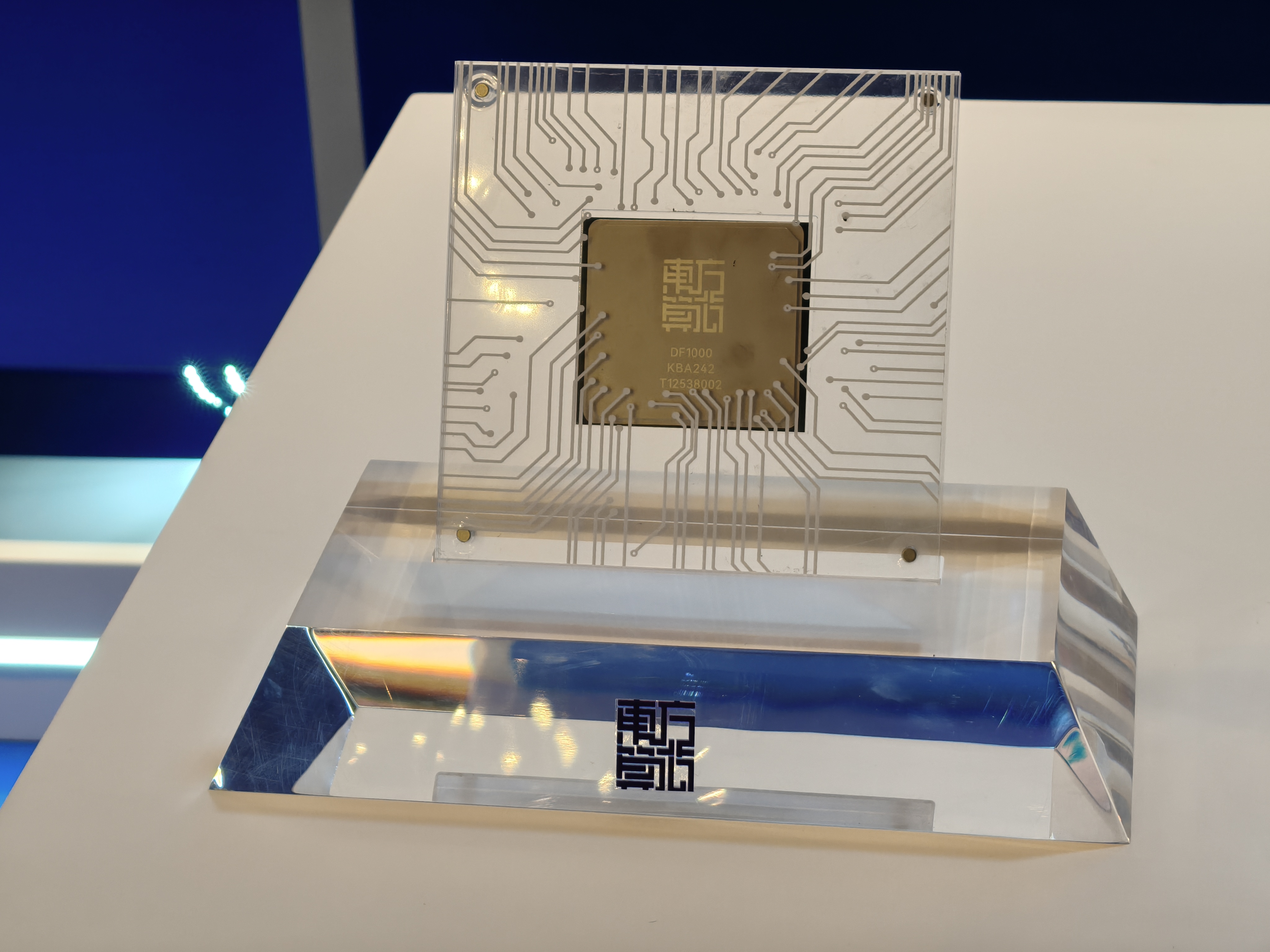
Image source: LeiTech
Building upon this architecture, the Ascend 950 SuperCluster can further scale up to a massive 500,000-card deployment. Huawei’s strategic vision is unambiguous: single-card performance is no longer the sole decisive factor. With a fully integrated stack covering interconnection, memory resource management, task scheduling and software ecosystems, robust system-level capabilities can forge distinct competitive advantages on their own.
The AI compute arms race is undergoing a fundamental shift — competition no longer centers on building the single most powerful accelerator card, but on orchestrating hundreds of thousands of cards to operate in seamless unison.
Matwings Venus: Design Novel Proteins Through Natural Language Dialogue With AI
Amid the bustling displays of smartphones, AR glasses and humanoid robots, Matwings Technology’s Venus platform cuts a less flashy figure, yet it arguably embodies how AI will truly revolutionize scientific research.
Put simply, Venus is a conversational AI agent built for protein engineering. Researchers may articulate their design targets entirely in natural language — for instance, requesting an enzyme optimized for plastic degradation. The system invokes protein foundation models to generate candidate molecular structures, links up with automated lab equipment for physical testing, and incorporates experimental data feedback to continuously filter and iterate on molecular designs.
Traditional protein development requires labor-intensive back-and-forth cycles between computational modeling and wet-lab experimentation, with full R&D cycles stretching across years. Venus unifies these discrete stages into a self-reinforcing closed loop, empowering the AI model to refine its outputs iteratively based on real experimental readouts, rather than merely generating one-off static predictions.
A tangible use case demonstrated at WAIC centers on the biological recycling of PET plastic waste. The AI reengineers naturally occurring plastic-degrading enzymes to boost catalytic efficiency, enabling discarded plastics and textile waste to be broken down into recyclable raw feedstock.
While this work lacks the crowd-pleasing spectacle of robots performing somersaults, it automates substantial portions of the experimental pipeline for discovering novel biomaterials and therapeutic drugs.
Closing Remarks: AI in Pursuit of a Physical Embodiment
From FaceAI’s new generation of compact high-performance edge models to Matwings’ Venus protein design platform, the transformative shift showcased at WAIC 2026 extends far beyond advancements in foundation models — it encompasses sweeping innovation spanning AI agents and physical hardware alike.
Smartphones represent the most mature physical vessel for AI, which is why StepFun, Doubao and Honor are racing to claim this form factor. Smart glasses sit closest to human sight and hearing, driving Rokid and Moonix to position them as the next primary sensory computing interface. Robots possess the unique ability to physically manipulate the real world, leading PrimeBOT, Agibots and Robbyant Lingbo to explore specialized deployment scenarios spanning households, manufacturing plants and automated pharmacies. Underpinning all these physical embodiments lie the foundational technologies that serve as their digital brains: foundation models, AI accelerator chips, embedded development boards and large-scale supernode clusters.
Nevertheless, the proliferation of AI-equipped physical hardware brings a new wave of granular, practical challenges.
Agent smartphones must navigate thorny issues surrounding cross-application access permissions. Always-on recording smart glasses face stringent privacy constraints. Domestic service robots need to deliver proven endurance, operational safety and consistent reliability. Super-scale computing clusters must demonstrate that domestically developed accelerator cards can serve as the robust foundation of fully functional, high-efficiency AI computing infrastructure.
Now that AI has stepped out of digital simulations and into the tangible physical world, every misprediction, connectivity dropout and mechanical malfunction becomes immediately visible to end users. The industry’s forward trajectory, however, is crystal clear. What remains to be seen is how many of these groundbreaking AI-powered devices debuting on exhibition floors will ultimately integrate permanently into everyday human life.
WAIC 2026—under the theme “Intelligent Partners, Co-Creating the Future”—has officially opened!
The AI narrative is shifting from stacking model parameters to deploying agent-driven productivity; heterogeneous collaboration and photonic computing continue pushing compute ceilings; embodied intelligence accelerates real-world adoption—robots entering homes and factories are making physical AI a reality.
LeiTech’s WAIC coverage team has arrived in Shanghai—capturing the annual pinnacle of AI industrialization. Stay tuned!