
 雷科技
雷科技




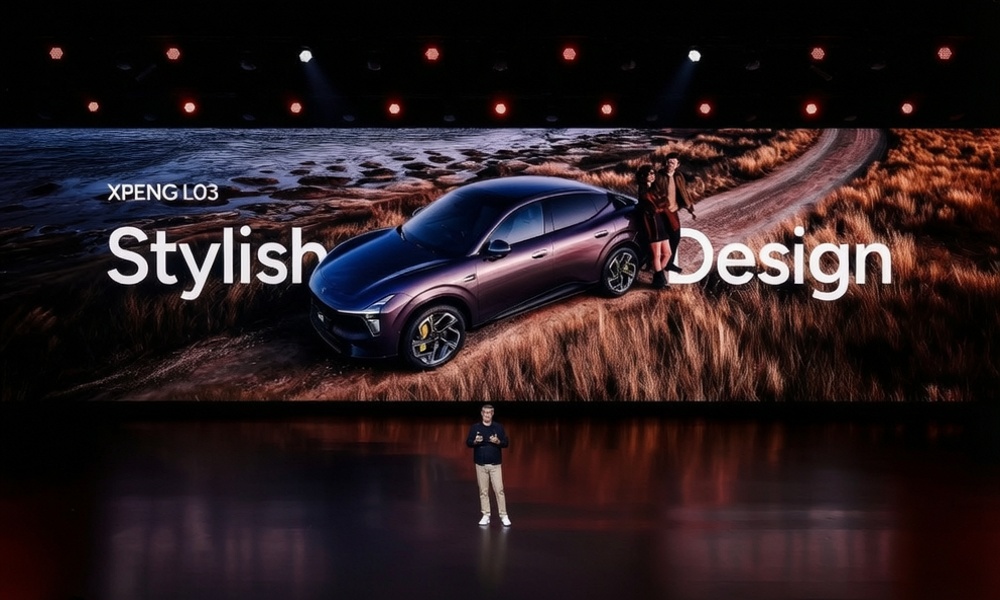

Last Thursday will forever be remembered as the auto industry’s very own Crazy Thursday.
Within a single day, eight new car launch events unfolded across the automotive circle, with seven brand-new models unveiled. The presentations stretched nonstop from the afternoon well into the night. I even flipped through a Chinese almanac trying to figure out why this Thursday turned out so chaotic.
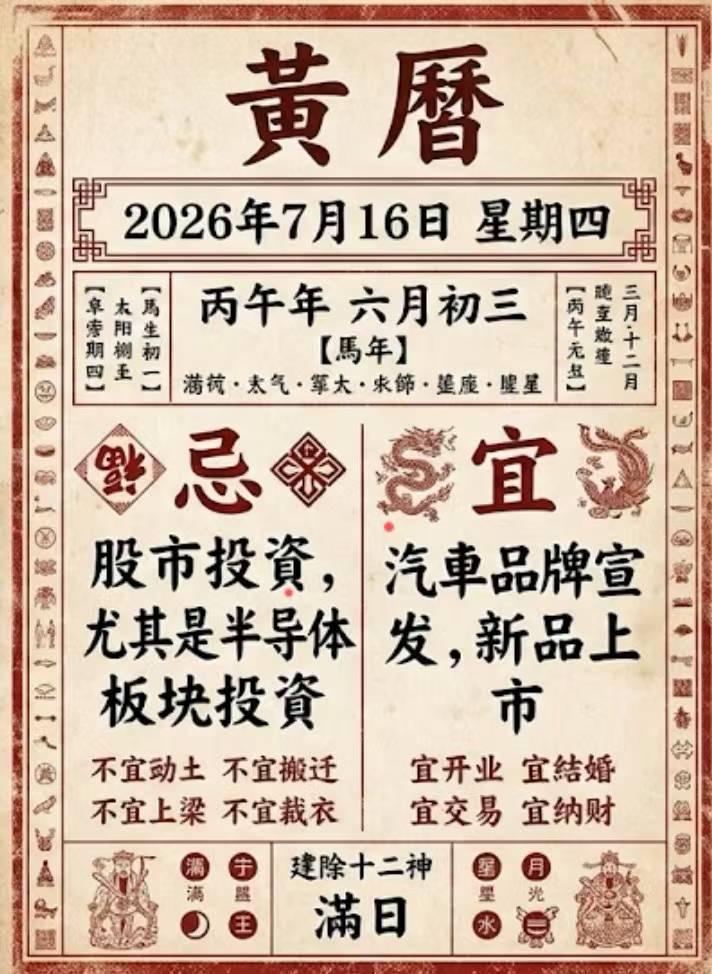
Source: DiancheTong (Original)
The jam-packed schedule of launch events lays bare automakers’ anxiety over online exposure and sales volume.
Where does this sense of unease stem from, and how will it reshape the entire industry? Today, EV Insider (ID: dianchetong233) will dive deep into these questions with you all.
Eight Launch Events in a Single Day — The Cutthroat Competition in the Auto Industry Is Exhausting
This past Thursday saw automotive brands host a total of eight product launch galas:
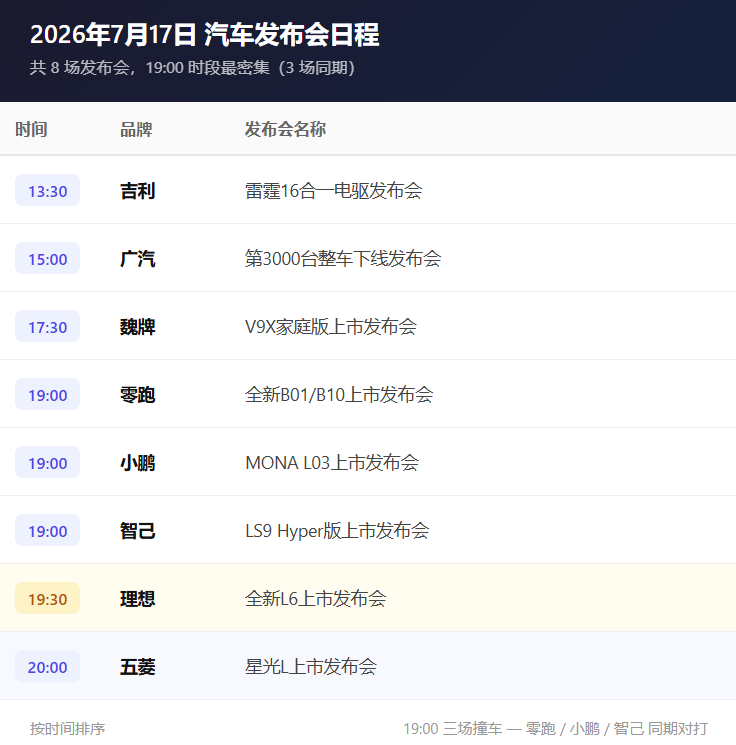
Source: DiancheTong (Original)
Besides, Dongfeng Nissan unveiled the 2026 Pathfinder on Thursday without holding a dedicated launch event.
Among all the models released that day were many flagship vehicles and major generational upgrades from various brands.
Take the Xpeng MONA L03 as an example. It is the first SUV under the Xpeng MONA lineup, a key model tasked with boosting Xpeng’s sales volume in the 120,000–160,000-yuan price bracket.
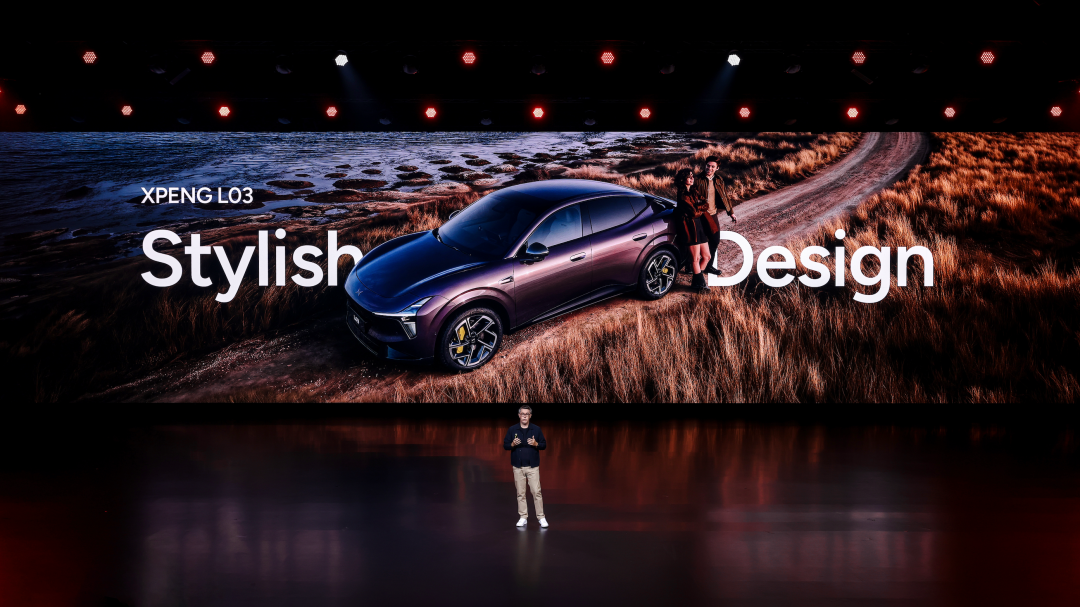
(Photograph Source: XPeng Motors)
Then there’s the all-new Li L6, which boasts substantial upgrades in range and handling. Tasked with driving bulk sales for Li Auto’s L-series lineup, this model will play a pivotal role in determining whether Li Auto’s overall sales can rebound in the futureLi Auto In....
The other five models unveiled that day are also core offerings from their respective brands.
With multiple flagship vehicles launching on the exact same Thursday, netizens have dubbed the day the auto industry’s very own "Crazy Thursday".
So why do so many automakers choose to roll out new cars on the same day? EV Insider (ID: dianchetong233) believes the root cause lies in the cutthroat culture now sweeping the automotive sector.
Nowadays, product cycles—covering vehicle R&D, market launch and mid-cycle facelifts—are being continuously compressed. Every brand is locked in a race against time against its competitorsFuturecar.....
This dynamic has turned the entire auto industry into a massive real-time competitive video game. Automakers act as players engaged in fierce PvP battles; all of them strive to launch new products before their rivals, even rolling out multiple models at once. Only in this way can they outcompete peers amid the industry’s fierce internal competition and scrape together slim profit margins.
It comes as no surprise, then, that dozens of new car launches end up clashing on a single day when every manufacturer rushes to speed up its product roadmap and race against the clock.
But the critical question remains: Is this frantic pace truly sustainable?
Three New Cars Launched on Average Every Single Day — How Can Automakers Turn a Profit?
The flood of new model releases hitting the market recently has already drawn widespread attention from industry insiders.
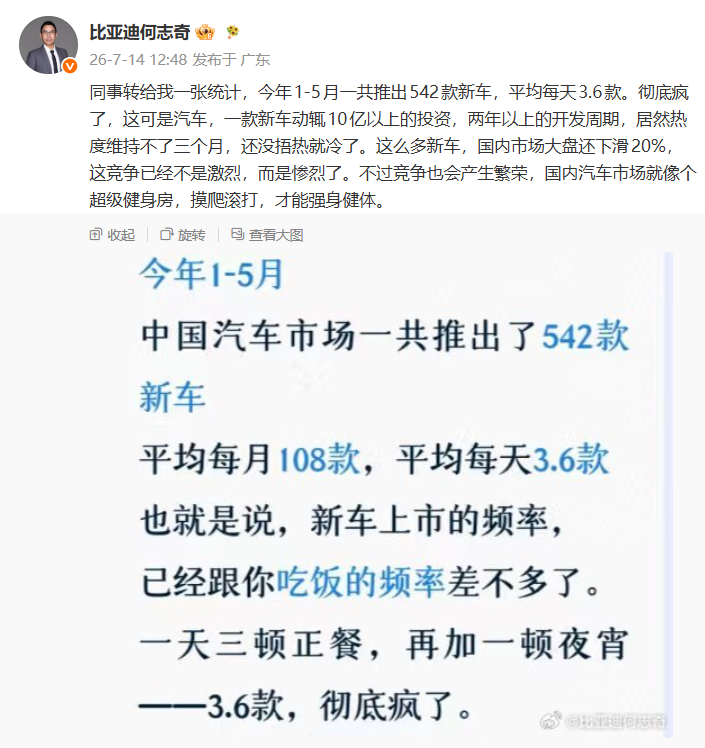
On July 14, He Zhiqi, Executive Vice President of BYD, posted on Weibo commenting on the industry’s rampant new product launches: “From January to May this year, a total of 542 new vehicles hit the market, averaging 3.6 new models every single day. The industry has completely lost its mind.” “Developing a single new car often requires an investment of over 1 billion yuan and an R&D cycle spanning more than two years. Yet the product hype barely lasts three months; the new models turn cold before manufacturers even have time to capitalize on their launch momentum.”
(Photograph Source: Weibo)
Launching 542 new car models in five months works out to 3.6 new vehicles rolled out each day. To put this number into perspective: the frequency of new car launches in China right now even outpaces how often most people eat their meals!
But here’s the key question: Has this relentless stream of new product launches actually driven sales growth?
Data released by the China Passenger Car Association (CPCA) shows passenger vehicle sales hit 1.618 million units in June, a year-on-year drop of 23.4%. For the first six months combined, passenger car sales reached 8.701 million units, down 20.2% year over year.
In plain terms, automakers sold more than one-fifth fewer cars in the first half of this year compared with the same period last year.
The industry is growing increasingly cutthroat, launch events are held more and more frequently, yet vehicle sales keep sliding.
Publicly available June sales figures paint a stark picture: only 41 models recorded monthly sales above 10,000 units, while a staggering 334 models sold fewer than 1,000 units that month.
Even after filtering out ultra-luxury and custom-built vehicles, these figures remain astonishing.
Automakers are pouring resources into endless launch galas, yet very few models become genuine bestsellers. It comes as no surprise that BYD Executive Vice President He Zhiqi commented, “The competition is no longer merely fierce—it’s brutal.”
For car manufacturers, however, skipping these frequent launch events means falling behind rivals in product exposure. Brands risk missing out on all the buzz generated in the early launch phase. Thus, manufacturers have no choice but to join the industry-wide race to outdo one another.
That said, there are relatively less aggressive brands bucking this trend.
Take ZEEKR, for example. The brand was mocked in previous years for its slow pace of rolling out new products, earning the jab “three swords forged over a single year.” Now, ahead of every annual facelift, ZEEKR announces its upgrade plans well in advance, giving consumers ample time to adjust their purchase plans.
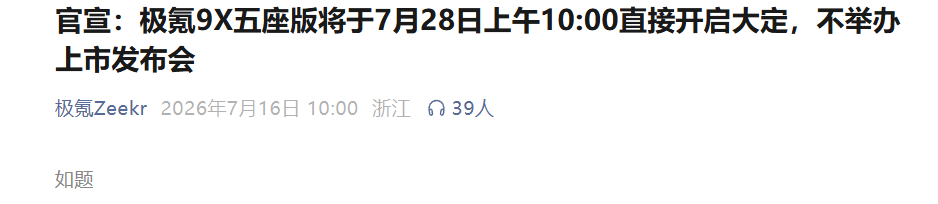
Even for the upcoming ZEEKR 9X five-seater variant set to launch at month’s end, ZEEKR has officially confirmed it will skip a dedicated launch event and open firm order reservations directly instead.
(Photograph Source: Zeekr)
Xiaomi, which never lacks online traffic, also officially unveiled the launch timeline for its new-generation SU7 ahead of its release this year, and halted sales of the previous model lineup.
With domestic sales slumping and competition reaching a fever pitch, many automakers have settled on a solution: accelerating their overseas expansion.
Several Chinese independent brands leading the overseas push, such as BYD, Geely, Chery and Great Wall Motors, all recorded overall sales growth in June, with export shipments serving as the primary growth driver.
Take BYD as an example. Its June exports hit 174,897 units, accounting for 43% of its total monthly sales. Last year, exports only made up 23% of its sales volume — meaning this share has jumped 20 percentage points in the past year.
Chery’s figures are even more striking: exports accounted for 76.9% of its June sales. Put simply, for every four vehicles Chery sells, fewer than one is delivered to buyers in mainland China.
Given the cutthroat domestic market, tapping foreign markets to earn higher profit margins from overseas consumers is undoubtedly a viable strategy.
Will China’s Auto Industry Keep Chasing This Frenzied Competition?
The flood of overlapping launch events and endless model facelifts all signal one clear truth: China’s auto industry is trapped in extreme hyper-competition.
But does the sector truly need such relentless rivalry?
From the perspective of EV Insider (ID: dianchetong233), the accelerating pace of facelifts and new model rollouts is essentially industry-wide meaningless internal friction, or internal waste of resources.
For automakers, this endless race consumes massive R&D and marketing budgets on frequent minor upgrades and short-term hype campaigns.
To hit tight launch deadlines, manufacturers keep slashing time allocated to long-term technological accumulation and full-cycle reliability verification. The return on R&D investment per vehicle gets diluted continuously. The end result is an industry that works tirelessly yet barely turns a profit, while also jeopardizing its long-term development prospects.
This rapid iteration cycle also brings no benefits to consumers.
Buyers may have owned their new car for barely six months when a facelifted version hits the market with lower pricing and upgraded configurations. Not only does this drag down the vehicle’s value retention rate, but consumers also feel betrayed by the brand, which dampens their willingness to purchase new vehicles in the future.
Against this backdrop, while buyers face an abundance of vehicle choices and attractive price tags, many consumers have adopted a wait-and-see attitude, thinking “the next model will be even better, so there’s no rush to buy.” This trend is clearly detrimental to the automotive consumer market.
EV Insider (ID: dianchetong233) argues that the core competitiveness of the auto industry never lies in how quickly brands launch new models, but in whether manufacturers can truly refine their products to perfection.
Instead of burning out in this sprint-style iteration race, the auto industry would be better off voluntarily slowing its pace. Brands should shift resources away from short-lived traffic battles and toward long-term quality refinement and technological accumulation.
After all, what can sustain the steady and lasting development of China’s auto industry is never this reckless race to launch new products, but solid, meticulous craftsmanship poured into every single vehicle model.
It is hoped that the industry will see fewer fleeting traffic spectacles and embrace more long-termism, breaking free from this vicious cycle of meaningless internal friction to embark on a healthier path of sustainable long-term growth
The WAIC 2026, themed “Intelligent Partners, Co-Creating the Future,” officially opened today!
The AI narrative has shifted—from stacking model parameters to deploying agent-based productivity solutions; heterogeneous collaboration and photonic computing continue pushing computational ceilings upward; embodied intelligence accelerates practical applications, bringing robots into homes and factories—making physical AI a reality.
The LeiTech WAIC reporting team has arrived in Shanghai to cover the annual pinnacle of AI industrialization. Stay tuned!