
 雷科技
雷科技





Xiaomi’s first six-figure luxury hypercar is finally on its way.
It has been two years since the Xiaomi SU7 Ultra debuted in July 2024. Though the model is far from outdated, Xiaomi still needs a new high-end performance vehicle to showcase its technical prowess and support marketing initiatives.
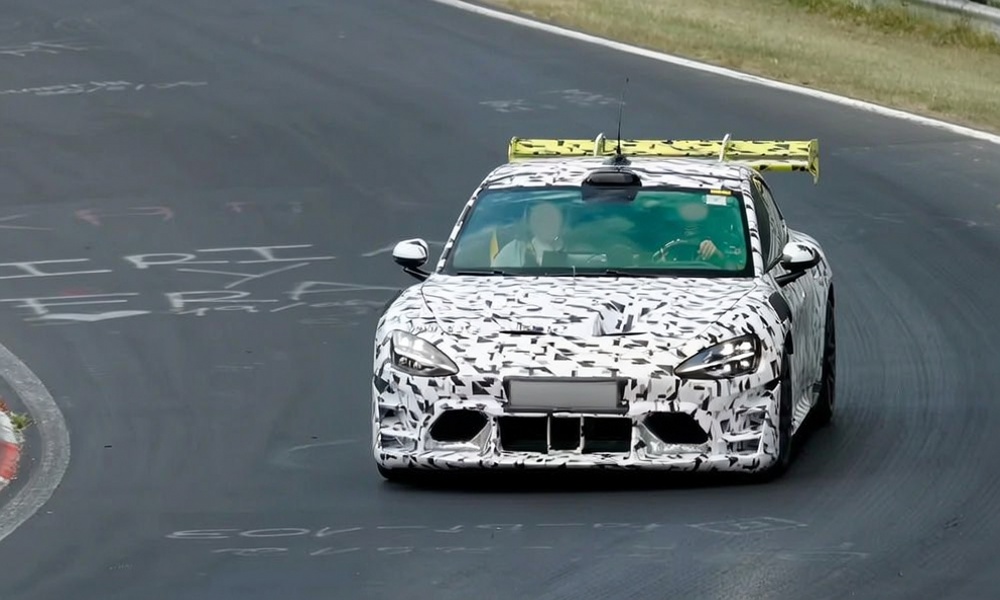
Recently, overseas automotive media AutoEvolution released a set of road-test spy photos of a Xiaomi car, identifying it as an "ultimate" variant of the Xiaomi SU7 Ultra, an all-new "track monster".
Peak Output Hits 2,054 Horsepower; 0–100 km/h Acceleration Under 1.8 Seconds
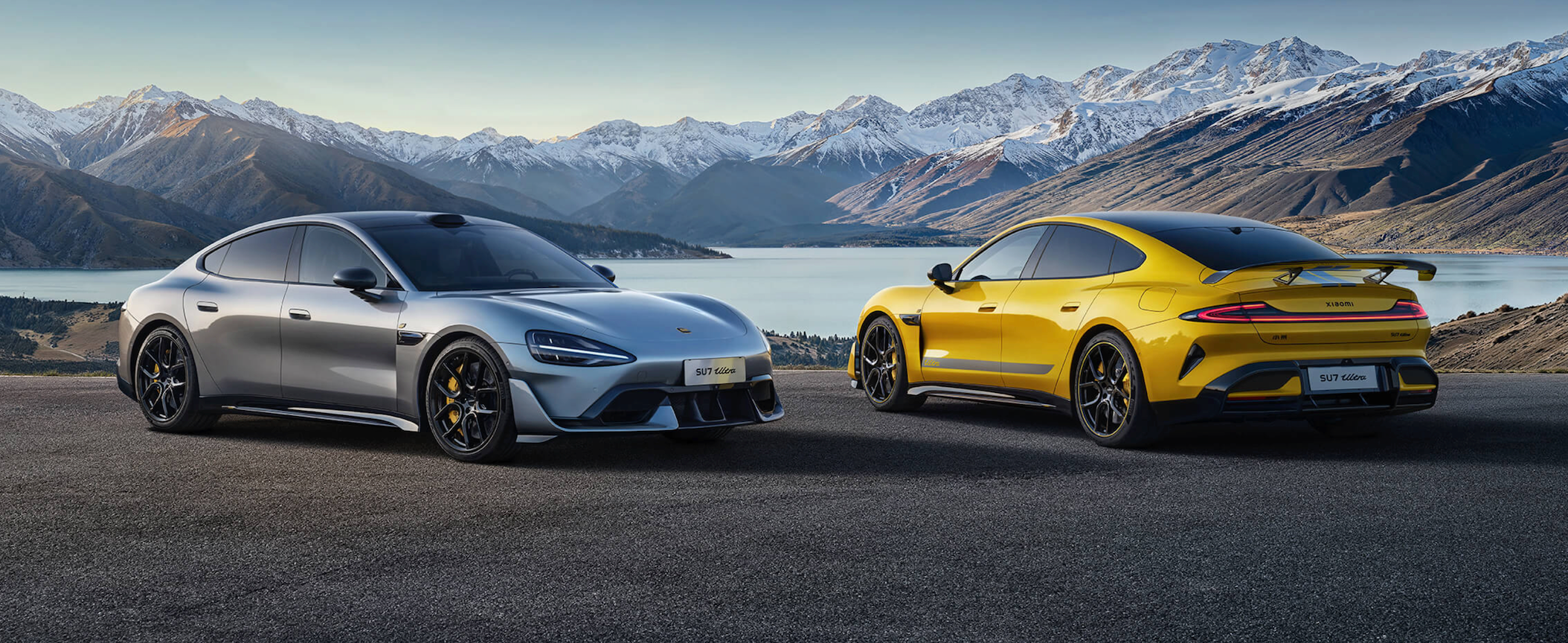
Fitted with three high-performance electric motors, the existing Xiaomi SU7 Ultra delivers 1,548 horsepower, sprints from 0 to 100 km/h in merely 1.98 seconds, and reaches a top speed of 359.71 km/h.
On the Nürburgring Nordschleife, the SU7 Ultra prototype clocked a lap time of 6 minutes 46.874 seconds, setting the world record for the fastest four-door vehicle. The production-spec SU7 Ultra later secured the title of the world’s fastest production electric car with a lap time of 7 minutes 04.957 seconds on the Nordschleife.
It was not until May this year that the Porsche Taycan Turbo GT equipped with the Manthey package reclaimed the crown of the fastest production EV on the Nordschleife, posting a lap time of 6 minutes 55.533 seconds to surpass the Xiaomi SU7 Ultra.
Nevertheless, Xiaomi is poised to retake the title before long. According to AutoEvolution, the new model is likely badged the Xiaomi SU7 Ultra Extreme. It comes with an array of aerodynamic add-ons, including a massive rear spoiler, large aerodynamic fins, and a rear diffuser engineered to reduce airflow turbulence.
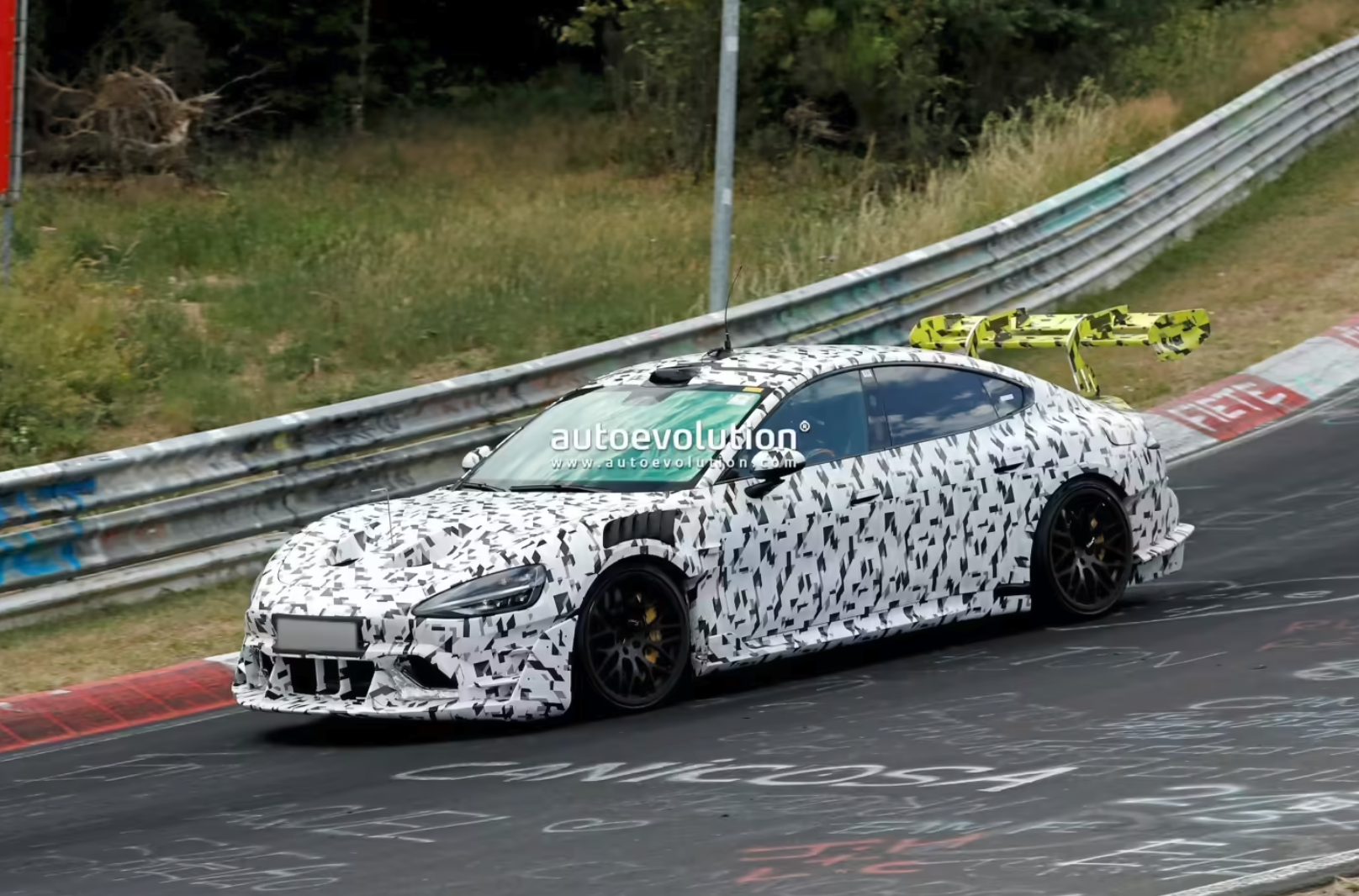
(Photograph source: AutoEvolution)
The most critical upgrade is that the SU7 Ultra Extreme is highly likely built on Xiaomi’s four-motor platform.
On November 14, 2024, Xiaomi unveiled core pre-research hardware for its intelligent chassis system, consisting of two in-house compact front motors and two V8s super motors. Xiaomi’s proprietary compact front motor spins at up to 28,000 rpm, generating a maximum output of 449 horsepower and peak torque of 380 N·m per unit. Collectively, the four motors churn out a peak power of 1,510 kW, equivalent to 2,054 horsepower, matching the performance of gasoline hypercars costing over ten million yuan.
The three-motor SU7 Ultra hits 100 km/h in 1.98 seconds. The more powerful SU7 Ultra Extreme is projected to complete the 0–100 km/h sprint within 1.8 seconds under ideal driving conditions.
(Photograph source: Xiaomi)
No detailed specifications for this new vehicle have been disclosed yet. Drawing references from the Xiaomi YU7 GT and updated SU7 lineup, Dianchetong (ID: dianchetong233) speculates that the SU7 Ultra Extreme will receive upgrades across intelligent driving, vehicle cabin experience, seat upholstery, massage functions and more.
As for pricing, the standard SU7 Ultra currently retails between 529,900 yuan and 814,900 yuan. The SU7 Ultra Extreme is expected to start above 1 million yuan, forming a duo of domestic six-figure all-electric hypercars alongside the BYD Yangwang U9.
Beyond this four-door electric hypercar, spy shots previously emerged of a Xiaomi two-door sports car, rumoured to adopt the same four-motor powertrain. Dianchetong forecasts this coupe will be cheaper than the SU7 Ultra Extreme yet more expensive than the regular SU7 Ultra.
Still, stellar performance does not guarantee strong sales. The Yangwang U9, the benchmark domestic million-yuan hypercar bolstered by BYD’s brand recognition, has averaged fewer than ten monthly deliveries since 2025. Xiaomi faces identical market constraints: the pool of buyers willing to spend seven figures on a hypercar remains niche. This raises a key question: does Xiaomi truly need to launch a million-yuan hypercar?
SU7 Ultra Sales Slump; Will the Extreme Variant Skip Mass Production?
Early after launch, monthly deliveries of the Xiaomi SU7 Ultra once hit four-digit figures, yet sales soon nosedived. By the fourth quarter of 2025, monthly deliveries dwindled to double digits.
Without official confirmed data, Dianchetong cross-referenced vehicle insurance registration numbers and third-party industry reports to estimate total deliveries of roughly 16,000 units since launch, with the vast majority sold within the first six months post-release.
Plummeting demand has even sparked public doubts over the authenticity of the SU7 Ultra’s launch-time sales data.
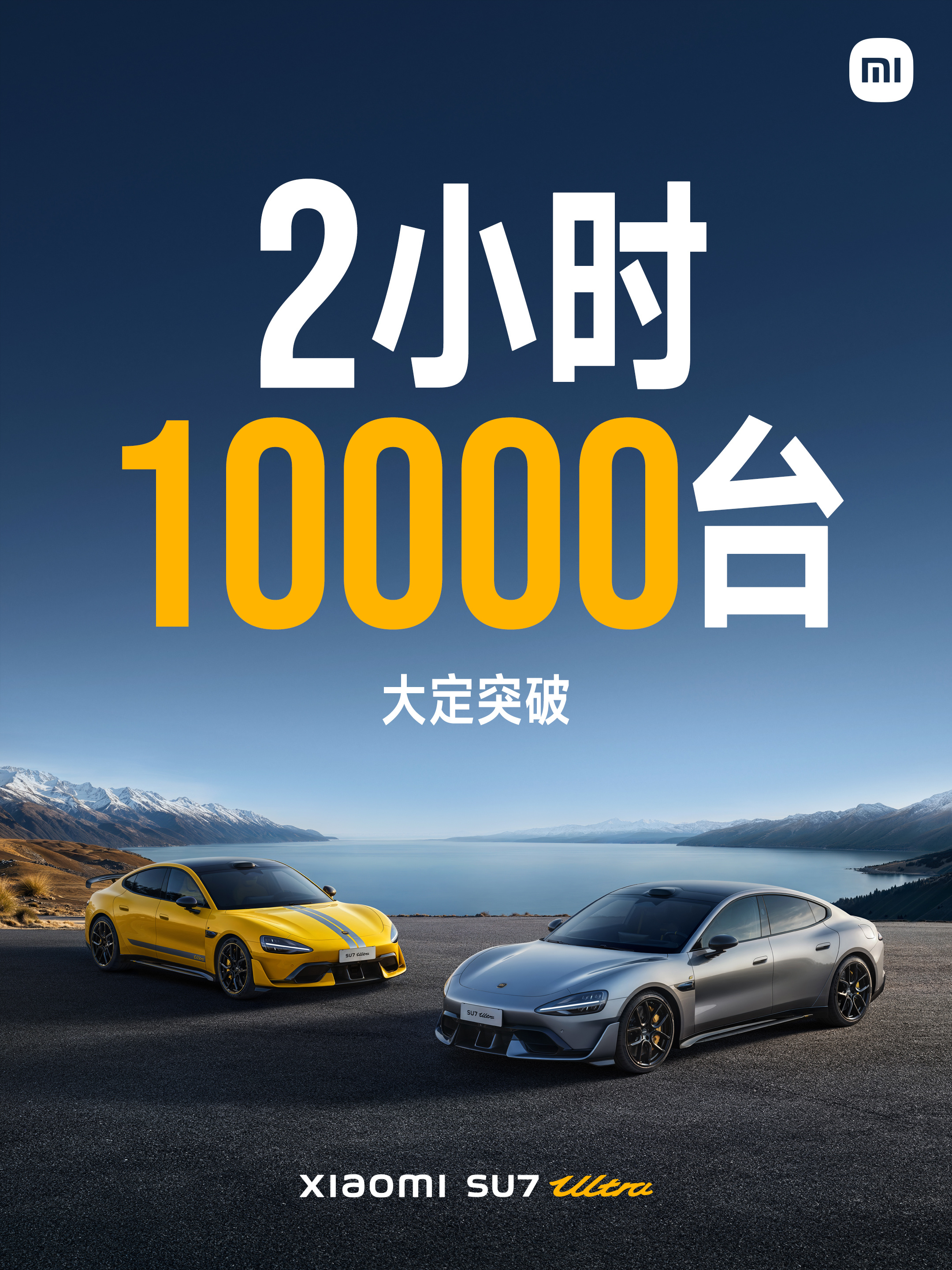
At its debut, the SU7 Ultra made headlines with 10,000 paid firm orders within two hours and 15,000 within 72 hours. To elevate the model’s premium positioning, Xiaomi founded the exclusive Ultra Master team to handle all SU7 Ultra sales operations.
(Photograph source: Xiaomi)
Team members were mostly recruited from luxury marques including Lamborghini and Ferrari, holding national Grade B or higher racing licenses and earning monthly salaries exceeding 20,000 yuan. Not all Xiaomi retail stores qualified to sell the SU7 Ultra; only authorized outlets staffed with 2–3 Ultra Master specialists could offer the model, paired with one-on-one dedicated customer service.
However, reports surfaced in January this year claiming the Ultra Master team had been disbanded amid weak sales. In early February, Xiaomi Auto issued an official statement denying the dissolution, framing the move as an optimization of sales service experience. Even so, dedicated Ultra sales roles were eliminated, granting all dealerships permission to sell the SU7 Ultra — functionally identical to the widely reported team disbandment.
The dissolution of the Ultra Master team and sharp sales decline stem not from insufficient Xiaomi technology or weak vehicle performance, but from the inherently limited size of the global hypercar market.
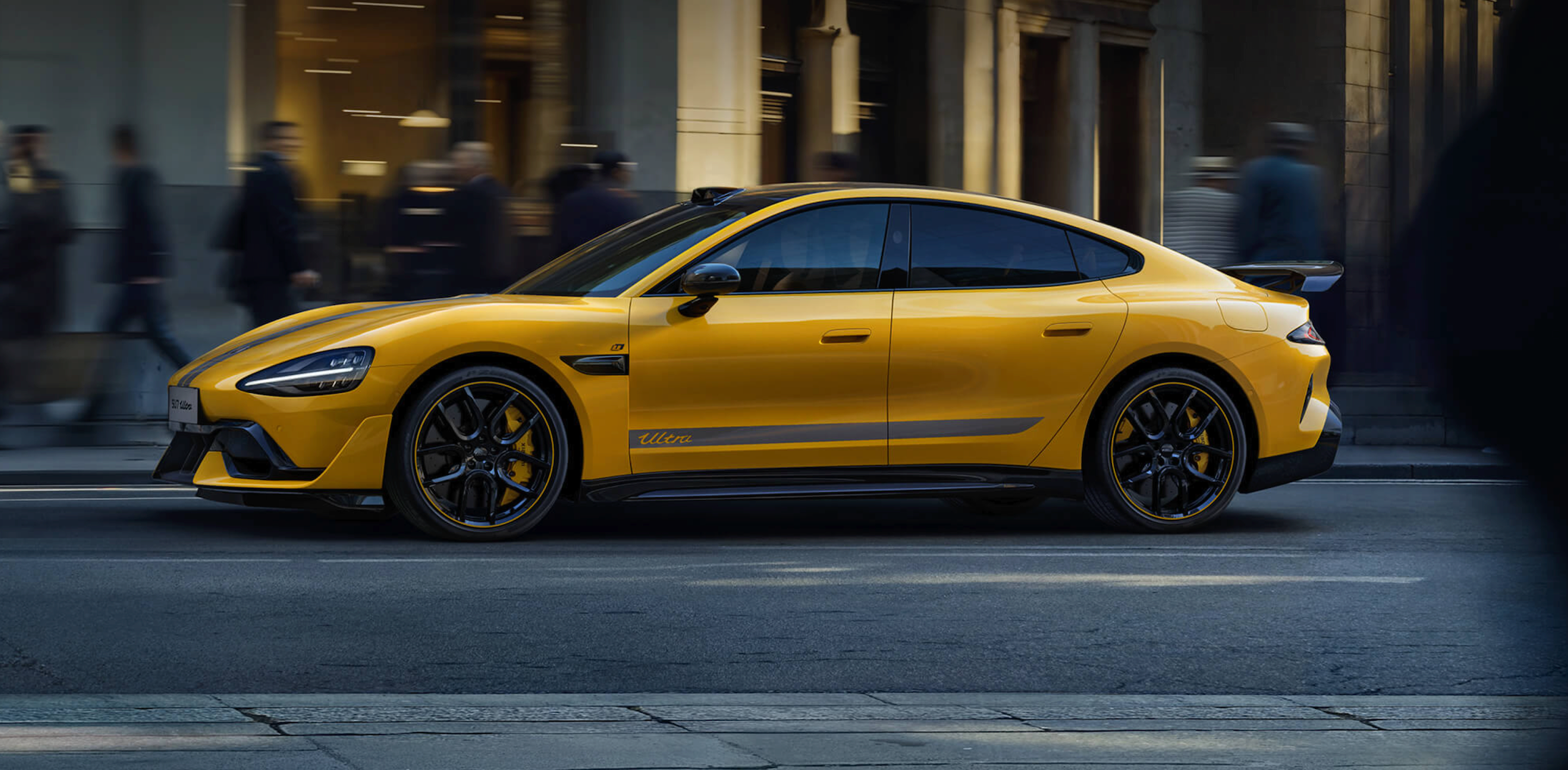
(Photograph source: Xiaomi)
Market research firm Bes Consulting tallied the global hypercar market at approximately 126.403 billion yuan in 2025. Excluding Porsche, which offers relatively accessible pricing, top luxury hypercar brands such as Lamborghini and Ferrari each sold just over 10,000 vehicles annually.
Focusing solely on China, Porsche recorded total annual sales of 41,900 vehicles across all nameplates in 2025. Lacking the global brand footprint and international distribution of Porsche, Xiaomi’s hypercar sales ceiling is capped at Porsche’s domestic volume.
While loyal Mi fans with strong purchasing power stand ready to back Xiaomi, this customer base is limited and unlikely to purchase every new Xiaomi model released. For this reason, order volumes for each Xiaomi vehicle rely heavily on pre-orders and launch-period momentum. The SU7 Ultra secured 15,000 firm orders in its opening 72 hours, yet cumulative deliveries have barely surpassed 15,000 units total, proving new orders dried up drastically post-launch.
Sales prospects look even bleaker for the higher-priced SU7 Ultra Extreme. Per AutoEvolution’s reporting, mass production is unlikely; the vehicle will probably follow the limited-run strategy of BYD’s Yangwang U9 Xtreme.
SU7 Ultra & Extreme: Built Primarily for Technical Showcase
Even with low projected sales and uncertain returns on massive R&D investment, Xiaomi remains committed to developing the SU7 Ultra and Extreme variants.
The core value of the SU7 Ultra lineup lies first and foremost in technology validation and platform trickle-down, mirroring BYD’s strategic logic for the Yangwang series. Hypercars act as rolling test beds for flagship brand technology, tasked with trialling cutting-edge hardware and verifying extreme performance. Mature innovations are then cascaded down to mainstream passenger cars to lift overall product competitiveness.
Second, Xiaomi faces a prominent brand-upgrade challenge as a smartphone manufacturer branching into automotive manufacturing. Its top priorities include building brand recognition for technological performance, crafting a premium brand identity, boosting brand premium capability, and breaking the stranglehold of joint-venture brands in the high-performance luxury vehicle sector.
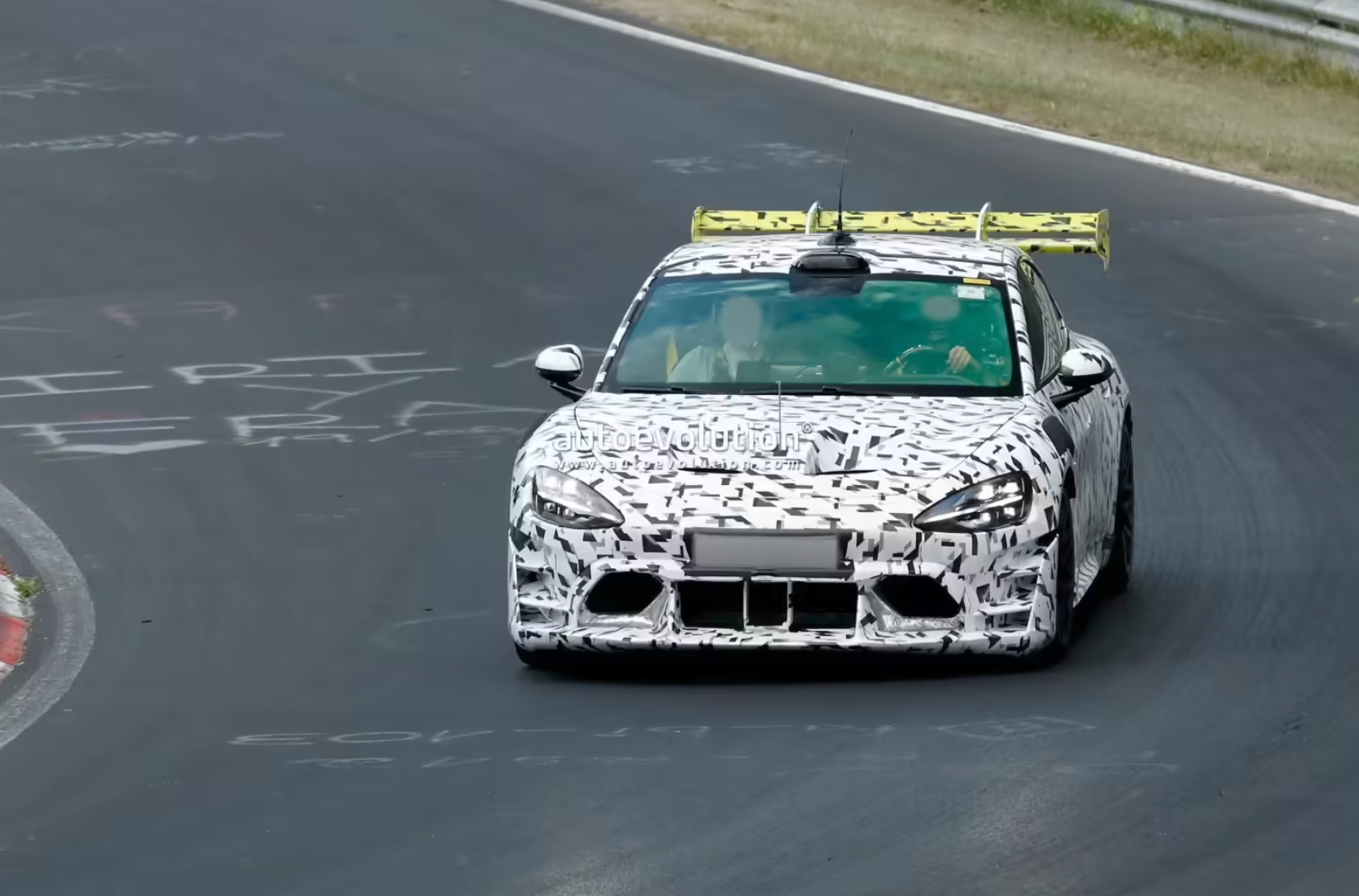
(Photograph source: AutoEvolution)
Competition in premium performance cars extends far beyond product specs; it is a battle of user communities and automotive culture. By cultivating track culture and fostering exclusive owner circles via the SU7 Ultra family, Xiaomi has built powerful brand cohesion among its automotive fanbase.
Hypercars function as natural attention magnets. Every round of road testing, official launch, and Nürburgring lap record triggers nationwide media buzz, delivering massive free publicity for Xiaomi Auto. Spy shots of the SU7 Ultra Extreme have drawn extensive coverage from Chinese and international outlets — exposure unattainable for ordinary family cars, which drastically cuts Xiaomi’s marketing expenses.
Pushing Technical Boundaries to Secure the Premium Market
Building on the three-motor layout of the current SU7 Ultra, the Extreme variant pushes performance limits further with upgraded power output and track-focused aerodynamics. It is poised to recapture the Nürburgring fastest production EV record, demonstrating that domestic new-energy vehicles can match and even outperform established Western luxury brands at the pinnacle of performance.
Its seven-figure price tag inevitably translates to modest sales and slim profit margins, yet sluggish volume is standard for the hypercar industry rather than a reflection of inadequate Xiaomi product strength.
Strategically, the model’s true purpose lies in technical experimentation and brand elevation. Identical to BYD’s Yangwang playbook, flagship hypercars serve as advanced R&D testbeds to pioneer four-motor powertrains, ultra-fine chassis tuning, radical aerodynamic design and other breakthrough technologies. These advancements are later rolled out across mass-production models to upgrade the competitiveness of Xiaomi’s entire vehicle lineup.
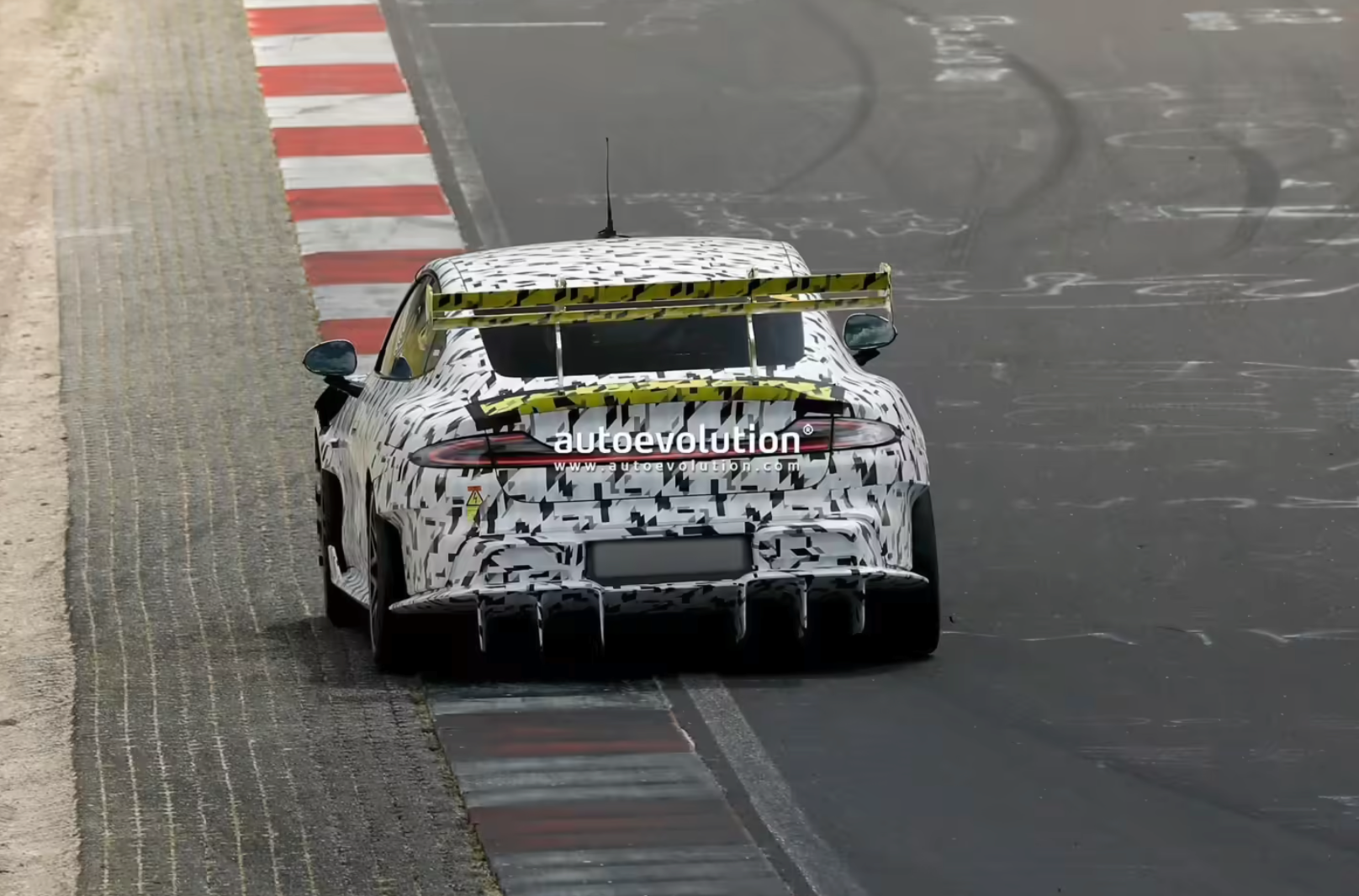
(Photograph source: AutoEvolution)
Meanwhile, ultra-high-performance vehicles attract unparalleled online buzz, solidifying Xiaomi’s brand positioning as a maker of cutting-edge, performance-driven premium EVs.
Though the existing SU7 Ultra suffers falling sales following its initial hype, the premium hypercar segment remains a small niche burdened with steep R&D costs and long payback cycles. Xiaomi’s decision to iterate the 2,054-horsepower four-motor Extreme variant may seem like an unprofitable arms race, yet it constitutes a deliberate, rational premium branding strategy.
In summary, the SU7 Ultra Extreme stands as Xiaomi Auto’s technical totem. It prioritizes technical breakthroughs over sales volume and profit, aiming to shatter foreign brand dominance and establish lasting credibility in the high-end market. It marks a pivotal milestone in Xiaomi’s evolution from an emerging automaker to a global automotive brand.
The WAIC2026, themed “Intelligent Partners, Co-Creating the Future,” opens soon.
The AI narrative is shifting—from stacking model parameters toward practical Agent-driven productivity; heterogeneous collaboration and photonic computing continuously raise computational ceilings; embodied intelligence accelerates real-world applications, bringing robots into homes and factories to make physical AI a reality.
The LeiTech WAIC reporting team has arrived in Shanghai—covering the annual pinnacle of AI industrialization!