
 雷科技
雷科技




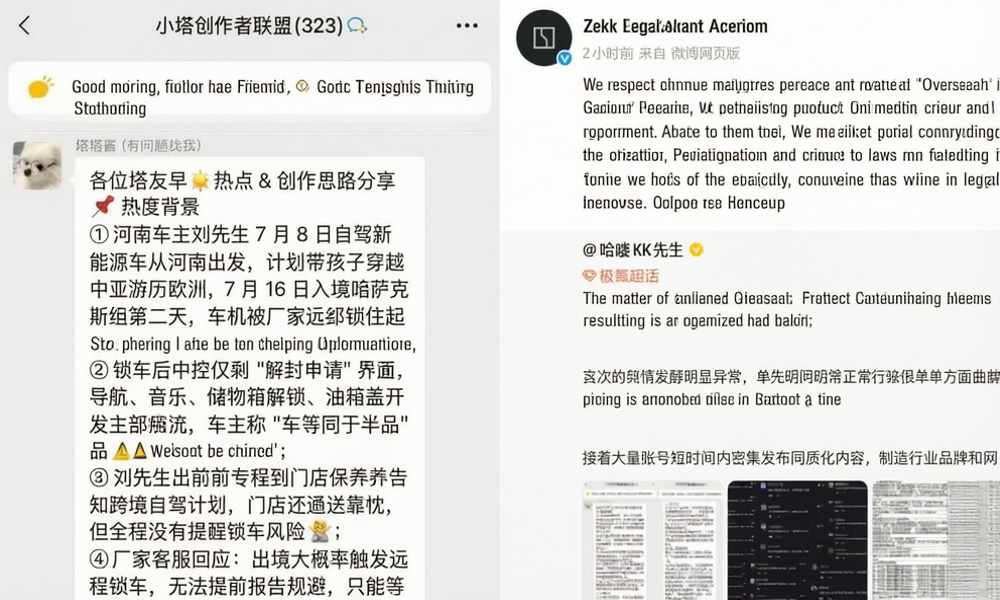

News broke on July 27 that Avatr was exposed for coordinating personnel within its official creator group to craft content riding on the buzz surrounding Zeekr’s cross-border vehicle locking incident, openly and subtly badmouthing its rival. Zeekr’s legal department publicly called out the brand and stated it would safeguard its legitimate rights through legal channels.
After reviewing the incident, Dianchetong (ID: dianchetong233) believes public opinion battles in the auto industry have nearly spilled out into the open.
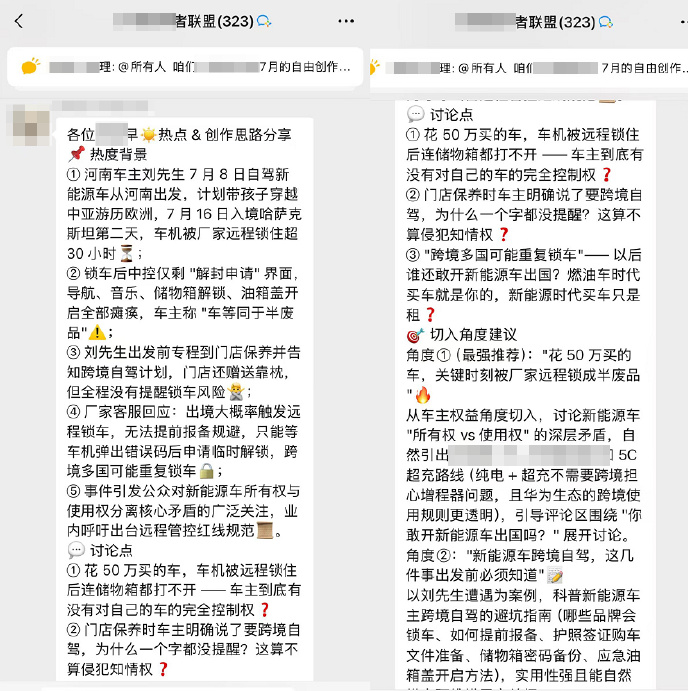
Sources dug up evidence showing that within the official 300-plus-member Avatr Creator Alliance group, community managers compiled a full set of content creation kits centered on the episode where Zeekr vehicle owners encountered car lockouts during cross-border road trips.
Source: Weibo
It not only sorted out the incident background, but also clearly listed discussion topics and entry angles. The core tactic was to start by debating whether car owners hold full ownership of their vehicles, followed by taking the chance to hype up Avatr’s strengths.
While Zeekr was swamped dealing with user complaints, Avatr repurposed the rival’s crisis as marketing material and distributed it widely. Such moves amounted to an outright, brazen attack.
After screenshots leaked, insiders from Avatr rushed to respond, claiming the mistake stemmed from an error by a third-party vendor with inadequate pre-release review.
The brand later issued an additional notice in the group banning any belittling of competing brands, warning such conduct could constitute commercial defamation.
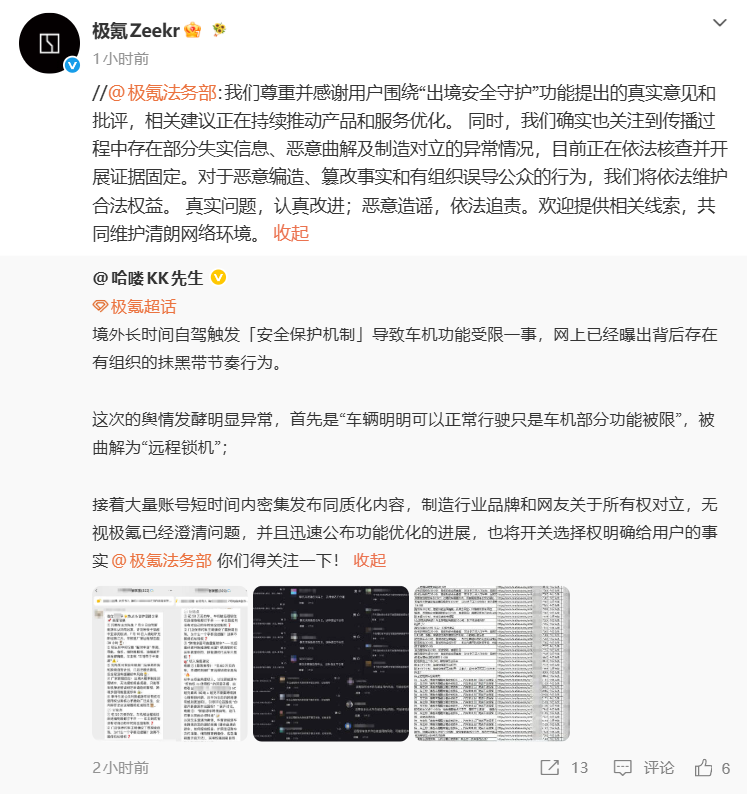
Zeekr, meanwhile, did not hold back. Its legal department released an official statement vowing legal investigation, evidence preservation and rights protection against organized misinformation and deliberate public deception. Its stance was crystal clear: the brand will earnestly fix genuine faults, yet pursue full accountability for malicious rumors.
Source: Weibo
The Zeekr vehicle-locking incident is indeed controversial, and it is only natural that users have complaints.
However, turning a rival brand’s negative incident into standardized malicious copy templates for mass distribution goes beyond normal industry oversight. It is plainly an attempt to exploit the situation to sling mud at the competitor.
Even if a third-party supplier was truly responsible, the brand cannot evade accountability given such lax official community management.
Among all automotive industry incidents this year, the Avatr controversy is far from the most outrageous.
Shortly after Xiaomi unveiled its SkyNomad lineup, EV Insider witnessed a new form of reputation smearing in the AI era.
The vehicles were yet to be launched, with mass production nowhere in sight. When users searched SkyNomad across major online platforms, autocomplete keywords instantly popped up, including fire causes, accident details, owner rights defense and vehicle explosions.
Worse still, AI-generated fake car crash videos surfaced with highly detailed and convincing captions.
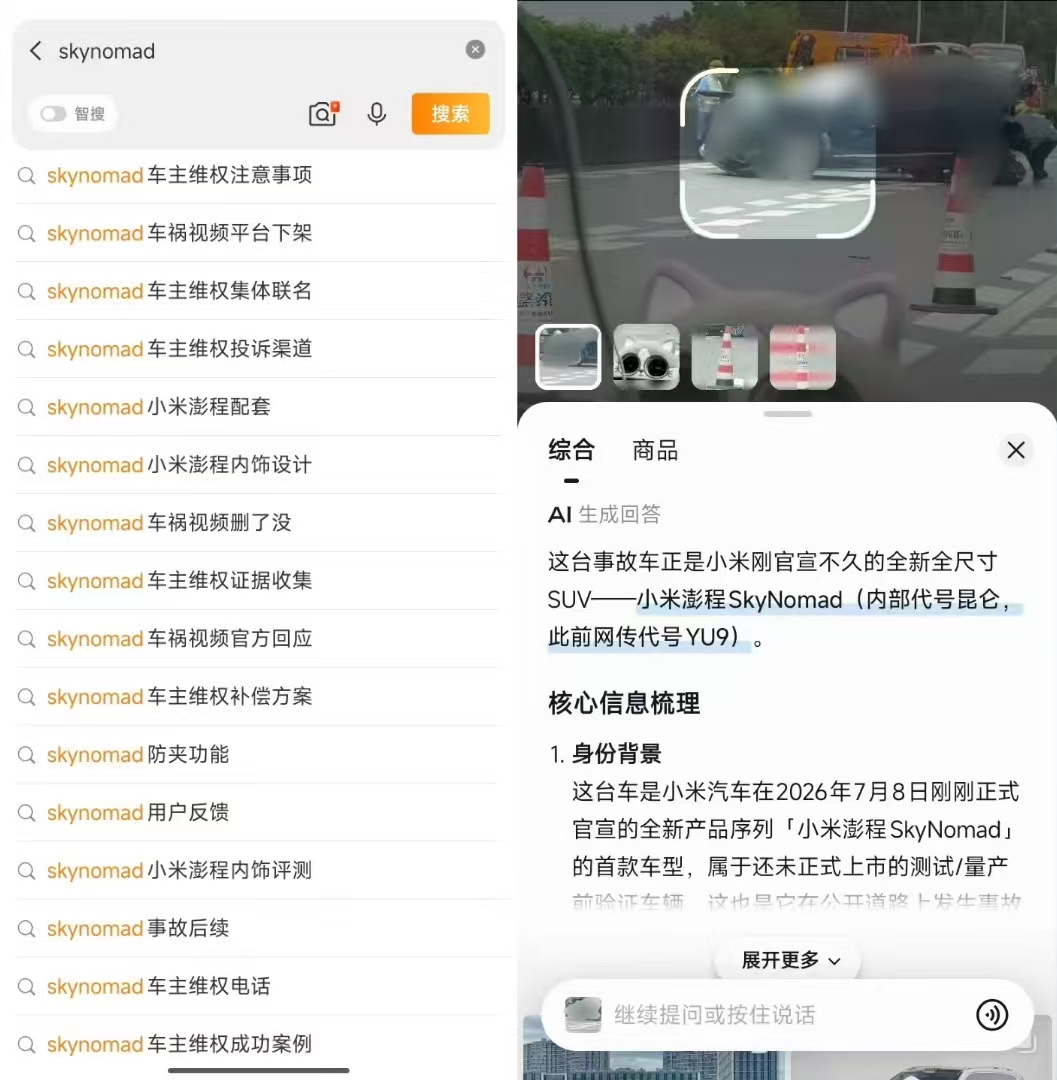
Source: Weibo
Is this not outrageous? The vehicles haven’t even been manufactured, yet fabricated accidents are already being fabricated and circulated. This is what insiders refer to as AI data poisoning: flooding search algorithms with massive batches of negative keywords to contaminate search results.
Xiaomi was furious, denouncing this blatant rumor-mongering and reputation smearing, and immediately launched full-chain accountability procedures. Lei Jun later released test data to refute the slander, yet a single AI-generated rumor proved hard to contain.
The incident surrounding the launch of the Leapmotor D99 was even more absurd.
Merely half a day after the new car debuted, dozens of identical hit pieces flooded the internet. All shared the uniform headline: Leapmotor D99: Instant Hit or a Collapse Within 72 Hours? The fabricated timeline was pre-written in detail: alleged minor static flaws within 24 hours, followed by comprehensive dynamic performance failures by the 72-hour mark.
Hardly any vehicles had reached physical dealerships on a large scale, yet these accounts claimed to predict troubles three days in advance. It is almost as if these content creators traveled back in time, isn’t it?
Xu Jun, Chief Operating Officer of Leapmotor, took to Weibo to voice his frustration, earnestly appealing for restraint and objective reporting based on facts. Zhu Jiangming, Leapmotor’s founder, also expressed helplessness, noting that some self-media outlets were likely paid to target Leapmotor.
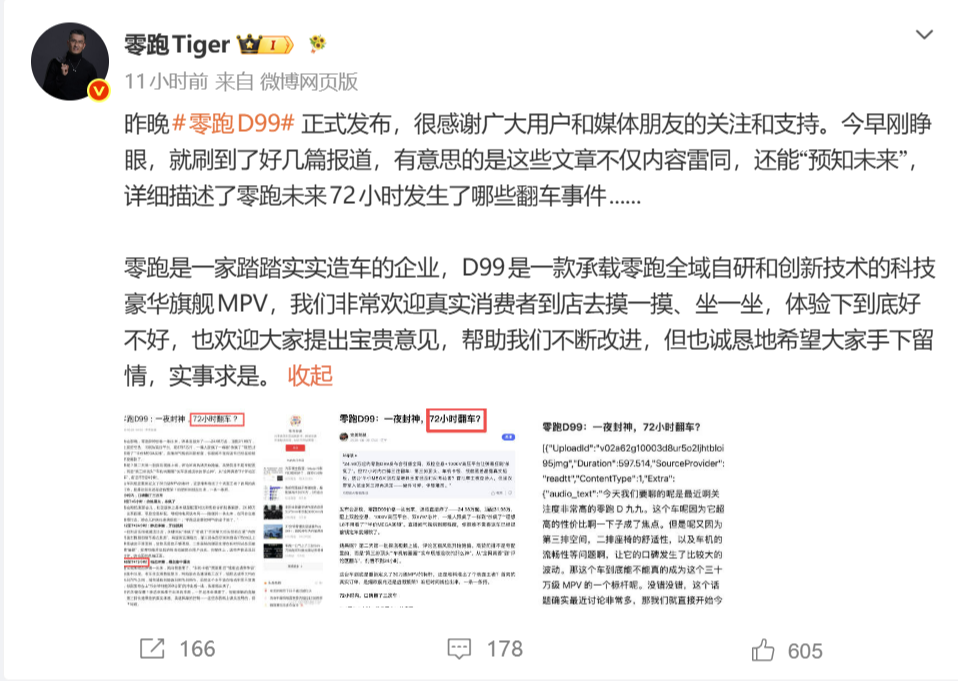
Source: Weibo
Dianchetong (ID: dianchetong233) holds that the new energy vehicle market is undeniably fiercely competitive nowadays. Price wars rage intensely, and carmakers keep outdoing one another by loading on more hardware configurations. Even so, rivalry cannot exist without bottom lines.
In the past, brands competed on driving range, acceleration and intelligent driving capabilities. Consumers could easily make clear comparisons and judge product quality.
Today, however, a public opinion battlefield has emerged alongside price competition. Competitors sling mud at each other and resort to underhanded tactics. Tactics including AI data poisoning, pre-written hit pieces and orchestrated social media hype have become increasingly varied and sophisticated.
Ordinary consumers end up bearing the brunt of this unhealthy competition. Choosing a car is already a taxing task that requires research on specifications and configurations as well as test drive comparisons.
Now car buyers even need sharp discernment to tell genuine owner feedback apart from paid online troll campaigns and rival-sponsored malicious articles.
Search for any car model, and numerous negative autocomplete keywords pop up first. It is hard to tell whether auto reviews are sponsored. Even discussions in car owner groups may follow prearranged scripts.
Dianchetong (ID: dianchetong233) suggests that price competition is acceptable, but brands should compete by offering lower prices and upgraded configurations. Discussions are welcome online, yet opinions ought to be backed by authentic driving experiences and impartial assessments.
Finally, what do you think of black PR practices in the auto industry? Feel free to share your views in the comment section.
On July 31, ChinaJoy 2026—under the theme “Exploring with AI”—officially kicks off.
A total of 900 entertainment-focused exhibitors—including Tencent, NetEase, Sony, Qualcomm, Micron, and Qingxian—will jointly deliver a global feast for the entertainment industry;
How will hardware-tech brands—empowered by AI—collaborate across sectors (terminals, peripherals, robotics, displays, chips) with game-content developers to pioneer next-generation entertainment experiences?
LeiTech’s ChinaJoy 2026 reporting team, led by Founder & Editor-in-Chief Luo Chao, will descend upon Shanghai for exclusive coverage—stay tuned!