
 雷科技
雷科技




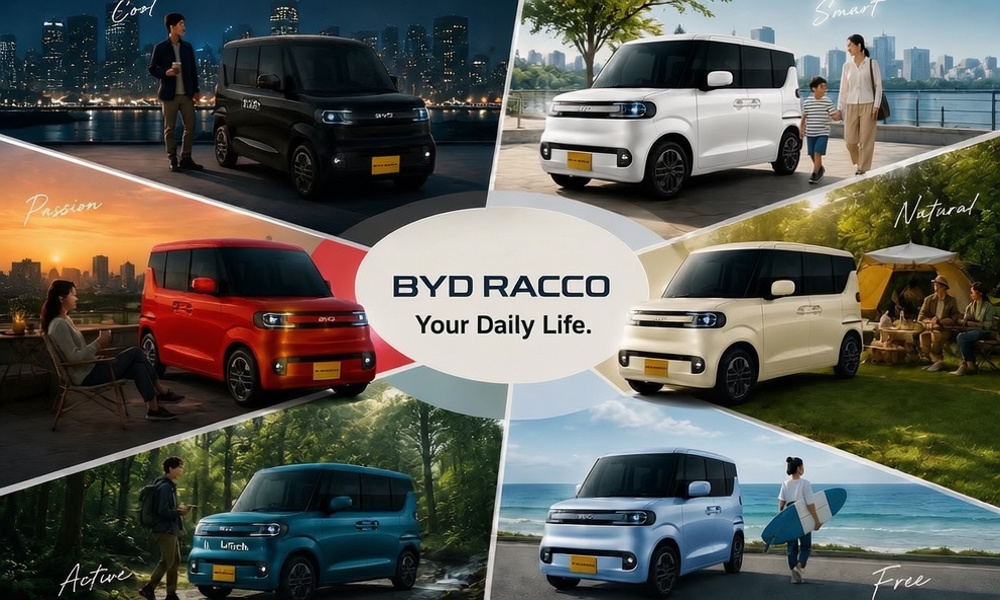

BYD's Japan-exclusive K-Car has finally launched today.
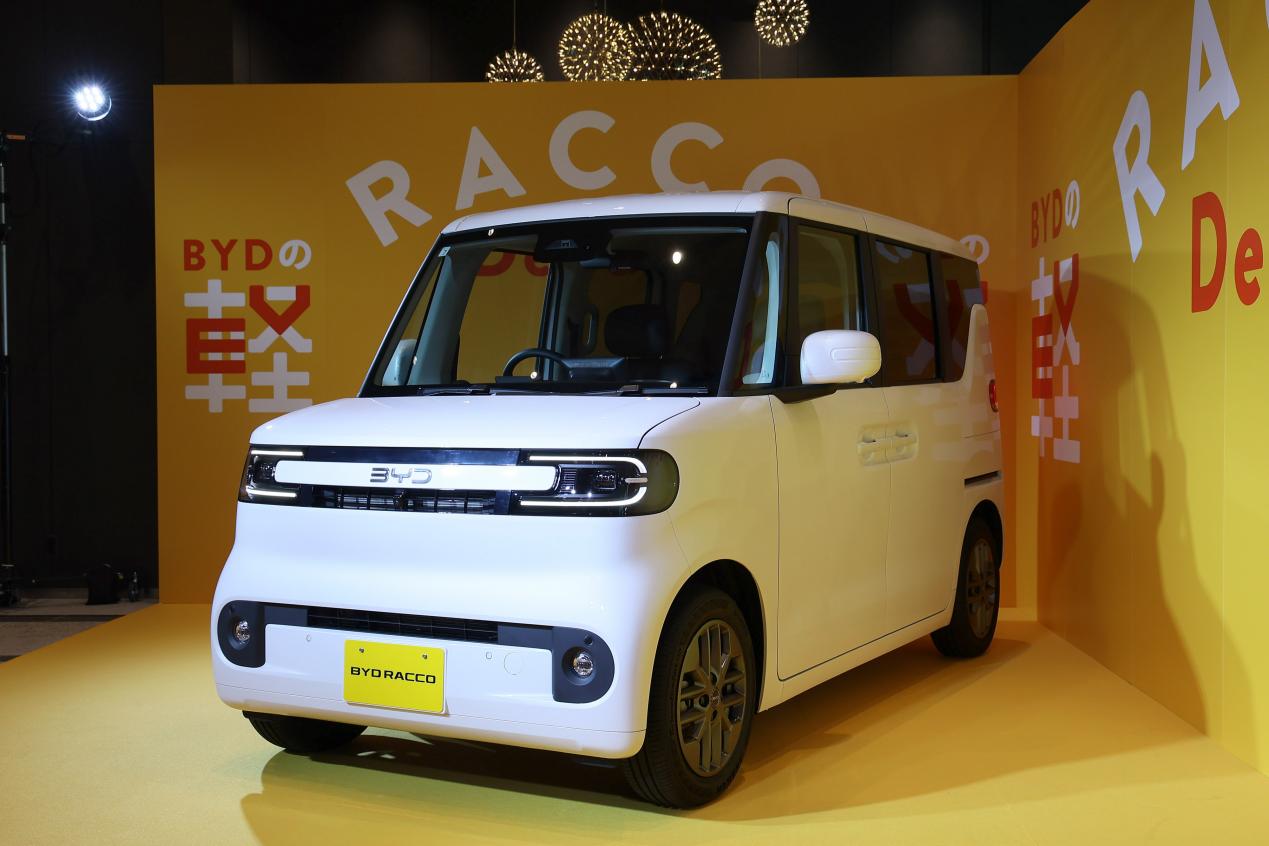
(Image source: BYD)
The new model is named RACCO, with the Chinese name Hǎi Tǎ (literally "sea otter"). It is offered in three variants with the following prices:
RACCO 200: 2.145 million yen (approximately 88,700 Chinese yuan)
RACCO 300: 2.398 million yen (approximately 99,100 Chinese yuan)
RACCO 300 Premium: 2.497 million yen (approximately 103,100 Chinese yuan)
In addition, the RACCO qualifies for a 150,000-yen new energy vehicle subsidy, bringing its minimum starting price down to 1.995 million yen (roughly 82,400 Chinese yuan) after the subsidy.
For BYD, the launch of the RACCO marks a brand-new stage in its overseas expansion: developing entirely new vehicle categories tailored to the needs of local consumers in target markets.
So today, let’s dive into this new chapter of BYD’s global expansion.
RACCO Launches in Japan: BYD’s Breakthrough Move on Japanese Home Turf
The debut of the RACCO is set to make a notable impact on Japan’s automotive market.
First, in terms of pricing and specifications, we can compare the RACCO with the Nissan Sakura, a domestic Japanese all-electric K-Car. Before subsidies, the RACCO starts at 2.145 million yen, undercutting the Nissan Sakura’s starting price of 2.4486 million yen.
However, Japan’s subsidy amounts vary across automakers. BYD is only eligible for a 150,000-yen subsidy, so after deductions, the RACCO’s starting price stands at 1.995 million yen — slightly higher than that of the Nissan Sakura.
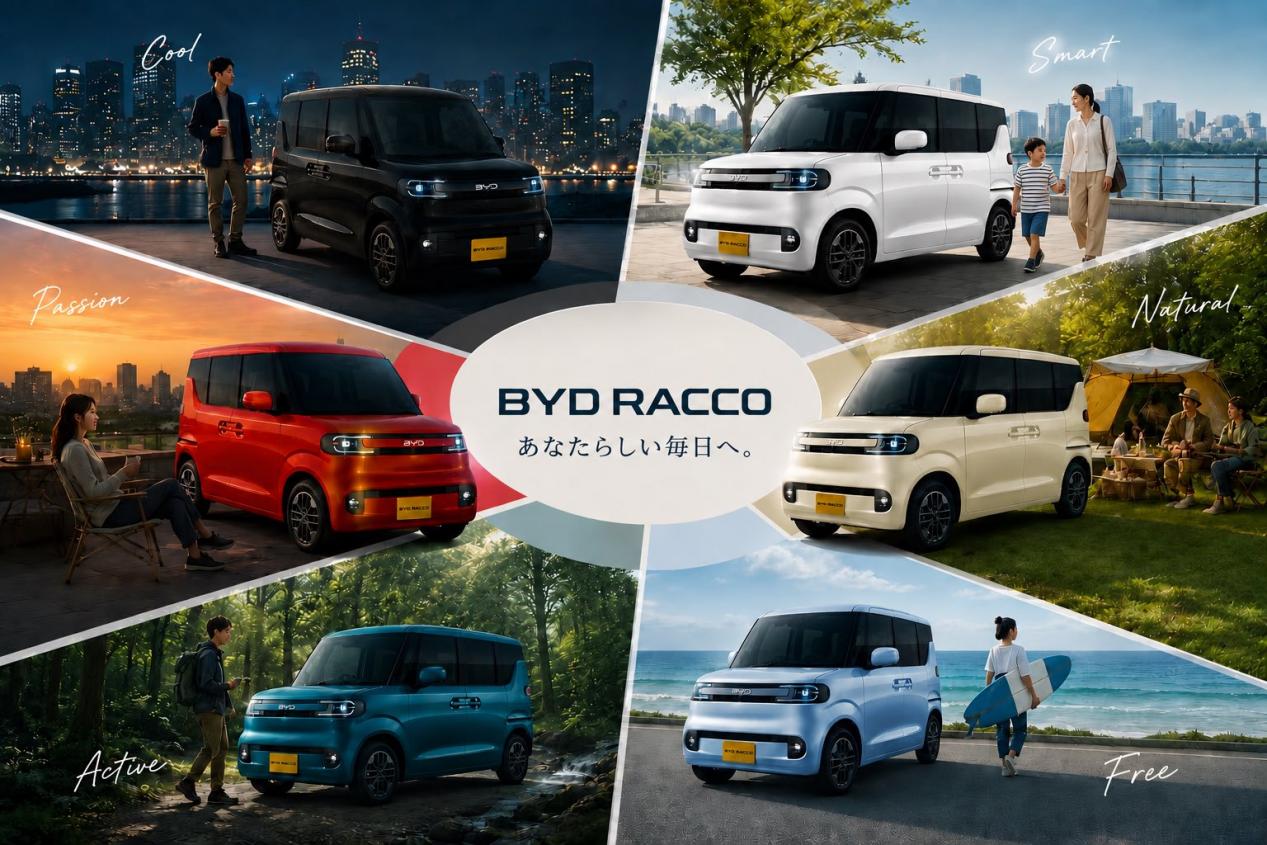
(Image source: BYD)
In terms of specifications, the RACCO is offered in two variants with WLTC-rated ranges of 200 km and 300 km respectively, making it the first K-Car in Japan to deliver a WLTC range exceeding 300 km. By comparison, the recently facelifted Nissan Sakura only achieves a WLTC range of 180 km.
Additionally, the RACCO comes equipped with dual power sliding doors, six airbags, and vehicle-to-load (V2L) capability.
In other words, even though its effective post-subsidy price is slightly higher than domestic Japanese battery-electric K-Cars, the RACCO holds a clear edge in overall product strength, lending it fairly strong competitiveness in the Japanese market.
A further dimension is BYD’s strategic commitment to the Japanese market.
A brief look at Japan’s K-Car segment reveals that prior to the launch of the BYD RACCO, the market had long been dominated almost exclusively by domestic Japanese brands. No overseas automaker had ever launched a dedicated project to develop a K-Car built to Japan’s regulatory standards for the local market.
The K-Car category has effectively functioned as a protected domestic sanctuary for Japanese automakers: with virtually no foreign competition and targeted policy support, domestic brands have thrived comfortably in this space.
The arrival of the BYD RACCO has completely changed the landscape. As the first brand willing to take on the tough challenge of the K-Car segment and successfully bring a product to market, BYD has amply demonstrated its focus on the Japanese market and its determination to expand its local sales footprint.
Rather than simply exporting global models like the Seal and Yuan PLUS (ATTO 3) to Japan, BYD is committed to developing vehicles aligned with local needs and standards — a move that exerts considerable pressure on major Japanese automakers.
According to 2025 global sales data, among Toyota, Honda and Nissan, only Toyota has maintained sustained growth, though at a slowing pace, while Honda and Nissan have posted declining sales.
As Japanese brands already face mounting operational headwinds, BYD’s entry into their protected home market — while not a decisive blow — has undoubtedly created a significant sense of crisis for domestic Japanese automakers.
Targeted Localization: The New Phase of BYD’s Global Expansion
The RACCO’s debut in Japan signals that BYD’s passenger vehicle overseas strategy has moved beyond a one-size-fits-all approach, and instead focuses on developing distinct models for different markets.
Beyond Japan, BYD has also rolled out several new models this year tailored to European market demands.
First is the Dolphin G DM-i, developed specifically for the European market.
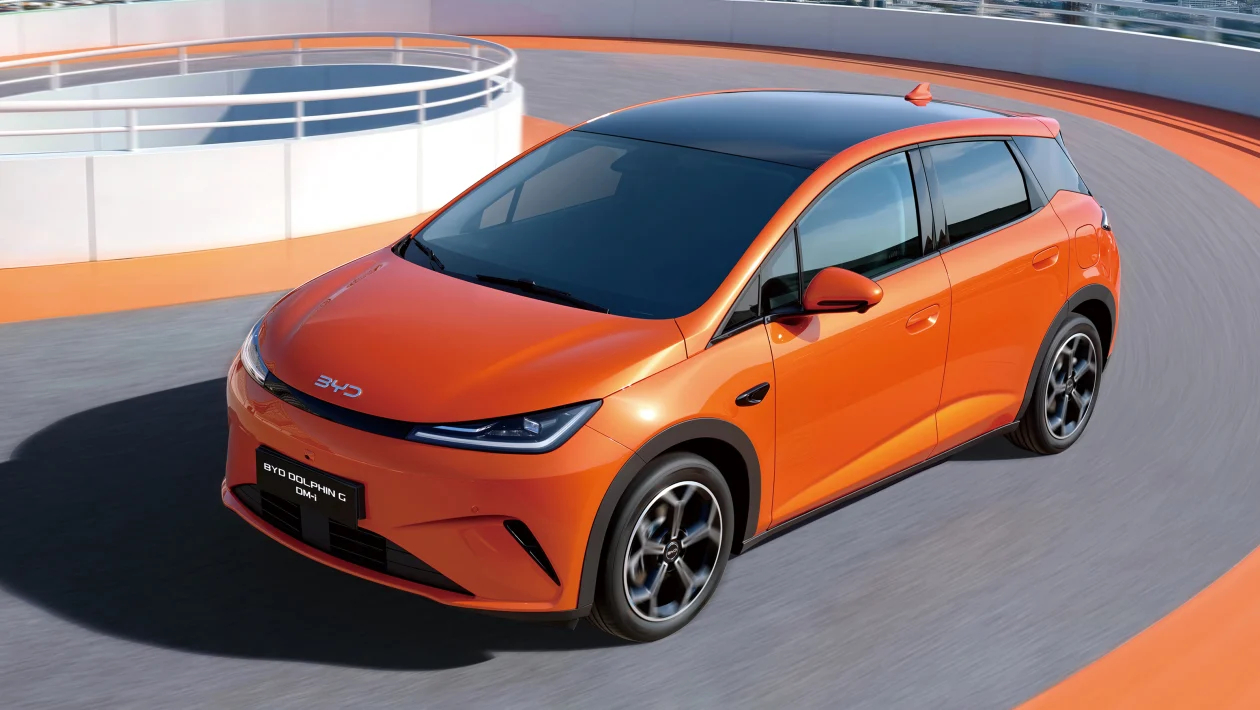
(Image source: BYD)
Positioned as a compact plug-in hybrid sedan, the model is priced at under £24,000 in the UK (approximately 216,100 yuan). It measures 4,160 mm in length, 1,825 mm in width and 1,575 mm in height, with a wheelbase of 2,610 mm. It is powered by a 1.5L engine paired with two electric motor options delivering 129 kW and 156 kW respectively, and comes with 7.42 kWh and 18.3 kWh battery packs, offering all-electric ranges of 40 km and 105 km.
As indicated by the specifications, the Dolphin G differs significantly from models sold in China in both dimensions and all-electric range. With a length of 4,160 mm, it is smaller than the domestically available Dolphin and Yuan PLUS, close in size to the NIO Firefly, and slightly larger than the Volkswagen Polo. The Dolphin G targets the same consumer demographic in Europe as models like the Polo and Golf.
Meanwhile, given the relatively low NEV penetration rate in Europe at present, BYD has adopted the small-battery plug-in hybrid configuration commonly used in its earlier domestic PHEV models. This approach not only lowers purchase costs for local consumers, but also helps users gradually get accustomed to new energy vehicles and rely more on all-electric driving mode.
Another UK-exclusive model is the Dolphin Cargo e-Van, the commercial freight variant of the Dolphin, priced at £29,300 including tax (approximately 263,800 yuan).
Developed in response to the popular European trend of converting passenger cars into compact delivery vans, the model removes the rear seats of the standard Dolphin and adds a bulkhead behind the front seats, turning the former rear cabin and trunk into a single connected cargo hold to meet urban delivery needs.
Another example of a successful overseas-exclusive model is the BYD Shark pickup, originally developed for markets including Australia and Mexico before being introduced back to the Chinese market (domestically registered as Fangchengbao Shark / Fangchengbao Bao Sha).
The RACCO and the aforementioned market-exclusive models demonstrate that BYD is steadily transforming into a truly global automaker.
Previously, most of BYD’s export models were modified versions of vehicles sold in mainland China, adjusted to meet local regulatory requirements and consumer demands — a relatively early-stage form of overseas expansion.
Today, however, BYD is capable of developing tailored models and even entire vehicle categories for individual regional markets, an operating model much closer to that of established multinational automakers such as Volkswagen and Toyota. In other words, BYD has entered a brand-new phase of its global expansion.
This trajectory bears similarities to BYD’s overseas expansion strategy in the bus segment.
In its early years, BYD’s bus exports were largely based on the domestic K9 model, with exterior and configuration tweaks to suit the needs of different countries and regions.
In recent years, BYD has progressed to developing new energy buses of different specifications tailored to diverse market demands. Examples include the K9UD built for the European market, the BD11 double-decker designed for London, UK, and the K12A developed for BRT systems in South America.
Evidently, BYD’s commercial vehicle division entered this new phase of global expansion earlier than its passenger vehicle business, though the passenger vehicle segment holds far broader growth prospects in overseas markets.
An Inevitable Path to Becoming a Global Automaker
Today, Chinese automakers are continuously pushing forward their overseas businesses, yet many remain in the relatively early stage of globalization, simply exporting the same models sold domestically.
BYD, in this regard, has set a benchmark for other Chinese automakers venturing abroad.
Beyond BYD, Chery — which has operated in overseas markets for many years — has also been developing models tailored to the niche demands of international markets.
Examples include the Stockman diesel plug-in hybrid pickup developed for the Australian market, and the DELIVAN brand targeting the European commercial vehicle sector.
Therefore, according to Dianchetong (ID: dianchetong233), the market-specific R&D model adopted by BYD and Chery represents the inevitable path for Chinese brands to become global automakers.
This is the same path forged by Toyota, Volkswagen and General Motors, and one that BYD, Chery and other Chinese brands are now following.
It is hoped that more Chinese brands will embark on this journey in the future, raising the international profile of China’s automotive industry to ever greater heights.
On July 31, ChinaJoy 2026—themed “Exploring with AI”—will officially open.
A total of 900 pan-entertainment exhibitors—including Tencent, NetEase, Sony, Qualcomm, MaiCong, and Qingxian—will jointly present a global entertainment extravaganza;
How will hardware-tech brands—including devices, peripherals, robots, displays, and chips—leverage AI to deliver novel cross-industry entertainment experiences alongside gaming content?
Led by Founder & Editor-in-Chief Luo Chao, the LeiTech ChinaJoy 2026 reporting team will soon descend upon Shanghai—stay tuned for exclusive coverage.