 雷科技
雷科技




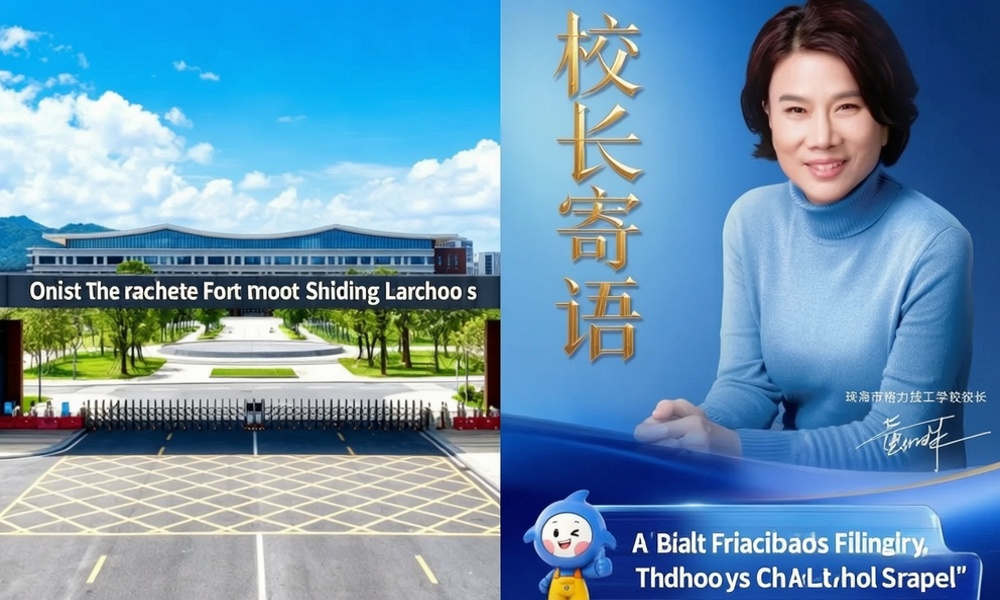

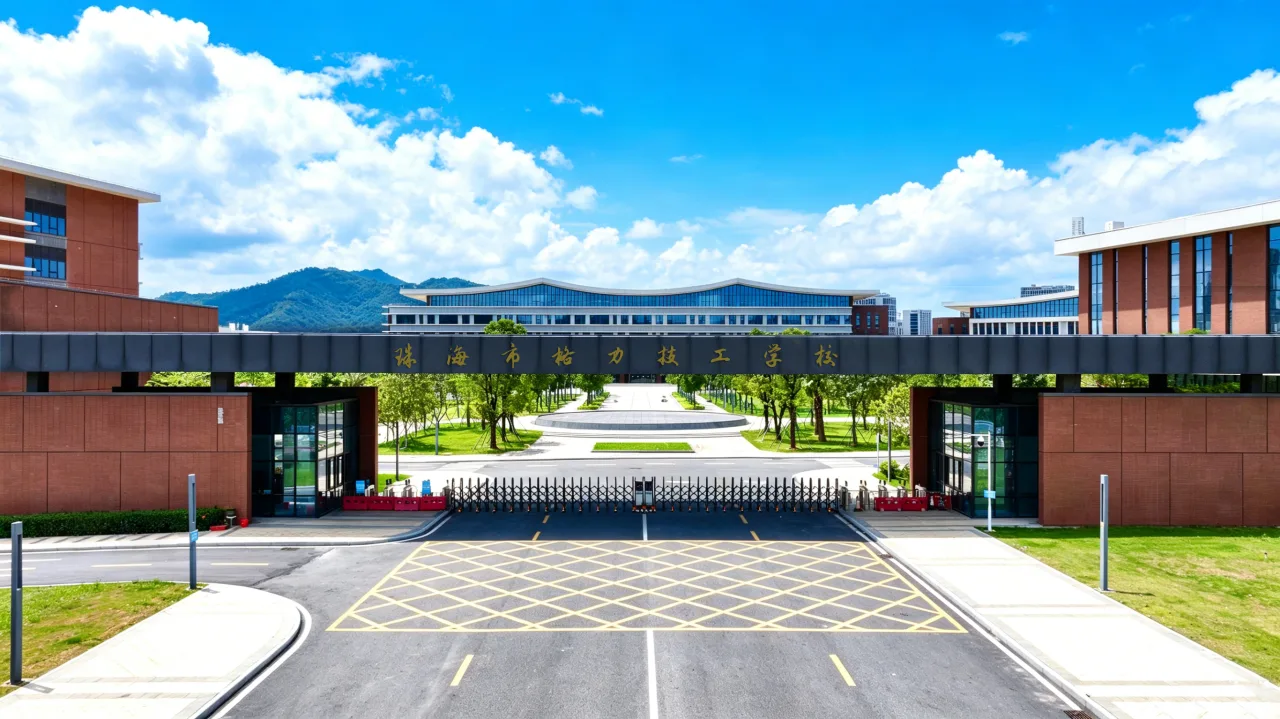
News, August 18: GREE has launched its own technical school, with Dong Mingzhu personally serving as its principal.
Officially named Zhuhai GREE Technical School, the institution is founded by GREE Electric Appliances. It has recently obtained official enrollment approval and will welcome its‑first intake this autumn.
As Chairwoman of GREE Electric Appliances, Dong Mingzhu takes the helm as principal. She delivered an inspiring message: “Study at GREE Technical School, master robust technical skills, become great craftsmen of our nation, and let the world fall in love with Made‑in‑China.”

Xiao Lei downloaded and reviewed its enrollment brochure. The school will take in a modest first‑batch intake of only 300 students. It targets junior high‑school graduates aged 15‑18 across the country, with a three‑year schooling system. Nine majors are offered under three broad categories: intelligent manufacturing, electrical technology, and information technology.
Specific majors include refrigeration equipment maintenance, mold manufacturing, intelligent equipment operation and maintenance, and mechatronics. All these rigorous technical programs are directly aligned with GREE’s core business.
In terms of tuition fees, annual fees range from 9,000 to 11,000 yuan after subsidies, and can reach a maximum of 15,000 yuan without subsidies.
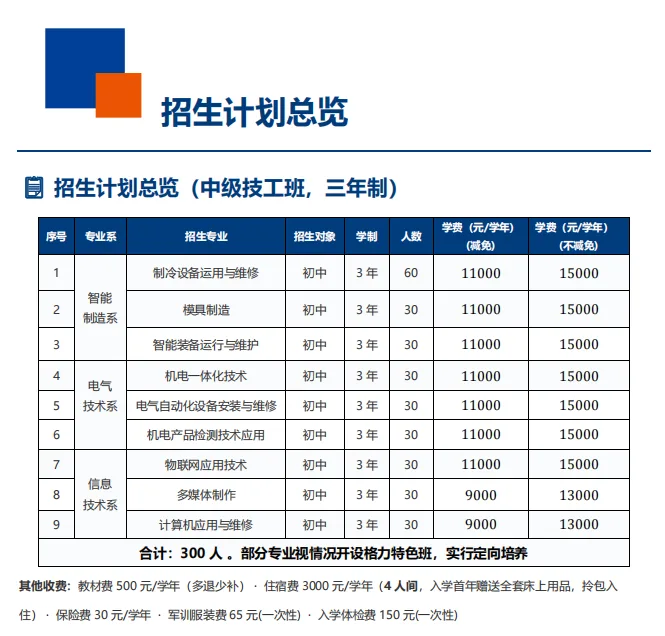
Source: Gree Technical Secondary School Admission Brochure
To be honest, the tuition is really reasonable for a private technical school. There are also scholarships, grants and tuition‑waiver policies to support outstanding students and students from disadvantaged families.
Most importantly, graduates get priority for internships and jobs at GREE Electric Appliances and its industrial‑chain partners.
Its official slogan goes: “Enroll as an enterprise‑affiliated student, and be job‑ready upon graduation.”
From Xiao Lei’s WeChat account (ID: xiaoleibbb), GREE’s launch of this technical school creates a win‑win‑win situation for the enterprise, students and the whole industry.
Most obviously, GREE can fill its talent gap. As manufacturing upgrades rapidly, factories are equipped with automated facilities and intelligent production lines. Gone are the days when new hires could start work with minimal preparation.
What troubles manufacturers most is the shortage of qualified skilled workers. Many externally‑recruited candidates have mismatched majors and poor hands‑on skills. Companies have to spend six months or more retraining them, which is both time‑consuming and costly.
Running its own school changes everything. Teaching content and practical skills are designed strictly around GREE’s job requirements.
Instructors are senior engineers and senior technicians from GREE. Real‑world production equipment is used in classes, and practical training takes place directly on GREE’s production lines.
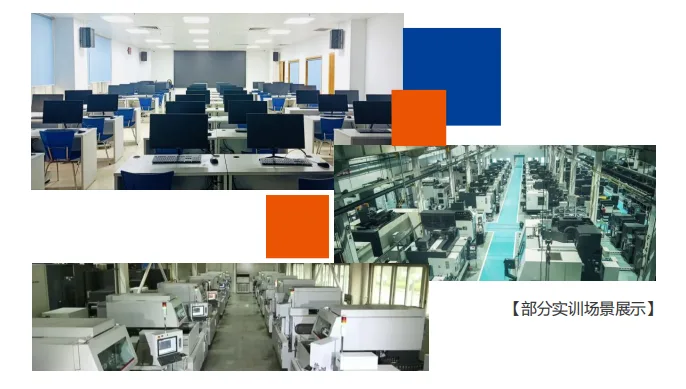
Source: Gree Technical Secondary School Admission Brochure
Upon graduation, students can step into factory positions and get down to work with little adaptation. This is known as order‑oriented training: the school cultivates exactly the talent the enterprise needs, achieving pinpoint precision.
For students, it also represents a solid career path. Many junior‑high‑school graduates with average academic grades struggle to get into general high schools and pursue university degrees. Meanwhile, ordinary vocational schools leave them worried about gaining no practical skills and landing no jobs after graduation.
At GREE’s technical school, after three years of study, students will possess solid technical know‑how with a major enterprise offering priority employment, translating into high job security.
Some netizens argue that this merely ties students to GREE.
That is not really the case. The enrollment brochure states priority employment, not mandatory employment.
Top‑performing students who wish to stay at GREE will have access to fast‑track channels. Those with better opportunities elsewhere, such as other home‑appliance manufacturers or intelligent‑manufacturing firms in the Pearl River Delta, are free to take those positions.
Skilled blue‑collar workers with real competence are highly sought‑after in today’s job market. Solid technical skills make them competitive wherever they go.
This brings us to a major trend: blue‑collar skilled workers are commanding increasingly higher value. In the past, office jobs were widely regarded as the only respectable option, while factory work was seen as a dead‑end career.
Source: Gree Culture Official WeChat Account
Yet if you visit factories in the Pearl River Delta and Yangtze River Delta in recent years, you will find that seasoned skilled workers and senior technicians earn decent salaries. Many make 7,000‑8,000 yuan or even over 10,000 yuan a month, more than many white‑collar employees.
Moreover, manufacturing upgrading fuels growing demand for skilled talent.
Still, Xiao Lei has noticed some online debates over enterprise‑run technical schools.
Some worry the school might turn into a corporate recruitment training camp that only teaches job‑specific skills while neglecting comprehensive personal qualities. Others question whether teaching quality can be guaranteed, given that GREE’s core expertise lies in home appliances rather than school‑running experience.
These concerns are reasonable. Its real‑world performance will depend on the outcomes of its first cohort of graduates.
Nevertheless, from the perspective of Xiao Lei’s WeChat account (ID: xiaoleibbb), the overall direction is undoubtedly correct.
Industry‑education integration has been advocated for years, yet many partnerships between schools and enterprises remain superficial — little more than brand licensing and signed agreements.
Few enterprises go so far as to launch a school of their own, with the board chairperson serving as principal and substantial corporate resources fully committed, as GREE has done.
Such deeply‑integrated models are more likely to deliver tangible results.
Now we’d like to hear from you: What do you think about enterprises running their own educational institutions? Feel free to share your thoughts in the comments section.
The world’s most critical barometer for robotics—the World Robot Conference (WRC) 2026—is set for a landmark debut, followed closely by the World Humanoid Robot Games.
Over 300 top-tier exhibitors—including Unitree, Zhiyuan Robotics, Qiyuan Robotics, Magic Atom, Galaxy General Robotics, CloudDeep, and Lingxin Qiaoshou—will jointly define the future of the global robotics industry!
WRC will address every core question shaping robotics’ evolution.
The LeiTech WRC 2026 Reporting Team has already arrived onsite.