
 雷科技
雷科技




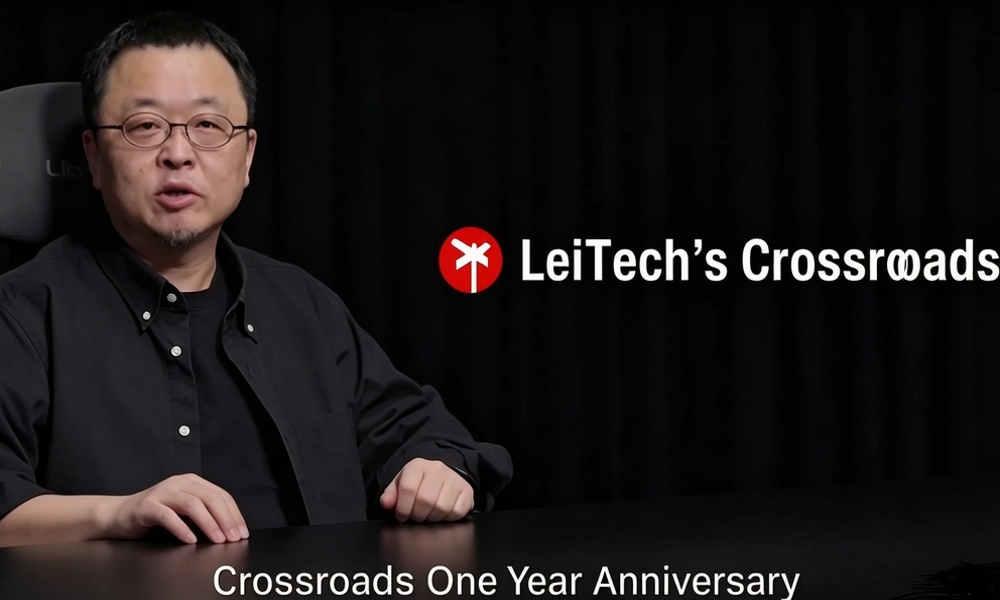

News for August 19: Luo Yonghao’s podcast Luo Yonghao’s Crossroads has officially marked its first‑anniversary since premiere.
Looking back to when the show was first announced a year ago, the internet was awash with pessimistic predictions.
On August 19, 2025, Luo Yonghao’s Crossroads launched across all major platforms, with full episodes simultaneously released on Douyin, Bilibili, Ximalaya, Xiaoyuzhou and other services.
Many netizens spoke their minds bluntly, convinced that this long‑form interview program would not survive three months. Criticisms and doomsaying comments flooded online spaces.
One year on, those earlier doubts have been thoroughly disproven by hard data.
Luo Yonghao himself posted on Weibo, attaching an AI‑animated retrospective video. He shared the full one‑year performance report of the podcast, and playfully jabbed at netizens who once mocked the show.

Image source: Weibo
Many people wonder why Luo Yonghao decided to launch a podcast.
From the perspective of Xiao Lei Bi Bi (ID: xiaoleibbb), this was not a spur‑of‑the‑moment impulse.
Industry insiders have noted that Luo Yonghao possesses exceptional verbal skills, making him well‑suited for long‑form conversational interviews. Many people encouraged him to leverage this strength, which ultimately led to the creation of this podcast.
Titled Crossroads, the show centres its themes around this very concept.
It invites guests from diverse industries to discuss life‑changing decisions, the hardships of entrepreneurship, industry evolution and AI trends, alongside personal experiences, ideals and reality.
Rejecting the format of wrapping up stories within a few minutes, each episode runs for an average of three‑and‑a‑half hours, with the longest exceeding five hours. The full conversations are largely preserved without heavy editing or cuts, presenting unfiltered discussions directly to the audience.
The guest lineup spans a wide spectrum. It includes tech luminaries such as Li Xiang, He Xiaopeng and Zhou Hongyi, cultural figures like Jia Zhangke and Kevin Tsai, as well as stand‑up comedians and more.
One year after its premiere, the official released figures are genuinely impressive within the podcast industry.
It has released 36 full episodes in total, amassed 349 million cross‑platform plays, generated 138 related trending topics, secured partnerships with 23 commercial brands, and gained over 10.242 million followers across all platforms.

Image source: Weibo
He has also racked up a string of awards, including Apple Podcasts’ Top New Show of the Year, Xiaoyuzhou’s New Podcast of the Year, Bilibili’s Best New Creator of the Year, and Ximalaya’s Trend Insight Officer of the Year. He has claimed honours from nearly all major audio and video platforms.
It is worth recalling that when the show first launched, scepticism was rife online.
Some netizens put it bluntly: in the short‑video era, people are accustomed to fragmented content, so who would want to spend three to four hours listening to people talk?
Others revived the old “industry curse” meme, joking that whatever sector Luo Yonghao steps into is doomed to suffer — and that the podcast industry would be next.
A year on, doomsaying has not completely vanished, yet a large number of viewers have changed their minds.
Many netizens point out that short‑video content is heavily fragmented and full of clipped snippets these days, making genuine full‑length conversations hard to come by.
Avoiding manufactured drama, this podcast preserves guests’ remarks in full, letting audiences hear candid thoughts rarely found elsewhere.
Criticism, however, still persists.
Some viewers argue the show largely rides on Luo Yonghao’s built‑in audience appeal. They maintain that identical content would struggle to achieve such viewership with a different host.
Others feel certain episodes lack tight thematic focus, containing plenty of filler material across the three‑to‑four‑hour runtime, and question whether such length is necessary.
From Xiao Lei’s personal perspective, Luo Yonghao’s podcast represents a rather distinctive achievement for China’s video‑podcast landscape.
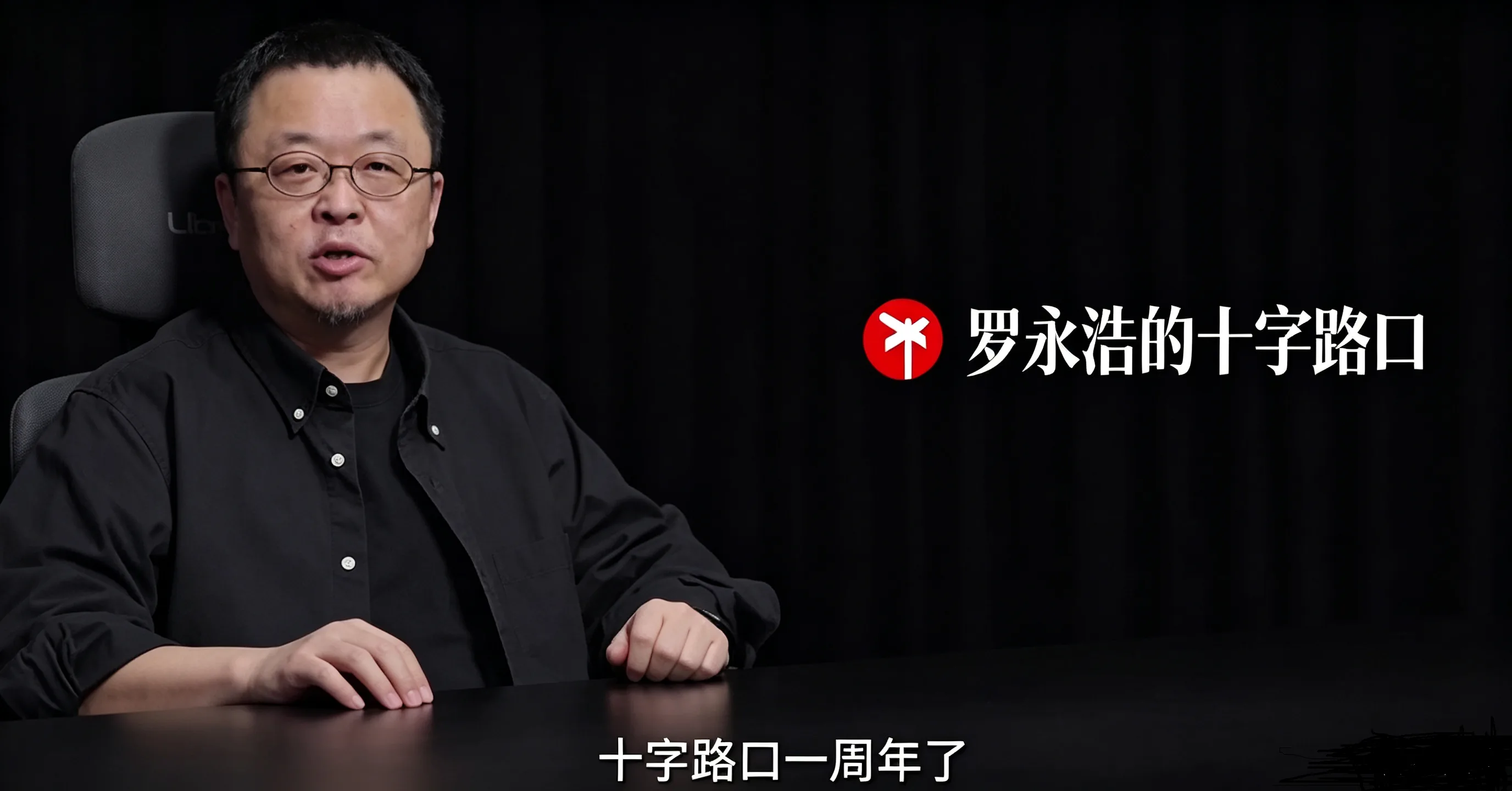
Image source: Weibo
Objectively speaking, its success owes much to Luo Yonghao’s massive built-in audience and inherent newsworthiness.
His involvement thrust podcasting into the spotlight for millions of mainstream users—boosting overall visibility for the entire category.
Yet we mustn’t attribute its achievements solely to traffic.
Its willingness to produce ultra-long, uncut interviews—and to cede the stage fully to guests—has proven essential to retaining audience loyalty.
Of course, its shortcomings remain equally evident.
Controversies persist around guest selection, topic management, and ad integration.
Traffic is a double-edged sword: While generating immense attention, it subjects every episode to intense, multi-directional scrutiny—often triggering online disputes.
Meanwhile, the prophecy that the show “wouldn’t last three months” has already been shattered by reality.
Going forward, however, whether it can sustain quality, consistently deliver insightful conversations, and strike the right balance between content integrity and commercialization—all remain open questions awaiting time’s verdict.
Finally, have you listened to “Luo Yonghao’s Crossroads”? Feel free to share your thoughts in the comments below.
The most critical barometer for the robotics industry—the World Robot Conference (WRC) 2026—is set for a major debut, followed closely by the World Humanoid Robot Games.
Over 300 top-tier exhibitors—including Unitree, Zhiyuan Robotics, Qiyuan Robotics, Magic Atom, Galaxy General Robotics, CloudDeep, Lingxin Qiao Shou, and more—will jointly define the future of global robotics!
WRC will answer all core questions about robotics.
The LeiTech WRC 2026 Reporting Team has arrived onsite.