
 雷科技
雷科技




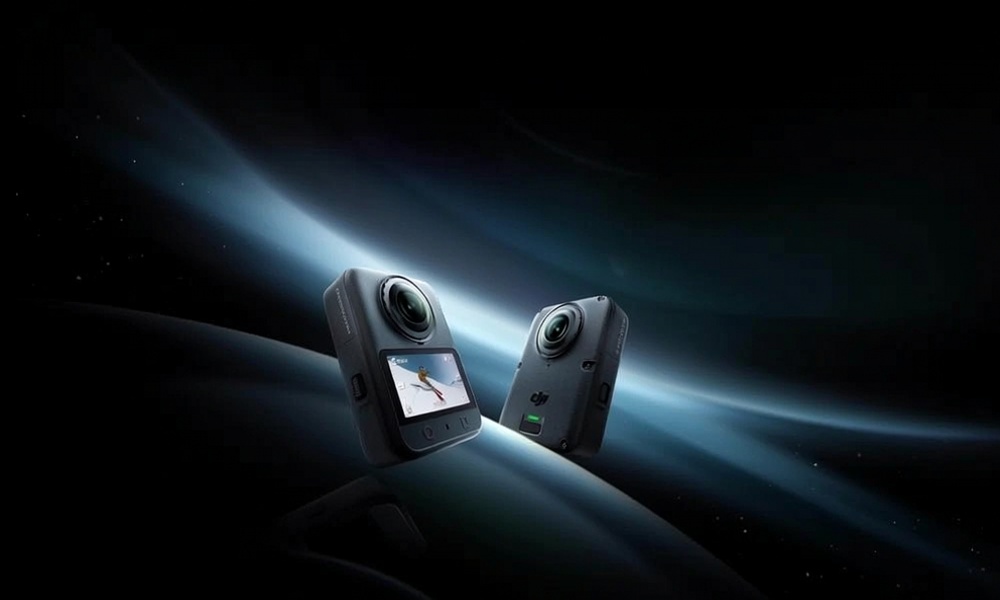

Xiaolei BIBI (ID: xiaoleibbb) I came across a fascinating trending topic today: a DJI action camera actually completed space flight and recovery aboard a rocket.
On August 19, the Zhuque‑3 Y2 carrier rocket lifted off from the Dongfeng Commercial Aerospace Innovation Test Zone. Its first‑stage booster successfully performed land recovery per pre‑set procedures, marking the complete success of the flight mission.
This marks China’s first‑ever land recovery of an orbital‑class carrier rocket’s first‑stage booster using landing legs, a genuine milestone in the domestic aerospace sector.
Yet what has sparked widespread online discussion is not the rocket itself, but the 12 DJI Osmo Action6 cameras strapped onto the rocket body.
CCTV has run special coverage on this. It is the first time a Chinese‑made consumer‑grade action camera has been formally mounted on a carrier rocket, capturing the full sequence from launch to recovery.
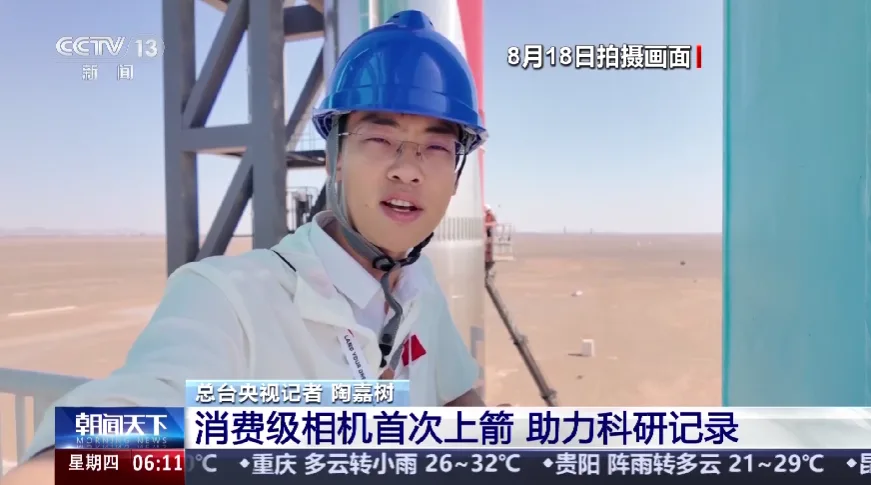
Image source: Weibo
Many netizens are curious: for a space‑grade mission, why not use dedicated aerospace cameras, but instead ordinary action cameras that can be bought for a few thousand yuan?
The story traces back to the maiden flight of Zhuque‑3 Y1 last December. Though its satellites were successfully placed into orbit, the recovery phase ended in failure.
After reviewing the mission, the team found that the original industrial cameras could not deliver sufficient image quality, failing to clearly show the actual working conditions of critical components such as grid fins and landing legs.
Researchers needed high‑definition real‑world footage for cross‑validation against the rocket’s telemetry data.
After evaluating multiple options, they settled on the consumer‑grade DJI Action6. Boasting solid image quality and high reliability, this off‑the‑shelf mature product proved to be a suitable candidate.
The team made no modifications to the camera’s internal hardware. Adaptation to the rocket’s extreme environment was achieved entirely through additional external protective structures.
Special limit and shock‑absorbing designs were implemented for the battery compartment, and custom protective casings were fitted externally to resist impact and insulate against high temperatures.
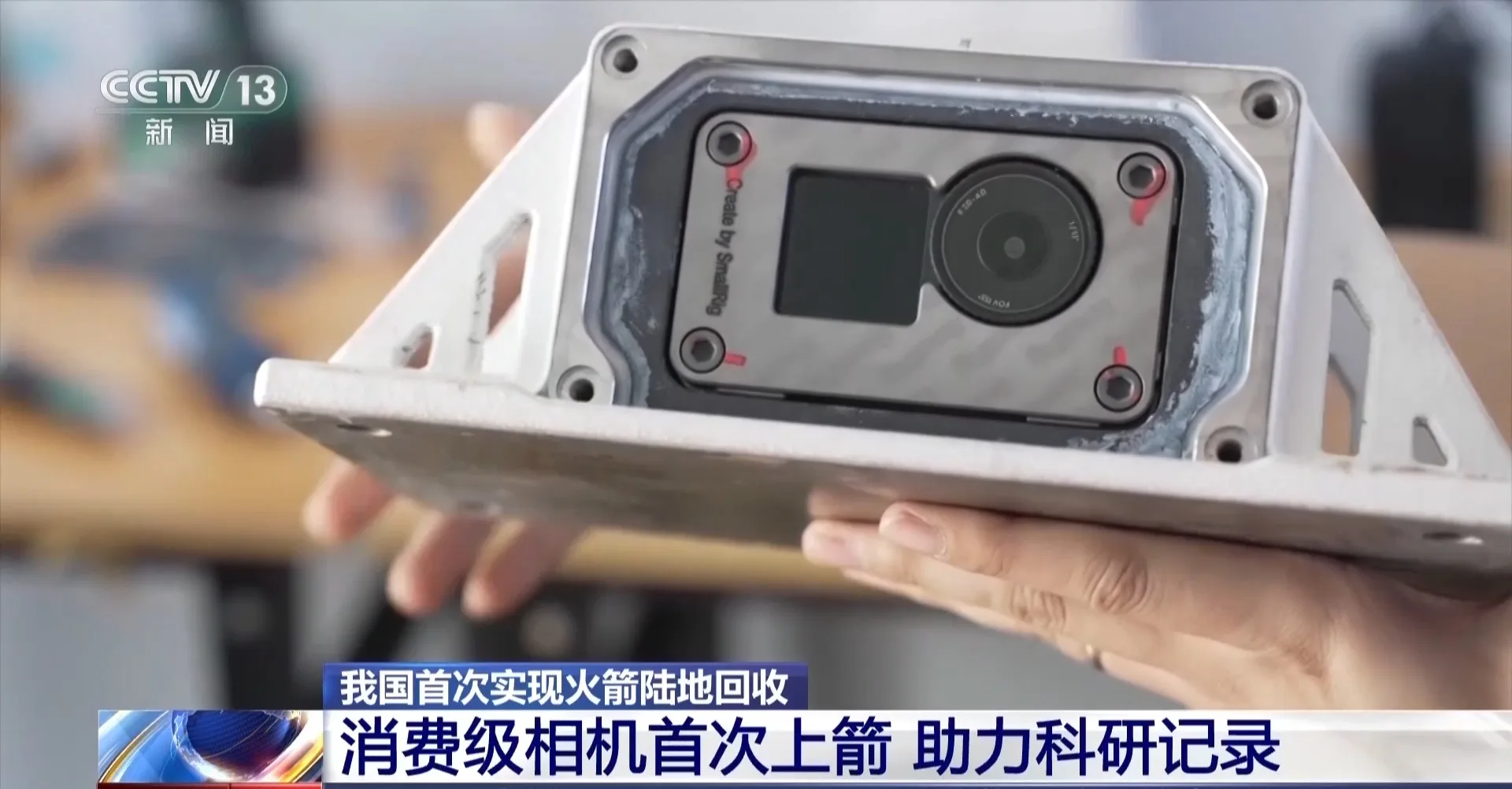
Image source: Weibo
The shooting solution is also highly practical: the cameras power on and start recording on a timer, with 4K raw footage saved directly to local onboard storage.
After the rocket lands and is recovered, the cameras are physically retrieved for footage extraction.
DJI has indeed made quite a few new moves in imaging hardware lately.
Just a few days ago, DJI refreshed its panoramic camera lineup and launched the brand‑new Osmo 360 II, which bumps specifications straight up to 8K panoramic recording.
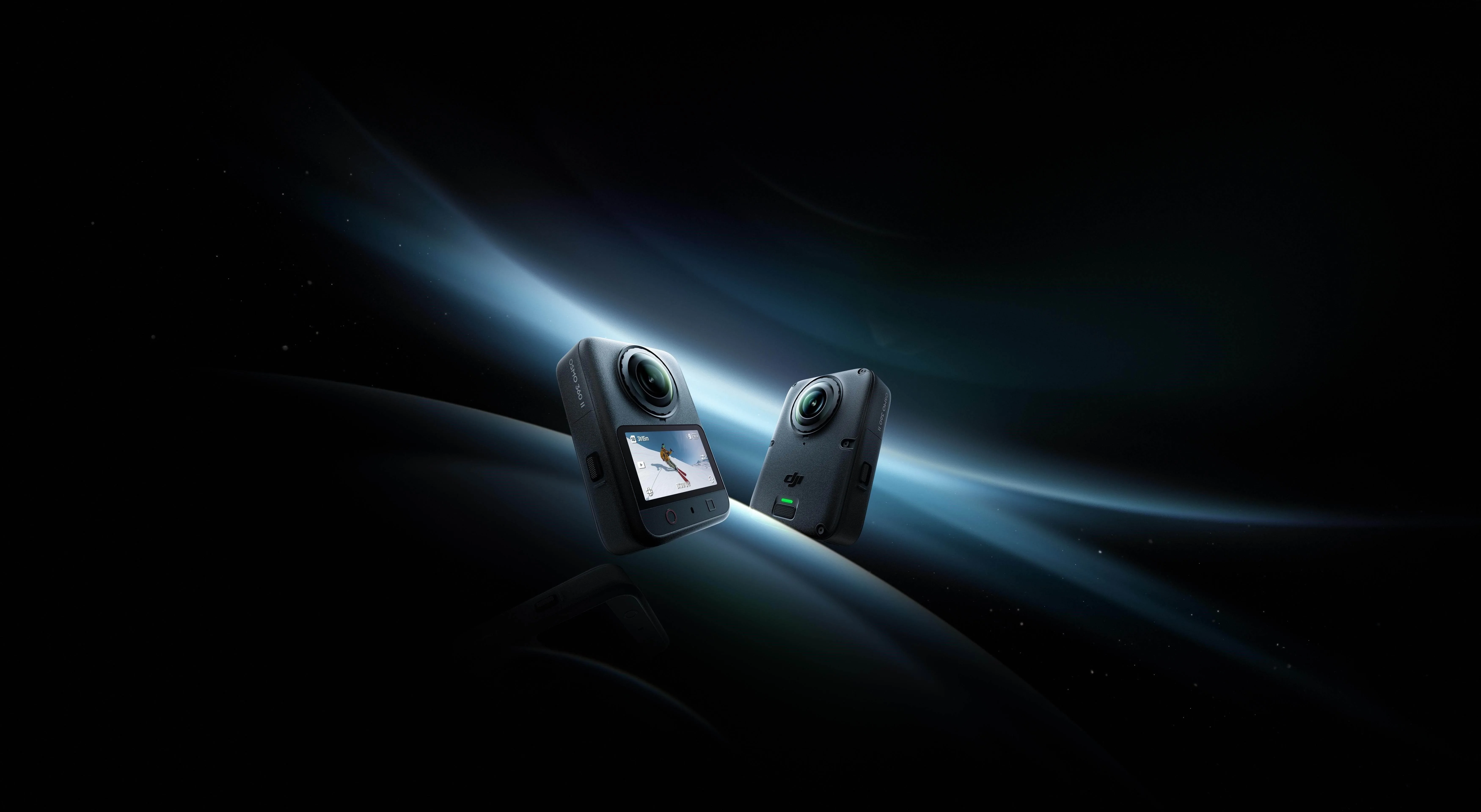
Image source: DJI official website
Anyone familiar with action cameras knows that panoramic cameras place high demands on body stabilization, heat dissipation and storage systems.
8K panoramic recording brings a massive surge in data volume, posing a considerable challenge to overall system stability.
This new product shows that DJI does not merely chase eye‑catching specifications for compact imaging hardware.
The real benchmark lies in whether it can finish recording stably under extreme conditions.
Many people may rarely use panoramic devices in daily life, yet such products prove highly useful for outdoor documentation, engineering inspections and content creation.
DJI’s compact imaging devices keep expanding their application scenarios, ranging from everyday vlogging gear to tools for engineering survey and recording.
It is precisely the long‑term refinement of hardware stability in consumer‑grade products that laid the groundwork for the aerospace team’s selection of the Action6 this time.
Some netizens even cracked jokes that their own Action6 has suddenly become much more desirable, realizing they own the same device used by the aerospace team.
Other internet users noticed a key detail: all twelve cameras returned intact together with the rocket booster, with data fully preserved.
This demonstrates not only that the cameras stood up to the grueling test, but also that the full set of protective solutions is highly mature.
From the perspective of Xiaolei BIBI (ID: xiaoleibbb), the greatest significance of this event is never the gimmick of an action camera going into space.
In the past, when we talked about aerospace, we tended to regard it as a lofty national project with no regard for costs.
Now that commercial aerospace is flourishing, greater emphasis is placed on cost‑effectiveness and engineering efficiency. Reliable, well‑proven civilian products can also be deployed to solve specialized technical challenges.
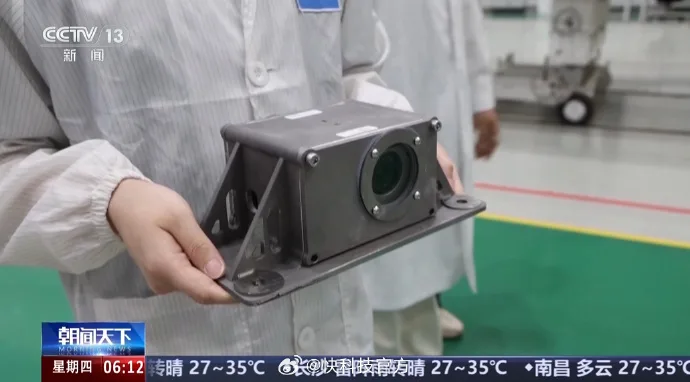
Image source: Weibo
This actually signals industry maturity.
Only with technology trickling down and costs coming down can aerospace truly enter an era of large‑scale commercialization.
DJI’s ride aboard the rocket serves both as proof of consumer‑electronics prowess and a microcosm of the dynamism of China’s commercial aerospace sector.
The partnership between commercial aerospace and domestic consumer hardware makes for a fascinating cross‑industry collaboration.
Now a question for everyone: what do you think about DJI cameras surviving rocket launch and recovery? Feel free to share your thoughts in the comments.
The most important industry barometer for robotics—the World Robot Conference (WRC) 2026—is launching with major momentum, followed closely by the World Humanoid Robot Games.
Over 300 top-tier exhibitors—including Unitree, Zhiyuan Robotics, Qiyuan Robotics, Magic Atom, Galaxy General Robotics, CloudDeep, and Lingxin Qiao Shou—are jointly shaping the future of the global robotics industry!
WRC will answer every core question about robotics.
The LeiTech WRC 2026 reporting team has already arrived on-site at the conference.