 雷科技
雷科技





LeiTech Rant (ID: xiaoleibbb)
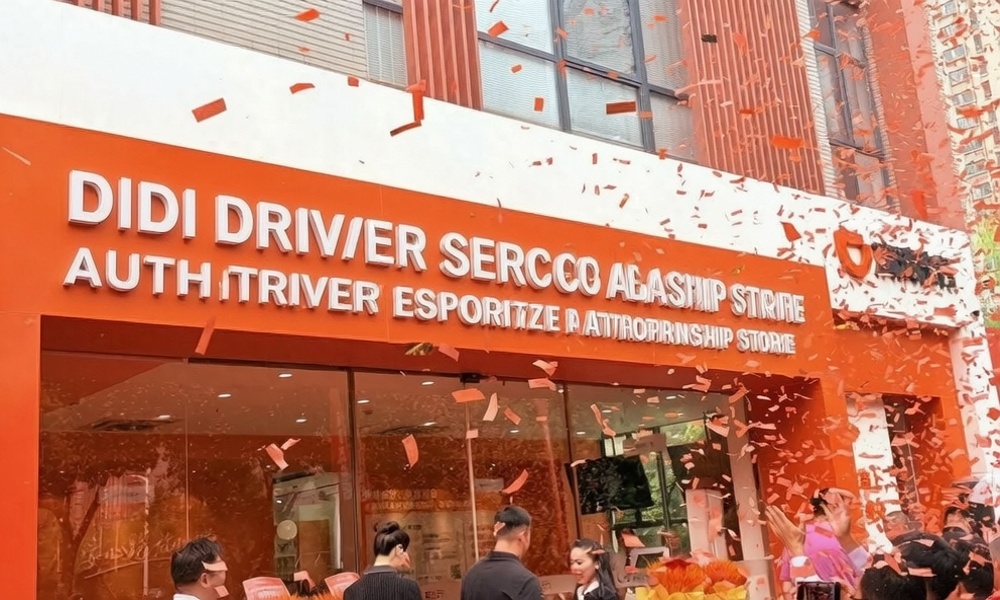
Today, I came across an interesting news item: Didi’s first nationwide authorized flagship driver service center has officially opened in Hangzhou.
Two similar pilot stores—in Shenzhen and Shanghai—are still undergoing trial operations. With this, Didi’s three-tier offline driver service system is now fully operational.
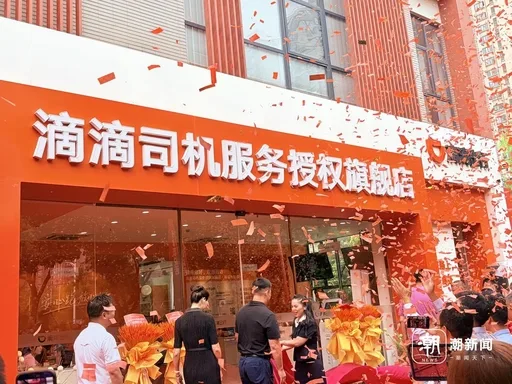
Image source: Weibo
Historically, one of the most frequent complaints about Didi centered on its customer support.
Online appeals often involved endless back-and-forth; issues like order liability determinations or account information updates frequently remained unresolved—even after multiple phone calls.
This time, Didi has taken a bold step by opening physical storefronts to resolve issues face-to-face—an approach that genuinely surprised LeiTech Rant.
This flagship store serves as a “one-stop service center” exclusively for ride-hailing drivers.
The core services fall into four categories: resolving complex issues in person, rest and replenishment, driver protection and care, and onboarding guidance for new drivers.
Problems that are difficult to clarify online—such as order liability disputes, account data modifications, or transaction history inquiries—can now be addressed directly at the store with dedicated, one-on-one staff assistance.
Beyond official business, the store also offers abundant convenience-based welfare benefits.
Free drinking water, mobile phone charging stations, restrooms, air-conditioned lounges—and even basic health screenings—are all available on-site.
Moreover, this isn’t merely about launching a single standalone store; Didi is building an integrated, three-tier offline service network.
The first tier consists of flagship stores—the central hubs handling complex matters—with three locations currently operational.
The second tier comprises over 2,400 authorized Tier-1 and Tier-2 partner stores, designed to serve everyday needs.
The third tier includes more than 1,000 Didi Service Stations, focused on small daily conveniences such as rest, hydration, and restroom access.
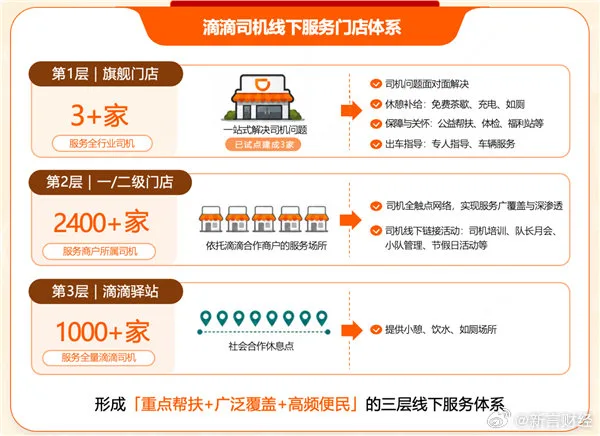
Image source: Weibo
According to Didi’s roadmap, it plans to open five to ten additional flagship stores nationwide this year.
All future offline service points will be integrated into the Didi Driver App, enabling drivers to locate the nearest service center with just a tap on their smartphones.
Speaking of Didi, the company has been unusually active lately.
First, there was the “Her Program” incident: A user selected the female-driver-only service option, only to be picked up by a male driver. Didi responded swiftly and launched an internal investigation.
Second, rumors circulated about Didi’s premium car service offering complimentary ice-cold cola. The company confirmed it would provide drivers with free insulated coolers and ice packs—a topic that sparked widespread discussion among drivers at the time.
Third, Didi recently launched its AI-powered ride-hailing assistant, “Xiao Di”—a fresh product initiative.
Instead of focusing solely on dispatch speed and fare competitiveness, “Xiao Di” matches riders with drivers based on personalized preferences—such as smooth driving, fresh cabin air, or low motion-sickness risk.

Image source: Weibo
Evidently, Didi is actively seeking ways to move beyond price competition and cultivate new competitive advantages.
Returning to today’s topic, netizens have voiced diverse opinions.
The majority of drivers express strong approval. One driver noted that, previously, responding to unreasonable passenger complaints via online channels involved lengthy appeal processes. Now, in-person verification at the store enables immediate penalty reversals when responsibility clearly lies outside the driver’s scope.
For thorny administrative tasks—such as account suspension appeals, insurance adjustments, or driver’s license information updates—drivers no longer need to repeatedly engage with online support agents. In-store staff provide hands-on, step-by-step assistance, significantly improving efficiency.
Beyond streamlined administrative services, meal-related benefits have also earned praise from many drivers.
The store offers subsidized “Care Meals,” co-funded by the platform and local trade unions: For just ¥8.8, drivers can enjoy a balanced meal comprising two meat dishes, two vegetable dishes, rice, and soup—plus 15 minutes of complimentary parking.

Image source: Weibo
Of course, numerous netizens remain cautiously optimistic.
Some comment: “Let’s hold off on praising—first see how widely the service expands. Right now, only the Hangzhou location is officially operational; drivers in most other cities cannot yet benefit.”
Others worry whether the flagship stores—despite their polished appearance—may devolve into symbolic gestures, with insufficient follow-up operations leading to gradual functional obsolescence.
LeiTech Rant (ID: xiaoleibbb) believes that Didi’s initiative to build this offline service system is unquestionably headed in the right direction.
After years of development, the ride-hailing industry has long suffered from a clear deficiency in driver-side experience.
Yet the real test lies ahead.
First, can Didi sustainably expand its reach—not stopping at flagship stores in first-tier cities, but extending coverage to drivers in secondary and tertiary cities, and even county-level towns?
Second, will these services deliver tangible results—or remain superficial formalities where drivers arrive in person yet still fail to resolve their issues?
Ultimately, drivers are the foundation of any platform. When driver experience improves, service quality naturally follows—and passengers, in turn, become more satisfied.
In the past, critics often accused Didi of prioritizing passenger interests while neglecting drivers. Now, it’s evident Didi is addressing this gap.
But whether these offline services can be effectively implemented and sustained over the long term—only drivers themselves can truly assess.
Lastly, what are your thoughts on Didi’s launch of offline flagship stores? Feel free to share your views in the comments below!
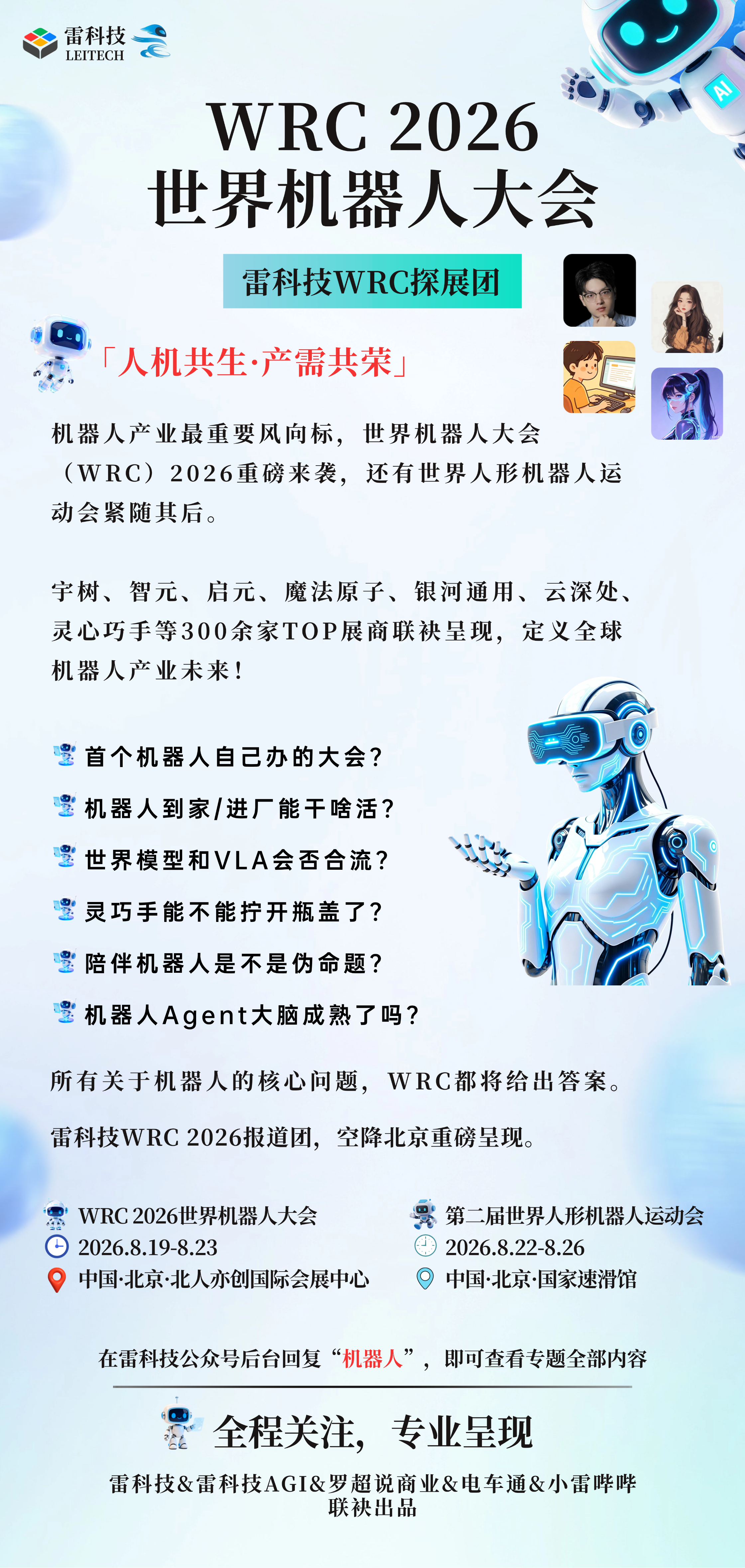
The world’s most important robotics industry barometer—the World Robot Conference (WRC) 2026—is set to make a major debut, followed closely by the World Humanoid Robot Games.
Over 300 top-tier exhibitors—including Unitree, Zhiyuan Robotics, Qiyuan Robotics, Magic Atom, Galaxy General Robotics, CloudDeep, and Lingxin Qiao Shou—will jointly showcase cutting-edge innovations, defining the future of the global robotics industry!
WRC 2026 will answer all core questions about robotics.
The LeiTech WRC 2026 Reporting Team has already arrived on-site.