
 雷科技
雷科技




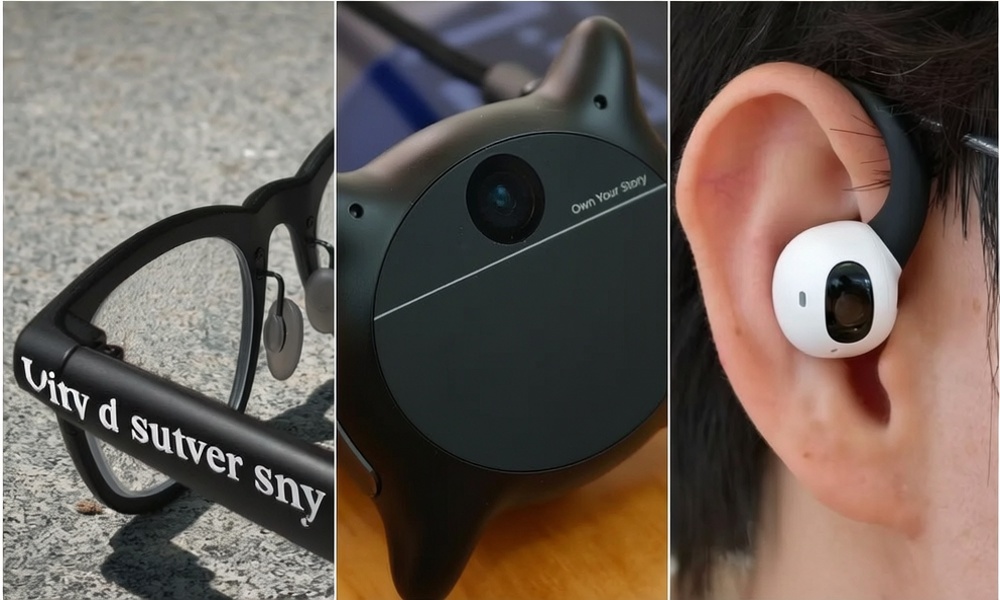


Over the past few years, AI-powered wearable hardware has been tested across nearly every part of the human body—from wrists and ears to the chest. According to the latest Consumer Wearables Market report released by market research firm Counterpoint, cumulative global revenue from consumer wearables is projected to exceed $1 trillion between 2026 and 2032.
Among these, smart glasses, smart rings, and smart pendants are expected to be the fastest-growing categories, with projected cumulative revenues of $16.8 billion, $4.4 billion, and $2.4 billion respectively over the seven-year period.
Rapid growth does not equate to product maturity. Smart glasses alone account for over 70% of the projected combined revenue among these three categories; smart rings have only recently entered the multi-million-unit annual shipment stage; and smart pendants lack publicly comparable sales figures or user retention data. What unites all three is their proximity to human vision, the body, and surrounding environments—enabling continuous collection of information that smartphones struggle to capture.
Image/LeiTech
Yet physical placement alone creates opportunity—it does not guarantee product viability.
Over the past two to three years, LeiTech (ID: leitech) has evaluated numerous AI-powered wearable devices—including many smart glasses, smart rings, and various chest-worn devices. Location determines what a device can see and hear—but three persistent challenges remain for all AI wearables:
Why should users wear it continuously? How does the device provide feedback? And is this usage pattern acceptable—to both users themselves and those around them?
Capable of Seeing, Hearing, and Displaying—Smart Glasses Hold the Greatest Promise as Personal Mobile Terminals
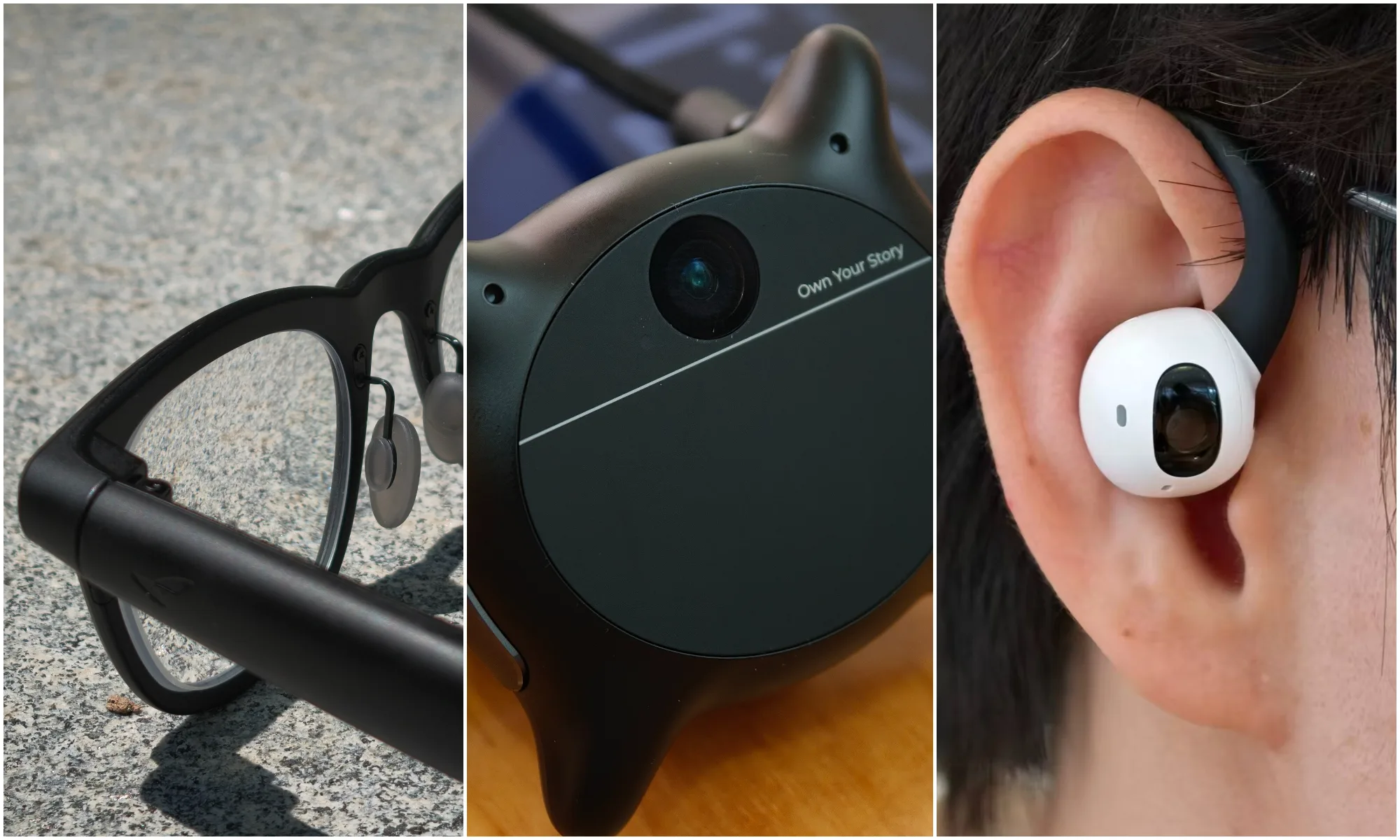
Of the three categories, smart glasses present the largest market opportunity—and the most diverse development pathways. With cameras positioned near eye level, they capture near-first-person perspective imagery; speakers placed close to the ears enable open-ear audio playback; and displays project navigation cues, live captions, and real-time translation directly into the user’s field of view.
Of course, not every smart glass model needs to integrate all these capabilities—leading to multiple distinct product pathways, including (but not limited to) AI audio glasses, AI photography glasses, AI display glasses, and AI all-in-one glasses.
Other lightweight wearables fundamentally cannot simultaneously support visual input, voice interaction, and instantaneous display output.
Smartphones also offer photo capture, translation, and navigation—but require users to retrieve, unlock, raise, or look down at the device. Smart glasses compress that sequence into a single utterance, button press, or glance—bringing input and output physically closer together. More practically, eyewear is already a daily essential: AI need not invent a new wearing location—it simply needs to integrate into an existing one.
The eyewear position is simply too advantageous—an advantage other wearables struggle to replicate.
More importantly, glasses are everyday essentials. AI doesn’t need to create a new wearing location—it just needs to find space within a standard pair of eyeglasses.
However, resembling a daily essential in appearance doesn’t mean delivering a daily-essential experience. Last year, a LeiTech editor used the TCL RayNeo V3 as their primary eyewear, wearing it nearly 18 hours per day for three consecutive months. That generation required charging at least three times daily—and often ended up powered off, functioning merely as heavier conventional glasses.
In fact, to ensure battery remained available when needed for photography, users frequently powered the device off intentionally—relegating music playback back to AirPods.
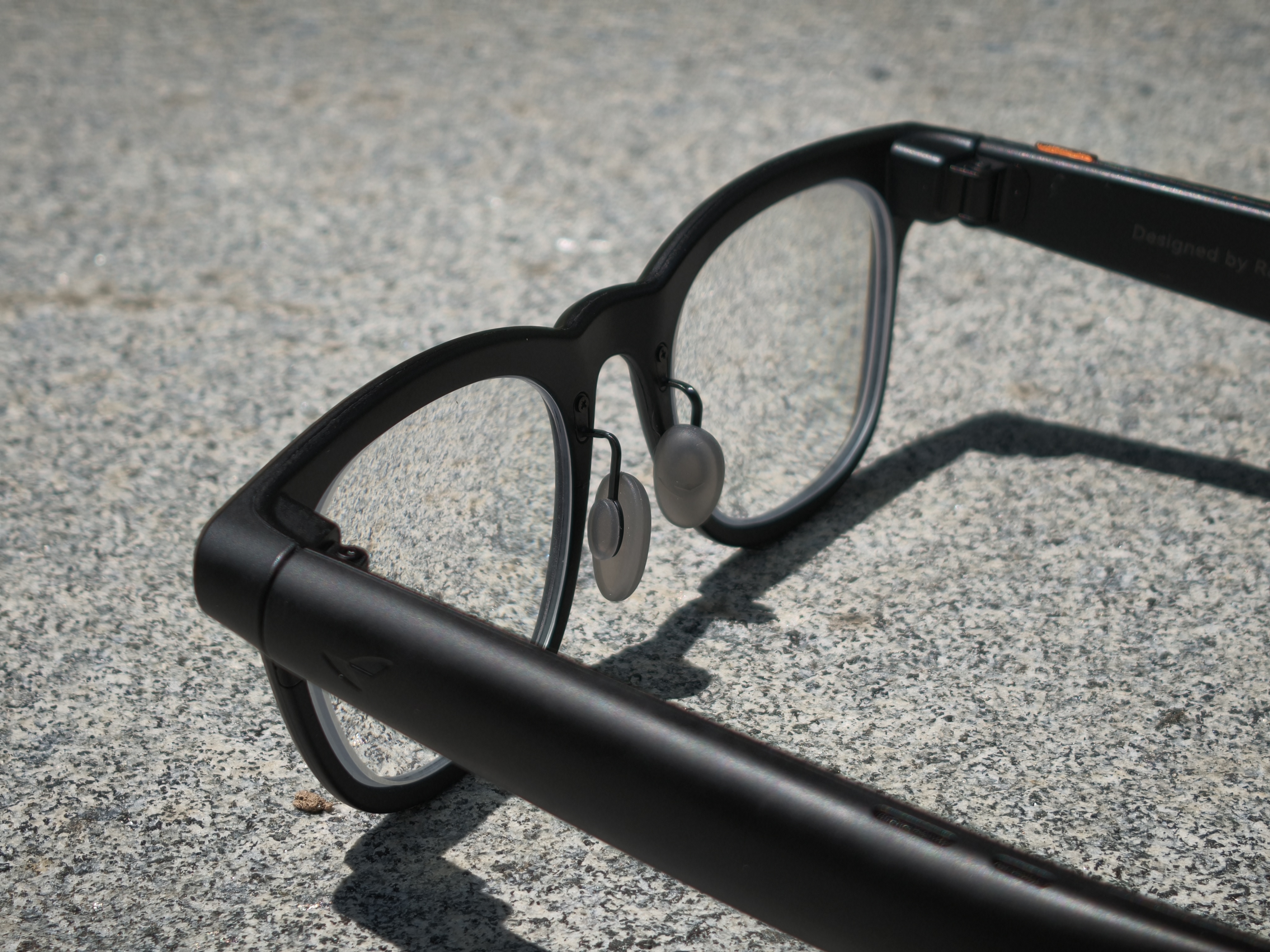
By 2026, however, the real-world experience of the TCL RayNeo V4 has improved battery life to once-daily charging, while its factory weight has dropped to 38 grams. Yet after fitting prescription lenses, its measured weight still approaches 49 grams—making eight to nine hours of continuous wear noticeably taxing.
Image/LeiTech
Once battery constraints ease, comfort during extended wear, reliability of wake-up triggers, and timeliness and accuracy of responses become decisive factors determining whether users will repeatedly invoke AI assistance.
The Quark S1—with its built-in display—addresses the limitations of pure voice interaction. However, its 51-gram weight, requirement for custom lenses, and dependence on in-person optometric fitting introduce new barriers. The positional advantage of smart glasses remains compelling—provided they function seamlessly as comfortable eyewear when powered off, and reliably perform smartphone tasks more naturally when powered on.
Pursuing “Invisibility” Differently: Smart Rings and Smart Pendants Head in Opposite Directions
Smart rings pursue an alternative path: abandoning screens and instant interaction to achieve lighter weight, longer battery life, and lower perceptibility.
Fingers provide rich blood-flow signals, and smart rings—being lighter than smartwatches—are better suited for sleep monitoring. Though incapable of messaging or displaying turn-by-turn navigation, their long-term wear enables continuous baseline tracking of resting heart rate, skin temperature, sleep quality, and recovery metrics.
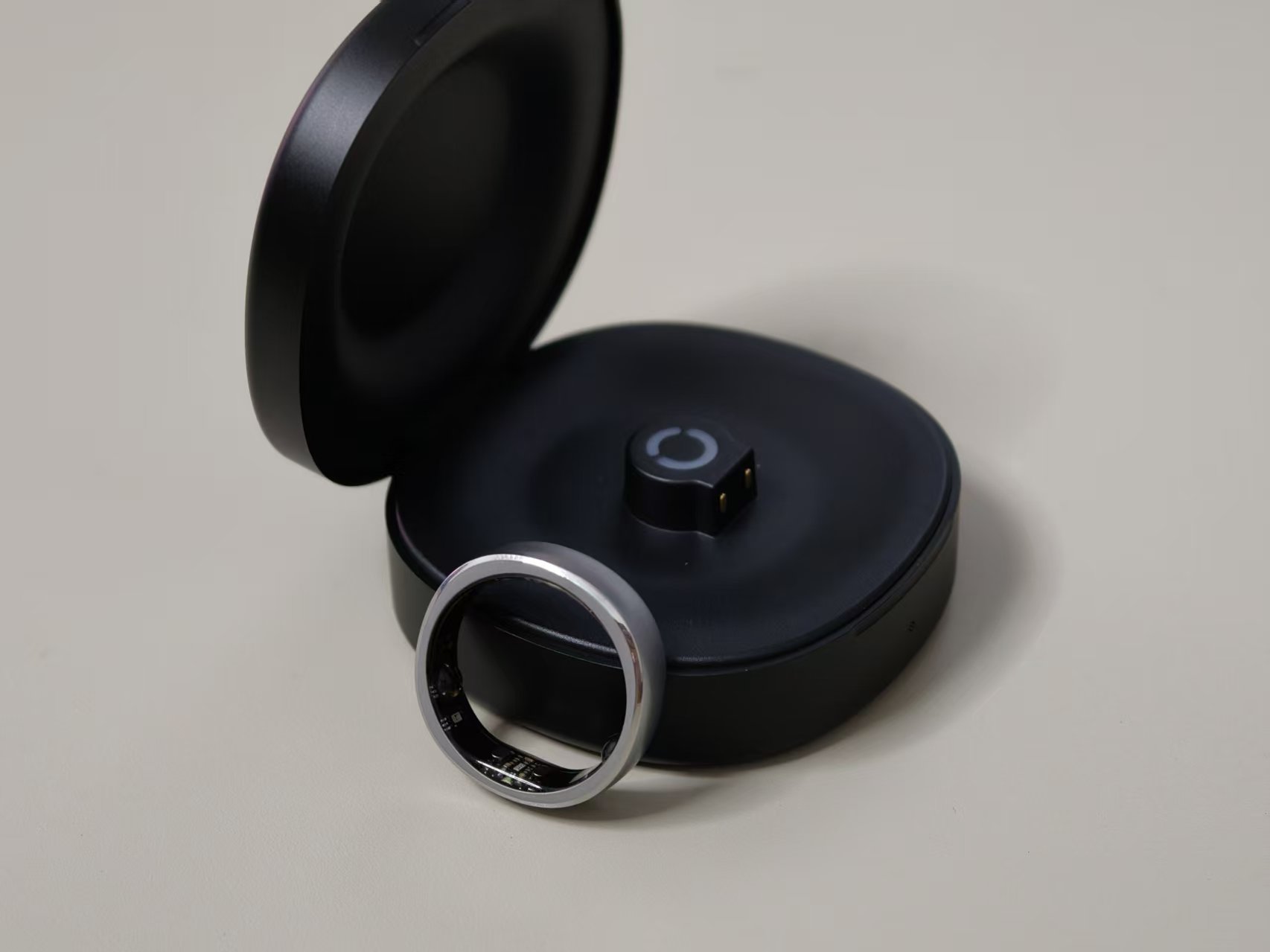
A LeiTech evaluation of the RingConn Gen 3—weighing only 3.4 grams—achieved nearly one-week battery life even with sleep apnea monitoring enabled, and successfully captured naps.
Image/LeiTech
A recent study synthesizing 107 studies and approximately 100,000 participants found that smart rings deliver solid performance in heart rate and sleep detection—yet many underlying algorithms remain proprietary, introducing moderate-to-high risk of bias. In short, smart rings can effectively monitor health trends—but they clearly cannot provide highly accurate health measurements.
While smart rings’ imperceptibility helps users forget the device exists, smart pendants’ imperceptibility may cause others nearby to forget they’re being recorded.
Like smart rings, smart pendants prioritize low visibility—but instead gather ambient sound. The chest-worn position frees users’ hands, and audio consumes less power than video—making transcription and summarization by AI models significantly easier.
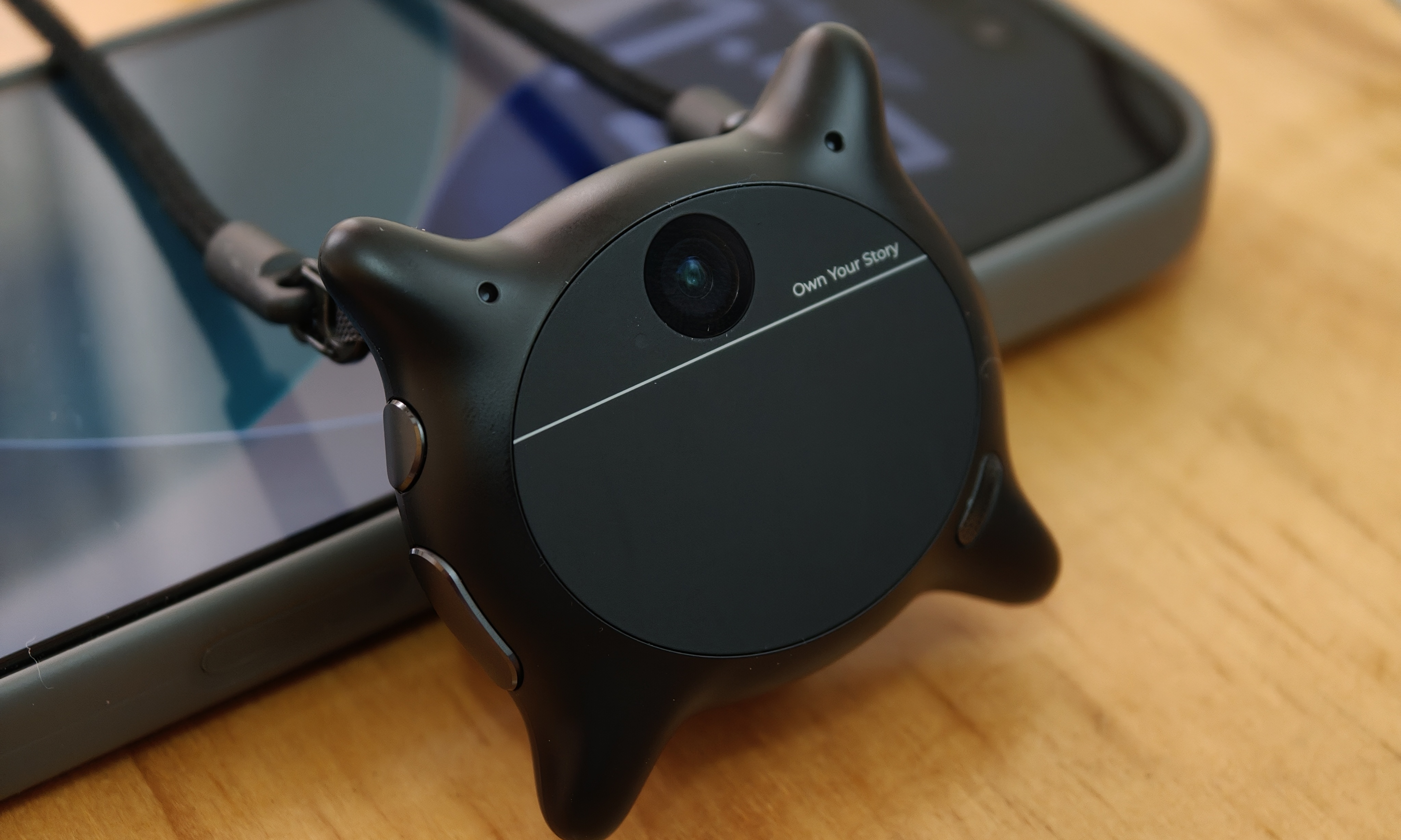
This year, LeiTech evaluated the Looki L1, which—strictly speaking—is closer to a chest-mounted camera. It vividly illustrates both the advantages and trade-offs of the chest-worn form factor: the device can now organize daily memories and curate video highlights, yet the chest-level perspective differs substantially from true first-person vision—and continuous recording inevitably raises privacy concerns for bystanders.
Image/LeiTech
Issues such as magnetic detachment, connection drops, and device-finding functionality reflect unresolved fundamentals specific to this product.
If focusing solely on audio recording, smart pendants must compete directly with smartphones, earbuds, dedicated voice recorders, and lavalier microphones. Chest placement also introduces complications—such as clothing friction and orientation variability—and may not deliver balanced audio in meetings compared to desktop-mounted alternatives. “Always-on, person-following recording” confirms demand for environmental memory—but falls short of proving the smart pendant is the optimal form factor:
Proximity to information truly provides AI with richer context. Yet without a natural wearing rationale, immediate feedback mechanisms, and broad social acceptance, positional advantages remain theoretical.
Why Haven’t the Wrist, Ear, and Clothing Become AI Wearable Battlegrounds?
Watches and earbuds are certainly viable platforms for AI. Both already command massive markets, where AI integration tends to manifest as functional upgrades—not entirely new product categories. The growth projections for the three emerging categories also reflect their relatively small current market bases.
Wrist-worn devices offer screens, batteries, payment functions, and mature distribution channels—but smartwatches already juggle an overcrowded feature set. Optical sensing at the wrist is also highly susceptible to motion artifacts and variations in strap tightness. Smart rings sidestep direct competition by targeting sleep, recovery, and low-disturbance health monitoring.
Ears may represent the most direct competitor to both smart glasses and smart pendants. Smart earbuds already serve core needs—music, calls, and noise cancellation—and audio output is inherently more private.
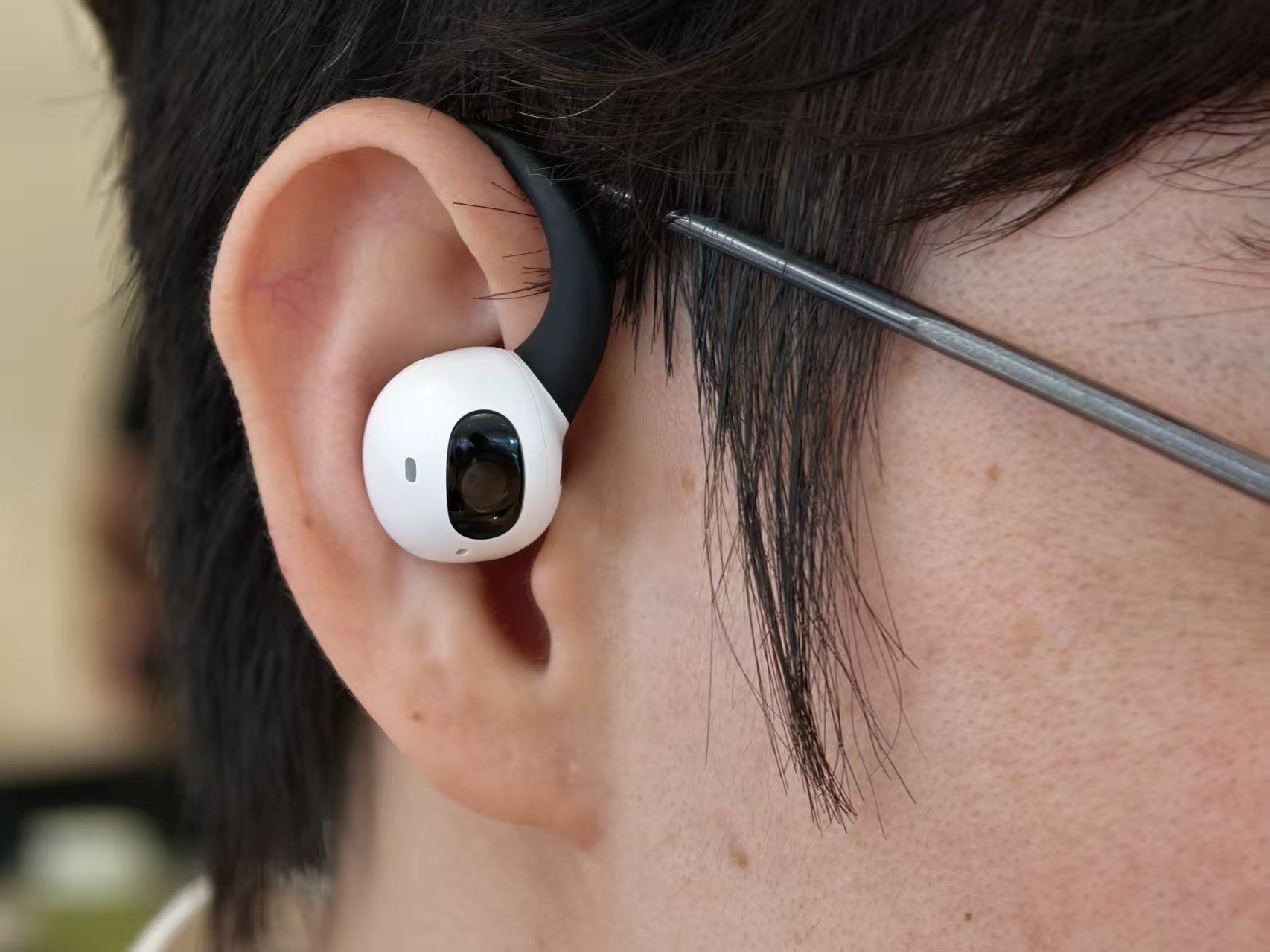
This year, LeiTech evaluated the Guangfan AI Earbuds, which even incorporate a camera and eSIM to acquire visual context traditionally reserved for smart glasses. Yet suboptimal recognition rates, network latency, a 115-gram charging case, and continued smartphone dependency illustrate how cramming all capabilities into earbuds easily sacrifices their defining advantage: lightness and portability.
Image/LeiTech
Apple, too, has reportedly been developing camera-equipped AirPods to sense surroundings and feed visual context to Siri—a clear indication that sourcing visual context from earbuds is gaining traction beyond any single company’s roadmap.
This is another advantage difficult for specialized medical devices to match. Chest straps and skin patches yield more stable physiological data—but reside firmly in clinical or professional domains, facing challenges like consumable replacement, skin irritation, and regulatory compliance. Smart footwear and apparel capture full-body motion data, yet contend with sizing, sweat resistance, cleaning, and charging logistics.
More sensors and higher data fidelity don’t automatically translate to greater suitability for mainstream users. Smart glasses and smart rings succeed by embedding visual and biometric sensing into objects already embedded in daily life. Smart pendants likewise resemble everyday accessories—but collect ambient sound from people nearby, requiring fresh justification for why they deserve to be worn at all.
What’s Missing Before AI Wearables Truly Reach Mainstream Adoption?
Battery life matters—but many AI wearable challenges won’t be solved by next-generation batteries alone.
For smart glasses, the harder hurdles involve whether applications justify daily use—and whether optical fitting, lens customization, face geometry compatibility, after-sales support, and in-person try-ons can scale effectively. Devices with cameras must also transparently communicate when recording is active. They must first excel as eyewear—then convincingly demonstrate that AI delivers sufficient value to justify added weight, cost, and maintenance overhead.
Smart rings must tackle data credibility, sizing precision, and service value. Fingers swell and shrink with temperature and activity—so incorrect sizing compromises both comfort and data quality. Whether users will commit to long-term subscriptions—and whether algorithms can translate scores into actionable, understandable recommendations—matters more than adding another sensor.
Smart pendants must prove superior convenience versus smartphones, earbuds, and voice recorders—and clearly inform bystanders about recording start/stop times and data destinations. Their deeper reliance on cloud services means that if transcription, summarization, or personal memory libraries cease operation, the hardware risks losing most of its utility overnight.
Smart glasses compete for control over personal information entry points; smart rings accumulate longitudinal health data; smart pendants explore environmental memory. All gain opportunity through proximity to people and information—but whether they become mass-market products hinges on sustained wearing rationale, effective feedback mechanisms, and broad social acceptability.
Once AI novelty wears off—why should this device still be worth wearing every day? To drive broader adoption of AI hardware, this is a profoundly simple question every manufacturer must answer.